by Corinne Murdock | Jun 15, 2022 | News
By Corinne Murdock |
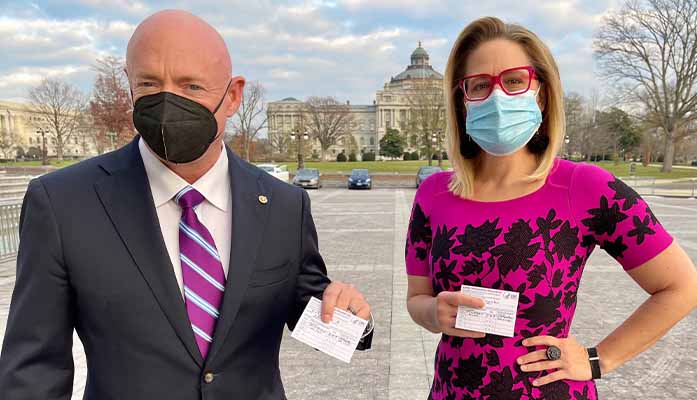
On Sunday, Arizona’s two Democratic senators announced a sweeping gun control proposal to curb gun ownership of the mentally ill and domestic abusers, as well as expand mental health and school safety programs.
The proposal hasn’t been introduced as formal legislation, let alone a formal, standalone document. It proposes to prevent court-ruled dangers to the public from obtaining firearms; expand community behavioral health centers, mental health and suicide prevention programs in communities, schools, and telehealth networks, and other similar community support services; add convicted domestic violence abusers and those with domestic violence restraining orders to the National Instant Criminal Background Check System (NICS); increase funding for K-12 school safety programs and training; increase punishment for evading firearm dealer licensing requirements and for illegal straw purchasing and trafficking; and require juvenile and mental health background checks for firearm buyers under 21 years old.
The legislation is a bipartisan effort, with 10 senators from each party issuing support. Republican senators who signed on were Bill Cassidy (R-LA), Susan Collins (R-ME), Roy Blunt (R-MO), Richard Burr (R-NC), Thom Tillis (R-NC), Rob Portman (R-OH), Pat Toomey (R-PA), Lindsey Graham (R-SC), John Cornyn (R-TX), and Mitt Romney (R-UT).
Democrats who signed onto the proposal were Senators Chris Murphy (D-CT), Richard Blumenthal (D-CT), Chris Coons (D-DE), Debbie Stabenow (D-MI), Cory Booker (D-NJ), Martin Heinrich (D-NM), Joe Manchin (D-WV).
One independent, Senator Angus King (I-ME), agreed to the proposal.
This latest gun control proposal comes less than three weeks after the school shooting in Uvalde, Texas.
In a statement, President Joe Biden commended Sinema for the legislation specifically, along with Cornyn and Tillis.
“Obviously, it does not do everything I think is needed, but it reflects important steps in the right direction, and would be the most significant gun safety legislation to pass Congress in decades,” stated Biden. “Each day that passes, more children are killed in this country: the sooner it comes to my desk, the sooner I can sign it, and the sooner we can use these measures to save lives.”
According to the CDC’s Web-based Injury Statistics Query and Reporting System (WISQARS) latest data, there were over 45,200 total firearm deaths in 2020. Nearly 24,300 of those deaths were suicides, nearly 19,400 were homicides, just over 600 were legal intervention, and 535 were unintentional. 400 firearm deaths had an undetermined intent.
A vast majority of the firearm deaths occurred in males: nearly 39,000 versus just over 6,200 females. As for race, about twice the number of white men were killed by firearms in 2020 over black men. 21,000 of the men who died were white, non-Hispanic males; over 12,500 were Black, non-Hispanic males; and just under 4,200 were white Hispanic males.
Just under 3,900 of the women who died were white, non-Hispanic females; nearly 1,600 were Black, non-Hispanic females; and over 500 were white Hispanic females.
Blue counties accounted for the top ten highest firearm death rates of all counties in the country. They’ve been ranked below from the greatest to least number of homicides.
- Cook County, Illinois: 82 percent were homicides, or 862 out of 1040 deaths; Biden won with over 74 percent of the vote in the 2020 presidential election.
- Los Angeles County, California: over 62 percent, or 524 of 837 deaths; Biden won with 71 percent of the vote.
- Harris County, Texas: over 61 percent were homicides, or 475 of 773 deaths; Biden won with over 56 percent of the vote.
- Philadelphia, Pennsylvania: over 84 percent were homicides, or 453 of 538 deaths; Biden won with over 81 percent of the vote.
- Wayne County, Michigan: over 75 percent were homicides, or 344 of 458 deaths; Biden won with over 68 percent of the vote.
- Dallas County, Texas: nearly 61 percent were homicides, or 251 of 412 deaths; Biden won with over 65 percent of the vote.
- Maricopa County, Arizona: over 35 percent were homicides, or 249 of 702 deaths; Biden won with over 50 percent of the vote.
- Marion County, Indiana: 69 percent were homicides, or 219 of 317 deaths; Biden won with nearly 64 percent of the vote.
- Miami-Dade County, Florida: 64 percent were homicides, or 208 of 325 deaths; Biden won with over 53 percent of the vote.
- Tarrant County, Texas: over 45 percent were homicides, or 140 of 309 deaths; Biden won with over 49 percent of the vote.
Corinne Murdock is a reporter for AZ Free News. Follow her latest on Twitter, or email tips to corinne@azfreenews.com.
by Corinne Murdock | Apr 7, 2022 | News
By Corinne Murdock |
Senator Kyrsten Sinema (D-AZ) promised to vote for Judge Ketanji Brown Jackson about two hours before the Senate voted to confirm her.
Sinema’s remarks mirrored those issued earlier this week by Senator Mark Kelly (D-AZ). Sinema emphasized Jackson’s amount of trial court experience, though she didn’t delve into the details of Jackson’s more controversial cases involving violent criminals like child rapists.
“Judge Jackson brings to the bench a wealth of knowledge, more trial court experience than all other current Supreme Court Justices combined, a commitment to respect precedent, and a proven independent, pragmatic approach to judicial decisions. Judge Jackson has exceptional qualifications and will serve our country well in the years to come,” wrote Sinema.
The Senate Republicans known within greater GOP circles as “Republicans In Name Only,” or “RINOs,” were the ones who rejected their party’s stance to confirm Jackson: Mitt Romney (R-UT), Lisa Murkowski (R-AL), and Susan Collins (R-ME).
In the weeks before Jackson’s appointment, reporters discovered that the White House briefings of Jackson’s rulings in which she administered punishments below sentencing guidelines excluded the more controversial cases.
Corinne Murdock is a reporter for AZ Free News. Follow her latest on Twitter, or email tips to corinne@azfreenews.com.
by Corinne Murdock | Mar 15, 2022 | News
By Corinne Murdock |
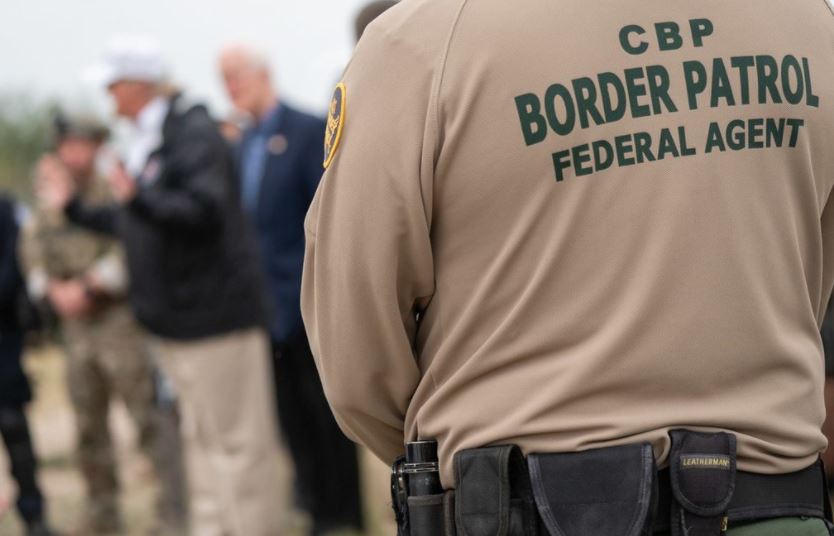
Senators Mark Kelly (D-AZ) and Kyrsten Sinema (D-AZ) championed their work to mitigate the border crisis Monday, highlighting several key provisions they secured in Congress’ annual budget bill. Their press release came the same day as the latest data was published by Customs and Border Protection (CBP), reporting nearly 165,000 illegal border crossings in February: the highest number for that month since 2000. The record high complements the record 154,000 illegal crossings in January. Those numbers fall in line with the Department of Homeland Security (DHS) prediction at the onset of this year that the border crisis would worsen throughout 2022.
None of their provisions included finishing the border wall. As AZ Free News reported last month, the Arizona legislature passed two separate bills to finish the border wall, allocating hundreds of millions to cover the remaining 17 miles. The House and Senate must consider the bills passed by the other before they will go before the governor.
Additionally, suggestions by Governor Doug Ducey presented in draft legislation for Sinema and Kelly were recognized and ignored in part. Ducey’s legislation called for border wall completion, physical barriers, and virtual surveillance; requirement that asylum seekers who have traveled through another country attempt to claim asylum in that country; requirement for asylum seekers to claim asylum at a port of entry; an increase in immigration judges; additional funding for local law enforcement and humanitarian efforts; and a clear declaration by the federal government that the borders aren’t open for immigration except through a port of entry and legal means.
Sinema and Kelly’s acquisitions that fulfilled Ducey’s requests were additional funding for local law enforcement and humanitarian efforts, as well as border security technology which includes virtual surveillance. In addition to their other border infrastructure investments, Sinema and Kelly secured over $2.3 billion.
Sinema emphasized that the billions would allow not only American citizens to be kept safe, but to ensure that the illegal immigrants receive fair and humane treatment.
“These critical resources will help secure the border through improved technology and additional personnel, manage the flow of migrants to keep Arizona communities safe, and provide Arizona nonprofits and DHS the resources needed to ensure migrants are treated fairly and humanely,” said Sinema.
Kelly alluded that there wasn’t a guarantee that further border crisis-related burdens wouldn’t befall Arizona in the future.
“The crisis at the border continues to put a strain on our communities and law enforcement as they work to maintain a safe and orderly process. It’s critical that we are bringing needed technology, personnel, and other resources to improve border security,” said Kelly. “I’ll keep working with my Republican and Democratic colleagues in the Senate and continue pushing the Biden administration to ensure Arizona does not bear the cost of this crisis.”
From 2000 to 2006, the total number of illegal crossings at all borders hovered around one million. Then, from 2007 to 2011, that number dropped steadily from under 900,000 to 340,000. The number of crossings picked up slightly and fluctuated between 300,000 to 500,000 from 2012 to 2018. A sharp spike of 860,000 occurred in 2019, before petering off to 405,000 in 2020.
Corinne Murdock is a reporter for AZ Free News. Follow her latest on Twitter, or email tips to corinne@azfreenews.com.
by Corinne Murdock | Mar 4, 2022 | News
By Corinne Murdock |
In just under 15 days, it will be two years since Trump announced the national emergency over COVID-19: 730 days exactly.
Of all the bills Sinema discussed on social media and in press releases, the resolution to end the national emergency wasn’t one of them. The senator appears to support a state of emergency in perpetuity, though she appeared to support the minimum at the start of the pandemic. Back in March 2020, Sinema touted the concept of “15 days to slow the spread” announced by President Donald Trump. Over the past several years, she has supported all other measures to alleviate people’s economic hardships from forced lockdowns — with the exception of supporting an end for the root cause of those hardships.
Congressman Louie Gohmert (R-TX-01) attempted to pass a similar resolution that would’ve been effective the previous Christmas. That, too, failed.
It is unlikely that the resolution will pass the Democrat-controlled House. Additionally, despite lifting certain masking regulations and pledging to roll back more COVID-related protocols, the Biden Administration promised that Biden would veto the resolution.
Corinne Murdock is a reporter for AZ Free News. Follow her latest on Twitter, or email tips to corinne@azfreenews.com.
by Corinne Murdock | Dec 11, 2021 | News
By Corinne Murdock
Democratic Senators Mark Kelly and Kyrsten Sinema voted against a resolution to nullify President Joe Biden’s mandate that businesses with 100 or more employees get vaccinated for COVID-19 or implement weekly testing.
The only Democrats to vote for the resolution were Senators Joe Manchin (D-WV) and Jon Tester (D-MT). The resolution was sponsored by Senator Mike Braun (R-IN). As AZ Free News reported, it was based on the Congressional Review Act (CRA), which establishes that the House and Senate together may overturn a federal regulation without presidential approval.
The two senators didn’t address their vote against stopping Biden’s vaccine mandate, one that aligned with a majority of their party. A day after that vote, Sinema said that she encouraged all Arizonans to get vaccinated quickly in a post announcing COVID-19 vaccinations through the Phoenix Veterans Affairs (VA).
“We strongly encourage all veterans — and all eligible Arizonans — to get vaccinated as soon as possible,” wrote Sinema.
At the end of October, Kelly asserted that the goal was to “beat” COVID-19 through higher vaccination rates.
“Our mission is to beat this virus. The science and data are clear. Vaccines save lives,” wrote Kelly. “Higher vaccination rates = Mission Success.”
Around that same time, Sinema posted a similar affirmation of the necessity to vaccinate most, if not all, Arizonans.
“Glad to see the continued progress toward returning to normal. We’re encouraging all eligible Arizonans to get the vaccine for our continued health and economic recovery,” wrote Sinema.
Sinema followed up with an urge to vaccinate as many American youths as possible.
“The sooner young Arizonans get vaccinated, the sooner our schools can fully return to safe and effective in-person learning. We strongly encourage all Arizona families to get vaccinated as soon as vaccines are available,” wrote Sinema.
Big COVID-19 Pharma hasn’t spent much on Kelly directly, but they have invested in Sinema.
Pfizer spent over $1 million on Democratic congressional candidates and nearly $860,200 on Republican congressional candidates in the 2020 election. They didn’t donate to Kelly’s campaign directly, but they did donate $10,000 to an affiliated PAC, “BOLD,” which donated $3,000 to Kelly. In fact, Pfizer donated $7,500 to Kelly’s Republican opponent Martha McSally. Pfizer did donate $2,500 to Sinema and $5,000 to her PAC, “Getting Stuff Done.”
Pfizer spent under $360,000 on Republican House candidates versus $288,000 on Democratic House candidates, and $190,386 on Republican Senate candidates versus $75,300 on Democratic Senate candidates. The company did spend more on Democratic campaign committees than Republican ones, by around $22,000.
Johnson & Johnson had similar donation patterns: they didn’t donate to Kelly, but they did donate $4,500 to Sinema. They also donated $10,000 to BOLD.
Johnson & Johnson also donated more to Republicans overall in the 2019-2020 election cycle: $160,500 to Republican committees versus $121,000 to Democratic committees, $214,500 to Republican House candidates versus $211,750 to Democratic House candidates, $67,000 to Republican Senate candidates versus $47,500 to Democratic Senate candidates. The same was true when it came to governors’ associations: the Republican Governors Association received $105,000 compared to $55,000 for the Democratic Governors Association.
Committees for the Republican and Democratic committees for the House and Senate all received $30,000. The company gave $10,000 each to the Democratic and Republican Parties of Arizona ahead of the 2020 election.
Moderna stated as recently as June that they don’t plan on endorsing a political action committee (PAC), and that they wouldn’t engage in partisan donorship for candidates.
Corinne Murdock is a reporter for AZ Free News. Follow her latest on Twitter, or email tips to corinne@azfreenews.com.