by Staff Reporter | Apr 6, 2024 | Education, News
By Staff Reporter |
Flagstaff schools are gearing to update their sex ed curriculum with material introducing gender ideology.
Gender ideology topics, such as gender identity and transgenderism, would be introduced to Flagstaff Unified School District (FUSD) students as young as the fifth grade, per the district’s ongoing review of its Social/Sexual Health Curriculum for grades 2, 5, 7, 9, and 11.
The district last updated their sex ed curriculum in 2006. As the existing curriculum is nearly 20 years old, the curriculum doesn’t include any discussions of gender ideology; rather, the curriculum clearly distinguishes sex education content between the two genders.
A sexual health educator brought in by the district to advise on the curriculum updates — Sydney Tolchinsky with Coconino County Health and Human Services — told the district in a meeting earlier this year that fifth graders could be transgender and not speaking openly about it. That’s why, Tolchinsky advised district officials, schools should leave it up to the students to pick which classroom they attend to receive their sex education.
Under the existing curriculum, sex education classes for grades 5 and 7 occur in gender-segregated classrooms. Coeducational classes don’t occur until grades 9 and 11.
Tolchinsky further advised the district to get rid of gender-based distinctions in lessons in order to be inclusive of transgender students, such as saying “people who have periods” rather than teaching students that only biological females have periods.
“What we’ve started doing is just not having different lessons, we just have the same lesson in both rooms to be really inclusive of all genders, and trying to change our language, instead of saying ‘girls have periods and boys don’t,’ saying ‘people with a uterus are going to have periods most likely and people without a uterus won’t,’” said Tolchinsky. “Sometimes that might mean a boy might have a period and girls might not have a period for a lot of reasons.”
Failing to have a menstrual period as a biological female is a condition known as “amenorrhoea.” Unless a female is pregnant, breastfeeding, experiencing menopause, or underwent surgery to remove the uterus or ovaries, amenorrhea is a sign of a condition warranting medical attention.
Common causes of amenorrhea include major hormone disruptions caused by emotional stress, extreme weight loss, excessive exercise, or reproductive disorders. Untreated, amenorrhea can present many health risks: reduced fertility, increased risk of cardiovascular diseases such as high blood pressure, increased risk of early onset osteoporosis, and premature menopause and aging.
For males, phallic bleeding may indicate a variety of medical conditions: physical trauma, balanitis, prostatitis, urinary tract infection, ruptured blood vessels, infection, a reaction to medications, or even cancer.
Under Tolchinsky’s suggested teachings, students may believe that conditions like amenorrhea or phallic bleeding are normal and not a cause for concern.
FUSD Assistant Superintendent Lance Huffman agreed with Tolchinsky that gender-neutral language eliminating gender differences would be beneficial.
“We might want to shift to ‘people’ language rather than just boys and girls so some people get periods or people with a uterus may and people with a penis will not,” said Huffman.
Arizona doesn’t require schools to teach sex ed at any level. However, the state does require parents to “opt in” with written permission for all grade levels. Should parents opt out, each individual school provides alternative instruction.
In 2021, the legislature approved a bill requiring, in part, parental consent for discussions of gender ideology in sex ed. Then-Governor Doug Ducey vetoed the legislation, critiquing the bill language as “overly broad and vague,” which the governor said would cause misinterpretations by schools and inhibit child abuse prevention education in early grades.
AZ Free News is your #1 source for Arizona news and politics. You can send us news tips using this link.
by Staff Reporter | Mar 26, 2024 | Education, News
By Staff Reporter |
In the Scottsdale Unified School District (SUSD), about half of students preparing to move up into high school understand math.
Only 54 percent of eighth grade SUSD students met proficiency in math per standardized testing, yet the district has further divided precious classroom time into teaching concepts like gender identity and how to successfully disrupt fact-finding dialogue.
Organized SUSD parents, teachers, and community members critical of the district’s academic focus have questioned why their schools continue to branch out into new educational pursuits when the basics remain unmastered. Those parents have gone so far as to criticize the modern content as unacademic.
“Less than half of Scottsdale Unified 8th graders are proficient in math, yet the district continues to approve resources that divert class time away from academics,” stated Scottsdale Unites for Education Integrity (SUEI).
However, SUSD touted their math proficiency percentage as a win during their board meeting last November, since it was technically higher than the 2022 national average of 26 percent and 2023 state average of 27 percent for eighth graders.
Math proficiency steadily declined from grade 3 onward, both in the district and statewide.
The contested concepts of gender identity and disruption of fact-finding dialogue occur within the permitted supplemental district curriculum for social studies (grades 3-12) and digital citizenship (grades K-12). Within these supplemental curriculums, teachers may choose from media literacy lessons on a wide variety of topics. Parents have challenged the necessity of these curriculums for delving into topics like hate speech, climate change, social justice, antiracism, Black Lives Matter, and transgenderism.
SUSD also requires high school students to learn media literacy as part of the “Digital Future” and “American and Arizona Government” courses.
The media literacy curriculum serves as the latest issue to emerge for SUSD community members.
Since increased parental and community scrutiny brought on by the pandemic, SUSD families have been sounding the alarm on their district’s trajectory. Their concerns have yielded various discoveries over the years, many of which have indicated a tendency for the district to keep parents in the dark on major developmental concerns, such as gender identity struggles, and a practice of encouraging minors to explore their gender identity through secretive gender transition plans and sexuality through outlets like GSA clubs.
Last month, SUSD was featured on Parents Defending Education’s list of schools with a gender support plan. SUSD’s gender support plan enables students to embark on a gender transition journey without the knowledge of their parents.
SUSD’s plan appeared to be nearly identical to a version published by Gender Spectrum, an organization advocating for transgenderism in minors. The organization hosted a controversial chat room promoted on the Arizona Department of Education website by former Superintendent Kathy Hoffman.
Gender Spectrum’s top sponsor is Pearson, one of the biggest providers of educational materials internationally.
Other Arizona districts listed by Parents Defending Education as having their own versions of gender support plans were Casa Grande Elementary School District, Creighton Elementary District, Ganado Unified School District, Kayenta Unified School District, Mesa Unified School District, Naco Elementary School District, Osborn Elementary School District, and Tucson Unified School District.
AZ Free News is your #1 source for Arizona news and politics. You can send us news tips using this link.
by Elizabeth Troutman | Mar 20, 2024 | Education, News
By Elizabeth Troutman |
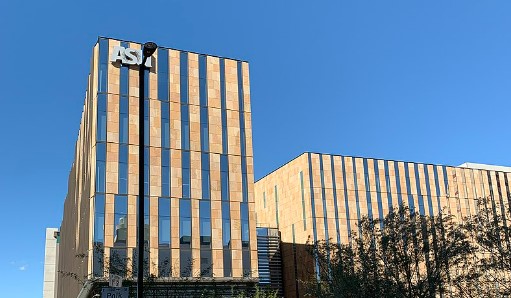
Arizona State University’s journalism school teaches students “cultural sensitivities, civil discourse, bias awareness and diversity initiatives.”
The Walter Cronkite School of Journalism and Mass Communication requires students in at least three of the undergraduate degree programs to take a course called “Diversity and Civility at Cronkite,” the Goldwater Institute uncovered.
ASU’s online course catalog says the class “emphasizes the importance of diversity, inclusion, equity and civility to ensure all Cronkite students feel represented, valued and supported.”
The course “Offers training and awareness on cultural sensitivities, civil discourse, bias awareness and diversity initiatives at the Cronkite School and ASU” and “Empowers students to approach reporting and communication projects with a multicultural perspective and inspire mutual respect among students from various backgrounds and beliefs within different Cronkite professional paths,” the catalog says.
The “Learning Outcomes” on the course syllabus lay out identity categories: “By the end of this course, students will be able to … understand the value of their own and other people’s identities in terms of the work and study at Cronkite.”
The course’s seven units affirm the theme of identity. Units include “Race & Ethnicity,” “Geography and Income,” “Language & Citizenship,” “Sexuality and Gender Identity,” “(Dis)ability,” and “Differences and Conflict.”
The “Race & Ethnicity” unit includes the learning objective “Learn what microaggressions are and why they matter.” The instructor asks students to review a list of “typical microaggressions” published on a University of Minnesota webpage.
Examples of microaggressions include “America is a melting pot,” a statement that demands that people “assimilate/acculturate to the dominant culture;” “There is only one race, the human race,” a statement “denying the individual as a racial/cultural being;” “I believe the most qualified person should get the job,” a statement communicating that “people of color are given extra unfair benefits because of their race;” and “Everyone can succeed in this society, if they work hard enough,” a statement communicating that “people of color are lazy and/or incompetent and need to work harder.”
A week of the course is dedicated to discussing “sexuality and gender identity” to make students:
- Understand the difference between sexuality and gender identity and why it matters.
- Recognize privileges related to sexuality and gender identity.
- Know how to ask for and why to use a person’s pronouns and the benefits of gender-neutral language.
The unit includes an assignment to read an article which defines nonbinary as “a term that can be used by people who do not describe themselves or their genders as fitting into the categories of man or woman,” and Agender as “an adjective that can describe a person who does not identify as any gender.”
Students are asked to demonstrate what they learned about gender ideology by responding to the following prompt:
“Imagine you’re working at a PR firm and you have a client whose first album is about to drop. Your client’s gender identity is nonbinary and they use they/them pronouns. They have a massive press tour planned.
How do you prepare journalists to talk with your client?”
Diversity initiatives at ASU are not limited to the journalism school. Goldwater identified more than 100 classes offered in ASU’s Spring 2024 course catalog that include terms like “diversity,” “equity,” and “inclusion,” or that fulfill the university’s general education requirement in “diversity.”
“To return Arizona’s public universities to their educational missions, it is imperative that the institutions themselves—or the bodies who oversee them—adopt a change in policy to eliminate politicized ‘diversity’ based course requirements such as DCC,” said Timothy K. Minella, senior fellow at the Goldwater Institute’s Van Sittert Center for Constitutional Advocacy.
Elizabeth Troutman is a reporter for AZ Free News. You can send her news tips using this link.
by Corinne Murdock | Sep 21, 2023 | News
By Corinne Murdock |
The Foothills Library plans to host a “He/She/They: Why Pronouns Matter” event next week with funding from the Arizona State Library and Arizona Humanities.
The Arizona State Library is a division of Secretary of State Adrian Fontes’ office; Arizona Humanities is a nonprofit affiliate of the independent federal agency, the National Endowment for the Humanities (NEH).
According to the event summary, the pronouns lecture will focus on defining pronouns, the relations between pronouns and gender identity, and explaining various gender identities. The library rated the event as for adults on their events calendar.
The event is one in a series of “FRANK Talks,” produced in partnership with Arizona Humanities and the Arizona State Library.
There are 14 FRANK Talks topics across categories of Diversity, Equity & Inclusion (DEI); Civics; Education; and Environment. “He/She/They: Why Pronouns Matter” is categorized as a DEI topic, along with:
- “Decolonizing Beauty: Who is Considered Beautiful?”: a critique of the privileges and advantages given to “Western standards of beauty” defined as “blondness, fairness, blue-eyes, and slender figures (in women).”
- “What Does Language Tell Us About Society?”: how to ensure respect and inclusivity in language related to social categories of gender and race.
- “Jocks and Nerds: Stereotypes in Our Everyday Lives”: how to recognize and prevent the stereotypes that lead to both conscious and unconscious, or implicit, biases.
- “The Road to Inequity: Understanding the Wealth Gap”: a historical review of federal policies and discriminatory practices, such as redlining and the “current gender wage gap,” that persist today in the form of social and economic inequities, and how to practice equity (not equality) to counter those systems.
- “Then and Now: What is White Nationalism?” (virtual only): defining and identifying modern white nationalism, or white supremacy, groups and individuals.
- “What Happens When Social Movements and Social Justice Collide?” (virtual only): discussing the importance of social justice movements like Black Lives Matter (BLM), LGBTQ+, and #MeToo, as well as concepts like intersectionality.
The speaker for next week’s pronouns lecture is listed as FRANK Talks host Erick Tanchez. Tanchez is a self-described “Queer Xicano” that identifies both as a “he” and a “they.” Tanchez has served as a program specialist for Maricopa County Community Colleges and president of Equality Maricopa.
Tanchez is an Arizona State University (ASU) alumni, where he served as the executive director of CollegetownUSA@ASU, the college program of the national anti-gun and social justice group, Anytown USA.
Tanchez also hosts speeches for the FRANK Talks topic “Undocumented Americans: Who Gets to Go to College?”, in which he advocates for the equal treatment of illegal immigrants in college admissions.
The other FRANK Talk speakers are Kaari Aubrey, founder of a LGBTQ+ and BIPOC-only digital publishing company and former teacher; Andrea Christelle, vice provost for research at the Navajo Nation’s Diné College, founder of Philosophy in the Public Interest at Northern Arizona University; Derek Keith, a senior project manager at Arizona State University’s (ASU) Learning Enterprise responsible for internal DEI committees and trainings, and a former California educator who incorporated diversity and social justice into curriculum through courses like Social Justice literature; Mathew Nevarez, board member for the Alhambra Elementary School, alumni of AZ Leading For Change Fellowship; Gail Rhodes, PhD student and adjunct professor at ASU, former reporter for Fox Sports Network; Matthew C. Whitaker, founder of the ASU Center for the Study of Race and Democracy; and R.J. Shannon, a community activist with involvement including the founding of Healing Racism, former board membership for the Arizona ACLU, chairmanship and state liaisonship of the local committee for the anti-gun group Moms Demand Action, and planner for an indigenous LGBTQ+ conference.
On Wednesday, Arizona Humanities also hosted “The Art of Drag,” featuring Arizona State University (ASU) English professor and Drag Story Hour president David Boyles to discuss the history of drag and the experiences of modern drag performers.
Corinne Murdock is a reporter for AZ Free News. Follow her latest on Twitter, or email tips to corinne@azfreenews.com.
by Tiffany Benson | Jul 8, 2023 | Opinion
By Tiffany Benson |
Peoria Unified School District (PUSD) Board President David Sandoval and Board Members Bill Sorensen and Melissa Ewing have effectively silenced all women and girls on school grounds.
Despite hearing concerns from countless community members, the trio remains calloused and uninterested in resolving the bathroom crisis. Discussions and actions taken during board meetings tell the story of an agenda-driven district that couldn’t care less about the well-being of its students.
On April 27, 2023, the pro-transgender board members rejected a bathroom policy proposed by Board Clerk Heather Rooks and Board Member Rebecca Hill. This is the same facility usage privacy policy Rooks advocated for at the April 13 board meeting. Essentially, the policy is intended to “ensure student safety and maintain school discipline” by providing administrative guidelines for accessing restrooms, locker rooms, and showers.
Of course, district leadership was always aware that a cross-dressing male student at Liberty High School regularly used girls’ bathrooms for social media photo-ops. By siding with the disturbed teenager, Sandoval, Sorensen, and Ewing lost all sense of moral decency and respect for half of PUSD’s student population.
No one knows exactly when the district started allowing biological males into female spaces. Formal communication was never provided to the public. Thus, parents were forced to wade through rumors and speculation while relying on reports from their children. It’s possible the district concealed this dangerous practice for nefarious purposes.
In December 2022, Executive Director of Education, Christina Lopezlira, received advice from the district’s attorney to inform administrators about “emerging practices for supporting transgender students.” If parents or students object to the new guidelines, Lopezlira wrote that PUSD must “amicably address the competing interests and rights.” By February 2023, Director of Information Systems, Jill Thompson, relayed that the Synergy upgrade included an option to record students’ preferred pronouns.
PUSD’s willingness to hide this information reveals a blatant disregard for the law and a particular disdain for familial bonds. There’s no length the administration won’t go to overthrow parental rights under Arizona’s Revised Statutes. It’s conceivable the district will soon pursue policy guidance on gender transitioning and clinical referrals without parental knowledge or consent.
Before casting her vote on April 27, Hill stated: “I understand we’ve had multiple instances at Liberty High School where a young man has been allowed to enter the girls’ bathrooms based on his claim that he identifies as a female. The fact that the district has allowed these actions to continue unabated—without establishing an accommodation or implementing appropriate consequences—is both irresponsible and unfathomable…”
Rooks followed suit stating that she had listened to multiple concerns from parents and students while district leaders remained silent on the issue. “It’s very disappointing that this has been going on [and] parents were not made aware of it. I think every parent in this district has a right to know what we are doing with their kids…and I think we need to move forward with this policy,” Rooks said.
Ewing justified her opposition, “If you look at our incident reports in [PUSD], and the narrative about assaults in the bathroom, it has not come as the result of a transgender-identified student. There is not a single incident that has happened. And if you look at the nationwide data, that does not show it as well. As board members, we need to be making sure that we are making data-driven decisions.”
It’s unclear whether Ewing was truly unaware or willfully ignorant of the landmark case in Loudoun County, Virginia. In 2021, a male student—who identified as gender fluid and frequently utilized girls’ facilities—sexually assaulted two female students. A grand jury later found district administrators “failed at every juncture” to properly report the violent crimes, and school board members were “deliberately deprived of information” until the second incident occurred.
Sandoval and Ewing maintained that their votes align with Title IX while Sorensen flat out refused to explain his position. During the June 22 board meeting, one parent’s criticisms finally compelled Sorensen to respond, “What I can tell you is that I was convinced that people don’t really want to listen…the end vote is ultimately what mattered.”
Although Sorenson agreed he could have been more transparent during the voting process, he figured that inclusive isn’t a “bad word” and the policy proposed by Rooks and Hill was “too restrictive.”
PUSD is increasingly becoming a dangerous place for children. If the administration can secretly change a student’s pronouns while advocating for shared private spaces, what’s next? Where are the boundaries?
How much control will the majority of the board take from parents and give to the public education system?
For nearly two decades, Tiffany Benson’s creative writing pursuits have surpassed all other interests. When she’s not investigating Kennedy Assassination conspiracy theories, she enjoys journaling and contributing to her blog Bigviewsmallwindow.com. Follow her on Twitter and Truth Social @WritingWoman84.