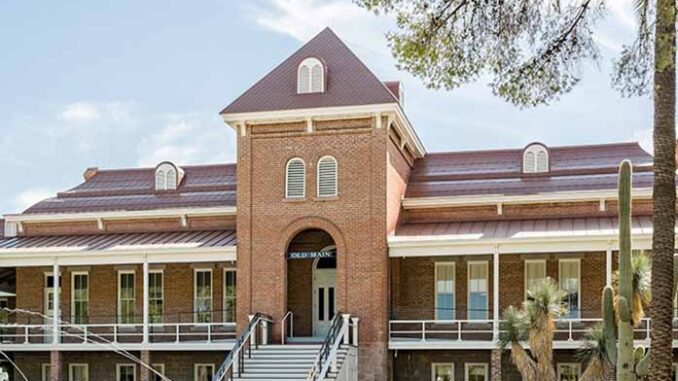
Universities are free to adopt ethics contrary to constitutional values, but they aren’t free from the consequences. This is especially true when the University of Arizona hired me, a Christian apologist to teach government ethics, and then fired me on ethical grounds.
For the last four years, I taught college students the skills of effective moral decision making in a required course titled “Ethics for the Public Administrator.” The students come from majors like law, criminal justice, and political science—many becoming cops, lawyers, and bureaucrats. I have countless emails and evaluations praising me for offering something they never had before: deep thinking on moral issues.
Selecting course content wasn’t easy. At first, I was tempted to model my predecessors by surveying the most popular moral theories like utilitarianism, deontological ethics, virtue ethics, relativism, natural law, and divine command theory so students could select their preferred choice.
However, ethics isn’t something public administrators can choose. They are bound by an oath to protect and defend constitutional values which are based on biblical ethics. So, that’s what I taught.
While constitutional values are based on biblical values, they aren’t the same thing. There are some obligatory commands (loving God and making disciples) and prohibitions (idolatry, blasphemy) that apply only to those who accept biblical theology. However, all values in the Constitution can be traced back to some biblical principle. No other moral theory (or combination of theories) captures the totality of constitutional values like the Bible. This is probably why the Bible was far and away the most cited text by the Founding Fathers when the Constitution was written.
While I always avoided teaching theology in my classroom, part of me worried that administrators may confuse my teaching of biblical ethics with the teaching of biblical theology. Whether this ever was their concern remains a mystery since it wasn’t why I was fired.
To my own surprise, the department director didn’t mention anything about my beliefs or my class content but pointed instead to a financial reason for firing me. After thanking me for my good service to the students, she announced I was being terminated because an unexpected budget surplus allowed them to hire full time tenure track faculty to teach my course instead.
This would be a legitimate reason, if true, but it’s not. Around the same time, the U of A made headlines for just the opposite reason. Just two weeks earlier, the AP reported U of A disclosing a nearly quarter-billion-dollar funding crisis. Needless to say, this historic calamity didn’t cohere with the director’s claim of excess funding. So, I became suspicious and asked if there was anything else that weighed into her decision to fire me. She replied simply, “No, nothing more.”
Unconvinced, I filed a freedom of information request the next day. After a seven-month wait, I enlisted an attorney to compel the university to disclose the truth of what led to their decision. The disclosure showed administrators panicked by two anonymous letters from community members complaining about statements I made at a public school board meeting. The letters alleged that I criticized the LGBTQIA+ community and asked the university to punish me for violating the university’s “values.”
The first anonymous email was sent on October 12, 2023. That same day, a Facebook thread shows three people—a teacher, parent, and school board candidate—plotting to submit their complaint. This was followed two weeks later by a second anonymous email containing similar defamatory claims. This is the true reason I was fired.
No one ever cited evidence of these alleged statements, and the university never asked me about them. They simply ended my employment for constitutionally protected speech I’m accused of making outside of the workplace, and then they lied about the reason.
This problem is much bigger than me or any other persecuted U of A employee. The problem is that there is no longer any ethical standard employed by the university that’s consistent with constitutional values. As I said at the beginning, they are free to embrace another morality, but not free from the consequences.
The university suppresses speech outside the workplace and lies about it. If this behavior accurately reflects the university’s values, we may wonder what kind of ethics they base all other decisions. If not constitutional ethics, what model will they use to operate their institution? Furthermore, what kind of moral system will they teach to future public administrators now that professors teaching constitutional ethics are not allowed? It’s a scary thought.
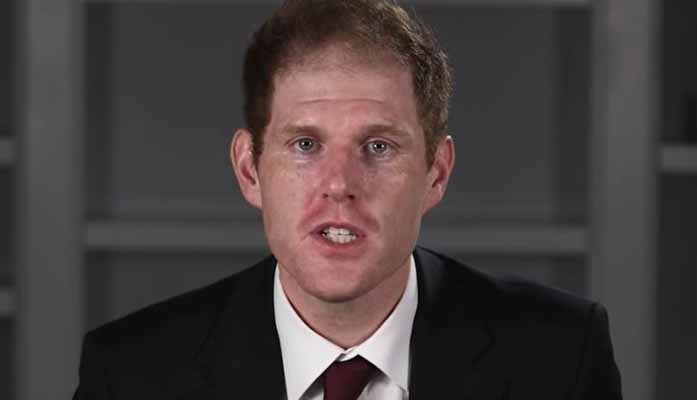
Dan Grossenbach is a 20-year federal criminal investigator, state-certified educator, husband, dad, patriot, and Jesus-follower in Tucson, AZ. You can follow him on X here.
Attorney General Kris Mayes has been asked to investigate the city of Surprise over its alleged violation of one citizen’s free speech rights.
Republican State Senator John Kavanagh sent a letter to Mayes on Tuesday requesting an investigation into the arrest of a Surprise citizen after criticizing the city attorney during a city council meeting last month. The arrested citizen, Rebekah Massie, sued the city of Surprise last week with the aid of Foundation for Individual Rights and Expression (FIRE).
Mayor Skip Hall, who ordered Massie’s removal, cited city policy prohibiting public comment from lodging any “charges or complaints” against city employees or elected officials.
State law requires the attorney general to investigate local governmental ordinances, regulations, orders, or other official actions alleged to be in violation of the state law or Arizona Constitution. Under this law, Mayes’ office would have to issue a written report of their findings within 30 days of receiving the investigation request.
🚨FOR IMMEDIATE RELEASE: Senator Kavanagh Calls on Attorney General to Investigate Potential Free Speech Violations in Public Comment Policy for City of Surprise
In a press release, Kavanagh claimed that the city of Surprise had violated both state law and the Constitution with Massie’s arrest.
“In Arizona statutes, we have a provision that specifically says, ‘[a] public body may make an open call to the public during a public meeting, subject to reasonable time, place and manner restrictions, to allow individuals to address the public body on any issue within the jurisdiction of the public body,’” said Kavanagh. “Protecting freedom of speech, especially in public government settings, is incredibly important to our democracy. Regardless of where they stand, members of the public deserve the opportunity to voice their opinions and concerns to city leaders.”
Kavanagh’s letter to Mayes asked the attorney general’s office to investigate whether the city of Surprise’s policy restricting public speech by prohibiting complaints against city employees and elected officials violates the Arizona Constitution and state law governing public comment within public meetings.
Were Mayes to determine that the city of Surprise’s public comment policy violates state law or the Arizona Constitution, her office would provide notice to the city by mail of its violation and give the city a 30-day deadline to resolve the violation. Should the city fail to resolve the violation, Mayes would notify the state treasurer to withhold and redistribute state shared funds.
Or, were Mayes to determine that the city’s public comment policy may violate certain state law or the Arizona Constitution, the attorney general would file a special action in the state Supreme Court to seek a resolution. The court would then require the city to post a bond equal to the amount of state shared revenues paid to the city in the last six months.
AZ Free News is your #1 source for Arizona news and politics. You can send us news tips using this link.
The people of Arizona deserve elections that are free, fair, transparent, and lawful. As the top election official in our state, Secretary of State Adrian Fontes should be working every day to ensure this happens. And he should be providing an Elections Procedures Manual (EPM) that gives impartial direction to county recorders to ensure uniform and correct implementation of election law.
This shouldn’t be that hard…or controversial.
But Adrian Fontes took it upon himself to produce one of the most radical EPMs in Arizona’s history. In fact, several of the “rules” in his EPM even go as far as to criminalize activity that is protected under the First Amendment—creating an unconstitutional chilling effect on protected political speech. Apparently, Adrian Fontes hasn’t read the United States Constitution or the Arizona Constitution.
Because of this illegal EPM, we sued him. And last week, a Maricopa County Superior Court ruled in our favor, finding that Fontes’ EPM contains speech restrictions that violate the Arizona Constitution, misstatements and modifications of statutes, and failures to identify distinctions between guidance and legal mandates.
So, how did Fontes respond? Did he realize the error of his ways? Will he now properly understand his role and amend the EPM to align with the law? No. Instead Adrian Fontes has responded how you would expect someone to respond when he knows he can’t win. He’s resorted to maligning our organization in the media…
Public records revealed that Maricopa County Recorder Stephen Richer tasked staff with compiling articles and online content pertaining to his personal defamation lawsuit against Kari Lake — Senate candidate and 2022 gubernatorial candidate — as well as topics of personal political interest.
Richer also tasked staff with printing his favorite articles and pieces of online content from these lengthy daily news compilations and organizing them in a binder. Richer admitted in one email obtained by public records that this daily content gathering assignment took a “significant amount of time” for staff to put together.
Richer filed his defamation lawsuit last June against Lake over her claims of him improperly administering the 2022 election. Lake has unsuccessfully petitioned to dismiss his lawsuit; her petition was denied earlier this month.
The county recorder’s staff weren’t just tasked with tracking online chatter about Richer’s personal lawsuit.
Records reveal that Richer has regularly tasked staff with tracking a wide variety of media reports and other online content on topics of personal political interest to Richer, unrelated to the statutory duties of the recorder’s office. This included coverage of other elected officials in Arizona and across the nation; the political landscape for the 2024 election; the indictments against former President Donald Trump; developments in social media; and updates on various public policies.
Some news and online content gathered by staff touched on legal challenges to free speech.
That prompted AZ Free News to ask Richer about the greater nature and purpose of his content gathering assignments, including whether the gathered content inspired, informed, or guided his defamation lawsuit, and why staff hours were dedicated to finding content unrelated to the duties of the recorder’s office.
In response to our questions, a spokesperson defended Richer’s content gathering tasks as consistent with the administration of his predecessors.
“Providing leadership with news clips relating to the office and regarding current events is a standard practice. It has been a practice of this office for the past three years and it was originally implemented by staff from former Senator McSally’s office, where it was a standard practice, who joined the Recorder’s Office in January 2021,” stated the spokesperson. “Recorder Richer values news and being aware of developments within our state and relating to our statutory responsibilities.”
Richer’s office didn’t respond to a repeat of questions left unanswered by their statement: what bearing the content gathered had on Richer’s personal defamation lawsuit leading up to it, and why the recorder tasked staff with compiling news coverage of his personal defamation lawsuit as well as topics of personal political interest unrelated to the recorder’s office.
Richer roping the recorder’s office in on his personal defamation case appears to be related to his interest in securing greater restrictions on free speech. Other emails obtained from public records reflected how Richer began to signal concern over the impacts of free speech on his office in the aftermath of the 2020 election.
In September 2021, the recorder drafted a proposal for greater restrictions on free speech in an unpublished op-ed pitched to The National Review.
Richer argued that free speech restrictions should be expanded, even if the wrongs of 2020 election claims were righted through avenues such as the Dominion Voting Systems’ defamation cases against Fox News and top Trump personalities Rudy Giuliani, Sidney Powell, Patrick Byrne, and Mike Lindell.
Dominion Voting Systems effectively prevailed in their lawsuit against Fox News in 2023, amassing the largest settlement in media defamation history: over $787.5 million.
“[E]ven if Dominion wins all of these lawsuits (and certainly if it does not), it still might be time to revisit our First Amendment jurisprudence,” wrote Richer. “If we don’t, I fear that the morass of disinformation will blanket over legitimate information in all areas of public importance.”
National Review submissions editor Jack Butler rejected the piece over Richer’s proposed restrictions on free speech. Butler encouraged Richer to resubmit the op-ed, sans the call for free speech restrictions; the piece was never published.
“I think we’d still be open to a version of this argument, but that sheds the bits about reconsidering First Amendment jurisprudence,” said Butler. “Even just revising it to express hope that the Dominion lawsuits have their desired effect.”
Although National Review denied the op-ed containing the free speech reform proposal, Maricopa County Community College District (MCCCD) accepted a version Richer drafted for a speech several weeks prior containing a more direct critique of the First Amendment.
In that speech, Richer said that lies and disinformation were the greatest threat to elections and the government; because of that, the recorder characterized the Constitution, specifically the First Amendment, as a “thorn in the side” of his office.
Richer lamented that the First Amendment protects lies, to a certain degree. The Supreme Court ruled this to be the case in their 2012 decision for United States v. Alvarez which pertained to lying about military service, and their 1964 ruling in New York Times Co. v. Sullivan which pertained to deliberate lying about the government.
Certain speech presenting specific harms aren’t protected, such as defamation, fraud, false advertising, perjury, plagiarism, and threats deemed grave and imminent.
However, in that earlier version presented to MCCCD, Richer admitted hesitation to his own desire for First Amendment reforms.
“Yes, I think it’s possible that our First Amendment jurisprudence needs to change,” said Richer. “But I’m hesitant to disrupt something that has served this country so well for so long.”
AZ Free News is your #1 source for Arizona news and politics. You can send us news tips using this link.
A retired educator once told me, “Parents don’t have rights, they have responsibilities.” Considering this viewpoint alongside the comment below, I can’t find any context in which these statements are appropriate.
In the same vein, former state Governor Terry McAuliffe (D-VA) said, “I don’t think parents should be telling schools what to teach.” Not to mention, the National School Board Association incited FBI Director Merrick Garland to declare war against parents.
In light of all the anti-parental rights sentiments infecting our education system, I declare:
Children are an inheritance, a reward, and a gift from God (Ps. 127:3). Therefore, they belong to their parents/guardians, not government employees. If your beliefs run contrary to this truth, then the following commentary was written with you in mind.
Two incidents lead to my discussion on parental rights in education. The first involves backlash I received after posting this flier in a parent group on social media:
Group members were appalled that I used the page to inform parents of their right to choose how their children are educated. One said, “I wonder what teachers would think?” Another member incoherently stated that teachers were being “used as political pons.” (I think she meant “pawns,” but we’ll blame public education for the error). The elementary shoving match in the comment section revealed that my primary opponent was, in fact, a teacher.
I was pitifully accused of being a “political operative” and called out for not focusing on strengthening relationships in the district. Never mind that I’m one of five people willing to attend board meetings. I’m also willing to find common ground with opposing leaders to improve academic success and student safety.
Our Parental Bill of Rights is one radical majority vote away from destruction. So, if giving parents options to circumvent government schools triggers you, then you’re part of the problem.
The second incident occurred on January 25, 2024, when teacher and Peoria Education Association (PEA) President, Trina Berg, requested public comments be moved to the end of the board meeting. Berg stated:
“My request is that we consider, and you have a discussion, and vote on moving public comments to the end of the board meeting. The reason why is because we have business we have to do. And I would appreciate it if we actually came in and did our business first … People still have the ability to speak on whatever they want, but it’s when business is done.”
Wouldn’t you know that public comments were relocated from position 5.1 to position 9.1 at the February 8 board meeting. Peoria Unified School District (PUSD) Board President Rebecca Proudfit — appointed by the financially compromised Maricopa County Superintendent Steve Watson — led the charge in compliance with Berg’s request.
When confronted about moving the comments, Proudfit claimed some teachers were uncomfortable with the atmosphere at PUSD board meetings. She also said the results of a survey — somehow received by educators but missed by parents — favored changing the meeting format. When pressed further about the timing of her decision, Proudfit said, “[Berg] did email me afterwards to say thank you … But I swear I wouldn’t do anything like that just because someone asked me to do it.”
Bear in mind, this is the same Trina Berg who staged an illegal sick out in defiance of the board’s decision to resume in-person learning after the 2020 winter break. District emails reveal that Berg and her co-conspirator, PEA Treasurer Jessica Batty (also a teacher), planned the union-backed catastrophe. At one point, Berg wrote, “[W]e are trying to show that this decision was especially dumb for retention.”
Berg’s shenanigans — which resulted in the closure of 13 schools — disrupted academic progress and left parents without childcare. So, why wasn’t this activist, posing as a teacher, fired?
The statement, “Teachers are not the primary stakeholders in public education,” is true contractually and financially. This is why teachers’ unions exist. Of course, educators typically have children, own property, and pay taxes in their district. But from a business standpoint, certified staff members do not hold revenue-generating positions — they are paid to provide a community service. For clarification: parents (and constituents) are patrons, students are beneficiaries, teachers are public servants.
Without parents and students, teachers wouldn’t have jobs.
When it comes to directing a child’s education, the law clearly identifies parents as the experts. And whether we consider parents “good” or “bad,” their rights are protected under the United States Constitution. The place of a teacher is to transfer knowledge, not propaganda, and foster an environment that’s conducive to learning, not excessive self-expression.
Communist dictator Vladimir Lenin — the man history deems responsible for the death of 10 million people — is credited with saying, “Give me just one generation of youth, and I’ll transform the whole world.” This is the ideological framework of someone who aims to incite rebellion and break family bonds. I implore leftist educators to reject radical approaches to instruction, abandon hypercritical theories, and, instead, work to form an alliance with parents/guardians.
Finally, I commend sensible and honorable educators who practice transparency, partner with families, and build strong support networks for their students. You are the teachers we can entrust with our youth. Now more than ever, your skills and compassion are needed to shape young minds for the betterment of society and secure the future of our nation.
Tiffany Benson is the Founder of Restore Parental Rights in Education, a grassroots advocate for families, educators, and school board members. For nearly two decades, Tiffany’s creative writing pursuits have surpassed most interests as she continues to contribute to her blog Bigviewsmallwindow.com. She encourages everyday citizens to take an active role in defending and preserving American values for future generations.