by Matthew Holloway | Jun 28, 2024 | News
By Matthew Holloway |
In a Monday morning press conference, the Common Sense Institute Arizona (CSI) announced the release of its comprehensive report on “Arizona’s Ongoing Fentanyl Crisis,” for 2024. The prognosis for the state of Arizona is grim with the report detailing the rapidly mounting cost of the fentanyl epidemic in economic terms. From 2015 to 2019 Arizona’s Department of Health Services reported opioid-related encounters in Arizona hospitals skyrocketed from 41,400 to 56,600, an increase of 37%. And the economic cost has leapt to a staggering $58 billion. The US Drug Enforcement Agency has also reported the total seizures of fentanyl in the nation jumped from 6,800 pounds in 2019 to 29,200 in 2024 or by about 320%.
In other key findings published by the Institute, the study found that nationally, the opioid epidemic cost the American people as a whole almost $1 trillion in 2017, with $22 billion of that falling on Arizona alone, and the situation has only become worse in the intervening seven years. Despite the incidence of opioid-related fatal overdoses seeming to peak, they’ve really more plateaued, holding steady at a near all-time high with declines that “have been modest,” and the institute warns “it is premature to assume success in dealing with this crisis.”
Turning to the medically focused economic impact of the crisis the institute cited CDC modeling of economic costs associated with use-disorder and fatal overdose with the Arizona Department of Health Services reporting over 56,600 opioid hospital encounters at a total cost to the state system of $676 million working out to about $12,000 per medical encounter.
Touching tangentially on the Biden administration’s border policies, the report also noted that “border states have begun to experiment with enforcement of border security – a role traditionally filled by federal authorities,” and observed that Texas has allocated over $5 billion toward the border while Arizona’s expenditure peaked in 2022 under Republican then-Governor Doug Ducey at $560 million.
The institute wrote, “Considering these figures through 2023 and based on state-reported changes in the rate of opioid use and overdose, inflation, and other cost changes, CSI estimates that the cost of the opioid epidemic in Arizona reached an all-time high last year – a staggering $58 billion. This is more than double the $22.5 billion estimated by the CDC in 2017 when then-Gov. Doug Ducey declared the opioid epidemic a public health emergency. The surge appears almost entirely attributable to the rise in fentanyl abuse since then, the source of which appears to be Arizona’s porous southern border.”
Glenn Farley, Director of Policy and Research said in a press release sent to AZ Free News, “The fentanyl crisis is not just a public health issue, it’s also a significant economic and social challenge that affects all Arizonans. The $58 billion cost to our economy is staggering and our report aims to provide a comprehensive understanding of the crisis to better inform policymakers and the public on what we are truly dealing with.”
With the increase in border security expenses and the medical fallout being accounted for, the obvious final element is the most prevalent in lower income neighborhoods as well: crime. Fentanyl addiction of course brings medical crisis and death, but first it often brings a rapid downward spiral into crime, misery, family dissolution, homelessness and violence that has touched nearly every family in Arizona and the nation writ large.
The institute explains, “In 2017, then-Gov. Ducey declared opioid misuse a statewide public health emergency. At the time there were 950 fatal opioid overdoses occurring annually. Today, the number is nearly 2,000 fatal overdoses every year. Crime, too, is on the rise – in Arizona and nationally. Since 2014 the violent crime rate in Phoenix has risen 38%. According to estimates, 25%-50% of all violent crimes are drug-related. Homelessness, too, is on the rise – and despite massive investment, resources are mostly targeted towards housing and shelter, even as homelessness is highly correlated with drug abuse and dependence. Police resources in Arizona have failed to keep pace with the rising demands created by the border, drug, and homelessness crises.”
The report concludes with a chilling reminder that the cost of the opioid epidemic in Arizona is still rising, citing “inflation, widespread availability of the drug at very-low street prices, and continued high incidence of opioid use disorder among Arizonans combined.” As an analysis, the report is thorough and comprehensive in all but one respect which an academic finding cannot possibly satisfy and CSI rightly doesn’t attempt: the crushing, devastating, and brutal human cost that only someone who has lost a loved one to this plague can truly understand.
The study does however, conclude on an appropriately cautionary note: “The battle with fentanyl – in Arizona and nationally – is far from over.”
Matthew Holloway is a senior reporter for AZ Free News. Follow him on X for his latest stories, or email tips to Matthew@azfreenews.com.
by Daniel Stefanski | Jun 18, 2024 | News
By Daniel Stefanski |
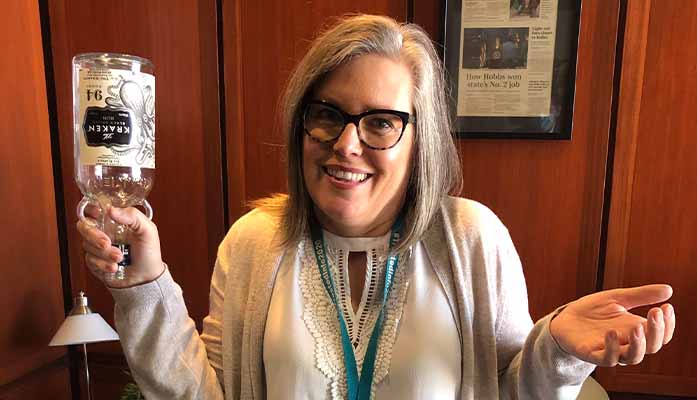
Arizona Republicans again got the better of Governor Katie Hobbs with their second installment of a state budget amid a tenuous divided government.
On Saturday night, the Republican-led Arizona Legislature passed the 2024-2025 state budget and adjourned for the year after finishing its tasks. This latest budget was negotiated between Senate President Warren Petersen, House Speaker Ben Toma, and Democrat Governor Katie Hobbs.
“Following last year’s state budget, where Republican lawmakers provided inflationary relief to everyday Arizonans through $274 million in tax rebates distributed to struggling families, as well as a ban on the tenant-paid rental tax taking effect this January, Republicans are again successfully supporting our hardworking citizens while simultaneously reining in spending,” said Senate President Warren Petersen. “In this year’s budget, we defended more than $520 million allocated last year for much-needed transportation projects statewide. We also cut fees for Maricopa County drivers on emissions testing by 5%, and we banned fee increases on Arizonans from state boards for the next two years.”
House Speaker Ben Toma added, “At a time when Arizonans are having to tighten their financial belts, so is state government. The Arizona House of Representatives has passed a fiscally conservative, structurally balanced state budget that solves the nearly $1.5 billion deficit, without touching the rainy-day fund or using budget gimmickry. The budget trims government and protects conservative priorities. It increases funding for local border support operations and assists fentanyl interdiction efforts by law enforcement. It funds transportation and infrastructure and maintains our state’s commitment to water security.”
According to a press release from the Arizona Senate Republicans Caucus, some of the highlights from the agreed-upon budget included the following:
- Reduction of state spending by $1.7 billion below the 2023-2024 budget (10%);
- Reduction of ongoing spending by $330 million; and
- Addition of $5 million for local border security support and $4 million for fentanyl interdiction and law enforcement response.
The Senate Republicans also noted that their efforts this year produced a budget that did not add any new taxes, tax increases, or debt. Additionally, the budget did not pull dollars from the rainy-day fund, ensuring that the state would have sufficient funds to draw upon should it experience more stormy weather in future years.
“We tightened the state’s belt by trimming fat from state agencies, and we reallocated unspent tax dollars to the general fund to eliminate the deficit, without irresponsibly tapping into our rainy-day fund,” said Senate Appropriations Chairman John Kavanagh. “Most government operations within the state received a healthy and manageable 3.5% reduction in spending, with a few exceptions. Safe communities free of crime and a secure border are the biggest priorities to Arizonans and Republicans alike, and we want to ensure our budget reflects that. As a result, funding for the Department of Public Safety, the Department of Corrections, and the Arizona Auditor General remains intact, while we’re also investing millions in border security, all without raising taxes or creating new debt.”
“Our budget also reflects our support for our citizens’ Second Amendment rights,” said Senator David Gowan, Chairman of the Senate Committee on Military Affairs, Public Safety & Border Security. “We’re funding two full time positions at the Department of Public Safety to address a backlog of concealed carry permit applications and renewals, with a requirement to prioritize Arizona residents first. This move can have a positive impact in our state by ultimately strengthening the safety and security of our communities as our citizens seek avenues to protect themselves, their families, and their private property. Additionally in this budget, we’re infusing crucial dollars into the Critical Access Hospitals (CAH) located in our rural communities, so these residents have convenient access to emergency care.”
Not every Republican was on board with this budget, however. State Representative Matt Gress explained his “no” vote on the most-recent edition, writing, “This year’s [budget] seems more focused on just ‘getting it done’ than ‘doing it right.’ There’s a reason there is bipartisan opposition. This is not a budget that reflects the shared priorities of Arizonans.”
Gress’ fellow Republican colleague in the chamber, Representative Jacqueline Parker, opined, “Literally the ONLY ones saying good things about this budget are Democrats…”
Senator Wendy Rogers weighed in after the vote in her chamber, posting, “This was a solid Republican budget and I voted for it.”
State Representative John Gillette agreed with Rogers’ sentiments, saying, “After a hard fight and two days of voting, we finally passed the 2024-2025 budget with tax cuts and NO new debt. Fiscal responsibility and conservative values prevailed.”
Regardless of their stance on the budget agreement, many Republicans seemed to be excited about the end of another legislative session.
Republicans will now have to make the case to Arizona voters in the all-important November General Election about why they should return to power in the state legislature for another two years in a divided government with Governor Hobbs. Throughout the past two years, Republicans have been mostly united and focused on protecting several of their priorities from the clutches of Democrats eager to dismantle values and principles. That balance of power, though, hangs on a knife’s edge as fall awaits.
Daniel Stefanski is a reporter for AZ Free News. You can send him news tips using this link.
by Daniel Stefanski | May 10, 2024 | Education, News
By Daniel Stefanski |
Arizona’s school’s chief is taking on the state’s fentanyl crisis.
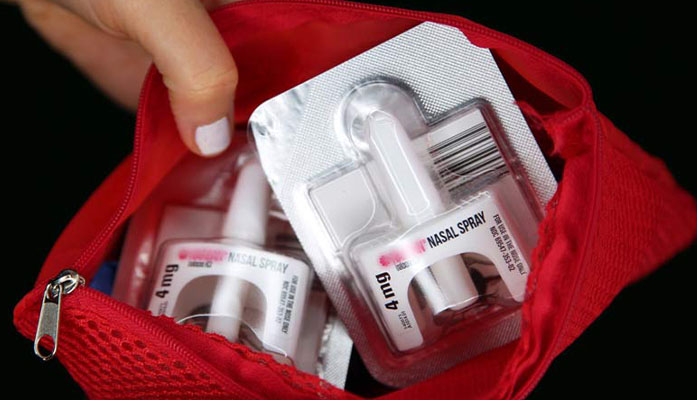
Earlier this week, Arizona Superintendent of Public Instruction Tom Horne announced the creation of “an initiative to supply schools with the anti-overdose drug Narcan and a statewide task force to address this crisis.”
According to the press release issued by the Arizona Department of Education, “among all age groups, Arizona recorded more than 1,800 opioid-related deaths and more than 4,000 overdoses in 2023.”
In a statement to accompany his announcement, Horne said, “Sadly, overdoses are a reality for school-aged children throughout Arizona. Fentanyl can kill students within minutes of an overdose. It is vitally important that all schools have Narcan available to help save student lives if it should happen on campus. With the establishment of the STOPIT task force, we will work to get Narcan into schools and assist with training for its use. I am also endorsing the work of The Sold Out Youth Foundation, which has excellent resources to address this ongoing crisis.”
The School Training Overdose Preparedness and Intelligence Taskforce (STOPIT) “will include representatives from schools, health care, law enforcement and other interested stakeholders,” as per the information received from Horne’s office. Terros Health and the Mayo Clinic have expressed support for the taskforce.
Dr. Holly Geyer, Addiction Medicine Specialist at Mayo Clinic Scottsdale said, “There has never been a greater need to prepare the next generation with the knowledge and tools necessary to combat the opioid epidemic. With more than 50 percent of U.S. fentanyl being trafficked directly through our state, we are ground zero. It’s time to bring solutions as big as the problem to the table. This taskforce has assembled a wide array of proven thought leaders whose collective expertise can and will change the landscape of our state’s opioid overdose trends.”
Dr. Karen Hoffman Tepper, president and CEO of Terros Health said,”Terros Health is honored to join the STOPIT task force. Too many young people are being impacted by the harmful effects of fentanyl. Our team has been on the front lines, educating thousands of Arizonians on when and how to use Narcan and we have seen it save lives. We look forward to working collaboratively to make this life-saving tool available in every school and community.”
In addition to the initiative and task force, Horne also endorsed an effort to get free anti-drug awareness materials into all Arizona schools.” He shared his support of the Sold Out Youth Foundation, which “provides interactive online materials warning of the dangers of illegal drugs, proven Accredited Fentanyl Education Curriculum and online platform and promoting health and wellness and fitness education.”
Sold Out President Roman Gabriel III said, “Sold Out is committed to partnering with K-12 public schools attacking our countries current youth drug, alcohol, and mental health crisis. The SOYF Program is saving lives by equipping school staff, parents and students with a comprehensive program that includes a PLA Accredited Fentanyl Education Platform. The emphasis is on education and awareness for parents and students to understand the grave dangers that this deadly poison poses, and in turn saving lives.”
The Republican Superintendent added, “The American Medical Association reports that overdose deaths nationally among adolescents has doubled since 2019. Fentanyl is responsible for more than three-quarters of those deaths and Arizona is not immune from this scourge. The rise of illicit fentanyl and its trafficking via social media is having a disproportionate impact on our children. This is a tragedy beyond words, it shows no sign of abating and schools are a vital resource to educate children on these dangers.”
Daniel Stefanski is a reporter for AZ Free News. You can send him news tips using this link.
by Corinne Murdock | Jan 20, 2024 | News
By Corinne Murdock |
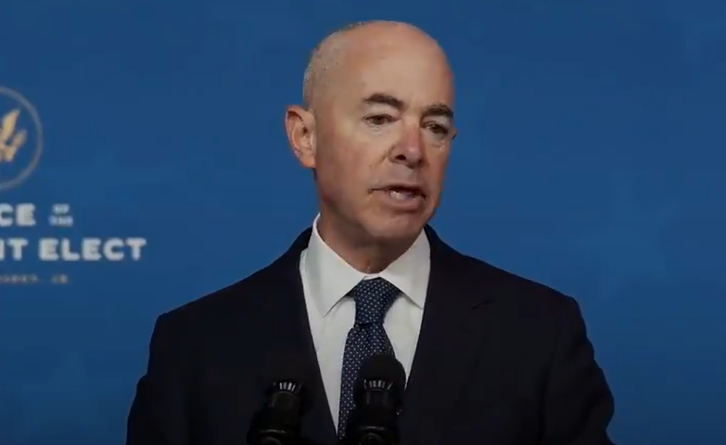
A Prescott mother blames Department of Homeland Security (DHS) Secretary Alejandro Mayorkas for her daughter’s death.
In testimony to Congress on Thursday, Josephine Dunn explained that her daughter, Ashley, overdosed from fentanyl trafficked through the border in May 2021. Dunn testified on the day that would have been her daughter’s 29th birthday. Mayorkas declined to appear for that hearing.
“In my humble opinion, Mr. Mayorkas’ border policy is partially responsible for my daughter’s death. His wide-open border policy allows massive quantities of poisonous fentanyl into our country. Arizona is the fentanyl superhighway into the United States,” said Dunn. “We need to close the fentanyl superhighway; we need to close the border.”
The border crisis initiated under President Joe Biden ushered in a tidal wave of fentanyl trafficking. The surge in overdoses and deaths from the potent drug has resulted in its classification as an epidemic.
The fatal overdose of Dunn’s daughter prompted several attempts to pass an eponymous law in the state legislature, the Ashley Dunn Act, to charge drug dealers with homicide if their product contributed to the death of a user. State Rep. Quang Nguyen (R-LD01) carried the law both times.
Lawmakers have shot down the bill during both the 2022 and 2023 sessions. Some have contended that the law would be unconstitutional since it allows homicide charges for individuals whose actions weren’t a direct cause for the victim’s death. Former users also have argued that such a bill would strip accountability from the users themselves. Proponents argued that it would result in fewer drug deaths and deter distributors from selling lethal drugs.
In response to Dunn’s testimony, Rep. Eli Crane (R-AZ-02) noted that the current Biden administration tasks Border Patrol with taking in and taking care of illegal immigrants more so than preventing illegal migration.
“The Biden Admin has tied the hands of our Border Patrol and sabotaged our national security,” said Crane. “The money the Biden Admin is requesting for ‘border security’ would be used to process more aliens into our communities NOT for protecting Americans.”
According to Maricopa County, fentanyl constitutes 60 percent of all drug-related deaths and has become the deadliest drug in the state.
In 2023, the Arizona Department of Health Services (AZDHS) documented over 1,600 confirmed opioid deaths in the state and over 4,000 non-fatal opioid overdoses. So far, the data indicates that there were less deaths than there were in 2022 and 2021, which had over 1,900 and over 2,000 opioid deaths respectively, but more overdoses: there were just over 3,400 opioid overdoses in 2022 and just over 3,700 overdoses in 2021.
Naloxone, the overdose reversal drug, was administered nearly 6,000 times this past year compared to over 8,000 times in 2022 and over 7,100 times in 2021.
However, AZDHS noted that the data may not be complete for the months of September through December of last year.
Corinne Murdock is a reporter for AZ Free News. Follow her latest on Twitter, or email tips to corinne@azfreenews.com.
by Daniel Stefanski | Dec 26, 2023 | News
By Daniel Stefanski |
The U.S. government obtained a guilty plea in its prosecution over a case of fentanyl possession across the southern border.
Earlier this month, the U.S. Attorney’s Office for the District of Arizona announced that Nathan Hernandez, a 20-year-old from Yuma, had “pleaded guilty to Possession with Intent to Distribute Fentanyl.” The Office revealed that Hernandez would be sentenced before U.S. District Judge Michael T. Liburdi, who was appointed by President Donald J. Trump, on March 25, 2024. This conviction, per the government’s information, “carries a maximum penalty of 20 years in prison and a fine of up to $1,000,000.”
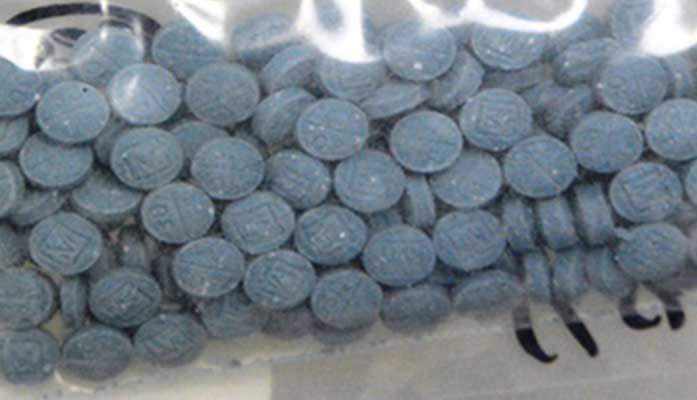
According to the press release from the U.S. Attorney’s Office, “Hernandez admitted that on November 3, 2023, he entered the United States through the San Luis Port of Entry in San Luis, Arizona, with 115.04 pounds of fentanyl pills hidden in a non-factory compartment of his 2020 Dodge Ram.” The young man also confessed that “he possessed the fentanyl with the intent to deliver it to another person.”
Data from the U.S. Sentencing Commission in 2021 showed that 86.3 percent of fentanyl drug trafficking convictions were U.S. citizens, while 8.9 percent of convictions were illegal immigrants and 4.3% for legal non-citizens. The vast majority of fentanyl seizures occur at ports of entry or vehicle check points – 91 percent. However, with the overwhelming number of ‘gotaways’ and the strategic abilities of cartels and smugglers to evade detection with their loads, the amount of illicit drugs escaping detection wouldn’t likely be known to government officials.
In 2022, The Washington Post published an article about the proliferation of fentanyl from Mexico to the United States, citing estimations from unnamed federal drug agents that “they are seizing 5 to 10 percent of the drugs coming from Mexico – if that much.” The article also stated that “agents say it has been nearly impossible to stop fentanyl trafficking” at the border.
Daniel Stefanski is a reporter for AZ Free News. You can send him news tips using this link.