Arizonans will have the final say on whether drug cartels should be classified as terrorist organizations under state law, following the passage of House Concurrent Resolution 2055 by the Arizona Legislature. The measure, championed by House Speaker Steve Montenegro (R-LD29), will appear on the November 2026 general election ballot.
The resolution calls for the state of Arizona to formally recognize transnational cartels as terrorist organizations and directs the Arizona Department of Homeland Security to use every available tool to combat their operations. If approved by voters, the designation would not carry federal legal weight but would signal Arizona’s position on the issue and potentially influence state-level enforcement priorities.
“These cartels run brutal, organized operations that traffic women and children, flood our streets with fentanyl, and kill without consequence,” said Speaker Montenegro. “Arizona is on the frontlines of a war…By sending it to the ballot, we’re putting the decision where it belongs—with the people.”
Supporters of the measure say it reflects a growing public concern about border-related crime, fentanyl overdoses, and human trafficking. According to statistics cited by the resolution’s backers, U.S. Customs and Border Protection encountered 282 individuals on the terrorist watchlist at the southern border from 2021 to 2023—a sharp increase compared to previous years. Meanwhile, fentanyl seizures and related overdose deaths continue to climb.
The proposed ballot measure is part of the House Republican Majority Plan, which emphasizes border security and law enforcement. GOP lawmakers argue that Arizona must act independently to address what they see as federal inaction on border issues.
“House Republicans are taking action to protect Arizona,” Montenegro said. “We trust voters to make their voices heard and stand with us in this fight.”
Proponents insist that the measure would send a strong message and help marshal additional state resources to combat cross-border crime. Voters will weigh in on the measure during the 2026 election. If passed, Arizona would become one of the first states in the nation to define international cartels as terrorist groups under state law.
Jonathan Eberle is a reporter for AZ Free News. You can send him news tips using this link.
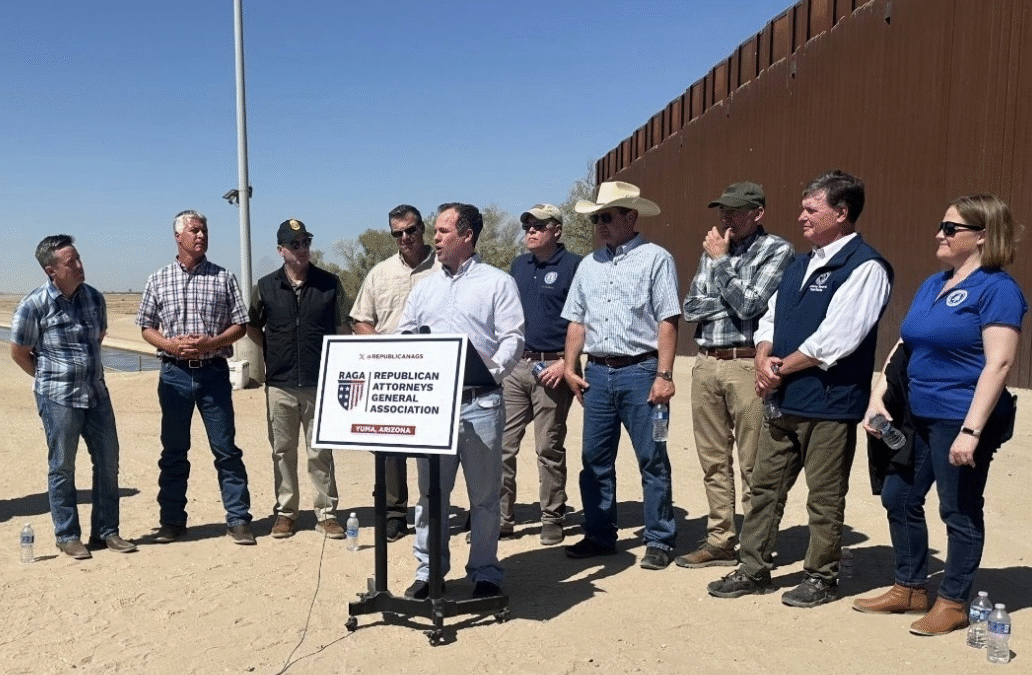
Arizona Senate President Warren Petersen recently led a delegation of nearly a dozen state attorneys general and local law enforcement officials to the U.S.-Mexico border, aiming to assess conditions on the ground and observe changes in federal immigration enforcement.
The bipartisan delegation, which included state attorneys general from as far away as Indiana, Mississippi, and South Dakota, met with local police, government leaders, medical professionals, and nonprofit organizations to get a clearer picture of the current border environment.
According to Petersen, the group found dramatically reduced migrant crossings, fewer than five per day in some areas, a stark contrast to the thousands reported daily in previous years. Officials attributed the drop to a return to stricter immigration enforcement policies, including the end of the “catch and release” practice and increased prosecutions under the U.S. Department of Justice.
“For the first time in recent history, most Americans say the country is on the right track,” Petersen said in a statement. “We didn’t need a new law. We just needed a new president to enforce the laws already on the books.”
Petersen framed the visit as a testament to the Arizona Legislature’s support for enhanced federal enforcement at the border. He emphasized the state’s continued commitment to addressing cross-border crime and public safety.
Other officials echoed Petersen’s message, citing improvements in morale among border agents and the impact of reduced immigration on state-level services.
Utah Attorney General Derek Brown linked the border situation to fentanyl trafficking, which he said has contributed to thousands of overdose deaths in his state. Mississippi Attorney General Lynn Fitch also referenced her office’s work with ICE through the 287(g) program, calling President Trump’s policies essential for restoring border integrity.
South Dakota Attorney General Marty Jackley and South Carolina Attorney General Alan Wilson both emphasized the criminal aspect of illegal immigration. Wilson, calling the previous administration’s approach “reckless,” said, “Every state is now a border state, and South Carolina is no exception.”
Local law enforcement also played a key role in the visit. Yavapai County Sheriff David Rhodes described the tour as a valuable educational tool for law enforcement across the country, citing the challenges posed by human and drug smugglers.
Yuma County Sheriff Leon Wilmot and County Supervisor Jonathan Lines, who hosted the delegation, expressed gratitude for national support. “We are grateful to again have officials in the White House who understand our plight,” said Lines. “Together, we are making a difference for residents of the border communities.”
Jonathan Eberle is a reporter for AZ Free News. You can send him news tips using this link.
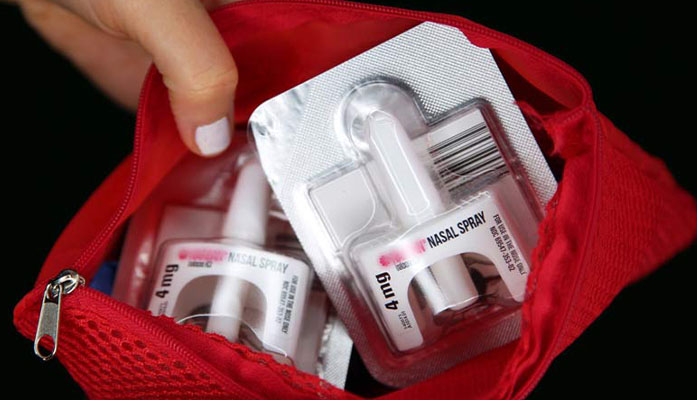
Arizona schools received over 4,000 overdose kits this past week, contributing to the thousands they have and will continue to receive.
The Arizona Department of Education (ADE) supplied the Narcan kits through its School Training Overdose and Intelligence Taskforce (STOP-IT) initiative.
In a press release, State Superintendent of Public Instruction Tom Horne hailed the kits as “lifesaving,” and pledged for more to be coming.
“The results have been excellent and represent my ongoing commitment to the health and safety of school-aged children,” said Horne. “They are to be congratulated for doing a tremendous amount of work in a short time and getting tangible results that will help protect children. We are grateful to the 20 medical societies, government agencies and state programs that have signed a letter of support promoting the integration of STOP-IT resources into our schools.”
Apart from this latest installment, ADE has supplied about 4,400 kits to 144 education agencies across the state.
Horne launched STOP-IT last May to supply the kits to schools. Last November, ADE announced that it began deliveries of over 16,000 kits in coordination with the Arizona Department of Emergency & Military Affairs (DEMA).
Schools signed up for these Narcan overdose kits through ADE’s online form after receiving permission from their districts.
ADE pledged to continue replenishment of overdose kits to ensure schools’ continued ability to handle opioid emergencies.
Nearly 60 percent of all fentanyl in the country comes through Arizona. Maricopa County maintains the second-highest overdose death rate among youth, according to Horne.
“Within the past three years, overdoses rose to the third leading cause of death in youth under age 18,” said Horne. “And according to the Department of Health Services, our state has recorded more than 1,300 non-fatal overdoses and 224 deaths in our kids since 2017. Those figures represent tragic situations for children and their families. As a state, we must do as much as possible to combat this scourge, which is why I am so proud of the meaningful progress made by the STOP-IT taskforce.”
Arizona reported over 1,900 opioid-related deaths and over 4,000 overdoses in 2023. 26 of those opioid-related deaths were among minors (those under the age of 17).
Last year, AZDHS recorded over 3,900 non-fatal opioid overdoses and over 1,300 confirmed opioid deaths. Total non-fatal overdoses among minors amounted to 94. Overdose deaths among minors for this year amounted to less than 10.
In partnership with ADE to make STOP-IT possible are the Arizona School Resource Officers Association, Arizona Counter Drug Task Force, Arizona School Administrators Association, Arizona Association of School Business Officials, Arizona Department of Health Services, Arizona School Boards Association, Arizona Society of Addiction Medicine, Arizona School Counselors Association, Arizona Chapter of the American College of Physicians, Arizona Association of School Psychologists, Arizona Health Care Cost Containment System, Arizona Interscholastic Association, Arizona Nurses Association, Arizona Medical Association, Arizona Chapter of the American Academy of Pediatrics, Arizona Chapter of the National Safety Council, National Association of School Nurses, School Nurses Association of Arizona, and the Substance Awareness Coalition Leaders of Arizona.
AZ Free News is your #1 source for Arizona news and politics. You can send us news tips using this link.
Border security was again a hot topic on the first day of the Arizona Legislative session for 2025.
Arizona Governor Katie Hobbs gave her State of the State address on Monday and discussed the issue of border security during her speech. Hobbs said, “A truly thriving economy means security for our families and neighbors. That’s why safe communities are a core pillar of the Arizona Promise and why I’ve made border security a top priority… We must remain vigilant in protecting Arizonans from the cartels who seek to do us harm. The fentanyl crisis is one of the greatest threats to public safety in our state’s history and requires a collaborative approach across state, local, and federal governments. When we work together, we protect Arizona families. I will continue working with this legislature to protect our border because until all Arizonans feel secure in their communities, we will not be able to deliver on our Promise of freedom and opportunity.”
Republicans were not amused by the governor’s comments, highlighting the many times she has opposed efforts to secure the border and protect Arizona communities from the harms and dangers wrought by illegal immigration. Arizona Senate President Warren Petersen said, “When the Governor promised to prioritize border security last year, her actions did not match her words. She vetoed our border bills. But, the voters spoke loud and clear last November. They want their government to enforce the law and secure our open border. We will support President Trump and our law enforcement in their efforts to protect Arizonans from the crime pouring into our communities and jeopardizing our national security.”
Senate President Pro Tempore T.J. Shope added, “If the Governor or any other elected leaders choose to stand in the way…get ready for court. The Republican-led Arizona Legislature vows to uphold the rule of law, and we will exhaust all legal options to ensure the chaos we’ve lived for the past four years comes to an end.”
Late last year, Hobbs released an ambiguous post on her official X account, indirectly taking aim at the Trump administration’s forthcoming actions on the border after his momentous victory over Vice President Kamala Harris in the historic November General Election. She said, “Securing our border is not a red issue or a blue issue. It’s an Arizona issue and an American issue. I’ll work with anyone to secure our border while standing up to misguided policies that attack Arizonans.”
Thus far in her administration, Hobbs has resisted most attempts by Republicans to maximize Arizona’s resources and laws to better protect communities against the harms from illegal immigration. That resistance led to state legislative Republicans sending a border security ballot measure to voters this past November – Proposition 314, which gave local law enforcement more tools to combat illegal immigration across the state. Arizona Republicans are expected to continue to search for ways to assist the Trump Administration to stop the flow of illegal immigration into and through their state over the next two years.
Daniel Stefanski is a reporter for AZ Free News. You can send him news tips using this link.
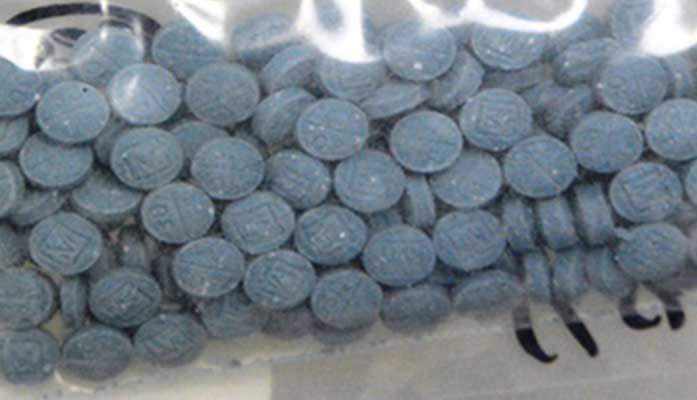
The Buckeye Police Department announced the seizure of 8,000 fentanyl pills and the arrest of four people in connection with a traffic stop near Yuma Road and Verrado Way. The lethal fentanyl M-30 pills were seized when a Buckeye police officer observed an SUV committing several traffic violations and initiated a pull-over. According to a statement from the department posted to social media, the officer determined that the driver of the vehicle had a suspended driver’s license and some of their passengers had active arrest warrants.
A search of the vehicle revealed eight bags containing 1,000 of the deadly pills each. All four occupants were placed under arrest.
Buckeye Police reporting shows that drug/narcotic offenses were down in 2023 compared to 2021 figures but are trending upward after a multiyear low in 2022. Behind theft/larceny and destruction of property, drug related charges represent approximately 12% of the city’s overall crime.
As reported by AZ Free News in June, the Common Sense Institute Arizona (CSI) released a comprehensive report on “Arizona’s Ongoing Fentanyl Crisis,” for 2024. The grim findings revealed that opioid-related encounters in Arizona hospitals leapt from 41,400 to 56,600 or approximately 37% from 2015-2019, and the DEA seized enough fentanyl in the state of Arizona to kill every resident fourteen times over. From 2020 and 2022, Fentanyl seized by the Arizona Department of Public Safety (DPS) increased 665% from 239 to an estimated 1,828 pounds, CSI stated, citing data shared by DPS. National seizures of fentanyl reported by the U.S. Drug Enforcement Agency increased by 320% from 6,800 pounds in 2019 to 29,200 in 2024.
🚨 The DEA seized enough fentanyl in Arizona alone to kill every Arizonan 14 times over, if the seizures were of pure fentanyl and assuming a potentially fatal dose is at least 2 mg.
— Common Sense Institute Arizona (@CSInstituteAZ) June 25, 2024
In the DEA’s National Drug Threat Assessment 2024, the agency reports that, “Fentanyl manufactured by the Mexican cartels is the main driver behind the ongoing epidemic of drug poisoning deaths in the United States… China-based chemical suppliers are the main source of the chemicals used in the production of illicit fentanyl.”