The McCain Institute’s Freedom for Political Prisoners Initiative (FPPI) praised President Donald Trump’s newly signed Executive Order on Strengthening Efforts to Protect U.S. Nationals from Wrongful Detention Abroad.
The order establishes a groundbreaking “State Sponsors of Wrongful Detention” designation, empowering the U.S. Department of State to impose sanctions, visa restrictions, export controls, foreign assistance cuts, and travel bans on nations that systemically detain Americans and other foreign nationals for political leverage.
By codifying tools long advocated by advocates like the FPPI, the order transforms wrongful detention into a strategic liability for offending states, potentially aiding negotiation for the release of detainees and preventing future abductions.
Ambassador Roger D. Carstens, inaugural Senior Distinguished Fellow of the John McCain Freedom for Political Prisoners Initiative and former Special Presidential Envoy for Hostage Affairs (SPEHA) said, “I am grateful to see the Trump Administration’s new executive order creating a ‘state sponsor of wrongful detention’ designation that can be levied against those who would take our citizens unjustly. This executive order starts to codify the very tools we have long advocated for—tools that, for the first time, make wrongful detention a strategic liability for any state. We’ve moved from response to prevention; now, with sanctions and designations in place, deterrence is real—and it’s backed by the full force of U.S. policy. We need to keep doing more to impose even harsher deterrence on countries who dare to wrongfully take Americans and hold them hostage.”
The executive order authorizes the Secretary of State to label a foreign government as a “State Sponsor of Wrongful Detention” if it engages in or supports such practices, including detentions on its soil or failures to release confirmed wrongful detainees after U.S. notification.
Designations can be lifted only if the government releases detainees, enacts policy changes, and offers credible assurances against recurrence.
Secretary of State Marco Rubio addressed the measure in a press statement, declaring, “Anyone who uses an American as a bargaining chip will pay the price. This administration is not only putting America first but also putting Americans first.”
The initiative comes amidst a global crisis, where at least 30 American citizens are currently wrongfully detained in countries such as Iran, Venezuela, Eritrea, Syria, and Afghanistan.
Sarah Moriaty, a member of the FPPI Advisory Board and the daughter of a former FBI agent who was wrongfully detained by Iran in 2007, later dying in custody, said, “We have watched in horror as the practice of taking American citizens hostage as political leverage has not only escalated but run rampant by the acts of many rogue nations.”
Ethan Faverino is a reporter for AZ Free News. You can send him news tips using this link.
Australia-based energy firm Woodside announced Monday plans to invest $17 billion in a new liquefied natural gas export facility to be sited in south Louisiana. Company CEO and Managing Director Meg O’Neill said the Louisiana LNG facility represents the single largest greenfield energy project investment, and the largest foreign direct investment in the state’s history.
In a release, the company said the project will support 15,000 jobs during the construction phase and, when completed, will sport a total export capacity of more than 27 million tons per annum of LNG. Originally named the Driftwood LNG project by previous owner Tellurian, Woodside acquired the project in 2024 for just $900 million.
The timing of Woodside’s announcement on Monday, which represented the 99th day of President Donald Trump’s second administration, serves to symbolize the impressive success the President and his senior appointees have had in completely changing the energy and climate policy debate in the U.S. across their first 100 days. Nowhere has this sea change in policy been more obvious than as it relates to the LNG export industry.
When Trump was sworn into office on January 20, America’s LNG sector had spent the previous 358 days as a target of demonization by former President Joe Biden and his senior officials. That stemmed from the decision by the White House to implement a so-called “pause” in permitting of new LNG facilities like Louisiana LNG on January 27 last year. Prior to last November’s election, that pause appeared destined to become a permanent feature of federal policy had Kamala Harris won the presidency.
President Trump canceled the Biden pause with a Day 1 executive order, and the industry has since resumed the pace of rapid expansion that had made it one of America’s great growth industries prior to Biden’s irrational move last year.
The resumption of the LNG industry’s rapid growth path is just one of many success stories which Trump’s energy team of Interior Secretary Doug Burgum, Energy Secretary Chris Wright, and EPA Administrator Lee Zeldin can point to at the end of this first 100 days time period.
At Interior, Secretary Burgum can point to his efforts to return the federal oil and gas leasing program to normal order both onshore and offshore after four years of its being held hostage by Biden’s Interior Secretary Deb Haaland. He can also highlight last week’s announcement detailing efforts to speed up permitting approvals related requirements under the Endangered Species Act, the National Environmental Policy Act, and the National Historic Preservation Act.
Zeldin is able to point to his effort to freeze $20 billion in highly questionable grants awarded by his predecessor, Michael Regan, during the final days of the Biden presidency, and claw them back a major savings. He has also embarked on a study focused on the potential reversal of the Obama EPA’s endangerment finding on greenhouse gases, a finding that classifies carbon dioxide, the fundamental building block for all life on Planet Earth, as a pollutant which can be regulated under the Clean Air Act. A successful reversal of that finding could lead to the restoration of honesty in air quality regulation and a focus on elimination of real pollution, which was the intent of the law as it was passed by congress.
Secretary Wright has less ability to directly impact regulatory polices to the nature of his job, but he has become the most effective spokesman for commonsense energy policies to ever hold the Energy Secretary position. He has not shied away from taking on controversial topics, like the need to revitalize the nation’s coal industry to take advantage of America’s enormous wealth of that resource. Wright has also been very blunt and effective in highlighting the role the wind industry has played in forcing consumer utility costs up to all-time highs under the Biden administration.
Taken as a whole, it is hard to imagine a more impactful 100 days related to energy and climate policy than this administration has achieved. Trump’s legion of critics won’t agree with the direction he and his appointees have taken, but they can’t honestly claim they aren’t producing major results. For Trump and his team, it is a simple case of promises made, promises kept.
David Blackmon is a contributor to The Daily Caller News Foundation, an energy writer, and consultant based in Texas. He spent 40 years in the oil and gas business, where he specialized in public policy and communications.
President Donald Trump issued an executive order on Monday ordering an end to in-state college tuition for aliens — the very policy endorsed by Republican gubernatorial candidate Karrin Taylor Robson.
Robson advocated for the passage of Proposition 308 in 2022: the proposition extending in-state tuition rates to illegal aliens protected from deportation by the Deferred Action for Childhood Arrivals (DACA) program, usually referred to as “Dreamers.”
Robson was featured in a commercial by “Yes on 308” advocating for Proposition 308’s passage. Robson argued Dreamers provided a fiscal benefit to the state.
“It will improve Arizona’s economy by keeping skilled workers here in Arizona – kids we’ve already invested in for years, with zero tax increase,” said Robson.
Robson also signed onto a letter alongside over 50 Arizona Republican leaders advocating for aliens as critical members of the workforce.
Proposition 308 passed narrowly thanks to millions in dark out-of-state funds.
Trump’s executive order ordered an end to these college tuition benefits, claiming these and other similar policies qualified as unequal treatment of Americans. Trump directed Attorney General Pam Bondi and Secretary of Homeland Security Kristi Noem to end state and local laws, regulations, policies, and practices which favor aliens over American citizens.
The Attorney General, in consultation with the Secretary of Homeland Security and appropriate agency heads, shall identify and take appropriate action to stop the enforcement of State and local laws, regulations, policies, and practices favoring aliens over any groups of American citizens that are unlawful, preempted by Federal law, or otherwise unenforceable, including State laws that provide in-State higher education tuition to aliens but not to out-of-State American citizens that may violate 8 U.S.C. 1623 or that favor aliens in criminal charges or sentencing.
Of note, Trump endorsed both Robson and her Republican primary opponent, Congressman Andy Biggs. Dual endorsements aren’t rare for the president, though Trump’s endorsement of Robson occurred prior to Biggs entering the race.
Arizona Republican leadership opposition to Robson’s campaign prompted Robson to unregister as a lobbyist earlier this year.
Shortly after Trump’s executive order, Biggs backed the move to end in-state tuition for Dreamers. The congressman also cited his support for a bill by Congressman Paul Gosar to prevent illegal aliens from receiving benefits restricted to American citizens.
“President Trump is right – US citizens shouldn’t pay more for college tuition than illegal aliens,” said Biggs. “I stand with President Trump on securing the border and ending policies that incentivize illegal immigration.”
President Trump is right – US citizens shouldn’t pay more for college tuition than illegal aliens.
I have supported legislation sponsored by @DrPaulGosar to clarify federal law and ensure illegal aliens don’t get benefits that Americans don’t.
Arizona’s legalization of in-state college tuition for illegal aliens resulted in the increased influence of dark money operations. These opaque cash flows have funneled into scholarship programs offered by the state’s universities.
Arizona isn’t the only state to grant this privilege to aliens. About half of the country and the District of Columbia also allows illegal aliens to pay in-state tuition for public colleges and universities including California, Colorado, Connecticut, Florida, Hawaii, Illinois, Kansas, Kentucky, Maryland, Massachusetts, Minnesota, Nebraska, Nevada, New Jersey, New Mexico, New York, Oklahoma, Oregon, Rhode Island, Texas, Utah, Virginia, and Washington.
AZ Free News is your #1 source for Arizona news and politics. You can send us news tips using this link.
For the past decade, our organization has been fighting the Green New Deal agenda in Arizona, working to score a decisive victory for reliable and affordable energy. Thanks to President Trump, that decisive victory now appears within reach.
Earlier this month, President Trump released three new executive orders and one proclamation, all aimed at unleashing American energy abundance. These executive actions are all part of a coordinated White House effort to initiate a tidal shift in the ever-steady march toward the Net Zero nightmare being pursued by radical environmentalists, the green industrial complex, and public utilities across the nation.
For years, energy regulators have forewarned of the impending grid crisis due to the overreliance on costly renewable energy, yet the previous administration only accelerated the catastrophe. The new Trump Executive Orders, coupled with his declaration of a National Energy Emergency, will directly address this crisis by ending the regulatory discrimination against coal, empowering the domestic mining of coal resources, encouraging the development of coal energy generation, and allowing for these activities to take place on federal lands.
Reigniting the American coal industry couldn’t happen soon enough. While China and India are building new coal plants at unprecedented rates to power their economic growth, we have been aggressively shutting our plants down…
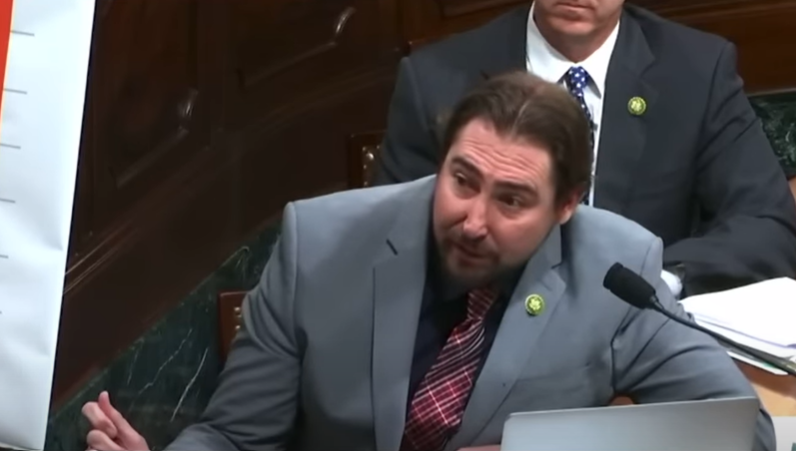
Arizona Republican Congressman Eli Crane (R-AZ-02) celebrated President Donald Trump’s Executive Order using emergency authority to keep the Cholla Power Plant in Navajo County in operation.
“While most politicians ignore the will of We the People, President Trump takes decisive action. By saving the Cholla Power Plant from imminent closure, hardworking Arizonans will maintain their jobs and livelihoods,” Rep. Crane said in a statement. “For years, radical environmentalists tried to destroy the once thriving coal industry. Under President Trump’s leadership, those days are officially over. This is a huge win for Navajo County, and I applaud the President and his team for delivering.”
In a statement signing the Executive order Trump said, “I am instructing Secretary Wright to save the Cholla coal plant in Arizona, which has been slated for destruction. We’re going to keep those coal miners on the job. We’re going to have that plant opening and burning beautiful, clean coal in a very short period of time.”
The text of the Executive order stated, “America’s coal resources are vast, with a current estimated value in the trillions of dollars and are more than capable of substantially contributing to American energy independence, with excess to export to support allies and our economic competitiveness.”
“Our nation’s beautiful clean coal resources will be critical to meeting the rise in electricity demand due to the resurgence of domestic manufacturing and the construction of artificial intelligence data-processing centers.”
The move by Trump was also praised by Navajo Nation President Buu Nygren who shared a lengthy statement to X, saying in part, “Today marks a pivotal moment for energy policy in the United States. As President Trump signs an executive order aimed at revitalizing the coal industry, I want to emphasize the importance of including tribal nations like the Navajo Nation in this national conversation.”
Nygren added, “The harmful policies of the past have unfairly targeted coal, but those tides are turning. Last year, the U.S. produced over 1 billion tons of coal, and even now, we are producing more than 500 million tons annually. If the federal government is serious about increasing domestic energy production, enhancing permitting, and bolstering energy security, it must work in partnership with tribal nations. Together, we can strengthen local economies, generate revenue, and create good-paying jobs in historically underinvested areas like ours. For the Navajo Nation, coal is more than an export—it has powered our homes and our economy since the mid-20th century. Our people have depended on the royalties, wages, and tax revenues from this industry for generations. Coal has also remained a primary heating source for many Diné families.”
STATEMENT FROM NAVAJO NATION PRESIDENT BUU NYGREN ON TRUMP'S EXECUTIVE ORDER SUPPORTING COAL DEVELOPMENT
WASHINGTON – Navajo Nation President Buu Nygren today issued this statement on President Trump’s Executive Order Supporting Coal Development across the U.S.:
— Navajo Nation President Buu Nygren (@BuuVanNygren) April 8, 2025
Speaking with AZCentral, APS, which owns the Cholla Power Plant stated, “APS stopped generating electricity at Cholla last month, in accordance with federal regulations and due to increasing costs that have made the plant uneconomical to operate.”
The utility said, “We plan to preserve the site for potential future-generation uses, including the possibility of nuclear power. At this time, APS has already procured reliable and cost-effective generation that will replace the energy previously generated by Cholla Power Plant.“
The contradictory statement leaves questions around whether the plant will resume operation in the immediate future.