by Corinne Murdock | Jan 14, 2023 | News
By Corinne Murdock |
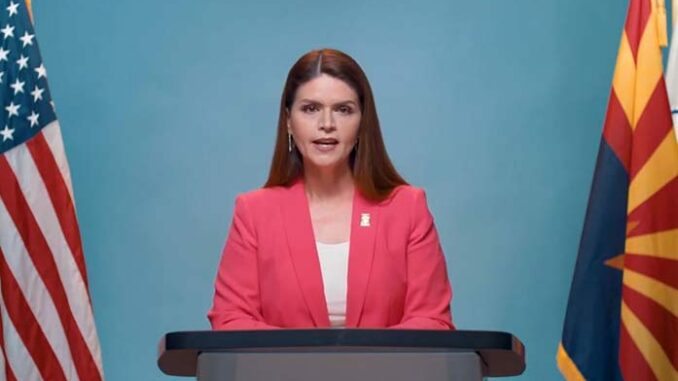
The newly appointed head of the Arizona Department of Child Safety (DCS) wants to make child services interventions equitable.
Governor Katie Hobbs appointed Matthew Stewart last month following a ProPublica-NBC News report in December alleging that racial disparities plagued the DCS. The report featured Stewart as evidence of the alleged disparity issue.
According to the investigative report, DCS investigations increased for Black families while overall DCS investigations went down
Stewart worked at DCS for over a decade, first as a case manager then training supervisor. Stewart told reporters that he’d discovered the alleged racial disparity in 2018, but didn’t leave the agency for another two years. Afterwards, Stewart founded a nonprofit advocating for keeping families together, Our Sister Our Brother (OSOB). Their website ceased being public around the time of Stewart’s appointment. (An archive of the latest version of the website is available here). According to Stewart’s LinkedIn page, he no longer serves as the CEO of OSOB.
Just over a week before Hobbs appointed Stewart, his advocacy organization declared that the state needed to end interventions. In the hashtags, OSOB included references to “anti-racism education,” “anti-racism,” “racial justice,” “social justice advocacy,” “anti-racist,” and “diversity, equity, inclusion.”
“We need to move away from interventions. Communities need resources that are proactive rather than reactive,” stated OSOB.
The OSOB website, prior to being taken down, declared its “heightened focus” as undoing the “overrepresentation” of Black children in foster care. OSOB cited from nonprofit and DCS data that five percent of Arizona children are Black, yet they represent about 17 percent of the foster care population. Researchers estimated that approximately 63 percent of Black children will undergo a DCS investigation before they turn 18.
In his interview with ProPublica-NBC News, Stewart said that DCS should focus more on solving “generational poverty and the resulting trauma” that was “centuries in the making.” Stewart expressed doubt that DCS could have a positive effect on lower-income Black families.
“I simply don’t think DCS is the agency to do this,” he stated.
Stewart said that DCS was part of a negative cultural fixation on Black families.
“We have a culture that says Black families need to be watched and if we don’t agree with the things that are going on with them, we are the saviors of these children and are charged with punishing their parents,” stated Stewart.
Stewart’s father, Warren Stewart, founded the oldest Black Baptist church in the Valley and instigated the state’s approval of Martin Luther King Jr. Day as an official state holiday.
The state created DCS in 2014 following systemic failures within Child Protective Services (CPS). In 2013, Hobbs, at the time a state senator and social worker, signaled support for prioritizing preventative measures rather than interventions. She said that CPS lacked employee support and infrastructure: namely, more funding to assist families that would prevent them from entering the system. Hobbs portrayed it as a cost-saving measure.
“We need to do so much more on the front end to help families on the front end who are struggling to stay out of the CPS system. What we could invest on that end is so much less than we would spend on the back end once people are in the system,” said Hobbs.
Corinne Murdock is a reporter for AZ Free News. Follow her latest on Twitter, or email tips to corinne@azfreenews.com.
by Dr. Thomas Patterson | Nov 11, 2022 | Opinion
By Dr. Thomas Patterson |
One of the things I appreciated most during my 30 years practicing medicine in community hospital ERs was that race just didn’t matter very much. ERs were open to all, and there was one standard of care for all races and classes.
That was then. Today a wave of intolerant wokeness is sweeping over our healthcare system, insisting that medicine is shot through with systemic racism and that research and education efforts must be diverted from medical science to “dismantling white supremacy” in medicine.
The Association of American Medical Colleges (AAMC) recently introduced their new Diversity, Equity, and Inclusion (DEI) guidelines, which require that all medical students be taught to practice “allyship” when “witnessing injustice such as ‘microaggressions.’”
Residents are told to use their more advanced knowledge of intersectionality in making clinical decisions. (Just when you thought that race-based medical protocols were in our dark past.). Faculty are charged with teaching how “systems of power, privilege, and oppression inform policies and practices.”
Medical schools are enthusiastically falling in line. Examples abound. In 2021, the Anti-Racism Task Force at Columbia and the Diversity Task Force at Indiana University, joined by the University of Texas and other medical schools, endorsed the recommended AAMC “competencies.” “Health equity” concepts have become a prominent component of medical education.
The University of North Carolina is one of many schools that not only teach “social justice” and “anti-racism,” but use medical school applications to ensure compliance with principles of diversity in race, gender, and sexual orientation. Applicants who demonstrate reluctance toward the DEI agenda are weeded out in the application process. Oregon Health and Science University faculty are among those evaluated on their “DEI, anti-racism, and social justice core competencies” in performance appraisals.
The University of Arizona is on board too, with some additional twists. All faculty and staff are required to complete six hours of DEI training and complete one Implicit Association Test annually (in spite of its dubious relevance). Each of 17 clinical departments is required to hold three DEI credit-eligible events per year. All departments also have designated “diversity champions” to oversee compliance and round up laggards.
This is bad, very bad news for medical education, future doctors, and patients. Even before DEI was a thing, the quality of medical instruction had been in decline. Incoming students are less qualified and fail rates on board exams are climbing, partly because some students from groups that have been historically underserved are either allowed to skip the Medical College Admissions Test or are admitted with lower scores than those required from white and Asian applicants.
But instead of beefing up instruction in anatomy, physiology, and other disciplines that might come in handy when actually practicing medicine, medical schools are spending instructional time on such matters as white privilege and anti-racism, including Critical Race Theory (CRT).
CRT includes the notion that white people are inherently prejudiced against people of color and that there really is nothing they can do but acknowledge their defect, apologize, and grant compensating privileges to people of contrasting skin color, who by definition are incapable of bigotry. Dissenters from this new orthodoxy can be accused of “micro-aggressions” and “repressive practices” with ominous repercussions for their careers.
This intellectual intolerance also extends to those skeptical of “gender affirming care” for adolescents. This new practice provides permanent medical and surgical alterations to gender-confused school children for the rest of their lives so they can pretend to be the gender they choose when a teen. What could go wrong?
Several countries, including the U.K., Sweden, and France are now pulling back from relying on the judgments of impressionable adolescents for such drastic remediation, but dissenters in the U.S. are still punished.
Medical educators who teach students that racism and mutilation are okay when officially approved should humbly recall the history of their own profession. Modern medicine has been of immeasurable benefit to mankind. But when evidence-based science is ignored and authority replaces free inquiry, bad things happen.
Bleeding and purging, eugenics, thalidomide, lobotomies, and nonsterile wound probing are among the historical results. It is the duty of the medical profession to protect us from such horrors, not promote them.
Dr. Thomas Patterson, former Chairman of the Goldwater Institute, is a retired emergency physician. He served as an Arizona State senator for 10 years in the 1990s, and as Majority Leader from 93-96. He is the author of Arizona’s original charter schools bill.
by Corinne Murdock | Aug 22, 2021 | News
By Corinne Murdock |
One of the first items on Tucson City Council’s meeting list last week concerned making August 15 through September 15, 2021, “Equity, Diversity, & Inclusiveness Month.”
Diversity, equity, and inclusion (DEI) are often referenced together, but each are individual concepts with their own definitions. Diversity concerns differences like race, ethnicity, gender, sexuality, gender identity, religion, caste, tribe, and socio-economic status. Equity differs from equality. Rather, equity focuses on equality of outcome. Inclusion is a combined practice of diversity and equity; oftentimes, it signifies inclusion of diverse individuals for equitable outcomes.
Tucson set aside time for this initiative as they continue their search for a chief equity officer for their new Office of Equity. Earlier this summer, Mayor Regina Romero and the council funneled $500,000 into the office with the approval of the budget. The Chief Equity Officer could have a salary ranging from nearly $81,000 to around $143,000.
The city didn’t appear to search too far for the leader of their six-figure investment. The city affiliates with a network called Government Alliance on Race and Equity (GARE) who assisted in designing the chief equity officer role.
Out of three candidates for the equity role, Tucson officials chose the one affiliated with GARE – Roberto Montoya, a GARE regional manager. However, Montoya turned down the offer.
In addition to the chief equity officer, Tucson’s equity office will also have three program managers and an administrative specialist.
Corinne Murdock is a reporter for AZ Free News. Follow her latest on Twitter, or email tips to corinne@azfreenews.com.
by Corinne Murdock | Aug 11, 2021 | Education, News
By Corinne Murdock |
Arizona State University (ASU) announced Monday that it would be launching an elementary curriculum focused on social-emotional learning, diversity, equity, and inclusion. The curriculum will be part of their K-12 online schooling, ASU Prep Digital.
The curriculum will blend cultural competence (diversity, equity, and inclusion), social-emotional learning, and the Spanish language. The university noted that it will partner with Encantos, an online learning platform, to roll out this new curriculum. In doing so, the curriculum could be implemented easily through distance learning.
Diversity, equity, and inclusion (DEI) is often referred to together, but each are individual concepts with their own definitions. In the context of DEI, diversity represents any and all possible differences, such as race, ethnicity, gender, sexuality, gender identity, religion, caste, tribe, socio-economic status, and so forth.
Equity differs from equality. Rather, equity focuses on equality of outcome. Inclusion is a combined practice of diversity and equity – oftentimes, it signifies inclusion of diverse individuals for equitable outcomes.
Social-emotional learning (SEL) focuses on identity, emotions, attitudes, and beliefs; it promises to help individuals understand themselves, their role in the world, and their relationships to others. SEL is the vessel for DEI.
Encantos offers a vast array of curriculum peppered with social justice concepts. Their brand Tiny Travelers has K-5 educational materials on the Fourth of July, for example, that teaches children that Black Americans still aren’t free.
“In the decades following the Emancipation Proclamation, Black Americans have continued to struggle for equal rights and treatment, even to this day,” reads the activity sheet. “Native Americans were also subject to genocide and displacement as the colonies expanded to form what we now know as the United States after the signing of the Declaration of Independence.”
Despite emphasizing the evils of genocide, slavery, and current racial tensions for this country, Encantos’s Tiny Travelers educational materials for other countries don’t discuss any evils that plagued their country. China, for example, is described only in terms of its cultural practices.
Encantos CEO Steven Wolfe Pereira credited ASU for leading in progressive education.
“ASU is the undisputed leader in progressive education, modeling a stance on universal access with excellence, inclusivity, access, and impact as the core,” said Pereira. “We share these values and are thrilled to partner to introduce 21st-century skills, story-teaching, and learning through play to their schools, to ensure the 2 billion kids around the world all have an equal chance to reach their fullest potential.”
According to ASU, this new curriculum will be unique – the first of its kind. It will create “a more inclusive educational system that democratizes and diversifies learning.” ASU asserts that the need for this type of curriculum exists because future jobs will require different skills.
ASU expects to roll out this new curriculum by fall 2022.
Corinne Murdock is a reporter for AZ Free News. Follow her latest on Twitter, or email tips to corinnejournalist@gmail.com.
Page 11 of 11« First«...234567891011