by Daniel Stefanski | Dec 21, 2024 | News
By Daniel Stefanski |
Arizona Republicans scored a significant victory in court over the state’s top elections official.
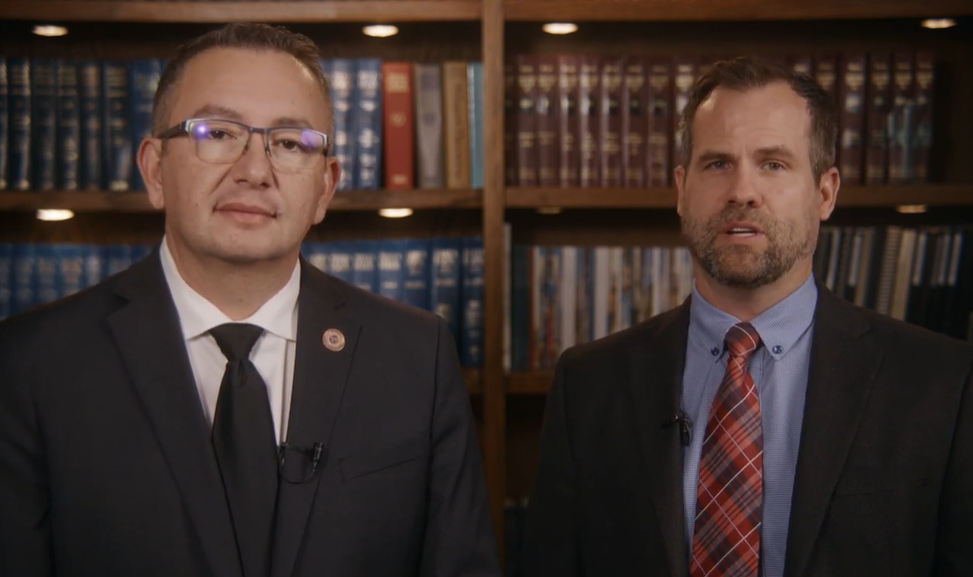
On Thursday, Arizona House Speaker Ben Toma championed a recent court ruling from Maricopa County Superior Court Judge Scott Blaney over contested provisions within the 2023 Arizona Elections Procedures Manual (EPM). According to a release issued by the Arizona House of Representatives, “the court sided with Speaker [Ben] Toma and Senate President Warren Petersen in their legal challenge, declaring that the Secretary overstepped his authority and infringed on the Legislature’s exclusive lawmaking powers.”
Speaker Toma released a statement in reaction to the decision, saying, “This is a clear victory for the rule of law, the separation of powers, and the integrity of our elections. The Legislature is the lawmaking body of this state, and today’s decision reaffirms that foundational principle. Secretary Fontes attempted to overstep his authority, but the court recognized these actions for what they were – unlawful and unenforceable. I am proud to have led this fight to protect the constitutional role of the Legislature and to ensure that Arizona’s election laws are upheld as written. It’s a win for all Arizonans who value fair, transparent, and accountable election policies.”
President Petersen said, “A win today on our lawsuit against the Secretary of State. Judge said the SOS exceeded his lawful authority at least 4 times in his drafting of the elections procedure manual. The voter rolls must be cleaned up.”
In a comment to AZ Free News, Petersen added, “We’re disappointed that the judge delayed the effective date of the AEVL provision but everything else was a big win. We will continue to do all we can to secure our elections and boost voter confidence.”
Arizona House Republicans shared that the court ruling “invalidated multiple provisions in the EPM, including:
- A rule altering how voter registrations are managed for non-residents, in violation of Arizona statutes.
- A rule excusing errors in circulator registrations, undermining strict compliance requirements for initiatives and referendums.
- A rule limiting the role of county Boards of Supervisors during the canvassing process and improperly allowing the Secretary to exclude county results from the statewide canvass.”
While this past election cycle has come and gone, Fontes will have one more opportunity to fashion an EPM before the next one, and he has Democrat allies in Governor Katie Hobbs and Attorney General Kris Mayes to potentially rubberstamp his schemes yet again. Arizona legislative Republicans are awaiting the next installment of the EPM to ensure that any out-of-order provisions will be quickly discovered and challenged in court to protect the integrity of Arizona elections.
Fontes dropped the current EPM just before the statute-mandated deadline of December 31, 2023, after securing approvals from Hobbs and Mayes. For the first time since 1978-1979, Democrats controlled the top three statewide offices in Arizona (Governor: Bruce Babbitt, Attorney General: John LaSota, Secretary of State: Rose Mofford). One of the most significant consequences of securing this power trifecta is the ability to negotiate, craft, and green light the state’s Elections Procedures Manual without initial interference from opposing political voices, as required by law every two years.
At the end of January, Petersen and Toma filed a challenge in Maricopa County Superior Court over Fontes’ EPM, which has been ongoing up until (and through) this week’s decision.
When the EPM was published at the end of last year, Governor Katie Hobbs, who preceded Fontes, said, “Partisan politics should have no role in how we run our elections. This EPM builds on the 2019 EPM and 2021 draft EPM from my tenure as Secretary of State and will ensure dedicated public servants from across the state will have the guidelines they need to administer free and fair elections. Together, we can protect our democracy and make sure every Arizonan has the opportunity to have their voice heard.”
As Secretary of State, Hobbs was required to finalize the EPM in 2021, but a divided government shared with Republican Governor Doug Ducey and Attorney General Mark Brnovich stymied the quest to secure a green light for the manual. Hobbs and Brnovich were also mired in an ongoing political feud, which resulted in legal bar charges that the Secretary of State brought against the state’s top prosecutor and several of his attorneys. After receiving Hobbs’ updated manual, Brnovich sued the SOS “to compel her production of a lawful EPM.” Brnovich alleged that “the SOS failed to provide the Governor and Attorney General with a lawful manual by October 1, 2021, as required, and instead included nearly one-hundred pages of provisions not permitted under the EPM statute.” The challenge from the former Attorney General was rendered unsuccessful, and the state was forced to revert to the previous cycle’s EPM (2019) to govern the 2022 races.
Daniel Stefanski is a reporter for AZ Free News. You can send him news tips using this link.
by AZ Free Enterprise Club | Aug 17, 2024 | Opinion
By the Arizona Free Enterprise Club |
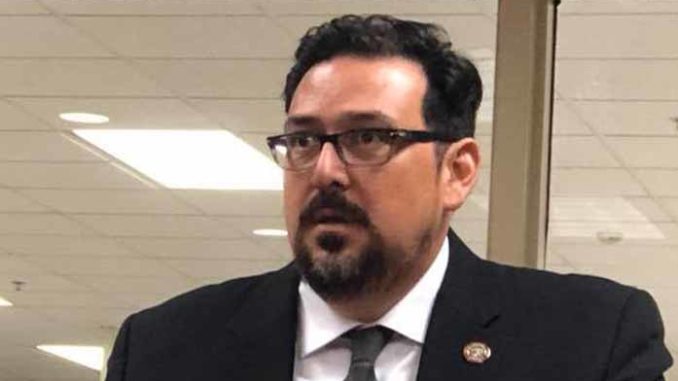
The people of Arizona deserve elections that are free, fair, transparent, and lawful. As the top election official in our state, Secretary of State Adrian Fontes should be working every day to ensure this happens. And he should be providing an Elections Procedures Manual (EPM) that gives impartial direction to county recorders to ensure uniform and correct implementation of election law.
This shouldn’t be that hard…or controversial.
But Adrian Fontes took it upon himself to produce one of the most radical EPMs in Arizona’s history. In fact, several of the “rules” in his EPM even go as far as to criminalize activity that is protected under the First Amendment—creating an unconstitutional chilling effect on protected political speech. Apparently, Adrian Fontes hasn’t read the United States Constitution or the Arizona Constitution.
Because of this illegal EPM, we sued him. And last week, a Maricopa County Superior Court ruled in our favor, finding that Fontes’ EPM contains speech restrictions that violate the Arizona Constitution, misstatements and modifications of statutes, and failures to identify distinctions between guidance and legal mandates.
So, how did Fontes respond? Did he realize the error of his ways? Will he now properly understand his role and amend the EPM to align with the law? No. Instead Adrian Fontes has responded how you would expect someone to respond when he knows he can’t win. He’s resorted to maligning our organization in the media…
>>> CONTINUE READING >>>
by Staff Reporter | Aug 8, 2024 | News
By Staff Reporter |
The Maricopa County Superior Court ruled against provisions of Arizona’s 2023 Elections Procedures Manual (EPM) on Tuesday.
The EPM, drafted and passed under Democratic Secretary of State Adrian Fontes, was challenged in court earlier this year by the public policy nonprofit, Arizona Free Enterprise Club (AFEC).
Maricopa County Superior Court Judge Jennifer Ryan-Touhill ruled that Fontes’ 2023 EPM contained speech restrictions that violated the Arizona Constitution, as well as misstatements and modifications of statutes, and failures to identify distinctions between guidance and legal mandates.
Ryan-Touhill ruled that the EPM’s provisions on speech were unnecessary, vague, overbroad, and serving as universal prohibition on conduct.
“The EPM’s language has restricted what the Secretary finds acceptable regarding behavior, both speech and acts. Our state constitution guarantees a right to speak freely and is only restricted for an abuse of that right,” wrote Ryan-Touhill. “[M]any of the prohibitions listed in the EPM are free speech and protected by both the Arizona Constitution and the U.S. Constitution. What, for example, constitutes a person communicating about voter fraud in a harassing manner? Or, for that matter, ‘posting’ a sign in an intimidating manner? How does a person either do this behavior — whatever it means — or avoid it? And what content printed on a t-shirt might be offensive or harassing to one and not another? What if the t-shirt says, ‘I have a bomb and I intend to vote!’? Where does the Secretary draw the line?”
Ryan-Touhill highlighted 13 instances of “problematic language” within Fontes’ 2023 EPM in her ruling:
- [N]o electioneering may take place outside the 75-foot limit if it is audible from a location inside the door to the voting location.
- Any activity by a person with the intent or effect of [ ] harassing, [ ] (or conspiring with others to do so) inside or outside the 75-foot limit at a voting location is prohibited.
- The officer in charge of elections has a responsibility to train poll workers and establish policies to prevent and promptly remedy any instances of voter intimidation.
- The officer in charge of elections should publicize and/or implement the following guidelines as applicable:
- The inspector must utilize the marshal to preserve order and remove disruptive persons from the voting location.
- Openly carrying a firearm outside the 75-foot limit may also constitute unlawful voter intimidation, depending on the context.
- Aggressive behavior, such as raising one’s voice or taunting a voter or poll worker.
- Using [ ] insulting [ ] or offensive language to a voter or poll worker. Disrupting voting lines.
- Following voters or poll workers coming to or leaving a voting location, including to or from their vehicles.
- Intentionally disseminating false or misleading information at a voting location. . . .
- Directly confronting, questioning, photographing, or videotaping voters or poll workers in a harassing [ ] manner, including when the voter or poll worker is coming to or leaving the polling location.
- Asking voters for “documentation” or other questions that only poll workers should perform.
- Raising repeated frivolous voter challenges to poll workers without any good faith basis, or raising voter challenges based on race, ethnicity, national origin, language, religion or disability.
- Posting signs or communicating messages about penalties for “voter fraud” in a harassing or intimidating manner.
Judge Ryan-Touhill assessed that the EPM’s provisions modified the criminal intent and effect of crimes outlined by Arizona laws against harassment and voter intimidation or threats.
“The Secretary has no authority to change a mens rea, regardless of the objective of the language,” said Ryan-Touhill. “Moreover, neither law allows for a subjective belief of the alleged target of the crime but rather focuses upon the acts of the criminal (e.g., force, violence, infliction) or the victim (‘a reasonable person’).”
AFEC President Scot Mussi said in a press release that he was happy to see the court protect Arizonans’ First Amendment rights within elections.
“The judge correctly realized that certain portions of Secretary Fontes’ illegal and radical manual were nothing more than a brazen attempt to destroy the integrity and transparency of state elections,” said Mussi. “Secretary Fontes and his team of leftwing ideologues must conform the entire manual to state law as is their statutory duty.”
The court ordered the sections of the EPM containing speech restrictions to be unenforceable.
AZ Free News is your #1 source for Arizona news and politics. You can send us news tips using this link.
by AZ Free Enterprise Club | Feb 19, 2024 | Opinion
By the Arizona Free Enterprise Club |
If Adrian Fontes likes spending time in court, he’s going to have a fun time in 2024. In case you’ve lost count, Arizona’s Secretary of State has been sued three times over his Elections Procedures Manual (EPM) in just the last two weeks. That’s what happens when you produce one of the most radical EPMs in Arizona’s history.
At the end of January, Senate President Warren Petersen and House Speaker Ben Toma filed a lawsuit against Fontes over a variety of provisions in his EPM that violate or conflict with current election laws in our state. But the party was just getting started.
Last week, the Arizona Republican Party, the Republican National Committee, and the Yavapai County GOP also sued Fontes for his blatant attempt to rewrite election law through his EPM. And on the same day, we filed our own lawsuit against Fontes over the promulgation of certain unlawful rules set forth in his EPM.
The reality is that, in his role as Secretary of State, Adrian Fontes is supposed to provide an EPM that gives impartial direction to county recorders to ensure uniform and correct implementation of election law. Instead, he prescribed certain rules without the power to do so and moved forward with an EPM that contains several “rules” that are unconstitutional.
>>> CONTINUE READING >>>
by Daniel Stefanski | Feb 1, 2024 | News
By Daniel Stefanski |
Arizona’s leading legislative Republicans are taking the state’s Secretary of State to court in advance of the 2024 election cycle.
On Wednesday, the State Senate Republican Caucus announced that President Warren Petersen and House Speaker Ben Toma filed a challenge in Maricopa County Superior Court over the recently published Elections Procedures Manual (EPM), “requesting the court throw out a number of provisions in the EPM, which violate or conflict with current Arizona election laws.”
“Both the Secretary and our Governor have a track record of not following the law. As a result, I’m taking action to protect the integrity of our elections,” said President Petersen. “This reckless EPM opens the door to unlawful activity and undermines the voter confidence measures Republican lawmakers have implemented over the years.”
Toma added, “The Arizona Legislature is taking steps necessary to protect the integrity of Arizona’s elections…. Secretary Fontes has exceeded his jurisdiction, using the EPM to exercise lawmaking powers that do not belong to him. Our lawsuit aims to halt this overreach and nullify the unlawful provisions in the manual to ensure a fair and lawful electoral process for all Arizonans.”
The lawsuit, which was filed by attorneys of Statecraft PLLC and Snell & Wilmer L.L.P., asked the Superior Court for a preliminary injunction prohibiting the implementation or enforcement of the 2023 EPM to the extent it purports to:
- Allow county recorders to merely move to inactive status – rather than cancel the registrations of – voters who affirmatively stated on juror questionnaires that they do not reside in the relevant county and have not responded within 35 days to a notice from the county recorder;
- Prohibit county recorders from relying on information provided by third parties in determining whether there is reason to believe a registered voter is not a United States citizen;
- Delay implementation of statutorily required maintenance of the active early voting list until January 2027;
- Excuse mistakes or errors in the statutorily required registrations of paid or out-of-state ballot measure petition circulators;
- Compel county boards of supervisors to reflexively vote to adopt only the returns provided by the election official when conducting a canvass; and
- Authorize the Secretary of State to certify a statewide canvass that consists of returns of fewer than fifteen counties.
The legislative Republicans will have stiff opposition in court from the trio of statewide Democrats who were responsible for producing and approving this EPM: Secretary of State Adrian Fontes, Governor Katie Hobbs, and Attorney General Kris Mayes. When Fontes issued the 2023 EPM at the end of last year, he said, “Free, fair and secure elections have been this group’s commitment to the voter from the very beginning. This is what happens when a committed group of leaders comes together to serve their community. It’s good for our democracy and it’s good for Arizona.”
Governor Katie Hobbs, who preceded Fontes, said, “Partisan politics should have no role in how we run our elections. This EPM builds on the 2019 EPM and 2021 draft EPM from my tenure as Secretary of State and will ensure dedicated public servants from across the state will have the guidelines they need to administer free and fair elections. Together, we can protect our democracy and make sure every Arizonan has the opportunity to have their voice heard.”
As Secretary of State, Hobbs was required to finalize the EPM in 2021, but a divided government shared with Republican Governor Doug Ducey and Attorney General Mark Brnovich stymied the quest to secure a green light for the manual. Hobbs and Brnovich were also mired in an ongoing political feud, which resulted in legal bar charges that the Secretary of State brought against the state’s top prosecutor and several of his attorneys. After receiving Hobbs’ updated manual, Brnovich sued the SOS “to compel her production of a lawful EPM.” Brnovich alleged that “the SOS failed to provide the Governor and Attorney General with a lawful manual by October 1, 2021, as required, and instead included nearly one-hundred pages of provisions not permitted under the EPM statute.” The challenge from the former Attorney General was rendered unsuccessful, and the state was forced to revert to the previous cycle’s EPM (2019) to govern the 2022 races.
Daniel Stefanski is a reporter for AZ Free News. You can send him news tips using this link.