The legacy media seem to be on a mission: tear down Arizona’s groundbreaking school choice program with false accusations and inaccurate reporting.
Fortunately, facts don’t lie, even if the media does.
The Arizona Capitol Times declared this week in astonishing terms, “Education department under fire for approving $124M in improper ESA [education savings account] purchases.”
Such astronomical levels of fraud would seem to threaten the very foundations of the historic school choice revolution that has swept the nation. There was just one problem, the headline was completely false.
Not only were the supposed dollar amounts exaggerated up to 100 times greater than the amounts of improper spending actually reported by the department, but these purchases weren’t even approved in the first place.
Here’s the story the media won’t tell: Arizona’s 2022 adoption of a fully universal ESA program has been a nation-leading success, allowing parents across the state to give their children an education best suited to their needs.
To its credit, the Times quickly retracted its original headline and issued a formal correction admitting “an inaccurate dollar amount” in its first draft and eliminating the suggestion that the purchases were “approved.” Unfortunately, such journalistic ethics appear not to be shared by the Times’ more ideological media counterparts in Arizona, particularly those of the teachers’ union-aligned 12News team, who have resolutely declined to correct or retract their false reporting.
12News’ Craig Harris, for instance, has repeatedly and falsely declared that the state has “approved” ESA purchases for iPhones, televisions, and other non-educational items over the past year.
But all those purchases haven’t been approved, as the State Board of Education’s ESA Handbook—ratified by members appointed by both former Gov. Doug Ducey and Gov. Katie Hobbs—makes clear. The document expressly states that while families’ ESA purchases under $2,000 are promptly reimbursed by the state, these items “are not deemed ‘approved’ by the Department, until they are audited OR the timeframe to audit the orders has passed [2 fiscal years].” Just like their tax returns filed with the IRS, these families’ ESA purchases are processed up front and subject to enforcement afterwards.
Yet, 12News either knowingly misrepresented the status of these orders or else incompetently failed to perform basic due diligence to learn how the program operates.
By 12News’ anti-ESA logic, the IRS should apparently also withhold refunds to taxpayers until their tax returns have been audited potentially years later, rather than promptly when the returns are filed.
Unfortunately, this is not the first time that 12News’ anti-school choice reporters have been exposed in such light. In 2018, Harris (then with the Arizona Republic) falsely reported that Arizona charter schools produced worse student graduation rates and worse outcomes on the state A-F letter grade system than district schools. Both claims turned out to have been fabricated results stemming from a faulty, agenda-driven data analysis by Harris’ team.
In 2024, 12News’ Joe Dana likewise doubled down on false claims that ESAs cost state taxpayers more than the public school system per student by conveniently ignoring major sources of public school funding. The state’s Classroom Site Fund, for example, allocates over $1,000 for every public school student in the state and gives not a penny to ESA families.
Undeterred by journalistic standards, Dana’s 12News team also went further, deceptively extracting a fragment of a statement given by the state’s budget director (given in response to a completely different question) to suggest the ESA program had created unprecedented strain on the state budget.
The Heritage Foundation’s Matt Ladner and Jason Bedrick have already exposed a litany of deceptive claims flowing from outlets like 12News, while more prestigious national news organizations like The Washington Post have seen their recent anti-ESA narratives similarly debunked. Yet none of these outlets have expressed any contrition for their deceptive coverage.
Indeed, in perhaps the richest of ironies, Harris’ 12News team recently attacked ESAs for “hurting” high-performing schools like Arizona charter network BASIS by competing with it for students. Never mind that Harris previously attacked BASIS for its alleged poor stewardship of taxpayer funds. Now that it is clear he and the media were on the wrong side of that school choice debate as well, they have simply shifted to a new enemy in their war on parents.
Looking at the whole of Arizona’s education landscape, there is no question that those who seek to defraud the state—whether via the traditional public school system or its competitors—should be prosecuted to the full extent of the law. But if there is a scandal in our education system, it is the dishonest reporting by journalists who are more disturbed by parental empowerment than by the tens of billions of dollars squandered year after year in chronically poor performing public schools.
Matt Beienburg is the Director of Education Policy at the Goldwater Institute.
Every year, a horde of school district officials and their lobbyists come before the state legislature, rattling their tin cups, begging for more money for their supposedly underfunded schools. They tell sob stories about crumbling buildings and underpaid teachers who had to pay for school supplies from their own pockets. Their schools, they say, are financially starved.
Hogwash.
School bureaucrats don’t want you to know it, but school spending is at an all-time high, and Arizona’s school districts are sitting on more than $20 billion in cash reserves and buildings they don’t need while student achievement craters. A new report from the Common Sense Institute (CSI) reveals the shocking scope of waste plaguing our traditional public school system, and it’s time taxpayers demanded answers.
The numbers are staggering. As has been documented, Arizona’s school districts are already hoarding $7.8 billion in cash reserves, up $1 billion since the prior fiscal year. Now we learn they’re also sitting on $12.2 billion worth of excess real estate—78 million square feet of unused and underutilized space that could house 630,000 additional students. Combined, that’s over $20 billion in resources that could be put to better use serving Arizona’s children.
Since 2019, district school enrollment has declined 5% statewide, yet these same districts increased their building space by 3% and boosted capital spending by a jaw-dropping 67% to $8.9 billion. As CSI has documented, districts have added 499 new buildings while losing 47,500 students. This isn’t just inefficient, it’s fiscally reckless.
The massive spending on new buildings might be justifiable if schools were overcrowded or expecting a huge influx of new students, but they’re not. In fact, Arizona’s district schools are already significantly overbuilt, operating at just 67% capacity while charter schools run at 95% capacity and private schools at 75%. CSI estimates that the excess space in district schools could accommodate 630,000 additional students—nearly half the current statewide district school enrollment.
The excess capacity comes at an enormous cost. CSI estimates that the market value of excess district space alone—$12.2 billion—could fund a decade of capital expenditures. Alternatively, eliminating maintenance costs for unused space would save taxpayers $1 billion annually. That’s real money that could reduce taxes, improve education, or address Arizona’s other pressing needs.
There are plenty of willing buyers. Indeed, the fastest-growing school systems—charters and private schools chosen by increasing numbers of Arizona families—struggle to find adequate facilities. Yet school districts often go to incredible lengths to avoid selling buildings to them, such as when Tucson Unified School District sold an unused building for 25% less than what a Christian school had offered, just so that a “competitor” wouldn’t have it.
In response to such cases, Gov. Doug Ducey signed a law requiring school districts to sell buildings to the highest bidder, even if it’s a private or charter school. Now, rather than comply, school districts are just letting their underutilized space languish and forcing the taxpayers to pay the bill.
The wastefulness is also a slap in the face to teachers and students alike.
As we noted previously, the districts have enough cash reserves to raise the average teacher pay from $64,420 to more than $80,000 for 10 years and still have funds left over. If they sold off all their underutilized space, they could raise the average teacher pay to $100,000 for a decade and still have billions left over.
There is no evidence that spending on buildings is contributing to student learning. As the buildings have gone up, math scores have gone down, plummeting 25% since 2019. As CSI documents, the lowest-performing schools have the most excess space, operating at just 19% capacity, while high-performing schools run at 70% capacity.
This isn’t about helping kids learn; it’s about protecting a bloated bureaucracy that puts institutional self-interest above student needs.
Fixing the problem will require realigning incentives. CSI recommends more transparency—including a “Facilities Condition Index” that would give policymakers and the public objective information about the quality of existing school facilities—and more state oversight of severely underutilized facilities. In the meantime, any funding requests from the school districts should be greeted by state lawmakers with a healthy dose of skepticism.
Arizona’s children deserve better than a $20 billion monument to government inefficiency. They deserve a system that puts their education first, not one that hoards resources while performance plummets. If local officials can’t or won’t deliver, then state lawmakers will have to step in.
Jason Bedrick is a Research Fellow and Matthew Ladner is a Senior Advisor for education policy implementation at the Heritage Foundation’s Center for Education Policy.
Among many issues, the past two elections have been a referendum on the public school system throughout our country. And that’s especially true here in Arizona. The people have shown that they are tired of the leftist indoctrination, wasted taxpayer dollars on declining test scores, attacks on parental rights, and more.
Immediately after his inauguration, President Trump proved that cleaning up our schools wasn’t just a campaign talking point. He issued an executive order (EO) ending radical indoctrination in K-12 schooling, and the U.S. Department of Education took action to eliminate harmful Diversity, Equity, and Inclusion (DEI) initiatives. It’s been a breath of fresh air, frankly, but the woke crazies in our state are not going down without a fight.
Back in February, a teacher at Marana High School was suspended after he challenged President Trump’s denial of the existence of more than two genders during a classroom lecture. Then, in May, an advocacy group released audio from inside a Catalina Foothills School District (CFSD) ninth grade health classroom where an alleged teacher gave a “lesson” on LGBTQ issues and criticized religious texts. What any of this has to do with “health” is beyond us, but it certainly shows the lengths these crazies are willing to go in order to push their radical message.
Not wanting to be outdone, Scottsdale Unified School District (SUSD) also decided to get into the mix…
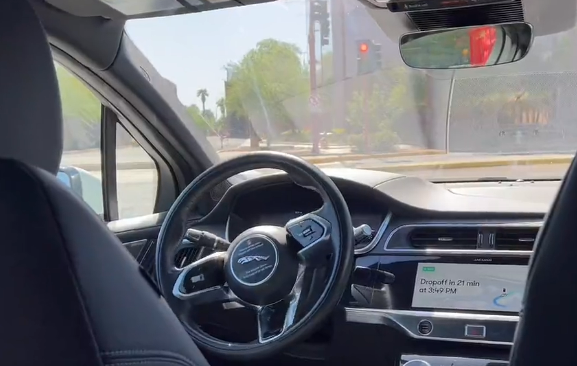
The Goldwater Institute has issued a report praising Arizona for pioneering “a freedom-based environment” for the development, testing, and deployment of autonomous vehicles or AVs.
Goldwater pointed to Executive Order 2015-09, signed by then-Governor Doug Ducey in 2015, which established a framework for development and testing requirements as the starting point for the free-market model.
The report highlighted the benefits of AVs, which for one manufacturer operated with 81% fewer airbag deployments, 78% fewer injury-causing crashes, and 62% fewer police-reported crashes than human-driven vehicles with over 20 million miles of rider-only service as of September 2024.
In a statement to AZ Free News Goldwater explained, “It’s not just about safer roads. AVs are revolutionizing mobility for elderly and disabled riders while unlocking massive economic potential. Unlike human drivers, AVs don’t get tired, distracted, or impaired—meaning fewer crashes and a more reliable transportation network.
“Yet while Arizona embraces the future, other states are slamming the brakes. Burdensome ‘driver in’ laws and city-level red tape threaten to stifle innovation and send AV companies packing. The question for policymakers is simple: regulate for yesterday, or innovate for tomorrow?”
According to the report, the 2015 EO, along with a 2018 follow-up to modernize the existing order to adapt to new technologies, were later enshrined into Arizona law by the legislature in 2021. Since the policy’s inception, 13 AV manufacturers have gained permission from state authorities to test and operate AVs in the state.
In its policy report, Goldwater argues that other states should adopt a policy similar to Arizona’s, referred to as “permissionless innovation” to “avoid erecting unnecessary regulatory barriers to AV innovation in order to reap the full benefits of this game-changing technology.” In particular, Goldwater criticized the innovation stifling single-party system in California where AV makers can wait over two years from proposal to deployment and a bill has advanced that would permit cities to create permitting requirements and restrict AVs’ hours of operations on city roads.
However, they add that other states are skewing in the opposite direction, instead applying regressive “Driver In” bills as well as municipal-level permitting regimes that lead to a Byzantine system of fragmented, inconsistent regulation.
Goldwater noted, “These efforts, driven by special interests and speculative fears, ignore the clear benefits and real-world data accumulated from years of studying AV safety.”
The think-tank observed that the experience gained in Arizona “offers a counterpoint—and a roadmap. States that follow the Arizona Model will not only attract investment and jobs, but also position themselves at the forefront of transportation’s next revolution. The choice facing lawmakers is simple: regulate for yesterday, or innovate for tomorrow. The roads of the future will see autonomous vehicles. And Arizona is already miles ahead.“
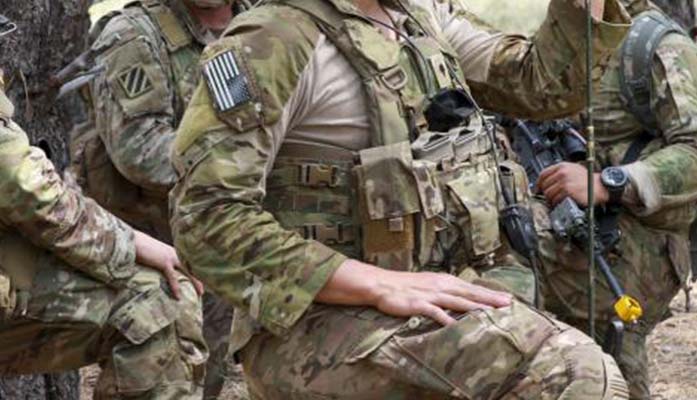
Major General Kerry Muehlenbeck, the Arizona Adjutant General, will step down from commanding the Arizona National Guard and Department of Emergency and Military Affairs in June, according to Governor Katie Hobbs’ office. General Muehlenbeck was appointed to office in 2021 by then-Governor Doug Ducey.
“It has been an honor to serve as Arizona’s Adjutant General,” Major General Muehlenbeck said in a statement. “To be able to work alongside dedicated men and women, both in and out of uniform, in service to Arizona and the nation is a privilege beyond measure. I appreciate the trust of Governor Hobbs, Governor Ducey, and both their teams. I will always value their commitment to protecting the citizens of Arizona.”
Speaking with the Arizona Capitol Times, she explained that the time has come for her to return to her previous vocation: teaching criminal justice studies at Mesa Community College. According to the outlet, federal law requires civilian employers to hold a member of the military’s job for up to five years while they serve. Major General Muehlenbeck’s five years are up this year.
Muehlenbeck described her working relationship with both Republican and Democrat governors, telling the Arizona Capitol Times, “In the military, you don’t take any of the decisions personally. You’re there to provide your best military advice.” Muehlenbeck continued, “And if I don’t agree inside the room where we’re having discussions, as soon as we walk out of the door, then that decision is the best one we could have made.”
Governor Katie Hobbs released a statement on Monday saying, “I am grateful to Major General Muehlenbeck for her service to the people of Arizona. She is a valued member of my cabinet who is dedicated to fostering public safety across the state. Under her leadership, the Arizona National Guard launched Task Force SAFE, a critical ongoing effort that is preventing dangerous drugs from entering our state. In addition, the Division of Emergency Management and Arizona National Guard embarked on one of its largest rescue missions to date, evacuating more than 100 people when devastating floods swept through Havasupai. I wish Major General Muehlenbeck the best in her future endeavors.”
Hobbs musts now nominate a replacement for General Muehlenbeck, but any nomination will face heavy scrutiny from the Republican-led Arizona Senate Committee on Director Nominations led by Arizona Senator Jake Hoffman. Chairman Hoffman was clear that the decision on any nominee would come down to capability.
“We’re in an age where we want our military men and women, whether that’s the Guard or whether that’s the Marines or the Army, we want them to be the most efficient, effective fighting force possible,” Hoffman said. “Woke ideology of the politicization of our men and women will be an automatic death knell for any Hobbs nominee for this important post.”