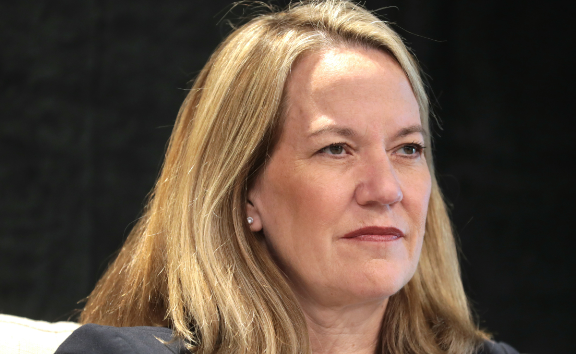
Former Arizona Governor Doug Ducey is blasting the anti-ESA ballot measure, which is currently facing a legal challenge from the Arizona Free Enterprise Club and the Goldwater Institute. Under Ducey’s leadership, Arizona became the nation’s leader in school choice.
The Goldwater Institute filed a lawsuit earlier this week, challenging the validity of signatures submitted for the proposed “Protection Education, Accountability Now Act,” a ballot initiative that would place new restrictions on Arizona’s Empowerment Scholarship (ESA) program.
According to the lawsuit, the initiative required 255,949 valid signatures to qualify for the November ballot but allegedly submitted enough invalid signatures to fall below that threshold. It contends that tens of thousands of petition signatures are subject to disqualification and raises concerns about the campaign’s signature-gathering process.
Goldwater claimed that more than 75% of the signatures were collected by paid circulators rather than volunteers and questioned whether some petition circulators met legal standards.
Out-of-state special interests are spending millions to buy their way onto Arizona's ballot. Today, Goldwater filed suit challenging the invalid signatures submitted for this anti-school choice measure. We will keep fighting to defend the rights of Arizona families and protect…
— Goldwater Institute (@GoldwaterInst) July 20, 2026
Ducey criticized the proposed initiative, arguing that it would eliminate educational options for families participating in the ESA program.
“Once again, we are reminded how little these out-of-state unions care about Arizona students and their parents,” stated Ducey. “This measure would strip tens of thousands of Arizona families of educational choices they have made for their children, forcing students out of the schools that are serving them well and back into schools they chose to leave. That is unacceptable, and we will vigorously challenge this measure at every possible step.”
Arizona’s ESA program currently serves more than 100,000 students, allowing eligible families to use state education funds for private school tuition, homeschooling expenses, and other approved educational costs.
Supporters of the program argue it expands educational opportunities and parental choice, while opponents have raised concerns about its cost and oversight.
The Goldwater Institute alleged that the ballot initiative is backed by out-of-state special interest groups seeking to limit Arizona’s school choice program.
“This is a shameless attack on Arizona’s parents, funded by an out-of-state union,” said Victor Riches, President and CEO of the Goldwater Institute. “They’re trying to game the system by turning in tens of thousands of invalid signatures in an effort to destroy the most successful school choice program in the country. This won’t happen on our watch.”
The Arizona Free Enterprise Club announced that it joined the legal challenge in support of the Goldwater Institute’s lawsuit. Greg Blackie of the organization will serve as a plaintiff in the case.
They Claim to Protect Children. Look Who They Hired!!
Arizona Free Enterprise Club @azfec Joins Legal Challenge to Union-Backed Anti-ESA Initiative. Save Our Schools and the teachers unions claim their anti-ESA campaign is about protecting children.
— Arizona Free Enterprise Club (@azfec) July 21, 2026
According to the Arizona Free Enterprise Club, it worked alongside the Goldwater Institute and other school choice advocates to review petition signatures and identify what they describe as “serious irregularities”.
The organization said the complaint also raises concerns about individuals hired to circulate petitions, including allegations involving circulators with criminal histories.
Arizona Free Enterprise Club President Scot Mussi released a statement, saying election laws should be enforced equally for all ballot initiatives.
“Save Our Schools and the teachers unions have spent years accusing ESA families of fraud and demanding greater scrutiny of parents, said Mussi. “Now, their own campaign is facing serious questions about the people they hired to gather signatures. Arizona’s election laws must be fully enforced. If this campaign failed to collect enough lawful and valid signatures, it must not qualify for the ballot.”
The challenged initiative is backed by Save Our Schools Arizona, the Arizona Education Association, and other organizations that have, for years, supported additional limits on ESA eligibility.
Ethan Faverino is a reporter for AZ Free News. You can send him news tips using this link.
A ballot initiative to end the state’s universal school choice program is facing a new challenge to the validity of its signatures.
The Goldwater Institute filed the challenge in court on Monday.
The Arizona Free Enterprise Club (AZFEC) also announced that it joined Goldwater’s legal challenge, with AZFEC Vice President of Policy Greg Blackie serving as a plaintiff in the case. According to AZFEC, it worked alongside Goldwater and other school choice advocates to review petition sheets, identify alleged irregularities, and help ensure Arizona’s ballot qualification laws are enforced.
The Goldwater Institute said “a large amount” of the more than 415,000 signatures submitted appeared to be “fallacious.” The initiative needs about 256,000 signatures to qualify for the November ballot. The complaint raised more than 73,300 objections; the complaint asserted that, with all signatures removed as a result of the objections, the ballot initiative would be left with fewer than 256,000 valid signatures.
The 900-page complaint filed in the Maricopa County Superior Court stated that the signatures weren’t properly registered with the secretary of state’s office as required by law.
Specifically, the complaint raised objections including paid but unregistered circulators, signatures gathered prior to circulator registration, false residential addresses, permanent address contradictions, bad telephone numbers or email addresses, false identities, bad service addresses, and ineligible, missing, or mismatched IDs.
Additionally, the Goldwater Institute claimed that certain circulators were ineligible to collect signatures because they had been convicted of a criminal offense involving fraud, forgery, or identity theft; convicted of another felony offense in which their civil rights haven’t been restored; or adjudicated an incapacitated person.
Individuals named as ineligible circulators were convicted of felonies and other crimes related to drugs, human trafficking, manslaughter, sexual abuse of a minor, assault, kidnapping, weapons misconduct, forgery, false reporting, and credit card forgery.
Finally, the complaint claimed that certain circulators failed to write their full and correct assigned circulator identification number on multiple petition sheets.
Arizona Free Enterprise Club President Scot Mussi said the allegations raised questions about the campaign’s vetting and oversight of paid petition circulators.
“Save Our Schools and the teachers unions have spent years accusing ESA families of fraud and demanding greater scrutiny of parents. Now, their own campaign is facing serious questions about the people they hired to gather signatures,” said Mussi. “Arizona’s election laws must be fully enforced. If this campaign failed to collect enough lawful and valid signatures, it must not qualify for the ballot.”
Goldwater Institute CEO and President Victor Riches criticized the initiative for its heavy sourcing of out-of-state special interest funding.
“This is a shameless attack on Arizona’s parents, funded by an out-of-state union,” said Riches. “They’re trying to game the system by turning in tens of thousands of invalid signatures in an effort to destroy the most successful school choice program in the country. This won’t happen on our watch.”
The Goldwater Institute also stated in a press release that the original title of the initiative was misleading.
If enough signatures are validated and voters approve the measure, the Protect Education Act would impose an income eligibility cap on the Empowerment Scholarship Account (ESA) program.
Doug Ducey, former Arizona governor, was quoted in the Goldwater Institute press release saying the entire effort to dismantle the ESA program proved the true intentions of teachers’ unions. Ducey signed the bill into law that made the ESA program open to all students.
“Once again, we are reminded how little these out of state unions care about Arizona students and their parents,” said Ducey. “This measure would strip tens of thousands of Arizona families of educational choices they have made for their children, forcing students out of the schools that are serving them well and back into schools they chose to leave. That is unacceptable, and we will vigorously challenge this measure at every possible step.”
In response to the submission of the ballot initiative signatures earlier this month, Ducey launched a political action committee to secure school choice accessibility for military families.
Protect Education, Accountability Now (PEAN), the organization behind the ballot initiative, filed a challenge last week to the competing legislature-referred ballot initiative that would negate their proposed ballot initiative.
Activists reported that they have turned in more than 420,00 signatures for a ballot initiative that would end the universality of Arizona’s school choice program.
Supporters wearing red shirts reading “Public School Proud” affiliated with Save Our Schools Arizona (SOSA) gathered outside the secretary of state’s office to watch the box truck delivery of the boxes containing the signatures for the ballot initiative. Both SOSA and the Arizona Education Association (AEA) were behind the initiative.
SOSA and the AEA contend the universality of the Empowerment Scholarship Account (ESA) program diverts far too much in funding away from public schools. Families within the program don’t have to depart their public schools; however, since the expansion of the ESA program to all students in 2022, enrollment in public schools has declined. Defenders of the ESA program counter that per-pupil spending in the program costs less than in public schooling.
ESA program funds may be used for private school tuition, tutoring, online courses, homeschool curriculum, educational therapies, textbooks, educational software, testing fees, and college courses.
The Protect Education Act (PEA) would impose income restrictions on the ESA program.
Estimates show that approximately 20,300 current students in the ESA program would be disqualified under the PEA initially, though that number would grow to exclude more than half of Arizona’s families with school-aged children due to inflationary impact on incomes outpacing the income cap adjustment.
The act would also impose accreditation requirements and further restrictions on spending.
The ESA program has reported the enrollment of more than 100,000 students. More than 8,200 were listed as new students enrolled for the next school year.
Those who support keeping the universality of the ESA program have been maneuvering to preserve protections for some member families.
The Republican majority in the state legislature passed a ballot measure of their own last month: HCR 2048, the “Military Families College Savings and Scholarship Protection Act,” which would amend the Arizona Constitution to prohibit the confiscation of ESA program funds from students belonging to military families.
Should voters approve both the lawmakers’ measure and PEA, it is likely the latter would be voided under language included in the former.
In addition, Doug Ducey, the former governor who signed universal school choice into Arizona law, made an announcement Thursday of a political action committee dedicated to securing school choice protections for military families. Ducey was announced as the chairman of the Protect Military Families PAC.
“Out-of-state special interests and their union allies are trying to take educational scholarships away from the children of Arizona’s military families,” said Ducey.
Serving alongside Ducey on the political action committee is Ashley Ragan, president of InCompliance AZ.
Out-of-state special interests and their union allies are trying to take educational scholarships away from the children of Arizona’s military families.
That is why today, we are proud to launch Protect Military Families PAC @ProtectMilFam.
The Goldwater Institute, a public policy think tank and litigation organization, filed a motion in the Maricopa County Superior Court earlier this week on behalf of two military families involved in the ESA program.
The organization said that about 1,000 other military families stand to be disqualified from the ESA program should the universalization end.
AZ Free News is your #1 source for Arizona news and politics. You can send us news tips using this link.
On Tuesday, the U.S. Supreme Court upheld state laws barring males from competing in female sports, even if they identify as female. The ruling drew praise from Arizona’s Republican leaders.
In its opinion in West Virginia v. B.P.J. (inclusive of Little v. Hecox), the high court declared that biology defines sex, not gender identity, when considering federal regulations on sex-based discrimination.
“The term ‘sex’ […] cannot plausibly be interpreted to refer to anything other than biological sex,” stated the ruling.
Arizona participated in the lawsuit through its leaders in the Republican-led state legislature: Arizona Senate President Warren Petersen (LD14) and Arizona House Speaker Steve Montenegro (LD29). The pair filed an amicus brief last September.
Petersen hailed the Supreme Court decision as a “landmark ruling.” In a press release responding to Tuesday’s ruling, Petersen said the ruling represented a win in both the intellectual and moral sense, calling it common sense justice for women and girls.
“Every young woman deserves the opportunity to compete on a level playing field and earn a roster spot, a championship, a record, or a scholarship based on her hard work. Girls shouldn’t have to lose those opportunities because adults are afraid to acknowledge biological reality. That’s not fairness, and it’s not what Title IX was created to do,” said Petersen. “Arizona has been leading on this issue for years, and we were proud to stand with West Virginia and Idaho before the U.S. Supreme Court to defend girls’ sports. Today’s decision makes it clear that states can continue protecting the integrity of women’s athletics and the opportunities generations of women fought so hard to secure. This is a victory for every girl who dreams big, works hard, and deserves the chance to compete fairly.”
Arizona Superintendent of Schools Tom Horne — the lone elected leader to defend in court Arizona’s law prohibiting biological males from participating in female-only sports — declared the ruling a victory for female success and safety in competition. Attorney General Kris Mayes refused to defend the law in court (Jane Doe v. Warren Petersen).
“The news has been full of stories about girls who worked hard on their sports, hoping to make the team, or even earn a college scholarship or qualify for the Olympics. But then they had to compete against biological boys and their advantages in birth in size, speed and strength. The girls’ dreams were shattered and they were devastated,” said Horne. “Girls have also been injured, including a brain injury, from having to compete against larger and stronger males. I am committed to making sure that Arizona schools follow state law protecting girls’ sports.”
Former Gov. Doug Ducey, a Republican, passed the “Save Women’s Sports Act” under the Republican-led state legislature in 2022. In a letter approving the legislation, Ducey called it fair and common sense.
“This legislation simply ensures that the girls and young women who have dedicated themselves to their sport do not miss out on hard-earned opportunities including their titles, standings and scholarships due to unfair competition,” stated Ducey. “This bill strikes the right balance of respecting all students while still acknowledging that there are inherent biological distinctions that merit separate categories to ensure fairness for all.”
AZ Free News is your #1 source for Arizona news and politics. You can send us news tips using this link.
Attorney General Kris Mayes is pushing a false narrative about Gov. Katie Hobbs’ leadership prowess, says Senate President Warren Petersen.
Mayes criticized Petersen over his recent interview remarks revealing the governor has refused to meet with legislative leadership to continue budget negotiations.
“Short memory,” said Mayes in a post with a picture of a 2021 headline describing former Republican governor Doug Ducey’s refusal to sign bills until a budget was approved.
The Republican representing LD14 retorted that Ducey continued to negotiate pending approval of the budget.
Unlike Ducey, Petersen said Hobbs hasn’t been willing to meet with the leaders of the Republican-led legislature at all unless they conform to her plan.
“Ducey didn’t walk away from the negotiating table like Hobbs did,” said Petersen. “We continued to meet with him even though he implemented a bill moratorium. Not the same.”
On Monday, Hobbs said she would veto all bills until Republicans publicized their budget plans.
“I’m ready to talk, but I can’t negotiate with politicians who refuse to show the public their plans,” said Hobbs. “The legislative majority needs to put forward their budget proposal and then join me in good faith negotiations so we can pass a bipartisan, balanced budget like we’ve done the past three years.”
Today, I promised to veto all bills that come to my desk and again invited legislative Republicans to show their budget plans to the people of this state. I’m ready to talk, but I can’t negotiate with politicians who refuse to show the public their plans.
Petersen explained in a Wednesday interview with KTAR that Hobbs wanted to balance the budget based on potential future funding to be accrued from the renewal of Proposition 123 — when, if ever, that comes to pass.
The proposition, passed by voters in 2016, pulled $300 million in annual revenue for K-12 funding from the State Land Trust Permanent Fund. It expired last summer, and the legislature still hasn’t agreed on a replacement renewal plan to put before the voters.
“[Hobbs] basically wanted us to balance something off of Prop 123, something that would have to pass later. We said that was irresponsible, and so she threw a temper tantrum and walked away from budget negotiations,” said Petersen.
Last month the Arizona Senate President and Arizona House Speaker issued a joint statement accusing the governor of “distorting the facts” on budget negotiations.
Part of Hobbs’ plan would “dramatically increase” the funds pulled from Arizona’s Public Land Trust, halving it over the next 20 years and jeopardizing the trust’s intended function to fund K-12 education in the long-term.
“This is not a solution. It is a long-term raid on a critical resource,” said the pair. “We’ve put forward a responsible plan that cuts taxes for working families and funds schools without gimmicks. She walked away from the table because her math doesn’t work.”
What’s more, the president and speaker said the governor’s proposed budget would add $1.5 million more in debt.
Hobbs’ communications director, Christian Slater, offered a different view of their budget plan. He claimed the governor’s proposed budget would lower costs, invest over $1.5 billion in public education, cut taxes for the middle class, and end tax breaks for data centers.
“[Republicans] know [their budget proposal is] unbalanced, unserious, and puts billionaires and special interests ahead of everyday working families,” said Slater. “Legislative Republicans must come clean with the people of Arizona and stop hiding their partisan and unbalanced budget from public scrutiny.”
Public education should be bipartisan, but @AZSenateGOP and @AZHouseGOP are putting their partisan political agenda ahead of Prop 123 in budget negotiations. Budget negotiations are off until they show the people of Arizona their budget.