by Corinne Murdock | Jan 7, 2022 | Education, News
By Corinne Murdock |
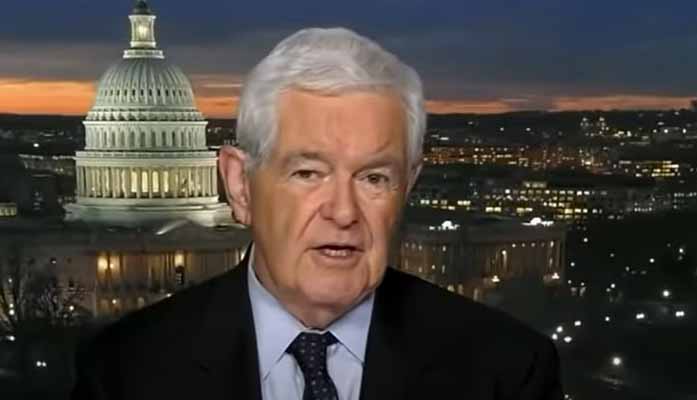
Former House Speaker and conservative pundit Newt Gingrich complimented Governor Doug Ducey for his leadership tactics concerning COVID-19 and K-12 schools.
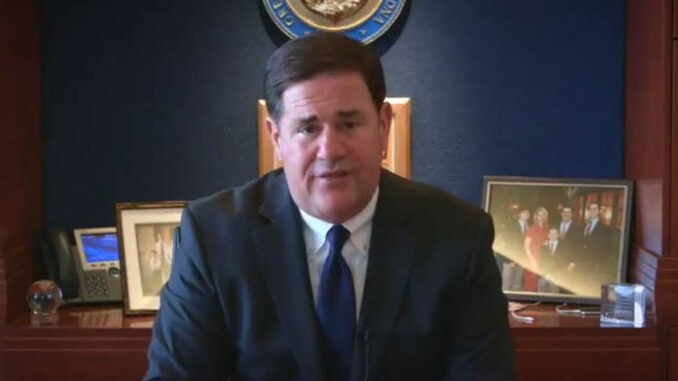
The governor announced that families may receive up to $7,000 to receive the education of their choice if their child’s school decides to cease in-person learning due to COVID-19. Ducey allocated $10 million to what he called a “preemptive action” program: the Open for Learning Recovery Benefit.
“Governor Ducey’s announcement that Arizona will give the education money to parents if their school is closed is the most creative response yet to the teachers union putting children last,” wrote Gingrich. “Chicago should follow his lead.”
Gingrich’s tweet referred to the decision by the Chicago Teachers Union (CTU) on Tuesday night to return to remote learning. A day later, hours after Gingrich’s tweet, Mayor Lori Lightfoot appeared in a press conference to reemphasize the importance of in-person education. Lightfoot had pushed for school reopenings throughout 2021 in a constant battle with the CTU and Chicago Public Schools (CPS).
As Ducey made his media rounds to discuss his program, he submitted an opinion piece with the Wall Street Journal criticizing the CTU, CPS, and Lightfoot’s administration the day after her press conference. Ducey challenged President Joe Biden to take a stand on school closures as well.
“Even Mayor Lori Lightfoot is unhappy, correctly noting that Chicago’s classrooms are safe and accusing the union of an ‘illegal work stoppage.’ She added that teachers who didn’t show up Wednesday would be put on no-pay status. We’ll see how long that lasts given how powerful the CTU is in Democratic politics,” wrote Ducey. “As for Mr. Biden, whose side is he on? The students whom he says will be safe in class according to all of the science? Or the unions who backed him politically but are doing terrible harm to America’s school children, including 330,000 of them in Chicago this week? How about leading for a change, Mr. President?”
Ducey’s program was prompted by teachers unions’ efforts to close in-person schooling, having children return from the holidays to remote learning for two weeks minimum. Ducey accused unions of disregarding children’s welfare for a political game.
On Thursday, the governor further claimed that his $10 million program would be “kryptonite” to teachers unions. He dismissed the activists as those opposed to science and challenged their true intentions.
“These unions are playing games with our children’s education. They aren’t following the science. Experts agree that kids should be in the classroom,” stated Ducey. “Our kids cannot afford any more time away from the classroom. Arizona children are in school and they’re going to stay in their classrooms. […] Kids need to get caught up. There’s too much focus on masks, and not enough on math. Arizona is showing the way to keep kids in school.”
Corinne Murdock is a reporter for AZ Free News. Follow her latest on Twitter, or email tips to corinne@azfreenews.com.
by Terri Jo Neff | Jan 4, 2022 | Education, News
By Terri Jo Neff |
In an effort to reassure students and parents, Gov. Doug Ducey announced Tuesday that he is making up to $7,000 available for families who may face financial or educational barriers due to unexpected school closures.
Ducey described his new $10 million Open for Learning Recovery Benefit program as a “preemptive action” to ensure in-person learning remains an option for all K-12 students in Arizona. Funds can be used by eligible students and families toward childcare approved by the Arizona Department of Economic Security, as well as school-coordinated transportation, online tutoring, and school tuition.
“In-person learning is vital for the development, well-being and educational needs of K-12 students,” Ducey said. “With the new Open for Learning Recovery Benefit program, if a school closes for even one day, students and families who meet the income requirements will have access to instruction that best meets their needs.”
Families at or below 350 percent of the federal poverty line will be eligible to apply online for benefits later this month. Data shows such families are more likely to be negatively impacted by school closures due to limited daycare options, limited access to technology for remote learning, and less flexibility with work schedules.
The governor’s announcement of the new funding program came just days after some members of RedforEd, a teachers’ union / activist group, called on school districts to require students to utilize remote learning in place of in-person classroom instruction for the next few weeks, at a minimum. Ducey and many K-12 professionals have rejected the option, citing performance gaps and other harms brought on by school closures.
You can read more about the call for school closures here.
“We will continue to work with families, public health experts and school leaders to ensure our kids can stay in the classroom and parents have a choice – always.” Ducey said Tuesday.
The Open for Learning Recovery Benefit program is the latest effort by Ducey to show his seriousness toward requiring schools to resume teacher-led, in-person instruction. Since March 2021, various funding options have been made available by the state, including the Education Recovery Benefit program and the Education Plus Up Grant program announced in August to provide grant fundings for district and charter schools that kept their doors open and followed all state laws.
Another K-12 funding program implemented last year addressed K-12 literacy, adult education, and expanded teacher professional development. Monies were also set aside to promote after-school programs, to support school choice opportunities for students in rural communities, and to fund Arizona Transportation Modernization Grants to improve reliable and safe transportation options.
by Corinne Murdock | Jan 4, 2022 | Education, News
By Corinne Murdock |
In an apparent response to the push from teachers’ unions to revert to remote learning for at least two weeks if not more, Governor Doug Ducey announced Monday that all of Arizona would continue with in-person learning.
In a thread, Ducey reminded Arizonans of President Joe Biden’s stance on keeping schools open, as well as the past actions of unions striking for higher pay after being promised higher pay. For the latter reference, Ducey was citing his promise of a 20 percent raise.
“IN-PERSON LEARNING WILL CONTINUE IN ARIZONA[.] ‘The science is clear, and overwhelming. We know how to keep our kids safe from COVID-19 in school. K through 12 schools should be open.’ That’s from President Joe Biden. And public health experts agree. Yet union leaders are telling parents to prepare for remote learning. It shouldn’t come as a surprise, this is the same union that encouraged a teacher strike well after a teacher raise was proposed. Once again, teacher unions are playing political games with no regard for the social and emotional impact on our kids. Parents shouldn’t stand for it — and will remember these antics at the ballot box. And at the state level, we’ll be working to ensure in-person learning continues. From recruiting more substitute teachers, to ensuring that if a student is turned away for even one day of in-person learning, parents have a choice and the resources to take their child to a school that better meets their needs.”
Twitter tagged the following warning to the governor’s thread: “Some conversations get heavy[;] Don’t forget the human behind the screen.”
Ducey issued a similar Twitter thread announcement last March several weeks before the one-year anniversary of COVID-19 being announced as a national emergency. That thread announced Ducey’s executive order for all schools to continue March 15 — several days after the one-year anniversary of former President Donald Trump’s national emergency declaration.
“ANNOUNCEMENT: Getting kids back in the classroom is one of the most important things we can do as we see #COVID19 cases drop and vaccinations underway. A majority of Arizona public schools are already open, and school leaders have demonstrated in-person instruction is possible to do safely. The @CDCgov has laid out a path for every school to open safely. Public health experts nationally have spoken about the importance of getting kids back in school. In Arizona, teachers have been prioritized for the vaccine, and many school districts are reporting that nearly all of their educators have received both doses. Today, I’m issuing a new Executive Order. It requires public schools to get back to teacher-led, in-person instruction by March 15, or after Spring Break. I know not every parent feels comfortable sending their kids back to school. So virtual learning will continue to be an option for those families. But many do want to go back, and this will require schools to provide that opportunity. The science is clear, and so are the social and behavioral impacts. It’s time to get kids back in the classroom. I’m confident that Arizona has made better progress on this to date than many other states, and today’s action will speed up that process even more.”
According to the Occupational Safety and Health Administration (OSHA) at the time of this report, there have been 1861 reported workplace fatalities from COVID-19. OSHA issued an Emergency Temporary Standard (ETS) requiring employers to report employees that were hospitalized or died from COVID-19, “regardless of the amount of time between the exposure to COVID-19 in the work environment and the death or in-patient hospitalization.
These OSHA reports are given within eight hours of a fatality, or 24 hours of a hospitalization.
According to the latest counts, there have been over 24,300 deaths related to COVID-19 in Arizona. In the last six months, a total of over 6,300 deaths have occurred. Nearly 72 percent of deaths occurred in individuals over 65 years old. Nearly 16 percent of deaths occurred in individuals aged 55 to 64 years old.
Nearly 8 percent of deaths came from individuals aged 45 to 54 years old. 5 percent of deaths came from individuals 20 to 44 years old. Nearly 0 percent of deaths occurred in individuals under the age of 20: .2 percent, to be exact.
Corinne Murdock is a reporter for AZ Free News. Follow her latest on Twitter, or email tips to corinne@azfreenews.com.
by Terri Jo Neff | Dec 29, 2021 | News
By Terri Jo Neff |
Arizona jumped to the national forefront of telehealth in May 2021 when Gov. Doug Ducey signed emergency legislation that dramatically expanded options for accessing safe and reliable health care services.
“Our state now has the broadest telemedicine law in the nation, providing greater opportunity for safe and reliable medical services,” Ducey’s office noted Wednesday in a “2021 Year in Review” statement. “Expansive telehealth helps all Arizonans, especially low-income families and those living in rural areas, connect with their medical providers.”
Telehealth or telemedicine is the use of digital technology -devices such as computers, telephones, smartphones, and tablets- to access health care services without needing to be in the same room or even the same state as the medical provider.
In May 2020, the health care consulting firm McKinsey & Company noted the total annual revenue of U.S. telehealth players was an estimated $3 billion prior to COVID-19. That U.S. revenue stream could jump in a post-pandemic market to $250 billion as health care services continue to shift to a telehealth platform, or what they refer to as virtual or virtually-enabled care.
A July 2021 updated report by McKinsey & Company noted the utilization of virtual care services is now 38 times higher than before COVID-19. This change has been driven by an increased willingness of consumers / patients to embrace telehealth, as well as an increased willingness of providers to offer such services.
And as seen in Arizona, another key factor in the growth of telehealth is the regulatory and statutory changes, which enable greater access and reimbursement.
“Patients and medical professionals know what’s best for their needs, and we’re working to make sure they have access to those services,” Ducey said when signing the legislation in the spring.
The governor pointed at the time to the benefits for vulnerable populations and the fact snowbirds visiting Arizona could receive telemedicine from their home state due to Arizona’s new law. In addition, doctors are assured equal compensation from insurance companies for telemedicine services.
Meanwhile, McKinsey & Company noted in July that investor activity continues to grow at record levels.
“Investment in virtual health continues to accelerate,” the firm noted in its July update, adding that total venture capital investment into the digital health space in the first half of 2021 totaled $14.7 billion. That is more than all of the investment in 2020 ($14.6 billion) and nearly twice the investment in 2019 ($7.7 billion), the update noted.
The University of Arizona’s College of Medicine operates the Arizona Telemedicine and Telehealth Center. It provides telemedicine services, distance learning, informatics training, and telemedicine technology assessment capabilities to communities throughout Arizona.
On Feb. 7, the UA Telemedicine Center is offering a free webinar for medical professionals interested in adding telehealth services to their practice. More information about the “Developing a Telemedicine Program” webinar can be found at https://telemedicine.arizona.edu/training/developing-telemedicine-program/webinar/2022-02-07
by Corinne Murdock | Dec 17, 2021 | News
By Corinne Murdock |
Governor Doug Ducey carved out an exemption for hospitals in his renewed executive order addressing COVID-19 vaccine mandates (EO 2021-21), though it banned the state and all counties, cities, and towns from implementing any. Additionally, Ducey issued hospitals $35.2 million in grants to aid in staffing shortages. The $35.2 million meted out to $1.2 million in dialysis center support to Valleywise Health, $6 million for more beds, and $28 million to extend around 300 nursing staff contracts.
According to campaign finance records, Arizona’s hospitals did greatly support Ducey during both of his gubernatorial campaigns: Tenet Healthcare, West Valley Hospital, Carondelet Health, Honor Health, Maricopa Integrated Health System (now Valleywise Health), Banner Health, Dignity Health, and Yuma Regional Medical Center.
Health insurance giants also supported Ducey during his two campaigns: UnitedHealth, WellCare Health Plans, Cigna, and Blue Cross Blue Shield.
Makers and distributors of the COVID-19 vaccine had Ducey’s back as well: Pfizer and McKesson donated thousands to Ducey’s campaigns respectively. McKesson is a major distributor of the COVID-19 vaccine, and Ducey’s special advisor on vaccination efforts, Dr. Richard Carmona, was one of the latest additions to the distributor’s board. Carmona was appointed to the board about two weeks after Ducey announced him as an advisor to the state.
12 News reported Carmona receives approximately $400 an hour from the state to promote the vaccine through Arizona Department of Health Services (ADHS). For about two collective weeks of work, Carmona has earned over $35,000. ADHS spokespersons confirmed that Carmon will remain in his advisory role past the December 31 contract end date — possibly through 2022.
The Arizona Hospital and Healthcare Association (AHA) thanked Ducey for this decision to reaffirm their mandating abilities. The AHA and its former president supported Ducey during both his runs for governor with thousands in donations.
The funds follow $60 million allocated in September to aid in health care facility staffing for administering treatments to decrease COVID-19 hospitalizations.
Arizona, like many other states, is facing a nursing shortage; their number determines the number of beds available for patients. Earlier this month, ADHS asked the Federal Emergency Management Agency (FEMA) for staff who can aid in monoclonal antibody treatments at Banner Health, Carondelet St. Joseph’s Hospital, Banner Health Plus, Banner Estrella Medical Center, Valleywise Health Medical Center, Dignity Health Arizona General Hospital, and Abrazo Central Campus, as well as emergency support at Yuma Regional Medical Center and Canyon Vista Medical Center.
ADHS confirmed the first case of the Omicron variant of COVID-19 last week in Yavapai County.
Corinne Murdock is a reporter for AZ Free News. Follow her latest on Twitter, or email tips to corinne@azfreenews.com.