by Matthew Holloway | Nov 29, 2025 | Education, News
By Matthew Holloway |
Arizona lawmakers are urging the State Board of Education to fix the state’s Structured English Immersion (SEI) Endorsement Course Framework at its December 1st meeting, according to a letter from Rep. Michele Peña (R-LD23).
A group of State Representatives and Senators cosigned the letter from Peña, warning that existing rules risk placing Arizona out of compliance with federal funding mandates and allow the insertion of politics and racial rhetoric into courses designed to prepare educators, in violation of state law.
“Parents expect English-language instruction to focus on English-language instruction,” Peña said in a statement. “Instead, they’re finding courses with ideological material that has nothing to do with helping students learn English. The Board can’t ignore federal requirements, and it shouldn’t look the other way while universities inject political content into SEI training. The framework needs to be corrected now, and delays only create further problems for students, teachers, and the state.”
Peña warned the board that the present rule set “is harming instructional quality and undermining classroom integrity statewide.”
As noted by Peña, A.R.S. § 15-756.01 requires that the Board of Education “shall adopt and approve research-based models of structured English immersion.” In the letter, Rep. Peña adds, “SEI is intended to be a model focused only on research-based English language acquisition. That is all.”
She continued:
“The insertion of DEI-aligned language, political ideology, or racialized theories is not only outside the scope of the statute, but it also actively undermines the purpose of SEI by introducing content that divides classrooms, distracts educators, and shifts instructional time away from what the law actually requires. Arizona’s students deserve better than to have their language instruction diluted by ideological philosophies and turned into a political debate…
… We expect the Board not to delay corrective action or hide behind process barriers that were never required when these controversial provisions were inserted. Our students, teachers, and districts deserve a framework grounded in objective, research-based instruction, not ideological experimentation.”
The legislators who cosigned the letter include State Representatives David Marshall (R-LD07), James Taylor (R-LD29), Leo Biasiucci(R-LD30), Lisa Fink (R-LD27), and House Majority Leader Michael Carbone (R-LD25), as well as Senators Hildy Angius (R-LD30) and Tim Dunn (R-LD29).
As previously reported by AZ Free News, Arizona Superintendent of Public Instruction Tom Horne issued a similar statement in October, calling upon the Board to strip Diversity, Equity, and Inclusion (DEI) language from Arizona’s teaching standards.
Note: As of this report, the State Board’s public calendar shows the meeting scheduled for Dec. 1, 2025, as a meeting of the Accountability Technical Advisory Committee, while the regular State Board of Education meeting is scheduled for December 8th; this conflicts with the December 1st date provided in Rep. Peña’s statement.
Matthew Holloway is a senior reporter for AZ Free News. Follow him on X for his latest stories, or email tips to Matthew@azfreenews.com.
by Matthew Holloway | Jul 30, 2025 | News
By Matthew Holloway |
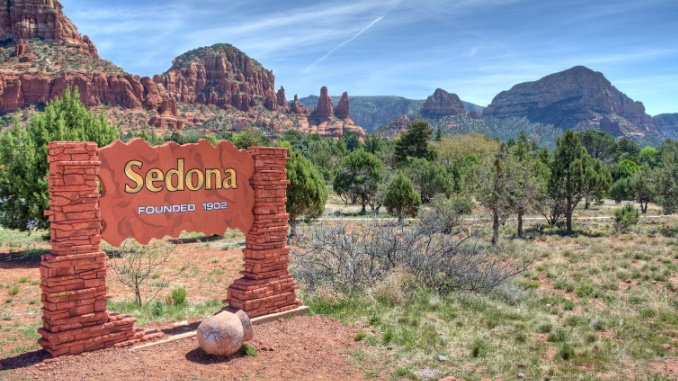
During its July 24th Contingency Open Meeting, the Arizona Corporation Commission (AZCC) unanimously assigned the construction cost of a massive 1.5-million-gallon subterranean water tank to the Sedona customers of Arizona Water Company. The decision follows a nearly four-decade efffort to find a location for the water tank that was agreeable with the City of Sedona and local residents.
According to the AZCC, the “extra costs incurred” by the water tank, concealed with a fake home, will fall “solely on the Sedona customers of Arizona Water Company.” However, Pinetop Lakes, Munds Park, and Payson will also see a significant rate increase.
According to a press release from the AZCC, for Sedona residents, the estimated rate increase is 45%, which would bring the average residential bill to approximately $60 per month. Meanwhile, other Northern Group customers will see an increase of roughly 34%, with a billing estimate of $52 per month.
Prior to the meeting, the notion of assigning the costs to the ratepayers outside of Sedona was opposed by Republican Arizona Rep. David Marshall (R-LD7), who publicly condemned it in a press release. Marshall cited the “City’s requirement that Arizona Water Company bury a new water storage tank underground and disguise it with a fake home built on top—an aesthetic demand that made the project one of the most expensive the utility has ever undertaken.”
Rep. Marshall stated, “Arizona Water Company’s northern Arizona ratepayers—including the good people of Pinetop-Lakeside, Heber-Overgaard, Rimrock, Munds Park, and the Village of Oak Creek—did not ask for these costly design features. Quite frankly, it’s absurd to ask them to fork over millions to subsidize the excessive, big-government design mandates of a city nearly 200 miles away. This is a matter of fairness and affordability. Sedona chose to inflate the cost of this project for its own benefit. The rest of northern Arizona shouldn’t be stuck footing the bill for Sedona’s multi-million-dollar expectations.”
According to the AZCC release, an amendment to the decision by Commissioner Rachel Walden resulted in the “non-operational aesthetic expenses” being shifted to Sedona Residents. “My job is to ensure expenses are just, reasonable, and prudent,” Walden said. “That is why I offered my amendment to ensure that non-operational aesthetic expenses will not be paid for by those who do not benefit from them. I thank my fellow Commissioners for fully supporting my amendment.”
The Corporation Commission said in a statement, “The Commission deemed a new tank was prudent and appropriate; however, it was adamant that the extra costs from the aesthetic requirements were not to be assigned to the other 15,000 customers who do not reside in Sedona. The City and residents expressed disapproval for construction of an above ground water tank, which is the conventional design. The Sedona Project is one of only three water tanks that have been undergrounded in the state, by Commission regulated companies.“
The construction tab for the East Sedona Water Storage Tank and Booster Project came to approximately $20 million, as reported by the Arizona Daily Independent. The Arizona Water Company explained that to obtain approval for a conditional use permit (CUP) by the Sedona Planning and Zoning Commission and City Council, it was required to comply with requirements to bury the storage tank and “camouflage” the tank by building a structure on top of the tank that resembles a home for aesthetic purposes, so that it will blend in with the neighborhood and scenery.
“Hopefully this is a strong signal to all water companies, local governments, and residents moving forward that if you require special conditions or place limitations on infrastructure based upon aesthetic preferences, you may be responsible for those extra costs,” said Chair Thompson. “I’m sympathetic to the majority of the Sedona customers who will be solely responsible for these added costs, but it is not an equitable requirement for the 15,000 customers in other communities to be responsible for millions in extra costs because a vocal minority didn’t like the way a water tank looked.”
“After a robust discussion today, the Commission reached a Decision in Arizona Water Co.’s Northern Group’s rate case that strikes a fine balance between ratepayer protections and company viability,” Commissioner René Lopez said. “Thursday’s Decision also signals to ratepayers and local governments that, even in a consolidated group, the Commission will equitably allocate costs to certain customer groups when extraordinary expenses are incurred at their request or for their exclusive benefit. Nevertheless, the compromises and decisions made ensures ratepayers continue to have access to reliable and safe drinking water in some of Arizona’s most beautiful terrains.”
“The final determination of rates for Arizona Water came after a very thoughtful discussion at the Commission about the additional requirements by the City of Sedona for the undergrounding of the water tank and the appropriateness of the financial burden on other ratepayers within their northern division,” stated Commissioner Lea Márquez Peterson, who voted in support of the amended case. “I am appreciative of my fellow Commissioners’ support for my amendment that requires the company to present possible improvements to their customer assistance programs within their next rate case.”
“I’m pleased the Commission directed Arizona Water to engage in discussions with the City of Sedona about funds to help cover the incremental costs to bury the East Sedona Storage Tank,” Vice Chair Nick Myers added. “Because the City required and is directly benefitting from undergrounding the tank, it’s only fair that they contribute financially to cover the City-imposed aesthetic costs. Otherwise, the entire incremental cost of burying the tank will be borne by Arizona Water’s Sedona System customers.”
Matthew Holloway is a senior reporter for AZ Free News. Follow him on X for his latest stories, or email tips to Matthew@azfreenews.com.
by Matthew Holloway | Jun 20, 2025 | News
By Matthew Holloway |
Only weeks after refusing to comply with an Executive Order to reactivate the Cholla Power Plant in Northern Arizona, Arizona Public Service (APS) has filed documents with the Arizona Corporation Commission (ACC) requesting an increase in the state-regulated electrical utility’s revenue of $579.5 million. That equates to a jump in residential electrical rates of approximately 14.5%. The hike would represent a 30% increase in residential rates since 2023.
The utility is also seeking permission from the Commission to unilaterally adjust prices annually using “rate design schedules.” APS justified this request to the ACC in the 2,323-page application docket claiming, “The costs to ensure reliable service to customers have rapidly increased due to high rates of inflation, persistently high interest rates, and continued supply chain and trade policy volatility.”
The utility alleged that a “significant revenue deficiency … based on the 12-month period that ended on December 31, 2024 (Test Year), demonstrates that APS’s current rates do not recover sufficient revenue to ensure reliable service.”
Notably, APS and its parent company, Pinnacle West Capital Corp., did have enough revenue to give Governor Katie Hobbs $250,000 for her inauguration and even bankrolled her legal battle with Kari Lake to the tune of $100,000.
“The tremendous growth across APS’s service territory shows no sign of letting up, with the Company’s infrastructure and reliable energy supply providing the backbone of this historic expansion,” APS said. “And yet, with high rates of inflation, persistently high interest rates, and continued supply chain volatility, the costs to serve current APS customers (let alone prepare for growth) are substantially higher than when the test year concluded in the Company’s last rate case.”
Just one year ago, the ACC approved a rate increase for residential customers of approximately 8 percent. That was followed by significant turnover in the commission with Republican newcomers Rachel Walden and Rene Lopez joining incumbent Lea Márquez Peterson to defeat the Democrat nominees and lock down all five seats for the GOP.
In the upcoming 2026 election, Arizona Reps. David Marshall and Ralph Heap are challenging incumbent commissioners Chairman Kevin Thompson and Vice Chairman Nick Myers. During a Tuesday presser, Marshall and Heap accused the commissioners of excessive price hikes and blocking President Donald Trump’s energy agenda.
“We have some families now who have to make a decision. Do I buy less groceries so I can pay my power bills? Or just deal with it or go without power,” Marshall told reporters.
“The Corporation Commission may not always make the headlines,” he added. “But the decisions made there affect every one of us every single day.”
In a statement responding to the primary challenge from Reps. Marshall and Heap, Commissioners Thompson and Myers defended their record saying, “We’ve taken steps to ensure our utilities are planning responsibly and not chasing costly, agenda-driven energy mandates. That’s why we required APS to prove in its 2023 Integrated Resource Plan that it has enough reliable and dispatchable generation to replace retiring plants. And it’s why we initiated the termination of Kris Mayes’ Renewable Energy Standard, which was an outdated mandate that artificially inflated utility costs by forcing ratepayers to subsidize unreliable, high-cost sources like wind and solar.”
Matthew Holloway is a senior reporter for AZ Free News. Follow him on X for his latest stories, or email tips to Matthew@azfreenews.com.
by Matthew Holloway | Jun 18, 2025 | News
By Matthew Holloway |
Arizona Corporation Commissioners Nick Myers and Kevin Thompson responded to reports of an upcoming primary challenge from State Representative Dr. Ralph Heap and running mate Rep. David Marshall with a surprising attack against both candidates and two of the most prominent conservative organizations in the state. After Heap confirmed his 2026 candidacy for the Commission in a call with the Arizona Republic, incumbents Thompson and Myers reportedly blasted Heap and Marshall as “special interest proxies who have been recruited to return politics into ratemaking.”
Myers would even go as far as to claim that the two GOP challengers are in the service of the Arizona Free Enterprise Club (AZFEC) and Turning Point USA (TPUSA), telling the Republic that both want “good puppets” on the Corporation Commission.
Responding to the remarks, Arizona Free Enterprise Club President Scot Mussi told the Republic that Myers and Thompason were “pretty on brand,” and added, “They always resort to attacks and attacking whoever they can to avoid having to address the substance of what’s being brought to them.”
Turning Point Action spokesman Andrew Kolvet told the outlet, “We have no idea what the commissioner means by ‘puppet,’ as we have had zero contact with any current commissioners since they have taken office.” He stated that TPUSA considers AZFEC to be “an ally.”
Although the Corporation Commission came fully under Republican control in January, the stakes for Arizona voters are high given that APS has requested yet another rate increase on top of the 8% increase it was given in 2024.
Commissioners Thompson and Myers have also drawn the ire of many Republicans by echoing the talking points of APS and Tucson Electric Power (TEP), when both utilities refused to comply with President Trump’s Executive Order to reactivate the Cholla and Springerville coal-fired power plants. As previously reported by AZ Free News, Thompson claimed that doing so would “jeopardize the grid and burden ratepayers with millions of dollars in short-sighted costs.” He also criticized the President’s intervention saying, “The Commission must hold utilities accountable and ensure that we have reliable and dispatchable generation to meet the load demands of the future. We also have to make sure we accomplish that goal in a manner that doesn’t jeopardize the grid and burden ratepayers with millions of dollars in short-sighted costs that fail to meaningfully address our long-term energy needs.”
He added, “Managing highly intricate systems like our electrical grid is far more complicated than a slogan on a bumper sticker. Continued calls from certain elected officials to reopen Cholla does nothing more than promote financially reckless solutions.”
The Commission’s refusal to follow the Trump administration’s energy agenda and pushback toward efforts to eliminate environmental, social, and governance (ESG) and Diversity, Equity, and Inclusion (DEI) policies has placed it at odds with the Republican-controlled state legislature—along with the Arizona Freedom Caucus, AZFEC, and the Goldwater Institute.
Speaking to reporters, Myers accused AZFEC and TPUSA of “making things up,” claiming, “They’ve basically been trying to run us through the mud for every little thing they can drum up.”
However, Mussi explained that the Free Enterprise Club has had “a multitude of issues,” with the Commission. “There’s been a multitude of issues that they have shown no interest in working on,” he said. “And when these issues are brought up, rather than engaging on them, they have usually gone and attacked not just us, but whoever is bringing the policies that they disagree with addressing.” In particular he pointed to APS and TEP’s integrated resource plans, which lean heavily on wind and solar generation as opposed to coal, natural gas and nuclear, and AZFEC’s drive to terminate “California-style, Green New Deal policies.”
Matthew Holloway is a senior reporter for AZ Free News. Follow him on X for his latest stories, or email tips to Matthew@azfreenews.com.
by AZ Free Enterprise Club | Jun 17, 2025 | Opinion
By the Arizona Free Enterprise Club |
One of President Trump’s most important campaign promises was to bring accountability and transparency to federal government spending. Under the newly created Department of Government Efficiency (DOGE), his administration didn’t waste any time getting to work.
Within weeks of Trump’s inauguration, DOGE had uncovered billions of dollars in waste and abuse of taxpayer funds under the United States Agency for International Development (USAID). Here are just a few of the ways the Trump administration discovered USAID was spending your tax dollars:
- $1.5 million to “advance diversity, equity, and inclusion in Serbia’s workplaces and business communities.”
- $2 million for sex changes and “LGBT activism” in Guatemala.
- Millions to EcoHealth Alliance — which was involved in research at the Wuhan lab.
- $1 million to boost French-speaking LGBTQ groups in West and Central Africa through the State Department.
- $15 million for condoms to the Taliban through USAID.
This list barely scratches the surface of the waste and abuse that was discovered. But now, it appears it’s not just the federal government that’s been throwing your money around to outlandish woke initiatives. Arizona may have its very own USAID scandal…
>>> CONTINUE READING >>>