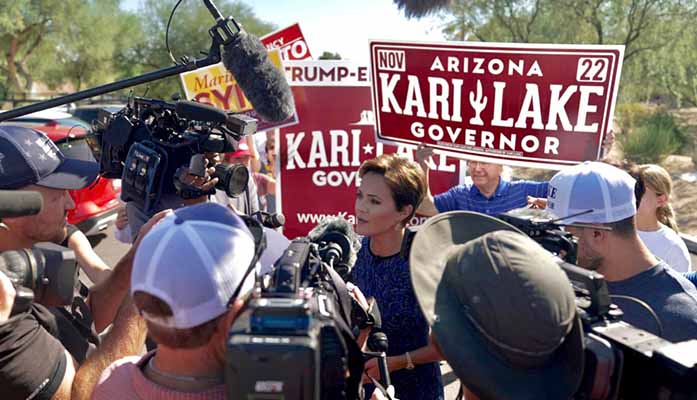
On Wednesday evening, Senator JD Vance, Vice Presidential nominee of the Republican Party, took to the stage at Arizona Christian University in Glendale, Arizona. While President Donald Trump was rallying the crowds in Pennsylvania for the first time since the attempt on his life in Butler, Vance was showing Arizonans that the Senator from Ohio and author of “Hillbilly Elegy” can play on the same field that once brought Barry Goldwater to national prominence.
Flanked on stage by notable conservative Congressmen Eli Crane, Paul Gosar, and Andy Biggs as well as GOP Senate nominee Kari Lake and Turning Point USA’s Charlie Kirk, Vance broke down the stakes for Arizona voters, describing the scenario of a Harris presidency.
“Let us count the ways in which Kamala Harris has screwed up this country over the last 3.5 years,“ Vance began according to CSPAN.
“Now, they’ll all lie to you about it, the media, but she was appointed the border czar and then unleashed the worst border crisis in the history of this country. On her watch, more than 10 million illegal aliens have invaded our country, and it wasn’t by accident. It was by design.”
“They said when they took office that they were going to do exactly what they did. They said they wanted to decriminalize illegal immigration and tear down Immigration and Customs Enforcement. Open up the floodgates and give illegal aliens free health care. And she wanted you the American citizens to pay the bill. That’s what she said.”
“And then, on her very first day in office, they went to work, but not for you. For them. They suspended deportations. They stopped building President Trump’s wall. They reinstated catch-and-release. And that’s how every state became a border state because they just released these people into our country. Then they fly in first class, give them first class hotel accommodations. You guys are paying for that too.”
Vance didn’t shy away from taking direct aim at Harris’ recent explosion onto the media scene either, and her stark departure from previous appearances as noted by President Trump when he spoke to the National Association of Black Journalists Conference in Chicago.
“So, you guys want to hear that truth about Kamala Harris? Kamala Harris is a phony who caters to whatever audience is in front of her. I don’t know if you saw this. But earlier this week, look up the clip, she went down to Georgia and started talking with a fake Southern accent. I’m serious. Now, what the hell was that all about? Kamala Harris grew up in Canada. They don’t talk like that in Vancouver or Quebec or wherever she came from.”
— News That Matters (@ThatmattersNews) July 31, 2024
“It doesn’t matter. It’s the same new liberal policies, but a different accent, whoever she’s talking to. Now on November 5th, she can go back to using her San Francisco accent because we are going to send her packing, and we’re going to elect Donald Trump President of the United States. “
Senator @JDVance: "She went down to Georgia and started talking with a fake, southern accent…Kamala Harris grew up in Canada! They don't like that in Vancouver or Quebec…on Nov 5 she can go back to her San Francisco accent because we are going to send her packing."🔥 pic.twitter.com/xQAnRAHkmq
Pointedly, Vance drew attention to Harris’ apparent complicity in deflecting concerns over the capacity of President Joe Biden to serve as well as criticizing the thoroughly non-democratic method of her nomination by DNC leaders without a primary vote.
“Now after they covered up for Joe Biden’s incompetence for 3.5 years. This is a scandal from both the Democrats and the media,” he began. “Now they’re gaslighting us about Kamala Harris’ radical record. The media likes to portray her, all of a sudden, she’s a sensible moderate. That’s what they say. Now, the same media that told us for 3.5 years, Joe Biden who couldn’t finish his sentence was Albert Einstein. Now they tell us Kamala Harris is Abraham Lincoln but anyone who is too blind to see Biden’s incompetence, or more likely too dishonest to admit it, is not fit to serve as our commander in chief.”
"…The media calls it a coronation; I think we ought to call it a coup! In America, we don't crown our leaders; we vote for them." – VP Nominee, @JDVance
— Real America's Voice (RAV) (@RealAmVoice) July 31, 2024
Vance added, “The Democrat party bosses have decided to install Kamala Harris as their new nominee, but think about this, she has not received a single vote for President of the United States. Now, the media calls this a coronation. I think we’d call it a coup and in America we don’t crown our leaders. We vote for them.”
Vance also prefaced his planned trip to Arizona’s southern border and called Harris out on her radical leftist record and the failure of the Biden-Harris regime to rein in the out-of-control border with Mexico.
He told rallygoers, “Now I’m going to the border tomorrow and her record of disaster is clear. 500,000 kids have been trafficked by the Mexican drug cartels because of her policies, hundreds of thousands of our citizens are dead from fentanyl overdoses because of her policies, hardworking Americans cannot afford groceries because of her policies. Now, the media wants to call her a moderate. But here’s a fact check for the fake news. Kamala Harris was the most liberal senator in the entire United States Senate. She is a dangerous San Francisco liberal, and thanks to the people in this room, she is never going to be the President of the United States of America.”
Arizona’s Republican Primary for the open seat in the U.S. Senate between former Gubernatorial candidate Kari Lake and Pinal County Sheriff Mark Lamb quickly became a heated one.
While Lake faced criticism for referring to Lamb as a “total coward when it comes to election integrity” who “surrendered to the establishment” during the GOP Senate Forum, Lamb decried her as “a divider,” rather than a “uniter.” He stated, “It’s time she takes some personal responsibility for losing an election that she was supposed to win,” referring to her 2022 defeat by Gov. Katie Hobbs in a statement published to X.
Although the results are not finalized in many of the races, according to state and county officials, the unofficial results stand thusly as of noon on July 31 according to the Arizona Secretary of State’s Office.
The Arizona Republican U.S. Senate Nominee is Kari Lake — According to current results, Lake defeated Pinal County Sheriff Mark Lamb 55.3%-39.3% by a difference of 98,644 votes.
In a post to X, Lake shared her acceptance of the nomination and wrote, “I want to thank everyone who put in their blood, sweat, & tears, knocking on doors, volunteering, & working for our campaign I love every one of you I want to thank Arizonans for entrusting me to be their voice. And I want to thank my family, I couldn’t do any of this without them.”
I want to thank everyone who put in their blood, sweat, & tears, knocking on doors, volunteering, & working for our campaign
I love every one of you
I want to thank Arizonans for entrusting me to be their voice
As of this report it doesn’t appear that Mark Lamb has issued a concession or any statement regarding the race.
Lake will face Democrat Congressman Ruben Gallego who won the Democratic nomination unopposed, garnering 424,088 votes.
According to Cook Political, the race for the seat of outgoing Sen. Kyrsten Sinema (I-AZ) leans Democrat. The RealClearPolling average as of this report shows Gallego leading by 3.4 points.
In a post to X, and during her nomination acceptance, Lake seemed to adopt a conciliatory tone toward Lamb writing, “[Sheriff Lamb] was never an opponent. He’s my friend. I truly appreciate everything he’s given to Arizona, and I know he’s not done fighting for it. He’s not done protecting it. He ran a great campaign, and I look forward to working together with him in the future.”
In her comments she thanked him and referred to him as her friend saying, “He ran a great campaign…that never hit below the belt, which is so rare in politics.” She complimented him saying, ”That is a great man. That is a man of great character.”
.@sherifflamb1 was never an opponent. He's my friend.
I truly appreciate everything he's given to Arizona, and I know he's not done fighting for it. He's not done protecting it.
He ran a great campaign, and I look forward to working together with him in the future. pic.twitter.com/qdf1oFuPFo
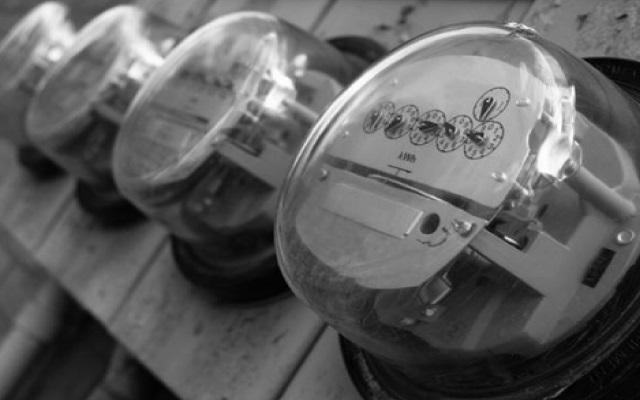
Arizona’s Energy Competitiveness Index was released Friday by the Common Sense Institute of Arizona (CSIA) and despite skyrocketing electrical rates, Arizona’s energy reliability and competitiveness have reportedly fallen since 2022. With businesses and families buckling under the strain of higher rates passed by the Arizona Corporation Commission in March, the state and nation are pivoting further away from reliable natural gas and nuclear power toward more intermittent solar and wind solutions. And the outcome seems to be hurting Arizona families.
According to the report, “Arizona’s relative affordability has improved compared to other states. The state now ranks 21st in residential electric affordability, up from 28th in 2011.” But legislators and regulators shouldn’t celebrate much. This isn’t simply because Arizona has gotten better, but also because almost every other state has gotten much worse.
The CSIA report found in part, “The reliability of energy grids across the country is on the decline, although Arizona remains one of the more reliable grids in the country. On average, a user of electricity in Arizona faced 136.9 minutes of interruption in 2022 – up from 73.9 minutes in 2013, and nearly 59% less than the duration faced by the average customer across the U.S. (333 minutes). Despite falling slightly in the two reliability competitiveness indices, Arizona still ranks 5th in reliability.”
⚡ Despite a national decline, Arizona's energy grid remains one of the most reliable! In 2022, the average Arizonan faced only 136.9 minutes of interruption, compared to the national average of 333 minutes.
— Common Sense Institute Arizona (@CSInstituteAZ) July 29, 2024
However, the report added, “Both the electricity and natural gas prices faced by residential, commercial, and industrial customers in Arizona have increased in the last 13 years, but have also become more competitive as other states experienced larger increases. Arizona now ranks 21st in residential electric affordability, up from 28th in 2011.”
The report shows in detail that since peaking in 2022 at a score of 82.9, Arizona’s competitiveness index has dropped precipitously ending at 79 in 2023.
As noted by the Common Sense Institute: “Arizona’s Energy Competitiveness Index was 77 in 2011, peaked in 2022 at 83, and then declined to 79 in 2023. An increase in the Energy Competitiveness Index is a positive qualitative change – i.e., the state is more competitive as the index approaches one hundred. While the headline index extends through 2023, data for some of the individual component metrics are not available for the entirety of the period covered. For those metrics, we present the results through the latest year of data available.”
In regard to capacity, the report reveals that Arizona’s generating capacity, referred to as “nameplate capacity” increased from 2019 to 2022 but has barely kept pace with population increases and has declined considerably since peaking in 2012. The report noted, “Arizona has experienced a large increase in its population in recent years due to high levels of net migration. Because power plants typically take several years, if not a decade or more to complete, nameplate capacity has not increased as much, thus the decrease in nameplate capacity per 100,000 residents.”
From 2011 to 2023, Arizona's overall energy competitiveness ranking jumped to 21st, with improvements in six out of ten key indices.
— Common Sense Institute Arizona (@CSInstituteAZ) July 26, 2024
The Common Sense Institute offered a stark warning that, “While the goals of implementing a more environmentally friendly energy system have merit, policymakers should take caution not to recklessly transition their energy grids to renewable sources too quickly, and without appropriate supporting infrastructure. Renewable transition elsewhere, namely in states like California and Texas, has proven to be both costly and at a detriment to reliability and competitiveness.“
Should Washington and Phoenix continue to plunge headlong down this path, it seems unlikely that Arizona’s energy outlook will remain sunny.
Last Friday’s CrowdStrike outage, which made headlines for disrupting operations at valley polling places, severely disrupted life for people all over the state because of Arizona’s heavy use of mobile banking, according to a study from Vention released Tuesday.
According to a release obtained by AZ Free News, the study by software development company Vention was based on Google Keyword Planner analysis of the U.S. Google search volume related to mobile banking on the basis that it can identify the states that utilize it most and were therefore the most impacted.
🚨 Recent #CrowdStrike outage shows that even automated security systems need a human touch. For startups & SMBs without dedicated security staff, Vention is here to bridge the gap. Let us help you stay secure and focused on growth: https://t.co/7J25dbcgkxhttps://t.co/tAtwqw1rYa
Arizona ranks fifth in the nation based on Vention’s findings following Maryland, New Jersey, Connecticut and Florida.
Credit: https://ventionteams.com Sources: Search volume data was gathered from Google Keyword Planner | Mobile banking usage survey results are from marketwatch.com | Penetration rate of online banking in the US is from statista.com
In Arizona, the utility of mobile banking is intuitive given the nature of Arizona’s development with tens of thousands of residents living in far-flung communities further from civic and business centers. But in other areas where mobile banking is prevalent, insufficient physical banking locations to handle customer density is a reasonable cause.
Vention reports, “In recent years, mobile banking has rapidly gained popularity, driven by the convenience and accessibility it offers. A recent survey conducted by MarketWatch found that nearly 75% of people prefer mobile and online banking over in-person banking.”
Marc Karasu, CMO at Vention, commented on the findings saying, “It’s fascinating to see which states are adopting the latest trends in banking technology more quickly and which are lagging.”
“What’s more, mobile banking popularity is set to keep rising, with research predicting that over 79% of the population will be using online banking by 2029.”
“Studies such as these are invaluable for the banking industry to identify where they need to focus their marketing efforts. Additionally, it highlights the states that could benefit from increased financial technology education and support.”
A report from the Arizona Republic Friday stated that the outage brought down point-of-sale systems at Circle K locations, caused delays and flight cancellations at Phoenix Sky Harbor International Airport, and disrupted police dispatch and communications systems all over the state.
Founder and president of Data Doctors Computer Services, Ken Colburn, told AZCentral that the situation could cause CrowdStrike and other cybersecurity firms to perform a “deep self-examination,” adding, “The silver lining of this is maybe we as an industry become better at this type of thing.”
Discussing the convenience of technology and interconnectivity as well as the risks he told the outlet, “You can’t really have it both ways.” He continued, “Every day, we as individuals make risk decisions. It is the nature of individuals. It’s the nature of business. It’s the nature of life. What we have to do is make sure that the risks that we’re taking do not exceed the value of what we’re getting out of our interconnected world.”
According to CNN, the outage, described as the largest IT outage in history, is expected to cost Fortune 500 companies in excess of $5 Billion in direct losses with healthcare and banking systems hit the hardest, suffering estimated losses of $1.94 billion and $1.15 billion respectively.
State Superintendent of Public Instruction Tom Horne is advising Arizona’s school districts and charter schools to consult legal counsel regarding implementation of the controversial Title IX changes.
The changes to Title IX center on the redefining of the term “sex” to include “gender identity.” In effect, schools would be required to permit access to gendered programs, activities, or spaces on the basis of gender identity rather than biological sex, such as sports teams, locker rooms, and bathrooms. The U.S. Department of Education (ED) released the final Title IX rules outlining this change in April.
In ED’s justification for expanding the concept of “sex” to include “gender identity,” the agency declared that basing exclusion on biological sex amounted to sex discrimination.
“For more than 50 years, Title IX has promised an equal opportunity to learn and thrive in our nation’s schools free from sex discrimination,” said U.S. Secretary of Education Miguel Cardona. “These final regulations build on the legacy of Title IX by clarifying that all our nation’s students can access schools that are safe, welcoming, and respect their rights.”
These new rules take effect on Aug. 1.
In a press release on Monday, Horne announced that he’d advised legal counsel to educational institutions through letters disseminated to all districts and charters. Horne emphasized that, though all schools had the choice to implement the updated Title IX regulations, there were pending legal challenges that may result in students suffering damages.
“This is your choice, but you may wish to delay implementing the new regulations until the legal situation is clarified. If the regulations are implemented and then later overruled by the courts, students may suffer damages in the meantime,” said Horne. “This is not legal advice. The Arizona Attorney General may disagree […] We are a local control state, and it will be up to districts and charters to determine how to proceed in this situation. You need to consult with your lawyer. I am only providing information I think might be useful.”
Indeed, a federal court in Louisiana ruled against the new regulations last month. The judge determined that the new federal rules amounted to federal overreach, calling ED’s rulemaking “arbitrary and capricious,” and signaling concern for the rules’ threat to protected constitutional speech.
Some districts have already opposed the changes.
Dysart Unified School District’s governing board voted to reject the new Title IX rules earlier this month. The district declared that ED’s changes to Title IX were contradictory to the existing, plain language of the rules.
Horne noted in Monday’s press release that the new Title IX rules could “significantly injure public education” by prompting parents to flee the system.
“In the past I’ve been asked by districts, as a policy matter, about their consideration of rules, permitting biological boys who have male genitalia being allowed in girls’ bathrooms, locker rooms, and showers,” said Horne. “My response was that there should be unisex bathrooms available, and if there was no room for them, the faculty bathroom should be used for that purpose. That would preserve the dignity of biological boys who identify as girls. But if they were allowed in girls’ facilities, I thought parents might well remove the girls from the school and send them to another district, Charter School, or private school. So, this rule could significantly injure public education.”
26 states have put forth legal challenges to the Title IX changes, with some awarded injunctions: Alabama, Alaska, Arkansas, Florida, Georgia, Idaho, Indiana, Iowa, Kansas, Kentucky, Louisiana, Mississippi, Missouri, Montana, Nebraska, North Dakota, Ohio, Oklahoma, South Carolina, South Dakota, Tennessee, Texas, Utah, Virginia, West Virginia, and Wyoming.
AZ Free News is your #1 source for Arizona news and politics. You can send us news tips using this link.