by Yendi Parker | Sep 17, 2026 | Opinion
By Yendi Parker |
For residents of Yuma County, concerns over biosolids are nothing new.
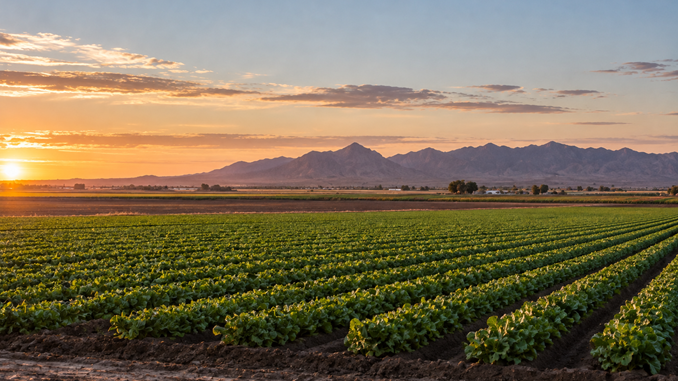
For years, residents, growers, businesses, and local officials have raised concerns about odors, flies, dust, debris, and the sheer volume of treated sewage sludge being brought into southern Yuma County and applied to agricultural land.
And for years, Yuma kept asking for action.
On September 10, the Arizona State Land Department finally acted, finding AgTech LLC in default on one State Trust Land lease and declining to renew four others after determining that continued leasing was not in the best interest of the State Land Trust.
According to the state, AgTech applied more than 68,000 dry metric tons of treated sewage sludge in 2025 alone, with more than 97 percent originating from California utilities.
But Yuma’s fight over biosolids did not begin in 2026.
Yuma County’s own timeline shows the Board of Supervisors formally discussing nuisance and public health concerns surrounding biosolids as far back as 2016. In 2020, the Board formally opposed a proposed 6,000-acre biosolids site. Then, in 2025, the Board formally asked the Arizona State Land Department to terminate AgTech’s lease in response to continuing complaints about odors, flies, dust, and debris.
The County could not terminate the lease itself. That authority belonged to the state.
Still, another year passed.
The issue has since received considerably more attention from statewide officials, with the recent action publicly highlighted by both the Governor’s Office and Attorney General’s Office.
Then, on September 10, 2026, after years of local complaints and more than a year after Yuma County formally requested termination of the lease, the State Land Department acted. The decision came less than two months before Arizona’s general election.
For local grower Tyler Woodman, however, the story goes back much further.
“I have been ‘dealing with it’ for about 20 years,” Woodman said.
Woodman farms roughly a mile north of some of the sites and described years of smelling trucks and odors when the wind shifted, watching the number of trucks traveling through the area and hearing concerns from agricultural workers and neighbors about flies.
Eventually, he said, frustration turned into action.
“Seeing that every route that everyone has ever taken never seemed to bear fruit for whatever reason, I just simply had enough,” Woodman said.
Woodman began filing public records requests with the Arizona Department of Environmental Quality and Arizona State Land Department and digging through inspection reports and other records himself.
“After that, I did FOIAs for ADEQ and ASLD, and the stuff I was reading in their inspection reports troubled me deeply,” Woodman said. “So, I just kept digging.”
His questions increasingly centered on the amount of biosolids being applied, the acreage being used, and whether existing oversight was sufficient.
Woodman said one of the things that troubled him most was the feeling that responsibility for oversight was fragmented among agencies.
“Overall, I just kinda got this weird feeling that no one was really in charge and ADEQ didn’t really have the tools they needed to enforce things even if they wanted to,” he said.
The recent State Land Department decision does not settle every question surrounding biosolids in Yuma. Residents continue to call for additional environmental testing, while AgTech disputes the state’s conclusions and has said it intends to appeal the lease decision. The company maintains that it has been a responsible steward of the land and has challenged the process used by the state.
Woodman himself is also now facing a defamation lawsuit filed by AgTech over statements he made while speaking publicly about the company’s operations.
But perhaps his explanation for continuing to dig best captures why the issue has resonated with so many people in Yuma.
“It’s a double-edged sword,” Woodman said. “You don’t want to be wrong about what you think is going on, but you also don’t want to find out you’re living next to a superfund site.”
Whatever comes next, one part of the history is already clear: Yuma did not suddenly discover this issue in 2026.
Residents had been complaining. Growers had been asking questions. County officials had been pressing state agencies for action. The Board of Supervisors had formally requested termination of the lease.
For years, Yuma kept making noise.
This September, the state finally listened.
Yendi Parker is an English teacher at Yuma Catholic High School. She also serves as the Western Arizona Chapter Manager for Our America and 3rd Vice President for the Arizona State Federation of Republican Women.
by AZ Free Enterprise Club | Jun 8, 2026 | Opinion
By the Arizona Free Enterprise Club |
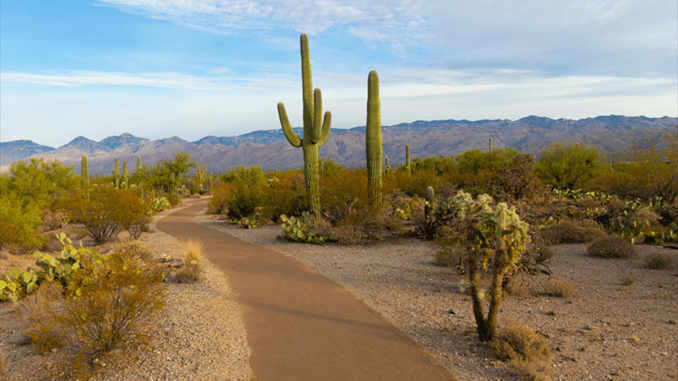
For generations, Arizona’s wide-open land has supported ranchers, farmers and the communities that helped build our great state.
Then, the climate activists came along.
Armed with nothing more than junk science from climate “experts” like Al Gore and Alexandria Ocasio-Cortez, they got busy imposing costly green energy mandates on states across the country—and Arizona’s political and corporate elites eagerly fell in line. Our state’s utilities committed themselves to achieving “Net Zero” emissions by 2050, a goal that will cost ratepayers billions of dollars while doing little to meaningfully impact the environment.
But higher utility bills are only part of the cost.
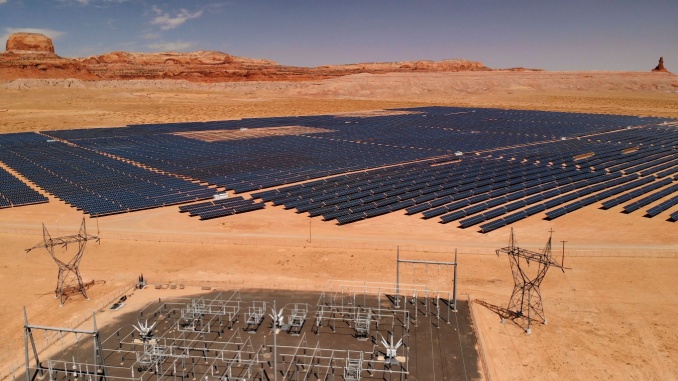
Not wanting to disappoint some of her largest campaign contributors, Arizona Governor Katie Hobbs has been quick to bend the knee to the Green New Scam time and time again. Now, these decisions are not only hitting families in the wallet, but they are transforming our state’s beautiful countryside into an industrial playground for massive, foreign-backed solar and wind developments.
Under Hobbs, the Arizona State Land Department has increasingly operated like a business partner for the solar industry instead of a steward of Arizona’s public lands. The agency now maintains detailed maps identifying the “best” locations for solar development across the state, effectively helping direct industrial solar companies toward Arizona’s most desirable land.
But surely, they must be doing the same for other industries?
Nope…
>>> CONTINUE READING >>>
by Ethan Faverino | Feb 17, 2026 | News
By Ethan Faverino |
The Arizona House of Natural Resources, Energy, and Water Committee held a special hearing on last week to examine the Arizona State Land Department (ASLD) and advance legislation aimed at its continuation, improved administration, and the siting of utility-scale wind and solar energy projects near residential communities.
In a sweeping action, lawmakers advanced all 16 bills on the agenda, demonstrating strong, unified momentum to reform persistent operational and cultural problems within the department.
HB 2426, which mandates the development and adoption of a required five-year disposition plan for state trust lands, was adopted as an amendment to HB 2150, the primary continuation bill for the ASLD.
Sponsored by Rep. Gail Griffin (R-LD19), HB 2150 repeals the department’s prior sunset date and continues its operation until July 1, 2030, with the repeal of related statutes effective January 1, 2031. The measure requires a two-year hearing, quarterly updates to the Legislature, and compliance with existing statutes mandating a five-year disposition plan under ARS § 37-331.03.
“The State Land Department is not a constitutional agency. The Legislature created the Department, and the Legislature can set guardrails to ensure the highest and best use of land,” stated Chairman Gail Griffin in a press release addressing the issues at the ASLD. “For years, the Department has failed to keep land and housing development moving with consistent long-term disposition planning and predictable decisions. That means less trust revenue for classrooms and fewer lots available for homes.”
ASLD manages approximately 9.2 million acres of state trust land, with a statutory mandate to prioritize the highest and best use to generate maximum revenue for 13 trust beneficiaries, primarily K-12 public schools.
However, recent audits—including the 2025 performance audit and sunset review by the Auditor General—along with multiple legislative hearings and recommendations from the Joint Committee of Reference, have highlighted persistent problems.
These include a lack of consistent long-term planning, unresolved pending applications without final decisions, unwritten regulatory processes and procedures, lost revenue opportunities, due-process concerns, and unnecessary strain on Arizona’s housing supply amid land scarcity and rising costs.
Effective management of state trust lands directly impacts housing affordability and education funding. The Department could immediately alleviate pressures by accelerating sales and leases of suitable parcels, increasing available land for residential development, and generating sustained revenue for schools without new taxes.
Yet reports indicate practices such as withholding land from public auction and canceling leases without replacement tenants, while the Hobbs administration is actively devaluing urban-adjacent land to favor utility-scale solar development near residential areas.
“This is not complicated,” added Griffin. “Arizona’s high-tech economy requires new affordable rooftops for workers, and Arizona’s schools depend on trust returns from the sale of available trust parcels. The Department can improve housing supply and education funding today by selling more land and ending the internal practices that keep projects stalled.”
The sunset review process provides the Legislature with significant leverage to enforce accountability and measurable change. During the hearing, committee members questioned the Governor’s appointed Land Commissioner on fundamental Department functions, processes, and documentation. Responses were often inadequate or nonexistent—raising concerns about leadership after three years in that role.
Senate Natural Resources Committee Vice Chairman Tim Dunn (R-LD25) echoed the call for reform. “The current administration didn’t create these problems, but it certainly inherited them. Now the burden is on the current commissioner to change the culture and redirect the agency in the right direction. The agency needs oversight, but the Department has an opportunity to make a meaningful difference for the state. A positive change could bring in millions of dollars of additional revenue for the trust.”
“Arizona House and Senate Republicans are unified in our understanding of the issues and of the breadth of changes that are needed,” added Senator Dunn. “Based on the clear recommendation of the Joint Committee of Reference, I think it’s safe to say that the Department will not be receiving a clean continuation, and that any continuation the Department receives will be contingent on significant improvements codified in law.”
HB 2426 requires the State Land Commissioner, within two years of the act’s effective date, to complete the five-year disposition plan, adopt written policies for updating it every five years, establish procedures for using the plan to guide public auctions, and submit copies to legislative leadership.
The bill’s legislative findings highlight years of inaction, noting the department’s failure since 2016 to produce the required plans and the fact that all five positions on the advisory Urban Land Planning Oversight Committee have remained vacant since 2018.
Ethan Faverino is a reporter for AZ Free News. You can send him news tips using this link.
by Matthew Holloway | Jan 25, 2026 | News
By Matthew Holloway |
The Arizona House and Senate Joint Legislative Committee of Reference (JLCOR) declined to grant the Arizona State Land Department a full, unconditional continuation following its sunset review. Citing systemic compliance failures, Republican legislative leaders are advancing legislation to restructure the agency.
According to a statement from House Republican leadership, the committee voted against a standard continuation during the sunset review hearing, raising concerns over deficiencies in oversight, transparency, and adherence to statutory requirements.
The Arizona State Land Department manages more than 9 million acres of state trust land, with proceeds constitutionally required to benefit public schools and other designated beneficiaries.
Lawmakers cited findings from a sunset review and Auditor General reports indicating the department has failed to comply with statutory requirements governing land disposition planning and long-term development strategy. Committee members said those deficiencies warranted legislative action before the agency could receive a full continuation.
According to House GOP leadership, the proposed reforms would require the State Land Department to:
- Develop and follow five-year land disposition plans as required by statute
- Increase transparency and public engagement related to land sales and leases
- Strengthen requirements for competitive bidding and limit single-bid transactions
- Improve coordination with municipalities and reporting on undeveloped trust land
Alongside the sunset review, lawmakers, led by Rep. Gail Griffin (R-LD19), Chair of the House Natural Resources, Energy & Water Committee and Co-Chair of the JLCOR, introduced several bills to reform the Arizona State Land Department.
HB 2426 would require the department to produce a statutorily mandated five-year disposition plan for trust lands within two years, addressing longstanding planning deficiencies. HB 2427 would compel the commissioner to implement all 51 recommendations from the Auditor General’s July 2025 performance audit, with regular reporting and oversight until completion. Meanwhile, HB 2150 clarifies the department’s continuation under sunset law by setting its termination date and laying groundwork for legislative reconsideration of its structure and authority.
“The Department has had issues for a long time,” Rep. Griffin said. “But they’ve gotten worse under the current administration. Licensing timeframes, five-year disposition plans, and written policies and procedures are essential to upholding the best interests of the trust. These were the top issues. The Commissioner acknowledged these issues during her confirmation hearing and committed to fixing them, but they haven’t been fixed. The captain isn’t steering the ship.”
Supporters of the reform effort said the changes are intended to ensure the department fulfills its constitutional obligation to maximize long-term value for trust beneficiaries, including Arizona’s public education system.
“I see an agency that needs significant reforms,” said Rep. Chris Lopez (R-LD16), Vice Chair of the House Natural Resources, Energy & Water Committee. “I think the lack of licensing timeframes is violating applicants’ due process rights. I think the Department’s decision to hold applications permanently in abeyance, so it can avoid appeals, is unlawful, serving functionally as a denial without a written decision. And I think the criteria the Department utilizes to determine which applications move forward are entirely subjective. At a time when transparency is key, I’m surprised the agency hasn’t already been sued.”
Under Arizona’s sunset review process, state agencies may be continued, modified, or allowed to expire based on legislative findings. The committee’s rejection of a full continuation means the State Land Department’s future structure and authority will now be considered as part of the broader legislative process.
Matthew Holloway is a senior reporter for AZ Free News. Follow him on X for his latest stories, or email tips to Matthew@azfreenews.com.
by Staff Reporter | Jan 24, 2026 | News
By Staff Reporter |
The Arizona State Land Department (ASLD) may be prioritizing the construction of solar panels over new home construction.
The agency maintains a unique map for “best” locations to put solar — but they don’t maintain similar maps for ideal locations for other industries, like housing, mining, and grazing for agriculture.
ASLD’s Land Parcel Viewer has a unique dataset for mapping existing and ideal spots for solar, complete with ratings: 0.0 to 0.9 for the best in green, all the way to 5.0 to 10.0 for the worst in red.
The map shows where parcels are for mineral and oil and gas, and whether those are unleased or permitted; the locations of rights of way and their perpetuity; and where grazing allotments exist. However, it does not offer any compatibility measure for the available land for each industry.
These industries would require knowledge to include resources, depth, size, and proximity to development for mining; animal unit month (the forage amount required for one animal per month), slope, and grass type and quality for grazing; soil conditions, water supply, and slope for agriculture; and path of development and slope for housing.
Spencer Kamps, vice president of the Home Builders Association of Central Arizona, said in a statement that the unique treatment of mapping land by ASLD may give the solar industry an unfair competitive edge in arguing for priority land use.
“In the absence of a similar map for other industries, some might say the solar map is serving functionally as a ‘presumptive highest and best use map,’ which gives solar a ‘rebuttable presumption’ of highest and best use in each parcel indicated in green,” said Kamps.
Last September, Gov. Katie Hobbs issued an executive order directing ASLD to outline proposals to streamline and expedite energy infrastructure projects on state land, as well as accelerate those energy-related projects already underway.
ASLD should have delivered the requested report last October.
The governor’s order also established a task force to come up with a strategic plan to “cut red tape related to the lease, sale, or other use of state lands in a way that advances the streamlined deployment of necessary generation and transmission projects.
That plan is part of three reports due by March 1 of this year. That task force, announced last November, includes ASLD Commissioner Robyn Sahid.
The two other reports include a policy framework for large energy users — data centers — to balance state interests in expansion with ratepayer costs, and an energy strategy plan to capitalize on technologies such as geothermal and advanced nuclear power.
Hobbs also directed her Office of Resiliency to use State Energy Program funding to fund one full-time staffer for ASLD to complete work on energy infrastructure projects.
ASLD doesn’t just have criticisms coming from the industries that sustained the state economy long before solar came on the scene. The state legislature believes the agency is in need of serious reform.
The House and Senate Joint Legislative Committee convened earlier this week to discuss ASLD’s scheduled sunset later this year.
In a significant departure from the standard renewal period of eight years for a state agency, the committee instead opted for a four-year continuation with conditions attached.
Official recommendations from the committee attributed their decision to “deep, longstanding issues” within the agency, describing its operations as an opaque, “unaccountable ‘black box’” per a press release issued on Wednesday.
Several of the committee recommendations outlined in the press release concerned solar leases and sales.
The committee advised the agency open additional investigations into intentionally vacant land, commissioner-initiated sales with only one bidder, solar leases and sales with only one bidder, reclamation of lands after solar leases, vacant land located within municipalities, vacant land location within five miles of urban areas, and vacant land located within 10 miles of urban areas.
Rep. Gail Griffin, committee co-chair, said in that press release the agency’s longstanding issues have worsened under Gov. Hobbs’ administration.
“Licensing timeframes, five-year disposition plans, and written policies and procedures are essential to upholding the best interests of the trust. These were the top issues,” said Griffin. “The Commissioner acknowledged these issues during her confirmation hearing and committed to fixing them, but they haven’t been fixed. The captain isn’t steering the ship.”
AZ Free News is your #1 source for Arizona news and politics. You can send us news tips using this link.