by Matthew Holloway | Nov 29, 2025 | Education, News
By Matthew Holloway |
Arizona lawmakers are urging the State Board of Education to fix the state’s Structured English Immersion (SEI) Endorsement Course Framework at its December 1st meeting, according to a letter from Rep. Michele Peña (R-LD23).
A group of State Representatives and Senators cosigned the letter from Peña, warning that existing rules risk placing Arizona out of compliance with federal funding mandates and allow the insertion of politics and racial rhetoric into courses designed to prepare educators, in violation of state law.
“Parents expect English-language instruction to focus on English-language instruction,” Peña said in a statement. “Instead, they’re finding courses with ideological material that has nothing to do with helping students learn English. The Board can’t ignore federal requirements, and it shouldn’t look the other way while universities inject political content into SEI training. The framework needs to be corrected now, and delays only create further problems for students, teachers, and the state.”
Peña warned the board that the present rule set “is harming instructional quality and undermining classroom integrity statewide.”
As noted by Peña, A.R.S. § 15-756.01 requires that the Board of Education “shall adopt and approve research-based models of structured English immersion.” In the letter, Rep. Peña adds, “SEI is intended to be a model focused only on research-based English language acquisition. That is all.”
She continued:
“The insertion of DEI-aligned language, political ideology, or racialized theories is not only outside the scope of the statute, but it also actively undermines the purpose of SEI by introducing content that divides classrooms, distracts educators, and shifts instructional time away from what the law actually requires. Arizona’s students deserve better than to have their language instruction diluted by ideological philosophies and turned into a political debate…
… We expect the Board not to delay corrective action or hide behind process barriers that were never required when these controversial provisions were inserted. Our students, teachers, and districts deserve a framework grounded in objective, research-based instruction, not ideological experimentation.”
The legislators who cosigned the letter include State Representatives David Marshall (R-LD07), James Taylor (R-LD29), Leo Biasiucci(R-LD30), Lisa Fink (R-LD27), and House Majority Leader Michael Carbone (R-LD25), as well as Senators Hildy Angius (R-LD30) and Tim Dunn (R-LD29).
As previously reported by AZ Free News, Arizona Superintendent of Public Instruction Tom Horne issued a similar statement in October, calling upon the Board to strip Diversity, Equity, and Inclusion (DEI) language from Arizona’s teaching standards.
Note: As of this report, the State Board’s public calendar shows the meeting scheduled for Dec. 1, 2025, as a meeting of the Accountability Technical Advisory Committee, while the regular State Board of Education meeting is scheduled for December 8th; this conflicts with the December 1st date provided in Rep. Peña’s statement.
Matthew Holloway is a senior reporter for AZ Free News. Follow him on X for his latest stories, or email tips to Matthew@azfreenews.com.
by Ethan Faverino | Oct 31, 2025 | Education, News
By Ethan Faverino |
Arizona Superintendent of Public Instruction Tom Horne issued a statement opposing the State Board of Education’s decision to postpone the rulemaking to strip Diversity, Equity, and Inclusion (DEI) language from Arizona’s teaching standards.
The issue will now be taken up at the Board’s December meeting—a delay Horne warns risks $866 million in federal education funding and violates clear federal civil rights directives.
“I respectfully but strongly disagree with the vote to postpone opening the rule-making process,” declared Horne. “The President issued an Executive Order requiring DEI language to be removed from programs funded by federal dollars. It made it abundantly clear that federal education funding is at risk if DEI language remains in education programs. Failure to comply with federal guidance may result in the loss of an estimated $866 million to Arizona schools. That is a major funding cut to our schools, and we need to begin dealing with this as soon as possible.”
Horne pointed to a letter from the U.S. Department of Education’s Office for Civil Rights (OCR), signed by Acting Assistant Secretary Craig Trainor, which reaffirms that discrimination based on race, color, or national origin is illegal under Title VI of the Civil Rights Act of 1964, the Equal Protection Clause, and controlling Supreme Court precedent.
The guidance explicitly condemns race-based preferences in admissions, financial aid, hiring, training, discipline, housing, and graduation ceremonies, and warns that DEI programs often “preference certain racial groups and teach students that certain racial groups bear unique moral burdens that others do not.”
The OCR letter also cites the Supreme Court’s 2023 ruling in Students for Fair Admissions v. Harvard (SFFA), which states that the use of racial preferences in school testing and admissions is unlawful. Their message is simple: “If an educational institution treats a person of one race differently than it treats another person because of that person’s race, the educational institution violates the law.”
“Not only is the $866 million at risk, but there is a philosophical issue at stake, too,” continued Horne. “All people should be judged based on their character and ability, not their race or ethnicity. DEI language and programs promote the exact opposite, and they have no place in the classroom. The teaching standards, unfortunately, include DEI references, and they need to be removed.”
The teaching standards at issue direct educators to teach “equitably,” with “responsiveness to the cultural backgrounds and differing perspectives learners bring to the learning environment,” and to address the “social, emotional, and cultural needs of students.”
“These terms do not belong in teaching standards,” Horne concluded. “The standards are meant to direct educators on the most effective ways to teach students’ core academics. Every instructional minute is precious, and DEI efforts distract from that essential mission.”
Ethan Faverino is a reporter for AZ Free News. You can send him news tips using this link.
by Staff Reporter | Oct 10, 2025 | Education, News
By Staff Reporter |
A school social worker “gone rogue,” who resigned to avoid firing in 2023, claimed she had the approval of a governing board member.
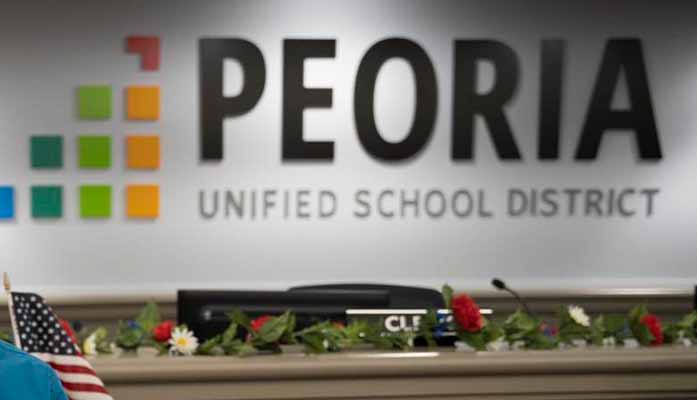
Peoria Unified School District (PUSD) investigated and ultimately released a now-former Peoria Flex Academy social worker, Allyson Jamee Ross, for treating students and taking them off campus without parental consent, according to records obtained and first reported on by the Arizona Daily Independent.
Ross worked in PUSD from around 2019 to 2023. Prior to that, Ross worked with the Child Protective Services and foster care systems in both Arizona and Virginia.
Ross defended her actions — which included taking students to doctors appointments and serving as their health advocates, helping a student plan to run away from home, taking a pregnant student to a Wiccan for consultation, and assisting a student with securing a birth control prescription — as necessary, comparing parents to “wolves” when describing their involvement.
“Our students don’t have the parents or guidance to teach them those skills,” said Ross. “I will be in the wrong, but I will never send a student away because I don’t have a consent form.”
Ross claimed she acted with the approval of her boss, Peoria Flex Academy Principal Cybill Jacob, and PUSD governing board member Melissa Ewing.
“She [Jacobs] knows exactly what I’m doing with students every single week. She knows very well, and even brags to Melissa [Board Member] about how her social worker goes so above and beyond and does all these great things like taking them to doctor’s appointments, food stamps, social security, etc.,” said Ross in an interview with investigators. “It was completely supported by everyone, driving students in personal vehicles. The van is never available, always broken, stolen catalytic converter, or always in the shop.”
Ross also violated district policy by transporting them regularly in a personal vehicle. School leaders attempted to resolve Ross’ infractions through trainings and meetings before turning her over for an investigation that concluded with giving her the option to voluntarily resign or face punishment.
PUSD didn’t file a statement of charges against Ross since she voluntarily resigned and voluntarily surrendered her social worker certificate.
PUSD also reported Ross to the Arizona State Board of Education.
PUSD Board President Heather Rooks shared the report on Ross. Ewing admonished Rooks for sharing the article and the detail of her alleged knowledge of the incident publicly.
“I had no knowledge of this happening and never would have supported this. You could have placed a phone call to me to ask me that as we sit on the same board. We have sat together for almost 3 years. We have both heard the same information both in public and in executive session,” said Ewing. “As President of the Board, you could have asked that this be reviewed in executive session – oh wait you did, despite it happening 2 years ago. All 5 board members heard the same information.”
State Senate candidate Anthony Kern (also a former state lawmaker) said that this incident justified the opposition he and other Republican lawmakers share over having social workers on school campuses.
“[Social workers] are tools of the deranged Democrats,” said Kern. “Get your children out of public schools. Sign up for an ESA account.”
AZ Free News is your #1 source for Arizona news and politics. You can send us news tips using this link.
by Tamra Farah | Jul 1, 2025 | Opinion
By Tamra Farah |
Arizona’s Empowerment Scholarship Account (ESA) program, launched in 2011, empowers families to tailor their children’s education with state funds. The 2025-2026 school year covers private school tuition, tutoring, and therapies, averaging $7,000 – $8,000 per student.
While the program serves over 93,000 students, that number is only a fraction of its possible reach. Bureaucratic inefficiencies and government red tape currently hinder broader access and limit the benefits of ESAs. The approval of the 2025-26 ESA Parent Handbook could have fixed this, but as critics pointed out, the handbook’s restrictive guidelines and manual review processes create more bureaucratic obstacles.
Now, it’s time to examine some of the key aspects of the ESA Program. We need real change, including adopting best practices from other states to streamline operations, better serve families, and extend this opportunity to more Arizona children.
ESA Application Process
The ESA program provides eligibility to any Arizona child from kindergarten through 12th grade, including preschoolers with disabilities, as outlined in the 2025-26 ESA Parent Handbook and A.R.S. §15-240. Families apply via the Arizona Department of Education’s (ADE) online portal, submitting proof of residency and, for students with disabilities, an IEP or 504 Plan.
Approvals are typically granted within 30 days. Approved families sign a contract to use funds for educational expenses and to forgo public school enrollment. Quarterly tuition deposits are managed through ClassWallet, requiring allocation to core subjects like reading and math, with receipt submission to ensure compliance. Non-compliance risks account suspension, balancing flexibility with accountability.
ClassWallet and Financial Management
ClassWallet simplifies ESA fund management through the ESA Applicant Portal, allowing parents to monitor balances and make transactions. It offers four spending options: the Marketplace, with pre-approved items like textbooks; Pay Vendor, for payments to providers such as private schools; the Debit Card, which requires receipt validation for purchases like school supplies; and Reimbursement, for out-of-pocket costs after review.
Marketplace purchases are automatically deducted, like a math workbook, are automatically deducted, streamlining routine expenses. However, non-Marketplace transactions require manual review as mandated by the 2025-26 handbook, which causes inefficiencies and frustrates parents.
Manual Review Staffing Strain
The 2025-26 handbook requires a manual review for non-Marketplace items, a detailed and staff-intensive process. Items like custom curricula, tutoring from unregistered providers, computer hardware, therapies for students with disabilities, debit card purchases, public school fees, and expensive items such as a $500 musical instrument must be verified for educational relevance. This includes providing specific documentation for IEP students and detailed invoices.
With more than 93,000 students, that could mean up to 186,000 reviews annually taking 46,608 staff hours. That would require at least 23 full-time ADE employees, thereby straining resources. These reviews, mandated by A.R.S. §15-2403(B), caused delays for 77% of parents, according to a 2024 Heritage Foundation report, which fuels perceptions of bureaucratic inefficiency.
The 2025-26 Handbook Controversy
The latest handbook’s approval by the Arizona State Board of Education (SBE) with an 8-1 vote sparked controversy over its compliance with state law. Critics, including parent Angela Faber, argued that its restrictive approval process, requiring additional documentation for disability-related expenses, violates A.R.S. §15-2402(B)(4), which permits funds for therapies and assistive technology.
Republican lawmakers criticized “overly restrictive cost guidelines,” such as a removed $16,000 cap on items like cellos, claiming the handbook defied a legislative warning. Still, no formal directive is documented, making the accusation speculative. The ADE asserts compliance with A.A.C. R7-2-1503 and A.R.S. §15-231(B), with a 30-day appeal period for denied expenses to ensure recourse. Despite revisions, late draft postings limited public review and increased debate. A 2023 report showed 96% of ESA funds supported academic goals, highlighting the program’s potential when managed effectively.
Lessons from Other States
Expanding ClassWallet’s Marketplace to include more pre-approved items could decrease manual reviews by 20–30% to improve the handbook’s inefficiencies. Implementing a machine-learning system for routine approvals, modeled on Florida’s Family Empowerment Scholarship or Tennessee’s Individualized Education Account, would simplify processing. Reinstating debit cards with Merchant Category Code restrictions and adopting risk-based audits could reduce review volume by 40%. Better parental education through tutorials could lower errors, easing administrative burdens.
Potential Leadership Change: Horne vs. Yee
Amid the handbook concerns, Superintendent Tom Horne may face Treasurer Kimberly Yee in the Republican primary for Arizona Superintendent of Public Instruction. During his tenure, Horne has advanced educational initiatives by eliminating the Kindergarten Entry Assessment to reduce teacher workload and expanded school safety with 565 new officers. As Arizona State Treasurer, Kimberly Yee has championed government transparency by pushing for easily accessible online budgets, with the Arizona Treasury website providing clear information on taxpayer spending, enhancing public accountability. Yee has also prioritized financial literacy for high school courses and a Financial Literacy Fund to educate students, seniors, and vulnerable populations. Voters are urged to select the leader in 2026 who is most qualified and prepared to improve upon the administratively challenged ESA program. Check out my previous column for more information about the Horne and Yee matchup.
Conclusion: Strengthening a National Model
The ESA program’s flexibility for over 93,000 students makes it a national leader, but the 2025-26 handbook’s manual reviews and controversial approval process show administrative challenges. Arizona can improve operations while keeping accountability by increasing transparency and adopting automation, learning from Florida and Tennessee.
For more details, visit https://www.azed.gov/esa or call (602) 364-1969. Be aware of potential staff availability constraints.
Tamra Farah leads AmericanStrategies.org. She brings twenty years of experience in public policy and politics as a journalist, focusing on protecting individual liberty and advocating for limited government. She has worked with ten local, state, and federal candidates and organizations, such as Americans for Prosperity, FreedomWorks, Moms for America, and Arizona Women of Action. Farah has regularly appeared on conservative radio, television, and print media.
by Ethan Faverino | Jun 24, 2025 | Education, News
By Ethan Faverino |
The Arizona State Board of Education has adopted the Arizona Department of Education’s Empowerment Scholarship Account (ESA) Parent Handbook for the upcoming school year.
This updated handbook was approved on June 23, 2025, by an 8-1 vote after more than a year of gathering feedback from parents and lawmakers.
“I am very pleased that the board has endorsed the updated handbook. The changes reflect the needs of parents to have clarity in how ESA expenses are reviewed, allow the department to continue its efforts to ensure the program is well-managed and that taxpayer dollars are used for appropriate educational purposes. Anything less would potentially damage the ESA program. I am committed to its long-term sustainability because it is a vital way for parents to have the freedom to choose the best education for their children,” said Arizona Superintendent of Public Instruction Tom Horne.
The ESA program allows Arizona parents to use state funds for educational expenses like tutoring, homeschooling materials, and private school tuition. The handbook serves as a guide for parents on how to comply with the program rules and ultimately make sure all funds are used for appropriate educational purposes. It also covers eligibility, application process, and allowed and prohibited expenses.
The 2024-2025 handbook outlined basic ESA rules, eligibility, and allowed expenses, but lacked specificity in certain areas, particularly Special Education students. It provided general guidance on expenses like educational therapies, but did not include a structured approach to evaluate expenses for students with diverse needs, making it difficult for parents to navigate approvals for Special Education requirements.
The updated 2025-2026 handbook addressed these issues with a broader, more flexible framework for evaluating expenses for Special Education students. There are more explicit guidelines for how expenses are approved and evaluating expenses for students with unique needs, such as specialized therapies, adaptive equipment, and individualized educational materials.
However, some parents believe that the language is still too vague, indicating the ongoing challenges in fully meeting Special Education requirements.
During the Arizona State Board of Education board meeting, ESA Director John Ward defended the broad language that was used in the ESA Parent Handbook and said that it provides flexibility to address varied students’ needs.
Ethan Faverino is a reporter for AZ Free News. You can send him news tips using this link.