In the first five months of 2025, solar and wind dominated new U.S. electricity generation. Of the 15 gigawatts (GW) added, solar was 11.5, wind was 2.3, and gas was just 1.3, according to the Federal Energy Regulatory Commission (FERC). Industry voices like Stephanie Bosh of the Solar Energy Industries Association hail this as proof that solar delivers power “faster and cheaper than any other source.” Is this true?
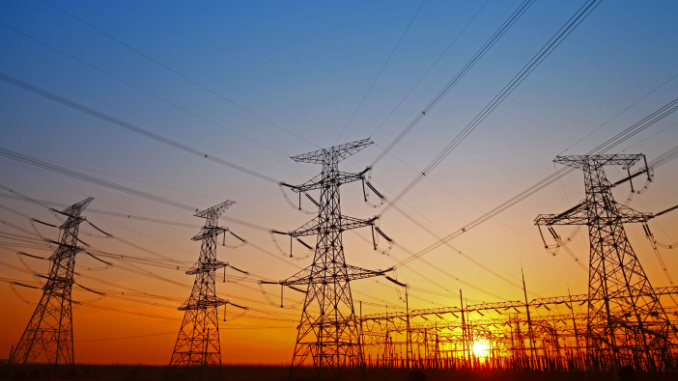
As we accelerate toward a grid increasingly reliant on wind and solar, a closer look reveals a troubling reality: these intermittent sources are driving up electricity costs, not slashing them, through a web of hidden expenses that threaten reliability and affordability.
Solar and wind’s part-time nature is the root issue. Solar generates nothing at night, little in the first and last hours of daylight, and falters under clouds, rain, or snow. Wind generation varies unpredictably. This intermittency doesn’t just displace fossil fuels like natural gas and coal—it forces them into inefficient backup roles.
Calling fossil fuels backups is a misuse of the English language that only serves the wind and solar industrial complex. It’s equivalent to calling the starting pitcher a backup in favor of a pitcher who can only play when the wind blows or the sun shines.
Hydrocarbon, coal and natural gas plants, with fixed costs (capital, maintenance, and employees) comprising 60-75% of operational costs, must raise prices on reduced sales volumes to break even. As renewables flood the market during peak production, they suppress wholesale prices temporarily, where subsidized low-bid renewables set the prices for all. In other grids, they get windfall profits, getting the highest price paid for electricity.
Yet, in the “pay-as-clear” system, evening ramps or scarcity periods spike prices, as expensive peaker plants — needed more frequently for renewable gaps caused by the addition of wind and solar — set the highest price, which is paid to all.
Consider the evidence from high wind and solar regions. California’s residential rates are 30-35 cents/kWh—nearly double the U.S. average of 17 cents — despite 50% wind and solar. Germany’s prices top 36-41 cents/kWh with 55% from wind and solar; Denmark and the UK follow suit at 37 and 29-32 cents, respectively.
These ambitious transitions expose the myth: wholesale dips from renewables are overshadowed by retail hikes from taxes, subsidies, grid upgrades, peakers, and using full-time coal and natural gas part-time.
In California, demand from EVs and data centers exacerbates this, and intermittency demands more peakers. These peaker plants run inefficiently, emit more when ramping up, and charge more because they are only used some of the time, causing costly price spikes. They set the price all generators are paid with the take-and-pay system.
In a grid of only hydro, nuclear, gas, and coal — dispatchable sources—peaker needs plummet. These can load-follow predictably, handling demand peaks without the supply volatility renewables cause. Hydro ramps quickly; nuclear provides steady baseload, natural gas and coal are dispatched to match demand. The system worked and was cost effective.
Pre-renewable grids used peakers sparingly, at 4-10%, versus 20% or more in solar-heavy systems like California, where the solar “duck curve” (charting solar generation creates a graph that looks like a duck, no production at night, the belly of the duck, ramp up during the day, the neck of the duck, with a sharp drop as the sun sets, the downward beak of the duck) requires rapid evening ramps of 10-20 GW.
Adding renewables means building more costly, underutilized peaker plants, inflating bills. Cancelling out much of the CO2 emission reductions that are the stated reason for adding costly disruptive wind and solar.
Transmission costs compound the problem. Wind thrives in remote plains or offshore; solar thrives in distant deserts. Connecting these to cities demands expensive high-voltage lines that cost $1-3 million per mile. Thousands of more miles than are needed for nearby hydrocarbon or nuclear plants.
U.S. estimates peg a price tag of $450 billion by 2035 for renewable integration, adding at least 2 cents/kWh to rates. In Germany, €70 billion in upgrades add 3 cents/kWh. Claims of renewables being “cheaper” rely on levelized cost of electricity (LCOE), ignoring transmission and peaker costs. Solar’s $30-50/MWh jumps 30% or more when transmission and backups are factored in.
FERC projects 84% of 133 GW additions by 2028 will come from wind and solar, making our grids less reliable and more expensive.
Policies like the One Big Beautiful Bill Act, which stripped tax subsidies and credits may slow growth, but the trend persists. We need honest accounting. We cannot ignore the wind and solar reality: more blackouts and ever higher prices.
The idea to extend light rail to the State Capitol has occupied the dusty shelves of bureaucratic transit plans for ages. Phoenix first floated it in their 2000 “Transit 2000” plan, their 2015 Transportation 2050 initiative, and the concept has taken up space in every MAG and regional planning cycle since 2004. The idea’s longevity is not a testament to how good ideas endure; rather how bureaucrats remain unaffected regardless of light rail’s failure; unwilling to change course despite low ridership, high costs, high crime, or changing travel patterns. The world changes but a transit plan apparently never dies.
In fact, it turns out it can’t be stopped from destroying the Capitol corridor even when lawmakers pass a law to stop it.
In 2023, Republican legislators negotiated Proposition 479, Maricopa County’s half cent sales tax for transportation, which included a clause prohibiting the use of any public resources for light rail coming within 150 feet of the State Capitol. The goal of the provision was to insulate lawmakers from the disruption and destruction caused by light rail. This neat trick of making the “Capitol Line” someone else’s problem would likely backfire.
Well, it turns out we were right, and what Phoenix has in store for the Capitol corridor is worse than anyone could have imagined.
Sandra D. Kennedy, with help and funding from Soros and company, has made it clear that she will bring the Green New Deal to SRP whether customers care or not.
You remember Sandra Kennedy, right? Kennedy tried to pass a Green New Deal regulatory mandate while serving at the Corporation Commission, but it was thankfully defeated by the other Republican Commissioners in 2022. Now, we conservatives need to pay attention again because with the SRP Board elections coming in April, there is a push to flip the board by Sandra Kennedy and her supporters.
Currently, the SRP Board is nearly split between conservatives and Green New Dealers, but the left is pushing hard to flip board members at the SRP election in April. We can’t let that happen.
It is important to understand that SRP does NOT fall under Arizona Corporation Commission jurisdiction, the entity that regulates the other Arizona electric utilities. The Salt River Project Agricultural Improvement and Power District (the District) was officially organized in 1937, formalizing its dual role in managing water resources and providing electricity. This formation was driven by a need to expand the utility’s role in power generation to support the growing population and industries of central Arizona at that time. SRP was formed according to ARS Sec: 48-2301-48-2475, which permits self-governance by a board elected from its members and elections that are completely independent from the regular elections held by city, county, and state.
The next election of Board members (a complex process) will be held April 7, 2026, and all eligible SRP voters must be registered with SRP no later than March 9, 2026. This registration and voting is completely independent of Maricopa County and the Arizona Secretary of State. Maricopa County residents can register to vote here (though you may find that many of you will not be eligible to vote).
Another important point to explore is why all Maricopa County residents who receive electricity from SRP cannot have a vote in who decides on costs of decarbonization, new power plants, and rates to fund these. I have lived in Mesa and Gilbert for the past 45 years and owned 4 houses in that time, but I could only vote in SRP elections at one of the 4 houses, why?
The answer is because the SRP District voting boundaries have never changed since it was incorporated in 1937 even though SRP has expanded service well outside the district’s original boundaries (see here).
The result is that more than 250,000 Maricopa and Pinal County residents have no say in how SRP spends its earnings or sets rates for us customers. This wide swath of Maricopa citizens cannot vote in SRP District elections, and that is just patently unfair!
It is well past time for SRP and the Arizona Legislature to update SRP Governance to include all ratepayers—or give the Corporation Commission the authority to regulate SRP. In the meantime, please do something NOW. Register to vote if you are eligible, and TALK to everyone you know about voting!
David Winstanley is a retired Director of Engineering at Honeywell Aerospace, former Chair of LD15 Republicans, and a conservative activist for local issues in the East Valley.
For those of us who live under the blazing Arizona sun, we recognize this as foolishness. Road diets have not been successful accomplishing any of the goals their proponents claim they will. Instead, the result is that the streets become more congested, you’re spending more time on the road, emergency vehicles have a harder time getting around, and everyone is mad.
Of course, unsurprisingly, the residents of those very cities often don’t want their own tax money to go to ripping up the roads they rely upon. One such city is the tiny town of Page, Arizona, where in 2022, the city council approved the “Page Downtown Streetscape Master Plan” which calls for removing vehicle lanes along a 1.4 mile stretch of Lake Powell Boulevard in the heart of the downtown area. In the small northern town, residents stood up against these restrictive, dumb transportation ideas. Page is a community known for its tourism, with visitors bringing boats and heavy gear to explore Lake Powell. For locals, these roads are lifelines for tourism, commerce, and daily living, and Page residents aren’t willing to surrender any more of their precious infrastructure.
School bureaucrats who have mismanaged their finances are hoping that voters will blame a convenient scapegoat: families using Empowerment Scholarship Accounts (ESAs) to educate their children. As usual, their allies in the legacy media are trying hard to help them shift the blame—but the numbers don’t lie.
Channel 12 recently ran a story titled “Deer Valley teachers self-fund or rely on classroom wish lists for basics, while ESA parents buy luxury items with state tax dollars.” Most of the article reads like a press release from Deer Valley Unified School District Superintendent Curtis Finch, who claims that the ESA program has “zero accountability,” “no oversight,” and is “out of control.” Meanwhile, the article quotes teachers in Deer Valley who are spending hundreds of dollars from their own pockets to cover school supplies for their students.
The implication is clear: district schools are financially starved while ESA families waste money on frivolous luxuries. But the reality is exactly the opposite.
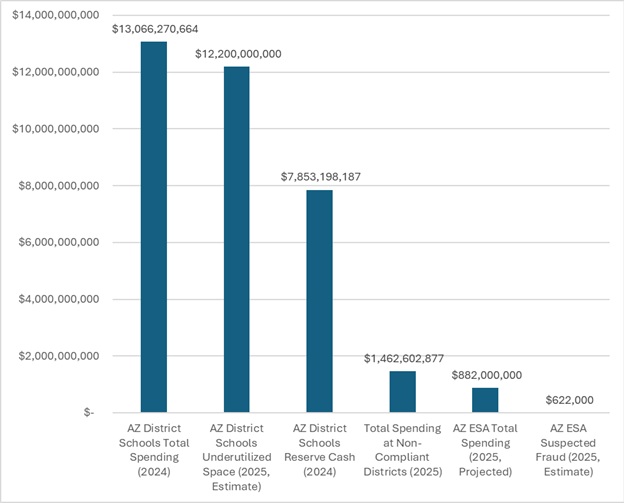
Misuse of the ESA program is vanishingly small. The Arizona Department of Education’s internal audit had turned up $622,000 in ESA funds that are “possible fraud or misuse.” That’s approximately 0.05% of total ESA spending over the past two years.
Misuse of funds in the ESA or any other public program must be detected, deterred, and punished. This is in fact happening in the ESA program, as the Arizona Department of Education had already found the misuse, suspended accounts of those responsible, and reports that it is “in the process of collecting more than $600,000” in improper spending. All of this makes the ESA program far more transparent and accountable than Arizona school districts, which do not post their purchases.
And while Deer Valley teachers may indeed purchase their own school supplies, it has nothing to do with the ESA program and everything to do with misplaced district priorities.
One of the oldest tricks in the school district advocate playbook involves pretending that teachers must buy their own classroom supplies because of a lack of funding. The Channel 12 story cites a Deer Valley biology teacher who said she “spends at least $500 of her own money every summer for her classroom.”
Days after the report aired, former Deer Valley school board candidate Tiffany Hawkins revealed that Deer Valley Unified had spent $560,407 to send students and staff on trips to Disneyland, Knott’s Berry Farm, Sea World, Universal Studios, and other destinations in Arizona, California, Hawaii, Indiana, and Texas. Apparently, the district leadership decided that these trips took precedence over classroom supplies for Deer Valley teachers.
Don’t hold your breath waiting for Channel 12 to cover that. Deer Valley Superintendent Finch—who recently faced charges of stonewalling public records requests and illegal electioneering on school grounds—attacked the ESA program for “out of control” spending with “zero accountability.” But his critiques of the ESA program much more accurately describe spending in his own district.
The Arizona Auditor General reports that Deer Valley spends $13,717 per pupil, meaning that a classroom of 25 students thus generates over $340,000 in total revenue. Where did this money go? Mainly not to teachers.
The Auditor General reports that Deer Valley average teacher pay is $2,163 below the state average. If Deer Valley is not prioritizing teachers, what is it prioritizing instead? The Auditor General report helpfully provides an answer: “high” and “very high” spending on administration and transportation, respectively, compared to a group of peer school districts.
The Goldwater Institute recently published a study of Arizona school superintendent compensation. Goldwater needed to use the open-records law to obtain this information, as districts compensate their superintendents in a variety of creative ways outside of their base salary, including providing either vehicles or “car allowances,” extra retirement benefits, and other perks.
The Goldwater Institute found that Deer Valley provides a total compensation package for their Superintendent of $290,505, including a car allowance of $10,000. This car allowance alone could have provided 20 teachers with $500 each for classroom supplies.
Even if one were to take the highly perverse view that students were the indentured servants of the school districts in which they reside, it would still be absurd for Deer Valley Unified officials to blame their problems on the ESA program. Arizona Department of Education reports show that 10,966 students lived within the boundaries of Deer Valley Unified but attended other public schools in 2024.
Deer Valley Unified meanwhile “drained” almost 3,000 students and their funding from other public schools. At the end of 2024, only 709 students had left a Deer Valley school to participate in the ESA program. Four different public schools outside Deer Valley Unified each have enrolled more students who reside in the district than the ESA program. Moreover 217 total public schools outside the district enroll Deer Valley Unified resident students.
Luckily, Arizona policymakers have decided that Arizona children are not merely funding units for their local school districts. Arizona families can use ESAs to choose the schools that are the best fit for the interests and aspirations of their children.
Arizona school districts have never had as much money as they have now, enough apparently to prioritize trips to California and perks for superintendents. If Deer Valley Unified officials hope to gain the enrollment of the thousands of resident students who have chosen to pursue their education elsewhere, a clear path forward would be to prioritize their funding.
Purchasing classroom supplies for teachers would be a great first step.
Matthew Ladner is a Senior Advisor for education policy implementation and Jason Bedrick is a Research Fellow at the Heritage Foundation’s Center for Education Policy.
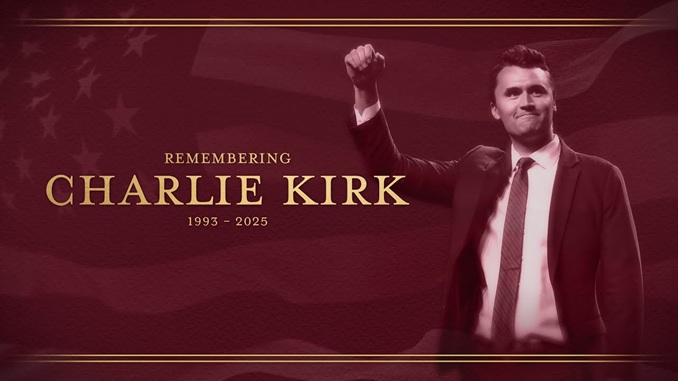
There is a heavy sadness that has swept the nation. Society is grieving to a level not seen since the 1960s. Earlier this month, America suffered an unspeakable loss. Charlie Kirk was in the middle of doing what he loved, talking to college students about the traditional American values that have made this nation a beacon of hope for millions of people the past 250 years: God, family, and country. And then he was abruptly taken from us. Kirk was singular, indispensable, and irreplaceable. America will not be the same without him. It will take multitudes of people to fill the void.
Wednesday, September 10, 2025, will forever be noted in history as a dark day where evil in its truest form was on full display. Charlie Kirk was assassinated in cold blood by a cowardly terrorist who sought to permanently silence someone he vehemently disagreed with. Americans across all political persuasions will always remember the moment in time they heard about the shooting on the campus of Utah Valley University and the flurry of information leading up to and past the time of Kirk’s passing.
I, for one, will never forget where I was or what I was doing when I heard the horrible news. I was filled with shock, disbelief, and heartbreak. The feeling was amplified by the like-minded voices of millions of individuals across the country who had in some way been influenced by him and felt a personal relationship.
It is no wonder so many people feel a heavy weight for the abrupt loss. His talent and intelligence were not easily parallelled. It is mind boggling what he accomplished in his short lifetime. As a teenager, he followed his dream to start a grassroots organization from his parents’ garage. He defied the odds and naysayers to grow Turning Point into a renowned international organization that would influence the course of American history across several elections.
Throughout his mission, Charlie Kirk became a trusted and influential confidant and advisor to several of our country’s leaders—most notably President Donald J. Trump and Vice President J.D. Vance. Despite his quick rise to fame and influence, however, Kirk never forgot his humble roots. He always had time for the young people who flocked to his organization, seeking to raise up an army of thoughtful, inspired men and women who would win back the values that made America into the greatest nation on our planet. They followed him, in part because he offered hope for a happy way to live.
Thanks to Kirk’s tireless and determined efforts, a marked change started happening with the youth. The current generation of Americans was bucking the trend of the woke indoctrination so prevalent in society. The left’s stranglehold on the youth across the nation was fading. For the first time in years the younger generation was trending more conservative. His efforts affected not only culture but politics, most notably the most recent presidential campaign, where Trump made a historic comeback. He was truly a public servant.
Charlie put others—and his nation—above himself. He loved the country that had given him the limitless opportunity to pursue his dreams, and he sought to make her a better place for his children and all those who would follow in his footsteps.
We know that full justice for Charlie will not happen in this lifetime. But we must seek as much justice as possible. That includes full prosecution of the assassin. But that is not enough. Kirk was targeted because he was influencing and changing the hearts and minds of millions of people, especially the youth. We must now take on the mantle and teach the traditional values of America to the youth. It will take thousands of people to compensate for Charlie’s immense talent. But justice demands it.
The pain in our hearts over this great loss reminds us to press forward and build our resolve to finish what Charlie has started. It is up to us to make sure his legacy continues. I think President Abraham Lincoln put it best when he said, “It is for us the living, rather, to be dedicated here to the unfinished work which they who fought here have thus far so nobly advanced. It is … for us to be here dedicated to the great task remaining before us—that from these honored dead we take increased devotion to that cause for which they gave the last full measure of devotion—that we here highly resolve that these dead shall not have died in vain.”
Warren Petersen is the President of the Arizona State Senate and represents Legislative District 14.