by AZ Free Enterprise Club | Sep 3, 2021 | Education, Opinion
By the Free Enterprise Club |
For over a decade, Arizona Democrats and the education lobby have been beating the same K-12 drum- that our schools are underfunded, spending is at historic lows, and that the legislature refuses to invest more in K-12. And every establishment media outlet and so-called “investigative journalist” in Arizona have been more than happy to parrot this narrative for them. Most articles and opinion columns published by the Arizona Republic read more like repackaged press releases from the Arizona Education Association than anything resembling a real news story.
But unfortunately for the Democrats and their pals in the media, the recent Arizona Supreme Court decision on Prop 208 just blew their K-12 funding narrative into pieces. Under the court’s 6-1 decision, the majority ruled that any revenue generated from the Prop 208 income tax surcharge is not exempt from the constitutional K-12 expenditure cap, so if the tax hike would cause K-12 funding to exceed the cap, then the measure is unconstitutional.
This shouldn’t be a problem, right? According to the backers of Prop 208 and the Media, we haven’t been properly funding K-12 for decades.
Yet the lone dissent in the decision referred to the majority opinion as “almost certainly dooming the measure.” Dooming the measure? If Republican lawmakers have truly slashed education funding, if we haven’t been properly funding K-12 for decades, how could we be hitting a constitutional spending limit that hasn’t been reached since 2008?
That’s because everything the education establishment and the media has been telling you about K-12 funding levels in Arizona has been one big lie. Education spending in Arizona is at an all-time high, and we know this because we are hitting the K-12 constitutional spending cap…
>>> READ MORE >>>
by K. Lloyd Billingsley | Aug 31, 2021 | Opinion
By K. Lloyd Billingsley |
Since January 6, FBI Director Christopher Wray has been targeting “domestic terrorism,” which he sees poised for a violent overthrow of American democracy. Nothing like that has taken place, but an actual domestic terrorist just caught a break from a prominent politician.
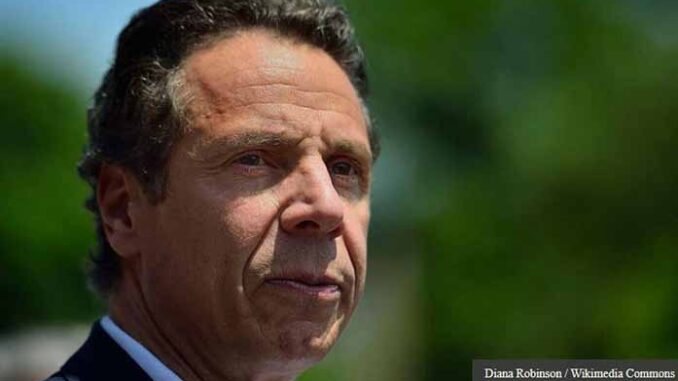
On his way out the door, disgraced New York Gov. Andrew Cuomo granted clemency to David Gilbert, a domestic terrorist serving a 75-year sentence for murder and robbery back in 1981. Gilbert, now 76, was a member of the Weather Underground, a domestic terrorist group that began with a formal declaration of war against “Amerika.” During the 1970s, according to an FBI report, the group claimed responsibility for 25 bombings, including the Pentagon, the U.S. Capitol and the office of the California Attorney General…
>>> READ MORE >>>
by Dr. Thomas Patterson | Aug 27, 2021 | Education, Opinion
By Dr. Thomas Patterson |
Oregon Governor Kate Brown doesn’t have a reputation as a deep thinker, but her recent attempt to do something “noble” for minority students was especially pathetic. She signed a bill that states “a student may not be required to show proficiency in Essential Learning Skills as a condition of receiving a high school diploma“ for the next three years.
She and her folks were mighty proud. An aide wrote that suspending the graduation requirement to read, write or do math will benefit “Oregon’s Black, Latino, Latina, Latinx, Indigenous, Asia, Pacific Islander, Tribal and students of color.” The benefit is assured because “leaders from these communities have advocated time and again for equitable graduation standards…”
But he couldn’t be more wrong. The only sensible meaning of a diploma is as verification of specific academic accomplishment. It has nothing to do with race. The alternative, no matter its label, is simply an attendance certificate.
When a student begins to fall behind, educators have a choice. They can address the failure head-on. Tutoring, different teachers, repeating grades, whatever it takes.
Or they can pretend to see nothing and advance the students through the grade levels even though they are failing to learn. Obviously, this is the path of least resistance. Students aren’t shamed, parents aren’t alarmed, teachers aren’t annoyed by the enhanced accountability. Moreover, this results in maximum “equity,” since all students receive the same diploma.
But you can’t fool Mother Reality. We can pretend that all holders of a high school diploma are legitimate graduates. But colleges know. Employers know. And eventually the students themselves find out the consequences when their lifetime earning level is limited by their meager abilities, which can’t be improved by a meaningless piece of paper.
This isn’t about Oregon. As the nation’s public schools continue to fail to educate the students who need it most, the go-to solution has been to change the standards rather than to beef up instruction.
Statements once accepted as common wisdom like “you can get ahead if you work hard“ and words like “merit“ are now often regarded as racist and thus forbidden. It’s hard for many of us to fathom how deeply and quickly this recipe for failure has become embedded in our culture.
Over half of US colleges have affectively eliminated the ACT and SAT admissions examinations. They were deemed racist on no other basis than that some, but not all, minority students underperformed on them. The possibility that the test could serve as a useful sentinel, a prod to improve educational quality for the underperformers was never considered.
The unspoken assumption is that certain racial minorities are inherently unable to keep up academically and expecting them to do so is unfair. What George W. Bush called “the soft bigotry of low expectations“ is actually a particularly destructive form of racial bias.
This is the bigotry born of the union between black victimhood and white guilt that, as described by the scholar Shelby Steele, has stymied black social and economic progress for over half a century, in a nation of remarkable racial harmony. Most Americans are rooting for Blacks to succeed, but nothing ever happens.
We have been hijacked by a mindset that decrees the only permissible cause for the lack of progress is racism, not actual racial hatred, but “systemic“ racism, a much more subtle and pervasive racism not visible to the naked eye. Suggesting that factors like lack of effort may be involved is deemed “blaming the victim.”
We know how to foster success. Many charter schools, for example, have demonstrated that disadvantaged students are fully able to learn and achieve at high levels.
But the massive teachers’ unions are unmoved. Instead of academic improvement, they are devoting their efforts to teaching children that America is fundamentally shameful, that all whites are incorrigibly racist and that it is bigoted to even strive for colorblindness.
But enough is enough. We simply can’t keep turning out generations of uneducated, propagandized Americans.
Here are two things you can take to the bank. America will never close the income gap until we close the education gap. And no nation has survived that was despised by its own citizens.
Dr. Thomas Patterson, former Chairman of the Goldwater Institute, is a retired emergency physician. He served as an Arizona State senator for 10 years in the 1990s, and as Majority Leader from 93-96. He is the author of Arizona’s original charter schools bill.
by AZ Free Enterprise Club | Aug 26, 2021 | Opinion
By the Free Enterprise Club |
It turns out that upending Utility energy production and mandating “clean” energy by an arbitrary date costs money. A lot of money actually—to the tune of over $6 billion according to a new study commissioned by the Corporation Commission.
This study comes over a year after the Commission first announced its Green New Deal Energy Rules. Many votes have taken place since then, votes that would impact ratepayers, yet no independent cost analysis had been done until now.
The green energy lobby repeatedly told the Commission that the mandates (which were rejected by a margin of two to one on the ballot in 2018), would actually save ratepayers money and have an economic benefit of $2 billion. Seemingly everyone in the Corp Comm echo chamber and the media actually believed these suspicious figures. Everyone except Commissioner Justin Olson. He introduced an amendment last April to ensure that costs incurred by Utilities to comply with the mandates aren’t passed onto ratepayers. The amendment failed. It turned out that the same people claiming that energy mandates save people money didn’t believe their own hype and fought to kill this ratepayer protection.
We already know that previous mandates have led to higher utility bills and boondoggle projects. The Renewable Energy Standard and Tariff adopted by the Commission in 2006 (requiring 15% renewable energy by 2025) resulted in APS signing a 30-year contract for solar energy costing 400% above market rates. All passed onto the ratepayer.
Thankfully prior to leaping before they looked, the Commission agreed to conduct a study with an independent firm to identify the potential cost of additional mandates. The firm they hired—Ascend—compares 3 different portfolios of energy production: “Least Cost” which relies on utilities pursuing the lowest cost option for consumers, an 80% clean energy mandate by 2050, and a 100% clean energy mandate by 2050. In order to hit the 80% or 100% mandate requirements, utilities would need to phase out all fossil fuels, purchase more solar and wind generation, expand lithium-ion battery storage and convert natural gas generation to green hydrogen…
>>> READ MORE >>>
by AZ Free News | Aug 25, 2021 | Opinion
In Scottsdale – and communities like ours all over the country – rising prescription drug prices are causing tremendous financial hardship.
It’s impacting patients struggling to afford health care. It’s affecting small business owners who would like to provide affordable health care for their employees. It’s impacting families faced with the unbearable choice between paying for critical medications and other basic necessities. All the while Big Pharma continues to see profits increase.
This January drug companies increased prices on more than 800 brand name drugs rise and already in July we are seeing another batch of price hikes under way, surpassing 65 increases in just a few weeks.
While price hikes disproportionately affect senior citizens and individuals with chronic conditions, more than two-thirds of all American adults use prescription drugs. This is an issue that affects us all.
So, it’s time for our legislators in Washington to pass solutions with bipartisan support.
It’s time to advance market-based reforms with support from Republicans and Democrats to increase competition and transparency, stop taxpayer subsidies for price hikes higher than inflation, cap out-of-pocket costs for seniors, and hold Big Pharma accountable by giving the drug industry responsibility for significant Medicare Part D cost-sharing.
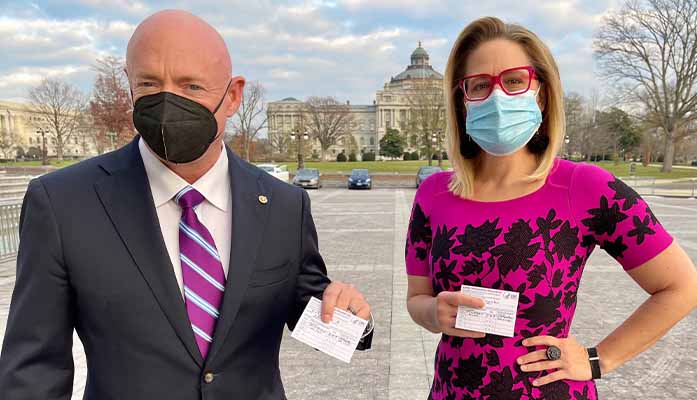
As a former US Air Force Captain, I know what it means to be a leader and step up when faced with adversity. It’s time for Senators Mark Kelly and Kyrsten Sinema to step up too and deliver solutions to lower drug prices and hold Big Pharma accountable.
Bruce Weber
Scottsdale, Arizona
by AZ Free Enterprise Club | Aug 22, 2021 | Opinion
By the Free Enterprise Club |
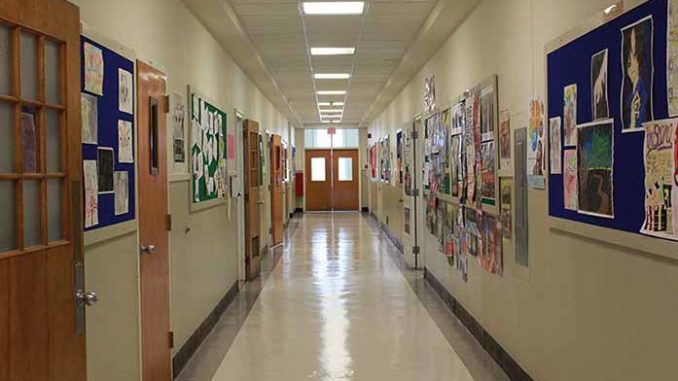
It needed to be done. At the end of June, Governor Ducey signed HB2898, which included a provision prohibiting a city, town, county, school board, or charter school governing body from requiring students or teachers to wear masks.
Bear in mind that this law doesn’t mean students and teachers can’t wear masks. They certainly can if they want to. But it keeps the heavy hand of government from enforcing unnecessary restrictions—especially on students who should be focused on learning.
Predictably, the liberal left has had a meltdown. The board president at Northland Preparatory Academy in Flagstaff went on a tirade in a now-removed Facebook post, referring to parents and students who disagree with mask mandates as “the worst of humanity.”
And some schools have decided that their first lesson for the year is to teach kids it’s ok to violate the law. A growing number of Arizona school districts are openly defying Governor Ducey by requiring students and staff to wear masks if they want to set foot on campus.
Our children have become pawns in a game of COVID chess—all at the mercy of the kings and queens on school boards throughout the state.
While parents are speaking up, they need help. Thankfully, Arizona’s House and Senate Republicans heard their cries. Last week, a group led by state representative Jake Hoffman called for Governor Ducey to do something…
>>> READ MORE >>>