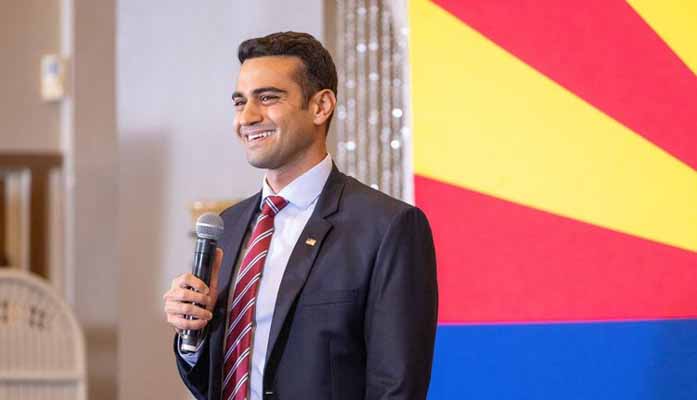
Congressman Abraham Hamadeh (R-AZ-08) pointed out this week the accuracy of his anticipation that Arizona Democrats would file a lawsuit seeking to block President Trump’s Executive Order 14248, entitled Preserving and Protecting the Integrity of American Elections. Hamadeh described the Democrats as “the beneficiaries of Arizona’s broken election system,”
Reacting to the announcement from Arizona Democrat Attorney General Kris Mayes and Secretary of State Adrian Fontes, Hamadeh’s office stated that they “and their ilk across the country will go to any lengths to keep our elections processes broken.” His office also noted that the Congressman alongside his co-sponsor Congresswoman Claudia Tenney (R+NY-24), who chairs the Congressional Election Integrity Caucus, have introduced legislation to support and codify the President’s election integrity agenda.
President Trump's Preserving & Protecting the Integrity of American Elections Executive Order takes historic steps to keep noncitizens from voting in elections, eliminate voter fraud, & repeal Biden's corrupt EO 14019!@RepAbeHamadeh & I introduced legislation to enshrine this…
Congresswoman Tenney posted on X, “President Trump’s Preserving & Protecting the Integrity of American Elections Executive Order takes historic steps to keep noncitizens from voting in elections, eliminate voter fraud, & repeal Biden’s corrupt EO 14019! @RepAbeHamadeh & I introduced legislation to enshrine this EO into law to ensure our elections remain free, fair, & honest.”
“The American people deserve better. They deserve to know that their legally cast ballot is counted and accounted for. I am disappointed, but obviously not surprised that Mayes and Fontes seek to thwart the implementation of commonsense safeguards of democracy,” concluded Congressman Hamadeh. “As a trusted advisor once said to me, ‘election integrity never disenfranchised a single soul, but a single act of election fraud disenfranchises us all.’”
The proposed bill, H.R. 2499, would codify Trump’s EO 14248 by ordering states to require proof of citizenship in the form of government-issued ID on voter registration forms, ordering the Departments of State and Homeland Security and Social Security Administration to provide federal database access to states for determining voter eligibility, and requiring a single Election Day deadline for vote tabulation. Each measure will carry the threat of withdrawn federal funding in the event of non-compliance. In a press release, Rep. Hamadeh stated, “In Arizona, we have seen what the mismanagement of voter rolls, failed election infrastructure, and corrupt courts can do to destroy voter confidence and faith in our system overall. We are taking swift action to rebuild citizens’ trust in our elections through comprehensive and meaningful election integrity legislation.”
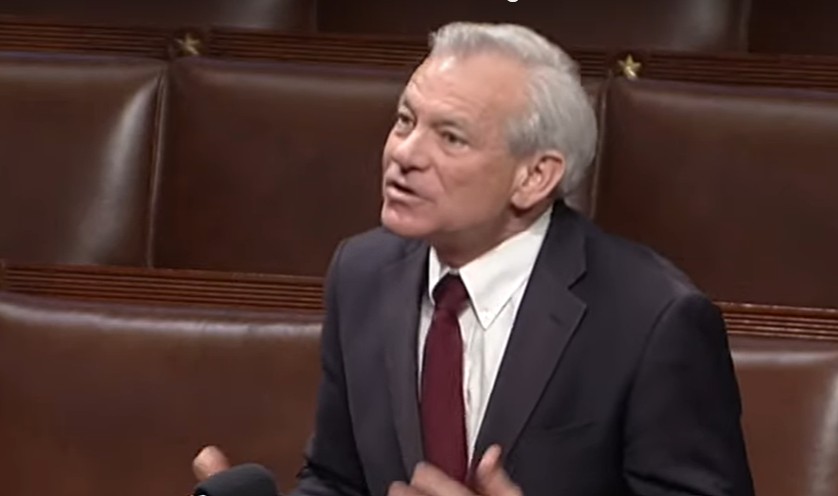
In a speech on the House floor earlier this week, Arizona Republican Congressman David Schweikert (R-AZ-01) blasted leftist activists and vandals who allegedly affixed a swastika to his wife’s Tesla.
Schweikert expressed exasperation speaking to the House saying, “It’s not, ‘Hey David, we’re concerned about Medicaid. Here are ideas for how you could deal with debt and deficits so we have the resources.’ No, because [instead], it’s this really high-brow intellectual conversation from our brothers and sisters on the other side: Stick Nazi things on people’s cars. This is what you’ve come down to? This is what’s going on?”
The congressman reflected that when his wife bought a Tesla a few years back, they were teased by fellow conservatives. Then, he excoriated the leftists resorting to “stick[ing] Nazi signs on people’s cars.”
“The wheels are coming off, and instead, the brain trust of some of these folks… okay, I accept that the tonal quality from some of the folks out of the White House isn’t warm and cuddly, but [is the answer really to] go around neighborhoods and offices and stick Nazi signs on people’s cars?“
The congressman, a well known critic of out-of-control government spending, explained, “Over the next 10 years, we’re going to spend $86 trillion. We’re talking about at best on the house budget resolution cutting $2 trillion over those 10 years. That’s 2.3%. Oh, god, dear heaven, you’re butchering government. 2.3%. You’re telling me if we didn’t grind through government, look at our programs, look at all the reports the GAO gives us of waste and fraud and programs that haven’t been authorized in decades, you couldn’t find 2.3%? But it’s easier to stick this sort of crap on my wife’s windshield than to do the intellectual work of saying, ‘I think we have more elegant ways to spend and make it better, faster, cheaper for the American people.’ No, we’d rather burn things down. Are we all proud of ourselves?”
As reported by the Fountain Hills Times, protesters marched on Schweikert’s Scottsdale District Office as recently as Sunday. Ten days prior, protesters delivered a petition to the Congressman’s office demanding he conduct a townhall meeting with 30 protesters holding signs outside of the building at Northsight Boulevard and Raintree Drive.
Arizona lawmakers have passed SB 1437, a bill aimed at increasing accountability for school employees and officials who fail to report sexual misconduct involving students. The bill, which received bipartisan support, now awaits Governor Katie Hobbs’ signature.
Sponsored by Arizona Senator Carine Werner (R-LD4), SB 1437 expands the list of mandatory reporters for cases of sexual misconduct in schools. Under the proposed law, school district governing board members, charter school governing body members, substitute teachers, and school safety officers will be legally required to report any incidents of sexual misconduct by school employees to law enforcement.
The bill was introduced in response to multiple cases of abuse that came to light during Werner’s tenure as a governing board member. Advocates argue that strengthening reporting requirements will close existing loopholes and help prevent potential predators from evading accountability.
SB1437 received bipartisan backing in the Arizona Legislature, with supporters emphasizing the need to ensure student safety and hold perpetrators accountable.
“It is imperative that we work together to protect children and take action against sexual predators who are abusing their trusted positions and flying under the radar in schools,” said Senator Werner. “Parents should be able to have confidence in knowing there are safeguards in place to prevent this abuse from happening.”
Supporters argue that increasing the number of mandatory reporters will deter potential misconduct and ensure swift action against offenders. The bill also reinforces Arizona’s commitment to child protection policies in schools.
“Not only does justice need to be served for inflicting life-altering acts on children, but parents should be able to have confidence in knowing when they send their child to school, there are safeguards in place to prevent this abuse from happening,” Senator Werner continued. “This bill, passing with bipartisan support, serves as a force-multiplier to ensure cases of sexual misconduct against children are reported. I applaud my colleagues in both chambers for getting this bill to the finish line. The people of Arizona are relying on us to implement laws to better protect our most vulnerable communities, and there’s no better way to deliver on this promise, than for the governor to sign this bill and support the effort.”
With the bill approved by both chambers of the legislature, it moves to Governor Hobbs’ desk for final consideration. If signed into law, Arizona will join other states that have recently strengthened mandatory reporting laws in response to concerns over child safety in educational settings.
The passage of SB 1437 underscores Arizona’s ongoing efforts to enhance protections for students and ensure greater accountability among those responsible for their well-being. The law would reinforce existing safeguards while signaling a tougher stance on preventing and addressing sexual misconduct in schools.
For further updates, stakeholders and the public are encouraged to follow legislative announcements and Governor Hobbs’ decision on the bill in the coming days.
Jonathan Eberle is a reporter for AZ Free News. You can send him news tips using this link.
This week, Governor Katie Hobbs issued a directive to all of her agency directors not to appear or testify at the inaugural hearing of the Arizona House Ad Hoc Committee on Executive Budget Mismanagement. Hobbs issued the directive 15 minutes prior to the start of the meeting. Democrats on the committee also refused to attend.
According to Committee Chairman Matt Gress (R-LD4), agency leaders from AHCCCS and the Department of Economic Security (DES), who share responsibility for the $122 million shortfall in Arizona’s Developmental Disabilities (DD) program, were scheduled to appear before the committee and answer for the program’s massive cost overruns that have threatened to disrupt critical services for Arizona families.
Gress said in a statement, “The Governor pulled her directors because she can’t defend the damage she’s done. If she had a plan, she would have sent her team to explain it. Instead, she’s hiding behind a press release while Arizona families face the consequences of her financial mismanagement. This Legislature asked for answers. The Governor responded with a tantrum. What she calls a ‘political stunt’ is actually legislative oversight—a constitutional duty that we will carry out whether she likes it or not.”
In the press release referred to by Gress, Hobbs and Democratic House Assistant Leader Nancy Gutierrez claimed the “Ad Hoc committee is a waste of time and a shameless political stunt,” and derided it as a “sham,” demanding instead that the legislature issue a supplemental budget bill to cover the shortfall.
Despite the conspicuous absence of Democrat members of the committee, the hearing went forward with the Republican members reviewing budgetary data, testimony from the Joint Legislative Budget committee, and expert testimony from former Idaho House Majority Leader Megan Blanksma, whose state suffered what Gress’ office called “a near-identical funding crisis.”
The committee issued its formally adopted findings, naming the Hobbs administration accountable for:
“Without approval from the Legislature or specific appropriation authority, dramatically expanded its Developmental Disability program by making permanent a temporary, COVID-era program to pay parents to provide attendant and habilitative care to their minor children.”
“The programmatic and scope changes of the DD program adopted by AHCCCS and implemented by DES led to dramatic unfunded liabilities, threatening the entire DD program and leaving the state with at least a $122 million budget deficit in FY2025.”
“Through its Medicaid agency at AHCCCS, put the Department of Economic Security under legal threat with a November 2023 Corrective Action Plan, which aimed to grant parents 2 additional hours for care under the PPCG program, which was at odds with the ’extraordinary care’ standards and dramatically expanded costs to the state.”
“AHCCCS delayed implementation of guardrails on the PPCG program by over 18 months, despite its original plan submitted to the Federal CMS in August 2023, causing considerable cost overruns and unrealistic expectations for families.”
The committee further found that “The critical nature of the Developmental Disabilities program and its pending exhaustion of funds requires that the Executive identify available federal funds, and the Legislature will work to identify transfers of other available funds, in the month of April, to continue the program.”
It also added that “the State Legislature must receive annual reports from the executive administration identifying all federal funds received and an exit plan should those federal funds be eliminated.”
In a statement following the hearing, Gress addressed the Democrats’ absence and Hobbs’ order for her agency directors not to attend.
“Fifteen minutes before the committee hearing began, I received a letter from Governor Hobbs criticizing legislative intent on providing oversight and learning exactly what happened. Now this is a pattern and a practice of Governor Hobbs. She fails to even acknowledge who’s responsible for this problem. Instead, it’s deflection and trying to scare families who rely on the DD services for their loved ones.
“We will not be deterred. Her unhinged, chaotic letter falls far below the standard that Arizonans expect of their leaders. We will continue to find the facts. We will be the adults in the room to provide a supplemental appropriation, and we will ensure that there are guardrails put in place so that this never happens again.
“Let me be very clear, we will not pass a financially irresponsible supplemental. It will include the reforms necessary to protect families who rely on DD for their loved ones. We demand accountability and transparency, and it’s going to happen soon.”
An American citizen is in critical condition after evading Border Patrol agents while smuggling illegal aliens over the weekend.
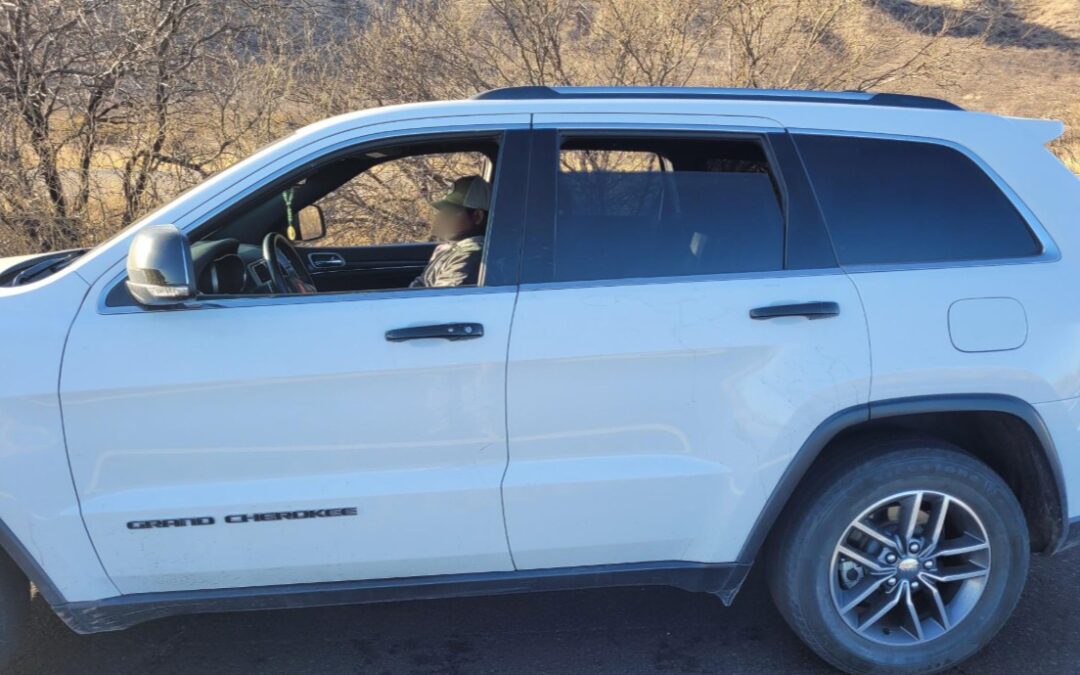
Customs and Border Protection (CBP) detailed the incident in a Tuesday press release. Detection technology observed the unnamed citizen driving a “suspicious” white Nissan Rogue traveling northbound from the border near Parker Canyon Lake around Sonoita around 3 pm on Saturday. The pursuit leading to the crash began after field agents located the car driving on state Route 83.
The vehicle stopped briefly to allow three individuals to exit, where they ran into the surrounding high desert. The vehicle continued northbound to evade Border Patrol agents along the highway, driving further for about four miles before apparently losing control and rolling onto its side. The driver lost consciousness on impact and sustained critical injuries.
Agents arrested two Guatemalan illegal immigrants and one Mexican illegal immigrant following the crash. All face charges for illegal reentry into the country, while the incapacitated driver faces alien smuggling charges.
U.S. citizen involvement in illegal alien smuggling has continued even amid heightened border security and mass deportation efforts under the Trump administration. A key initiative concerned Mexico and Canada committing 20,000 total troops and personnel to the southern and northern borders, respectively, to stop illegal immigration and drug smuggling.
Border Patrol also recently teamed up with the Department of Defense to beef up border security.
Serious Strykers for a serious mission. Border Patrol is teaming up with the Department of Defense to enhance Border security. pic.twitter.com/XcJym2lsdP
Field agents apprehended other Americans smuggling seven illegal aliens on Tuesday, also in the Sonoita area. The illegal aliens faced illegal entry and illegal reentry charges.
7 illegal aliens squeeze into a Tacoma to be smuggled into the U.S. Sonoita Agents spiked a vehicle attempting to flee from agents west of Sonoita, AZ. When agents caught up to the vehicle, it stopped, and 7 illegal aliens bailed out. While agents placed the United States… pic.twitter.com/2IF8l6LMyf
Two vehicles driven by two American citizens were apprehended in Willcox earlier this week.
Doubling down on smuggling loads with AZ DPS. Willcox agents assisted @Arizona_DPS , who stopped 2 vehicles involved in illegal alien smuggling. 2 United States Citizens and 3 illegal aliens from Mexico were arrested. A Jeep Cherokee and Ford Mustang belonging to the United… pic.twitter.com/z9nVbKPZXy
Republican Congressman Juan Ciscomani (CD-06) was named the most effective lawmaker from Arizona in the 118th Congress by the nonpartisan Center for Effective Lawmaking (CEL) on Thursday. This ranking places Ciscomani among the top-performing lawmakers in the nation. The Tucson Republican stands with the accolades of the 15th most effective legislator overall in the House of Representatives, the third most effective among freshmen Congressmen, and the highest ranking in the Arizona Caucus, followed by Reps. Paul Gosar (R-AZ-09) and Andy Biggs (R-AZ-05), rounding out the top three.
“It’s about getting the job done,” said Ciscomani in a statement. “I was sent to Congress by my constituents to deliver common sense, lasting results for the people of Arizona’s 6th Congressional District, and that is exactly what I’m doing. Being recognized as one of the most effective lawmakers in the House during my freshman term is an honor and a reflection of that mission.”
Ciscomani serves on the House Appropriations and House Veterans’ Affairs committees. He was ranked by the joint partnership between the Frank Batten School of Leadership and Public Policy in the University of Virginia and Vanderbilt University, with Vanderbilt announcing with the report that Ciscomani and the other leading members “were able to find ways to get their initiatives passed into law despite deep political disruptions in 2023 and 2024, and despite widespread public perception of gridlock in the nation’s Capitol.”
“Whether it’s pushing legislation to secure the border, support our veterans, safeguard Arizona’s water, or protecting our seniors, I don’t take no for an answer,” the Congressman added. “I am proud of what my office and I were able to accomplish for our constituents in my first term, and I am keeping my foot on the pedal to do even more for our district in my second term.”
The CEL cited Ciscomani’s record during the 118th Congress stating that he introduced 24 pieces of substantive legislation with six of these passing and two getting signed into law.