by Jonathan Eberle | Oct 15, 2025 | News
By Jonathan Eberle |
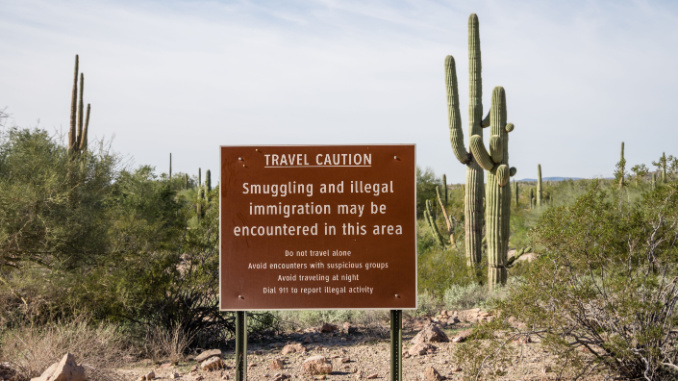
Arizona Senate President Warren Petersen hailed a “victory for Arizona” on Monday after Maricopa County Superior Court Judge Michael Valenzuela dismissed all challenges to the Secure the Border Act — a voter-approved initiative known as Proposition 314.
The ruling, issued October 10 and electronically filed October 13, upheld the will of voters who passed the measure in November 2024. In a statement on X , Petersen said the decision upheld “the will of voters who passed Prop 314 to protect our communities from illegal crossings and fentanyl,” calling border security “non-negotiable.”
“President Donald Trump truly delivered the most secure border in U.S. history,” Petersen wrote. “If our nation ever sees a repeat of lawlessness from an administration like we witnessed with Biden-Harris, Arizona will be ready to uphold the rule of law.”
The lawsuit, Living United for Change in Arizona et al. v. State of Arizona, challenged several provisions of Proposition 314, arguing the law violated Arizona’s constitution. Plaintiffs included Living United for Change in Arizona (LUCHA), the Arizona Center for Empowerment, and two individual plaintiffs.
According to court documents, the Secure the Border Act — approved by voters and enacted in November 2024 — created new state laws addressing immigration enforcement and public benefits eligibility.
Judge Valenzuela’s 10-page ruling rejected all three counts brought by the plaintiffs, determining that counts 1 and 2 were not “ripe” for review, as the challenged provisions are not currently enforceable; plaintiffs lacked standing to bring certain claims, particularly regarding separation of powers and legislative delegation arguments; and the SAVE Provision did not violate Arizona’s Revenue Source Rule, because participation in the federal verification program does not impose costs on state or local agencies.
The court concluded that the plaintiffs’ complaint “fails to state a claim on which relief can be granted” and dismissed it with prejudice, making the decision final under Arizona civil procedure rules.
The ruling allows Proposition 314 to stand as enacted by voters, although parts of the law will remain unenforceable until triggered by developments in Texas or another state with similar legislation. The decision represents a significant victory for Arizona lawmakers who championed the measure, including Petersen and House Speaker Steve Montenegro, both of whom intervened in defense of the law.
Supporters say the ruling reinforces Arizona’s right to protect its borders and uphold voter-approved laws. For now, however, the court’s dismissal marks a legal and political win for backers of Proposition 314 — and for state leaders pushing for stricter border enforcement at the state level.
Jonathan Eberle is a reporter for AZ Free News. You can send him news tips using this link.
by Ethan Faverino | Oct 15, 2025 | News
By Ethan Faverino |
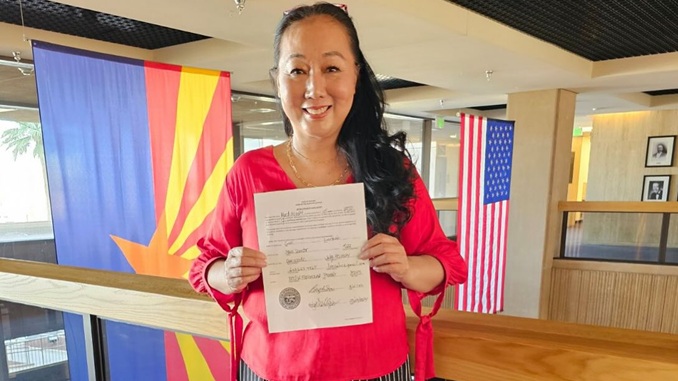
Michael Calles, a fourth-generation Arizonan, U.S. Navy and U.S. Army Veteran, and retired Phoenix Police Officer with 25 years of experience, has officially announced his candidacy for Glendale City Council in the Barrel District.
Running against incumbent Councilmember Bart Turner, Calles aims to restore transparency, accountability, and ethical governance to City Hall while addressing the growing concerns of Barrel District residents.
Calles, a political newcomer, brings a lifetime of public service to his campaign with a platform centered on strengthening public safety, investing in families and youth, revitalizing neighborhoods, and advocating for lower taxes, lower utilities, and robust economic investment in the Barrel District.
His announcement comes at a pivotal moment, as Barrel District citizens express frustration with what they describe as Councilmember Turner’s lack of responsiveness and transparency.
In a press release announcing the launch of his campaign, Calles wrote, “Glendale residents deserve safe neighborhoods, fiscal responsibility, and a City Council that works for them, not one that wastes taxpayer dollars. I’m running to restore trust, strengthen public safety, and deliver real results for families in the Barrel District.”
The Calles campaign is gaining momentum as residents rally for change in the Barrel District. His commitment to transparent governance and fiscal responsibility appears to resonate with voters seeking a City Council that reflects their values and priorities.
“I’m tired of seeing Glendale residents ignored while political insiders look out for themselves,” said Calles. “I believe city leaders should listen, respond, and lead with integrity — values I have lived every day through decades of service in law enforcement, the military, and as a mentor to local youth. Now, I am ready to bring that same honesty, discipline, and responsiveness to City Hall.”
Ethan Faverino is a reporter for AZ Free News. You can send him news tips using this link.
by Matthew Holloway | Oct 14, 2025 | News
By Matthew Holloway |
The Maricopa County Democratic Party is expected to launch removal proceedings against former State Representative and current Tolleson Union High School Board president, Leezah Sun, from her official party positions this month. Sun, a precinct committeeman and Legislative District 22 chair, is expected to be ousted during the party’s Oct. 27 executive meeting.
The news of the party’s plans comes in the wake of the latest fallout from Sun’s conviction and sentencing to 24 months probation for violating a restraining order against three Tolleson city employees.
Sun, an activist politician known for her consistently disruptive tactics, was slapped with probation last week after a judge extended the restraining order for two years, stemming from repeated contacts with city staffers. The Democrats’ removal request, filed by local activists, cites her legal troubles as a “liability” to the party, according to documents obtained by 12News reporter Brahm Resnik.
Resnik explained in a post to X on Thursday, “Former Dem state lawmaker & current Tolleson Union School Board President Leezah Sun sentenced to 24 months’ probation for violating restraining order to stay away from 3 City of Tolleson employees. Restraining order extended for 2 years.”
On Friday, the situation evolved to include Sun’s possible ouster by Maricopa County Democrats with the 12News reporter writing, “UPDATE Leezah Sun faces removal as precinct committeeperson & #LD22 chair by @MaricopaDems during Exec Ctte meeting Oct. 27.”
He later provided a screenshot of a letter from Patti O’Neil, Chair of the Maricopa County Democratic Party.
In the letter provided by Resnik, O’Neil wrote in part:
“I am writing to express my serious concern for the safety and well-being of MCDP Precinct Committeepersons (PCs) and volunteers in Legislative District 22. It has come to my attention that Chair Leezah Sun has once again violated the order of protection against her. For this reason, I feel it is necessary to take the steps to remove her as a PC. Under the MCDP Bylaws, the Chair can appoint a District Board from another District to conduct the removal proceeding.”
O’Neil justified Sun’s removal and laid out the process under Democratic Party bylaws before concluding, “I have been very patient about this individual’s behavior. She has consistently displayed aggressive behavior. For the safety and security of those volunteering in LD 22, I hope you consider accepting the duty of reviewing the facts to remove her as a PC.”
This isn’t Sun’s first brush with controversy. She resigned from the state House in 2024 amid ethics complaints and has been the subject of several issues among Tolleson Democrats since winning her school board seat in 2024.
The attempt to remove Sun comes as LD22—a battleground district in the West Valley—gears up for 2026 midterms. As the October 27 meeting looms, LD22 Dems appear to be seeking replacements in the event of Sun’s removal.
Matthew Holloway is a senior reporter for AZ Free News. Follow him on X for his latest stories, or email tips to Matthew@azfreenews.com.
by Ethan Faverino | Oct 14, 2025 | News
By Ethan Faverino |
Arizona Senate President Warren Petersen has publicly criticized Attorney General Kris Mayes and Arizona Democratic leadership for their silence regarding inflammatory statements made by Jay Jones, the Democratic nominee for Virginia Attorney General.
Jones recently came under fire for text messages in which he fantasized about the murder of the Republican Speaker of the Virginia House of Delegates and expressed a desire for the Speaker’s children to die. “If those guys die before me, I will go to their funerals to piss on their graves,” said Jones in a text message to Carrie Coyner, a member of the Virginia House of Delegates. “Three people, two bullets… Gilbert gets two bullets to the head.”
Instead of taking responsibility for his remarks, Jones has deflected blame on Virginia Attorney General Jason Miyares for the release of the messages.
In an era marked by escalating political violence, including recent high-profile incidents that have shaken the nation, Petersen emphasized the critical need for elected officials to unequivocally condemn such rhetoric.
Petersen condemned Jones’ comments and subsequent refusal to accept accountability, calling them unfit for a candidate seeking a leadership role.
“Our nation has been suffering from an unprecedented amount of political violence,” said Petersen. “Now more than ever, we need leaders to condemn such evil behavior. Mayes’ and Arizona Democrats’ silence is disturbing and unbecoming of their respective offices.”
Ethan Faverino is a reporter for AZ Free News. You can send him news tips using this link.
by Matthew Holloway | Oct 14, 2025 | News
By Matthew Holloway |
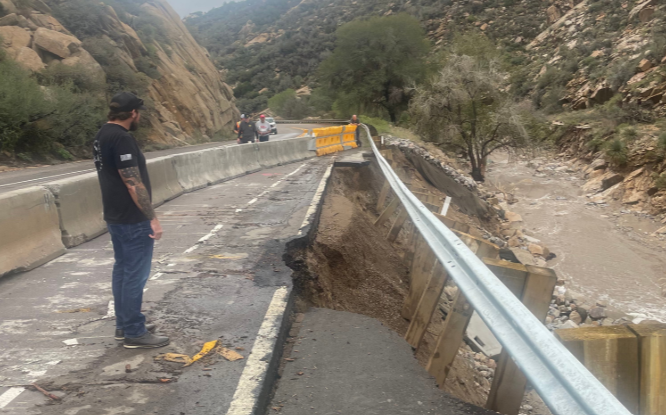
With tropical storm-fueled rains hammering various parts of Arizona and flood losses mounting, the U.S. Small Business Administration (SBA) announced that low-interest loans are now available for the victims of severe flooding in Coconino, Gila, Graham, Maricopa, Navajo, Pinal, and Yavapai Counties, as well as tribal nations.
The SBA is offering low-interest federal disaster loans to eligible businesses, nonprofits, residents, and tribal nations—similar to those provided for the Dragon Bravo Fire victims in September.
In a post to X announcing the relief for Gila County, Congressman Eli Crane (R-AZ02) called for continued prayers for those hit by the massive flooding. Remnants of Hurricane Priscilla hammered the area over the weekend, adding to late September’s monsoon deluge that devastated Globe-Miami.
Crane wrote: “@SBAgov has declared an economic disaster due to the severe flooding in Gila County. Through this declaration, SBA’s Economic Injury Disaster Loan (EIDL) program is available to eligible businesses, private nonprofits, and residents,” providing a link to resources.
He followed up: “Please continue to keep those impacted by the devastating floods in Gila County in your prayers. For those affected, @SBAgov is offering Business Physical Disaster Loans, Home and Personal Property Loans, and Economic Injury Disaster Loans.”
According to the SBA:
“Businesses and nonprofits are eligible to apply for business physical disaster loans and may borrow up to $2 million to repair or replace disaster-damaged or destroyed real estate, machinery and equipment, inventory, and other business assets.
“Homeowners and renters are eligible to apply for home and personal property loans and may borrow up to $100,000 to replace or repair personal property, such as clothing, furniture, cars, and appliances. Homeowners may apply for up to $500,000 to replace or repair their primary residence.
“Applicants may be eligible for a loan increase of up to 20% of their physical damage, as verified by the SBA, for mitigation purposes. Eligible mitigation improvements include insulating pipes, walls and attics, weather stripping doors and windows, and installing storm windows to help protect property and occupants from future disasters.”
The Economic Injury Disaster Loan (EIDL) program is also available to help small businesses, nurseries, and non-profit organizations with financial losses directly related to this disaster.
For more information, the SBA directs victims to visit this website. They can apply online, call SBA’s Customer Service Center at (800) 659-2955, or email disastercustomerservice@sba.gov.
“When disasters strike, SBA’s Disaster Loan Outreach Centers play a vital role in helping small businesses and their communities recover,” Chris Stallings, associate administrator of the Office of Disaster Recovery and Resilience at the SBA, said in a press release. “At these centers, SBA specialists assist business owners and residents with disaster loan applications and provide information on the full range of recovery programs available.”
Matthew Holloway is a senior reporter for AZ Free News. Follow him on X for his latest stories, or email tips to Matthew@azfreenews.com.
by Matthew Holloway | Oct 13, 2025 | Education, News
By Matthew Holloway |
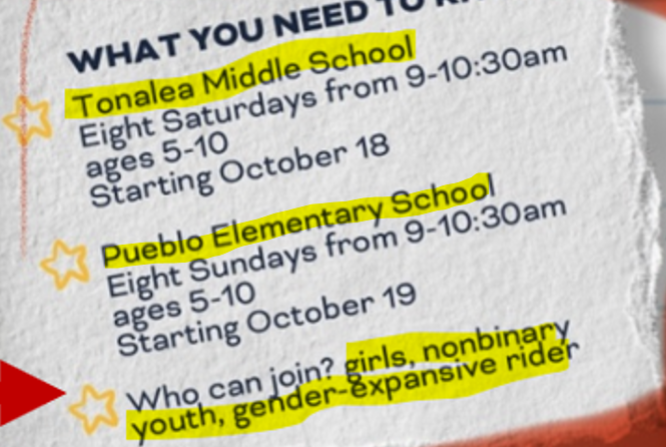
As enrollment dips and two schools are considered for repurposing, Scottsdale Unified School District (SUSD) is promoting a biking event for “girls, nonbinary youth, and gender-expansive” children in family-facing communications.
In an October 9th post to X, parental rights organization Scottsdale Unites for Educational Integrity (SUEI) wrote: “Parents confirmed @ScottsdaleUSD is using their district-wide communication system to promote an event for ‘nonbinary youth’ and ‘gender expansive’ children. Girls in Gear (and apparently boys, too) claims that these lessons are Social Emotional Learning. Email: GovBRD@SUSD.org.”
The “Girls in Gear” program, which focuses on cycling skills and social-emotional learning, includes participants who identify outside traditional gender norms, according to a district email sent to families. A post on X by SUEI shared the event flyer, which lists the inclusive criteria.
According to the Girls in Gear website, the event “is open to any rider who identifies as a girl. If a rider identifies as a girl, then the rider is welcome to participate in Girls in Gear.”
In a reply to the SUEI post, Arizona Women of Action drew attention to the contradiction that SUSD is continuing to focus on gender ideology despite reduced enrollment, school closures under discussion, and at-risk federal funding.
Arizona Women of Action wrote in its reply:
“1. Identifying as a gender that is not innate (boy or girl) is often the first step of the ‘trans’ path. By Scottsdale Unified recognizing these identities (non-binary, gender expansive) the district can contribute to a child’s ‘trans’ path. Change in pronouns and presentation are next, irreversible puberty blockers and hormones follow.
2. This is no longer a girls’ event if non binary or gender expansive youth can participate.
3. SUSD is closing schools. This kind of choice could be a contributing factor to low enrollment.
4. Isn’t there an EO about this? Yes. And schools can lose federal funding.”
The organization also called up on followers to call “the U.S. Department of Education’s Office for Civil Rights (OCR) at 1-800-421-3481 to report non-compliance.”
District reporting in February revealed that under SUSD Superintendent Dr. Scott Menzel, enrollment has consistently dropped. As of February 2025, enrollment stood at 19,367, a decrease of 390 students from 2024, down 355 from the previous year. Over the past seven years, enrollment has dropped precipitously by 13%, from 22,608.
In response to the enrollment trends, the SUSD governing board voted 3-2 on October 7th to advance a proposal to repurpose Echo Canyon K-8 School and Pima Elementary School for the 2026-27 school year, according to AZ Family. Menzel addressed the looming closures with families in a September message and cited under-enrollment at both schools.
The promotion of the program also comes amid federal policies addressing gender-related content in schools. President Trump’s Executive Order 14190, issued January 29, 2025, directs the withholding of federal funds from K-12 programs that promote gender ideology or other specified materials, and reestablishes the 1776 Commission for patriotic education. Additionally, a Department of Health and Human Services directive on August 26, 2025, requires states to certify that sex education programs do not reference transgender youth or gender ideology to receive funding, affecting 46 states and territories, including Arizona. Several Democratic-led states have filed lawsuits challenging the directive. Despite pending legal action, the Executive Order and HHS Directive both remain in effect at present.
SUSD has previously addressed transgender-related policies, including student transition plans and LGBTQ curriculum, and run afoul of the Arizona Department of Education and parents alike. In prior incidents, the district faced questions over notifications to parents and the use of school spaces for related activities, such as a “sexuality-safe-space” at Mohave Middle School, as reported by the Arizona Daily Independent.
Last month, a BrainPOP lesson on LGBTQ topics prompted review under state DEI restrictions, with Superintendent of Public Instruction Tom Horne citing potential violations.
Other community responses in the thread include comments from users expressing concern over the event’s inclusivity and district priorities.
Matthew Holloway is a senior reporter for AZ Free News. Follow him on X for his latest stories, or email tips to Matthew@azfreenews.com.