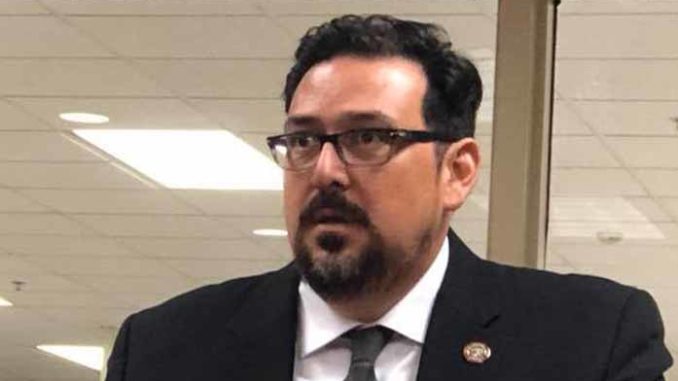
Arizona Secretary of State Adrian Fontes advocates for keeping porn-laden books in K-12 classrooms.
Fontes claimed that those opposed to sexually explicit content in classrooms were insecure and that the concept was “anti-American.”
“If you’re so insecure in your beliefs that you think you have to ban books, perhaps you should revisit the actual strength of your ideas and values,” tweeted Fontes. “Banning books is anti-American.”
If you’re so insecure in your beliefs that you think you have to ban books, perhaps you should revisit the actual strength of your ideas and values. Banning books is anti-American.
Fontes remarks were indirectly aimed at SB1700, which requires the Arizona Department of Education (ADE) to create and upkeep a list of banned schoolbooks posted to their website and authorize parents to submit for inclusion on the ADE banned book list any books containing lewd, sexual, gender fluidity, gender pronouns, grooming, or pedophilia normalization content.
State Sen. Justine Wadsack (R-LD17), the bill sponsor, accused Fontes of not reading the bill.
“SB1700 doesn’t ‘ban books,’” tweeted Wadsack. “It protects the innocent hearts and minds of children from indoctrinated porn being taught in their public government schools. Stop sexualizing children. Parents have had enough!”
Clearly, you didn’t read the bill. #SB1700 doesn’t “ban books”. It protects the innocent hearts and minds of children from indoctrinated porn being taught in their public government schools. Stop sexualizing children. Parents have had enough!
— AZ Senator Justine Wadsack (@Wadsack4Arizona) March 11, 2023
The Senate passed SB1700 last Thursday without vocal opposition from Democrats. However, Democrats argued during the Senate Education Committee that State Sen. Sally Ann Gonzales (D-LD20) claimed that the bill would prevent children from learning about basic anatomy. Wadsack dismissed that claim, noting that the focus of the bill was to keep lewd content out of schools.
Elijah Watson — an activist with Civic Engagement Beyond Voting, and former activist with the Arizona Democratic Legislative Campaign Committee and Arizona Democratic Party — claimed that the bill’s aim to ban porn was a “slippery slope” to censorship of great literary classics like “Of Mice and Men.” Watson said that the bill would ultimately prevent “tough but necessary discussions.”
Lisa Fink, president for Protect Arizona Children Coalition, testified that multiple books that would likely be subject to the prohibited books list included depictions of both children and adults in sex acts. One book highlighted by Fink, “Beyond Magenta,” depicts a six-year-old enjoying oral sex.
“Alarmingly, there is no immediate clarification for these pictures that this is illegal and damaging behavior,” stated Fink. “The book displays graphic language, violent sex, and graphic depictions of oral sex committed by children.”
Chris Kotterman representing the Arizona School Boards Association (ASBA) claimed that this was “unprecedented state control of curriculum.” Kotterman issued a veiled warning that the ADE wouldn’t always be run by a Republican individual, indicating that the prohibited books list would be weaponized against those advocating against sexualized content.
A group of transgender activists argued in opposition to the bill.
Erica Keppler, a transgender individual, claimed that gender fluidity is a “natural phenomenon.” Keppler claimed that any book using any pronouns, even in their correct usage, would be subject to the bill’s ban. Austin Davidson, another transgender individual, said that books affirming the lifestyles of fellow transgender individuals were necessary.
Alicia Messing, who signed a pledge to teach Critical Race Theory regardless of law or parental consent, said that teachers should dictate what students learn, not parents. Messing’s remarks made national headlines.
“We all have advanced degrees. What do the parents have? Are we vetting the backgrounds of our parents? Are we allowing the parents to choose the curriculum and the books that our children are going to read? I think that is a mistake,” said Messing.
Do you agree?!? 👍👎 “We all have degree advanced degrees. What do the parents have? Are we vetting the backgrounds of our parents? Are we allowing the parents to choose the curriculum and the books that our children are going to read? I think that is a mistake.” pic.twitter.com/Vyp0SxZUY9
It’s unlikely that any legislation of this nature — wholeheartedly supported by Republicans and opposed by Democrats — will become law. Gov. Katie Hobbs has engaged in a veto streak against Republican-led legislation.
Corinne Murdock is a reporter for AZ Free News. Follow her latest on Twitter, or email tips to corinne@azfreenews.com.
Arizona Legislative Republicans are working overtime to protect young students from what they could read or hear in their district schools, though these efforts are opposed by Democrats and have little chance at becoming law.
SB 1323, sponsored by Senator Jake Hoffman, “classifies, as a class 5 felony, a violation of the prohibition on a public school referring students to or using any sexually explicit material in any manner,” according to the purpose provided by the State Senate.
The prohibition of “sexually explicit material” is found in ARS 15-120: “….includes textual, visual or audio materials or materials accessed via any other medium that depict any of the following – sexual conduct, sexual excitement, or ultimate sexual acts.” There are exemptions from this prohibition, which include the school requiring written parental consent for the student to be referred to or use the materials.
As with most pieces of legislation dealing with children’s education and schools, the vote in the Senate came down along party lines. 16 Republicans voted in favor, while 13 Democrats vote against (Senator Juan Mendez did not vote).
"This bill is about stopping the sexualization of Arizona children."
Senator Jake Hoffman explains why Arizonans should be outraged by how Senate Democrats voted today on a bill that protects children. pic.twitter.com/RTNLH43too
The bill previously passed the Senate Judiciary and the Rules Committees with partisan 4-3 votes.
SB 1323 provoked a heated debate on both sides of the aisle when members of the Senate cast their votes. Democrat Senator Anna Hernandez bemoaned what she perceived as the lack of due process for the bill, arguing that there was no difference between a teacher presenting the materials to kindergarteners or high school seniors, or that the legislature was not making a clear line for teachers who were intentionally versus unintentionally making the material available to students. She stated that the state was taking a “huge step forward to criminalize the speech of a teacher who refers to a book,” and she wondered aloud why Arizona has a teacher shortage with these kinds of bills being proposed by Republican legislators.
Democrat Senator Christine Marsh agreed with her colleague, making the case that the language in the existing law was already incredibly vague on prohibitions, and that the added criminal penalty in Hoffman’s proposal was a huge problem. She echoed Senator Hernandez’s comments about the teacher shortage in the Grand Canyon State, saying that “educators are already finding the working and learning conditions in Arizona to be untenable,” and that “mistakes could expose a person to serious felony or prison time.”
Republican Senator Anthony Kern took strong exception to what he was hearing from Democrats, claiming that this bill protects children and that “teachers are leaving because they are being intimidated by the left for their Christian values.” He noted that “it is not naïve to think that our children are being targeted by our current school board education system to explicit pornography and explicit materials.”
Democrat Senator Mitzi Epstein pushed back against the Republicans’ assertions that explicit pornography was being shown to students in Arizona public schools, saying that Arizona “already has laws on the books against showing pornography to children.” She called the bill “overreach” and “ridiculous.”
Bill sponsor, Jake Hoffman told his fellow colleagues that his bill was about “stopping the sexualization of Arizona’s children,” and admitted that the definition of “sexually explicit” was pulled from the obscenity section of the U.S. Criminal Code, which was adopted in the 1960s – and hasn’t been amended since 2001. He revealed that when the Legislature previously considered a bill to enshrine into law the definitions of “sexually explicit materials,” he had to obtain permission from DPS to show pictures from a book for ten-year-olds in a committee hearing (since the proceedings were being broadcasted). He blasted Democrats for their votes against the bill, saying that “every parent in Arizona should be ashamed of the red (no) votes,” and he predicted that Governor Hobbs would aid “in the sexualization of children in Arizona” by vetoing this legislation.
Senator Sonny Borrelli presented a thought-provoking question from a constituent for his colleagues to consider when casting their votes: “Why is talking about sex with adults at work considered sexual harassment but talking with kindergarteners and middle school and grammar school kids considered necessary?” He called the Democrats’ stance on this proposal a “double standard” that was “completely off the charts.”
Senators Anthony Kern, Janae Shamp, Justine Wadsack, and Representatives Joseph Chaplik and Jacqueline Parker co-sponsored Hoffman’s legislation. Representatives from the Center for Arizona Policy and Arizona Free Enterprise Club supported the bill, and representatives from the Arizona Education Association, Save Our Schools Arizona, American Civil Liberties Union of AZ, and AZ Attorneys for Criminal Justice opposed its movement through the legislative process.
SB 1323 now awaits its fate in the Arizona House of Representatives.
Daniel Stefanski is a reporter for AZ Free News. You can send him news tips using this link.
Parents can now call a hotline to report inappropriate lessons at their schools, under a new initiative launched by the Arizona Department of Education (ADE) on Tuesday.
Superintendent Tom Horne discussed the hotline during a Wednesday interview on “The Mike Broomhead Show.” The superintendent said that teachers suspected of abusing their position may face disciplinary conduct and proposed that violations impact a school’s letter grade per the state’s A-F Accountability System.
“Teachers should be teaching the academic standards to their students and not abusing a captive audience by pushing their own ideology,” said Horne. “If they know that their kids have been taught those things, we want them to let us know so we can investigate it and try to do something about it.”
In a press release, ADE clarified that inappropriate public school lessons included those that focus on race or ethnicity, rather than individuals and merit; promoting gender ideology; social-emotional learning (SEL); or inappropriate sexual content. The department linked to our report documenting the over 200 educators who signed onto a statement proclaiming that they would teach outlawed materials like Critical Race Theory (CRT) – even if banned.
Anti-school choice activists and critics of Horne encouraged parents to flood the hotline, dubbed the “Empower Hotline.” Save Our Schools Arizona issued a call to action to drown out real reports from parents seeking help.
“[Please] report how amazing it is that teachers are doing so much for our kids despite the lack of resources provided to them,” stated SOSAZ.
The AZ Department of Education released a new Empowering Parents hotline today. Please join us in calling 602-771-3500 to report how amazing it is that teachers are doing so much for our kids despite the lack of resources provided to them. pic.twitter.com/ozuX12TBgU
The Empower Hotline rollout included a link to a page on the ADE site explaining Critical Race Theory (CRT) and Social-Emotional Learning (SEL).
ADE claimed that CRT is being taught in many public schools, and rejected the claim that it’s a college-level curriculum. ADE published a list of key words and phrases associated with CRT: oppressors or oppressed, whiteness, white privilege, white supremacy, white complicity, white equilibrium, and white fragility.
“The claim that CRT or its principles and elements is not part of any school curriculum in Arizona is false. It is being taught to children,” stated the ADE.
ADE also characterized SEL as a gateway for CRT. The department also claimed that SEL took away precious instructional time by focusing on emotions and feelings.
“Student test scores have been declining since before the pandemic, and resources – especially the non-renewable resource of time – need to be spent to fully educate students in core subjects,” stated ADE. “Teachers are professionals. They know their students and are already trained to be alert for signs of emotional and behavioral problems. This doesn’t require a full-blown curriculum that detracts from teaching academics.”
Horne warned in a statement that CRT can be taught under different titles, such as “power diversity” or “deep equity.”
Arizona Education Association (AEA) President Marisol Garcia called the hotline a “recipe for disaster.”
“Inviting the harassment of educators, without due process at their local level, with the ability of these ‘accusations’ to be FOIA’d?” asked Garcia.
On the @azedschools website, front and center! Let’s be CRYSTAL CLEAR, this is a recipe for disaster. Inviting the harassment of educators, without due process at their local level, with the ability of these ‘accusations’ to be FOIA’d? As if nothing bad is going to happen here? pic.twitter.com/lvc9unSkYH
A committee formed by University of Arizona (UArizona) faculty disbanded this month after they felt university officials were unsupportive of their efforts.
In a letter explaining their disbandment, the General Faculty Committee on University Safety For All informed Faculty Chair Leila Hudson and Faculty Vice Chair Mona Hymel that they feared negative repercussions if they continued their investigative efforts. Hudson had created the committee.
The committee issued a 30-page interim report in January claiming that UArizona suffers from “a glaring institutional failure” that compromises campus safety, and further accused the university of disregarding employee and student safety concerns. The committee’s primary focus on the report was the slaying of professor Thomas Meixner last October.
The accused killer, 46-year-old Murad Dervish, was denied a teaching assistant position for this spring semester by Meixner. Dervish initially sought out three other professors though he wasn’t able to locate them. The report documented Dervish’s lengthy criminal history prior to UArizona, as well as the timeline of his aggressive and predatory behavior leading to his expulsion and ban from campus.
“University officials knew about the prevalence of such violence risks but did not take necessary action to protect the victims,” stated the committee report.
The report also documented three other, unrelated cases to prove UArizona suffered from institutional failures compromising campus safety. These cases documented the alleged harassment and sexual misconduct of two male law students against two female law students; the doxxing and harassment of a female student reporter; and the police call on a student over fallout with a faculty member.
The committee further accused UArizona of suffering from a “chronic trust problem,” calling into question the competency and integrity of university administrators, the university’s capacity and willingness to address safety, and the imposition by administrators of a climate of retaliation and consequences.
The spokesman for UArizona issued a response to media outlets alleging that the committee’s work was based on “misleading characterizations and the selective use of facts and quotations.”
In order to cultivate its data, the committee engaged in one-hour listening sessions with four minority groups, and three faculty groups.
The Faculty Senate endorsed the report during a meeting last month.
The committee formed several weeks after the fatal shooting of Meixner last October.
UArizona hired consulting firm PAX Group to review and issue a report on their campus safety protocols. That report has not yet been publicized. The faculty committee was slated to issue a final report later this semester.
Members of the faculty committee were Chairwoman Jenny Lee, College of Education; Hoshin Gupta, College of Science; Jennifer Hatcher, College of Public Health; Luis Irizarry, graduate student liaison; Lisa Kiser, College of Nursing; Barak Orbach, College of Law; Christina Rocha, staff liaison; Shyam Sunder, Eller School of Management; and Lauryn White, student liaison.
Corinne Murdock is a reporter for AZ Free News. Follow her latest on Twitter, or email tips to corinne@azfreenews.com.
Alliance Defending Freedom (ADF) has sued the Washington Elementary School District (WESD), alleging unconstitutional discrimination against Christians.
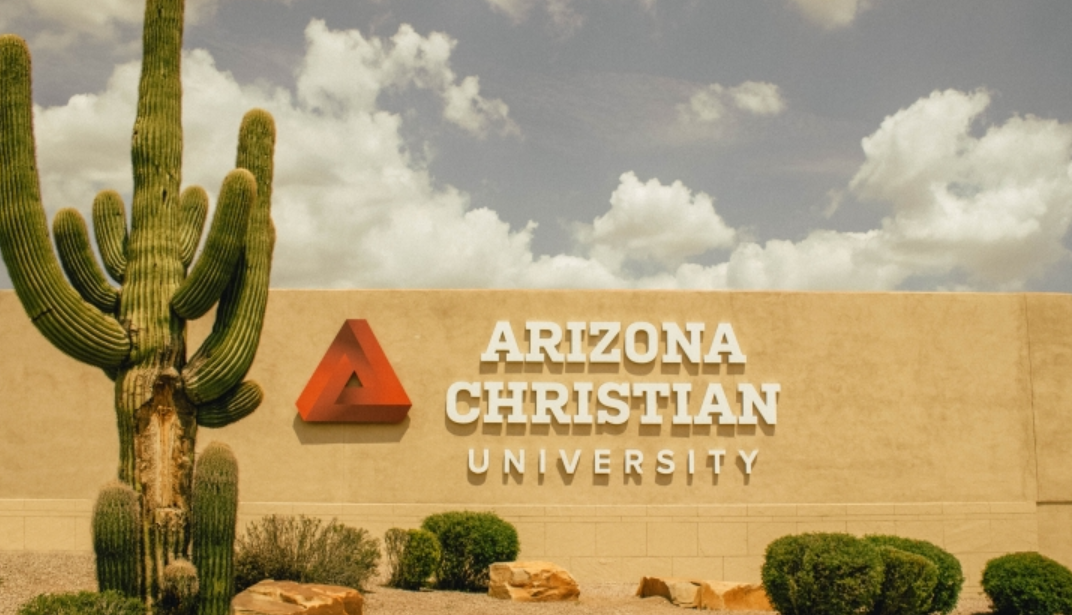
ADF filed the lawsuit on Thursday against WESD, claiming that the district’s recent decision to end a contract with Arizona Christian University (ACU) due to its religious beliefs on biblical marriage and sexuality constituted unlawful discrimination.
In a press release, ADF Senior Counsel David Cortman, claimed that WESD violated both the U.S. Constitution and state law by ending its contract with ACU based on the university’s religious beliefs.
“Washington Elementary School District officials are causing irreparable harm to ACU every day they force it to choose between its religious beliefs and partnering with the area’s public schools,” said Cortman.
AZ Free News first broke the story about WESD’s alleged discrimination last week, documenting how WESD Governing Board Member Tamillia Valenzuela, a self-identified neurodivergent queer furry, led a crusade to purge Christians from WESD.
Valenzuela said during the board’s Feb. 23 meeting that ACU’s mission to prioritize the teachings of Jesus Christ weren’t aligned with WESD priorities. WESD had contracted with ACU to have university students complete their student teaching and practical coursework at one of WESD’s campuses. All five of the governing board members voted to terminate WESD’s contract with ACU. 16 ACU students were involved with WESD at the time.
In January, Valenzuela also condemned the district for allowing Grand Canyon University (GCU) students to serve as interns with WESD. GCU is a private Christian university. Unlike with ACU, WESD opted to maintain its contract with GCU.
The Arizona Department of Education (ADE) condemned WESD’s decision to terminate its contract with ACU.
“Terminating a contract based on religious practices is unacceptable. The teachers from ACU sign a contract that adheres to the district’s guidelines, and it’s ill-advised to cut off an educator pipeline as our schools struggle with staffing,” stated ADE.
Terminating a contract based on religious practices is unacceptable. The teachers from ACU sign a contract that adheres to the district's guidelines, and it's ill-advised to cut off an educator pipeline as our schools struggle with staffing. https://t.co/6Y9Z24VXtK
— Arizona Department of Education (@azedschools) March 9, 2023
Social justice activists rallied around Valenzuela, issuing a call to action for community members to wear cat ears to Thursday’s board meeting.
Earlier this week, Democratic legislators also issued their support for Valenzuela. The Democrats claimed that criticisms of WESD and Valenzuela were coordinated by Republicans and intended to “demonize and demoralize school leaders, LGBTQ+ students, and our public school system.” The Democrats also claimed that criticisms of the district and Valenzuela would result in violence against officials and even students.
The Democrats’ statement didn’t address the concerns that WESD’s actions resulted in potentially unlawful religious discrimination against Christians.
Press Release: Senate Democrats Extend Support to the Washington Elementary School District & Board Member Tamillia Valenzuela pic.twitter.com/vhb0FBxGHe
— Arizona Senate Democrats (@AZSenateDems) March 7, 2023
Save Our Schools Arizona (SOSAZ), an anti-school choice teachers’ union activist group, helped get Valenzuela elected to WESD’s board last year.
Had a wonderful morning collecting signatures to get Tamillia Valenzuela on the ballot for Washington Elementary SD! 🌻❤️ We desperately need more diversity & representation on our local school boards! Can you chip in $5, $10, $20 for Tamillia today? https://t.co/NYvuKHcA9Vpic.twitter.com/IrmpjcOQxK
— Beth Lewis, SOSAZ 🆘 🏜🎓 (@AZBethLewis) May 14, 2022
During Thursday’s board meeting, Valenzuela claimed that lawmakers were bullying LGBTQ+ students by not accepting their lifestyles. Valenzuela claimed that realizing alternative sexualities constituted the fullest realization of humanity.
“There is a difference between acceptance and tolerance, and members of our society have been merely accepted, merely tolerated for their existence. We have watched as our children have been bullied for having autonomy,” said Valenzuela. “Know what Christ’s teachings were: it was love, it was acceptance. It was not cursing people out on Facebook and Twitter, it was not spreading misinformation.”
Valenzuela’s remarks elicited a mixed chorus of clapping and boos.
Watch the board meeting below:
Corinne Murdock is a reporter for AZ Free News. Follow her latest on Twitter, or email tips to corinne@azfreenews.com.
The Chairman of the House Education Committee is sponsoring a bill designed to increase awareness about school choice in Arizona, but Democrats remain in opposition to any policies that inform parents about their options to educate their children.
Representative Beverly Pingerelli introduced HB 2539, which “creates the Arizona School Choice Division within the State Board of Education, and outlines its duties and appropriates monies and FTEs (full-time employees) to the Division,” according to the overview provided by the Arizona House of Representatives.
Among other provisions of the bill, HB 2539 “directs the Division to implement a public awareness program about students’ abilities to choose any public schools and resources to explain school choice options;” and it “mandates the Division develop single-page informational pamphlets that can be accessed in physical and digital formats to educate parents on the available school choice options for students.” The legislation also “directs the Division to notify ADE if a charter school or school district that operates a D or F letter grade school submits, fails to submit or is late to submit compliance evidence within 60 days of letter grade assignment.”
In an exclusive interview with AZ Free News, Representative Pingerelli explained why she introduced this legislation: “Parents hold schools accountable in Arizona with school choice. But parents need transparency of school outcomes, and they need to be aware of their rights. The purpose of HB2539 is to ensure more parents are aware of ALL their choices. This bill requires that schools not only explain to their parents why and how they are failing to their parents if they have a D or F rating, but how they will improve their school. It relieves schools of the current burden of mailing the entire community a post-card mailer, which currently has almost no information on it. It is our job to ensure parents are informed. Finally, there are hundreds of new Arizonans arriving daily who likely are not experts in our education laws. We currently make no effort to help them. At the cost of an email, we can fix that.”
Last month, the bill passed both the House Education and House Rules Committee. The vote in the Education Committee was split across party lines, 6-4. All eight members of the Rules Committee voted in favor of HB 2539, pushing it one step closer to a vote before the entire House body.
Representatives from the Arizona School Administrators Association, Arizona Education Association, and Save Our Schools Arizona signed in against this bill as it went through the House committee process.
Over the past two sessions, many of the most contentious policy battles between Republicans and Democrats have been over the issue of school choice and providing more control and transparency to parents when it comes to their children’s education. Last year, after numerous debates between passionate members on both sides, the Arizona Legislature passed a historic expansion of the Education Savings Accounts program (ESA), which then-Governor Doug Ducey signed into law. This universal expansion was the first of its kind in the nation and was enacted with partisan votes in both chambers of the Arizona Legislature.
An online account advocating against passage of the bill, tweeted, “The not-too-hidden goal of denigrating public schools is to weaken support for teachers and their unions, and to redirect funds into school vouchers and other programs that pummel public education even further.”
The not-too-hidden goal of denigrating public schools is to weaken support for teachers and their unions, and to redirect funds into school vouchers and other programs that pummel public education even further. 🛑Oppose #HB2533 🛑Oppose #HB2539https://t.co/0vYR6TUSoQ