by Staff Reporter | May 24, 2026 | Education, News
By Staff Reporter |
Arizona State University (ASU) will be offering more affordable bachelor’s degrees to the 2.1 million community college students in California.
ASU announced on Tuesday that it was expanding the California Community College Achievement Plan (CCCAP) to create transfer pathways at all 116 community colleges in California.
The university decided to capitalize on the small transfer rate (10%) of California students going from community college to a four-year university.
ASU’s chief operations officer for EdPlus, Casey Evans, said this expansion was a critical investment in California’s future.
“We believe access to higher education should not be limited by geography or cost,” said Evans. “The California Community College Achievement Plan expands opportunity statewide, creating more accessible pathways through ASU Online for students to earn their degrees and contribute to California’s future.”
EdPlus oversees ASU Online in addition to:
- NeoSTEM, a platform combining personalized instruction tools Orchard and Digit for STEM students;
- Study Hall, a platform awarding reduced-cost college credits through YouTube videos;
- Dreamscape Learn, integrating virtual reality into courses;
- The ASU+GSV Summit;
- Zai Xian, a Chinese version of ASU Online offering non-English degrees in Mandarin to Chinese-speaking students;
- Cintana Education, a partnership opening up ASU resources, courses, and support with other universities that are part of the Cintana Alliance;
- Baobab, a platform providing networking, growth, and career development to Mastercard Foundation Scholars;
- e-SHE, an educational program for Ethiopians;
- Air Force Global College, a program providing professional development to Air Force servicemembers;
- Partnership with University of Tennessee, Knoxville to expand degree pathways and course catalogs;
- The Hall of Teachers project at the Bishop Museum in Hawai’i;
- The Earned Admission program; and,
- Tuition-coverage partnerships for Starbucks, Uber, and InStride employees.
California community college students receive a special tuition rate of $450 per credit hour. The regular tuition per credit hour for ASU Online undergraduate is about $600.
Meaning, online undergraduates who transfer from California community colleges save more than 20% on tuition compared to what Arizona residents pay.
ASU also prioritizes the maximization of transfer credits and personalized support for the program. Personalized support available to CCCAP students includes advisors, career services, and success coaches.
Only students who earned an associate degree or at least 30 credits from a California community college qualify for CCCAP.
ASU launched the pilot program of the CCCAP last fall. At the time, 26 community colleges in California were part of the pilot program.
Daniel Walden, the CEO of Victor Valley College, one of California’s community colleges, said CCCAP greatly benefits California residents and communities. The ASU News feature of the CCCAP expansion made no mention of impact to Arizonans or their communities.
“This partnership with ASU Online creates a clear and affordable path for our graduates to reach their goals, enrich their lives and strengthen our communities,” said Walden.
The latest financial aid report from the Arizona Board of Regents (issued 2021) found that 55 percent of ASU undergraduates graduated in debt.
Over 15,000 students in California already attend ASU’s online schooling.
AZ Free News is your #1 source for Arizona news and politics. You can send us news tips using this link.
by Staff Reporter | May 23, 2026 | Education, News
By Staff Reporter |
An Arizona mother says the state’s universal school choice program ensured the successes of her nine children.
Andrea attested that the Empowerment Scholarship Account (ESA) program allowed her family to have choice in the education of their nine children after she and her husband lost their jobs.
“It was a hard time to be able to pay for homeschool; we would have had to put our kids in a public school, and it was really stressing us out,” said Andrea.
Andrea told America’s Women that the job her husband acquired following his job loss didn’t provide enough income to cover the costs of homeschooling. The prospect of forcing her children to enter “a one-size-fits-all system” worried her; Andrea said the ESA program allowed her to provide her children with unique opportunities and freedoms not available within public education.
“Homeschooling with ESA has opened doors beyond traditional education. Our children have the opportunity to learn through real-life experiences — hiking in nature, visiting museums, and engaging in hands-on learning that brings lessons to life,” said Andrea. “They can move at their own pace, receive one-on-one attention, and explore interests that will shape their future paths and careers.”
As of Monday, the ESA program reported surpassing 101,500 students. The program also reported the enrollment of 3,300 new students for the next school year.
The ESA program may undergo reforms from two propositions gathering signatures to make it onto the November ballot: the Protect Education Act and the Reform and Accountability Act. Each would need 256,000 signatures to make it onto the ballot.
The Protect Education Act would impose an income cap on enrollment in the ESA program, in addition to eliminating the rollover of funding. This proposition is backed by two big critics of school choice: the state’s main teachers union, Arizona Education Association, and the nonprofit Save Our Schools Arizona.
Under the reforms on this proposal, qualified schools and tutors would have to pay fees and register annually with the Arizona Department of Education (ADE). Qualified schools must be accredited or administer state assessments, and the state would have greater oversight of nonpublic schools receiving ESA funds.
The Reform and Accountability Act would mandate the ADE to establish an online marketplace payments system starting July 2027. The proposed system would limit ESA purchases to approved vendors. This would eliminate the current system, in which parents rely on reimbursements and debit cards.
The program would need to issue quarterly reports to the attorney general detailing vendor payments, family disqualifications, and recovered funds. As part of that crackdown on misspending, this ballot measure would permanently disqualify parents from the program who intentionally misuse school choice funding.
Students not enrolled full-time at a qualified school would need to participate in an approved examination to gain entry to the ESA program. Then, the ADE would need to maintain lists of approved examinations and curricula.
The American Federation for Children has backed this proposition.
AZ Free News is your #1 source for Arizona news and politics. You can send us news tips using this link.
by Staff Reporter | May 21, 2026 | Education, News
By Staff Reporter |
A Maricopa County teacher’s aide allegedly impregnated by a middle school student received assistance in obtaining an abortion by the boy’s godmother, according to a police report.
The godmother or “nina” — identified as Adriana Eloisa Andazola — corresponded with the victim, a 15-year-old boy in the eighth grade, about his sexual encounters with his teacher’s aide, Jessenia “Nia” Rodriguez, 22, of Tolleson.
Rodriguez was a teacher’s aide at the boy’s school. Rodriguez supervised recess at the Avondale location of Sun Valley Academy, a charter school.
The police report alleged that Andazola knew about the illicit relationship between Rodriguez and her godson but didn’t report it to authorities. The report also disclosed that Rodriguez contacted Andazola to schedule an abortion.
“Nina promised to not tell anyone and [Rodriguez and Andazola] agreed to have Nina transport Nia to an abortion clinic,” stated the report. “Nina and [the victim] discussed blocking Nia and joked about having a level five klinger [sic].”
The child’s stepmother told police that Andazola “planned” for the boy to lie about going on a lunch date with her while they went to get an abortion. It was the stepmother who contacted school officials and police.
Sun Valley Academy’s principal, James Capriotti, told police that he observed a text message conversation between Rodriguez and the victim in which Rodriguez said she’d received and taken pills for an abortion and was “not feeling well.” Later in the report, police described text messages in which Rodriguez told the victim that she went to a Banner hospital due to adverse effects from abortion pills.
“I’ve been taking the abortion pills and inserting the ones I’m supposed to put inside me since Friday,” texted Rodriguez. “I inserted the last pills yesterday. The pharmacist did tell me that [I’m going to] get bad cramps and should bleed like if I’m on my period but it’s so much worse.”
Rodriguez allegedly targeted the child during one recess when asked for the victim’s phone number. The two began texting and video calling on Facetime. Rodriguez exposed herself to the boy on camera on multiple occasions.
This led to Rodriguez allegedly having sex with the victim on at least three separate occasions, twice at his home. After the first time, the victim told police that he went to a nearby pharmacy store and purchased a plan B pill for Rodriguez. The report didn’t disclose whether Rodriguez took that pill.
Two weeks after Rodriguez first molested the victim, Rodriguez claimed to be pregnant with his child. Records reflect Rodriguez texted pictures of three positive pregnancy tests to the victim.
The victim also alleged that Rodriguez threatened on more than one occasion to keep the baby.
Police confirmed that the investigation into the alleged pregnancy is ongoing.
Sun Valley Academy Avondale clarified in a press release that the molestation did not occur on campus. The campus principal, James Capriotti, advised that they reported the allegation about Rodriguez to the Avondale Police Department immediately upon receiving it.
Police were contacted at the end of March about the allegations against Rodriguez.
Rodriguez faces charges related to luring a minor for sexual exploitation, a class four felony, and four counts of sexual conduct with a minor.
Rodgriuez has at least one child of her own, per court documents: the student reported seeing Rodriguez’s child in one of their FaceTime calls.
During a police interview, Rodriguez said she wanted to create a family with the boy once he turned 18 years old, and admitted to knowing her actions were wrong.
A search of Arizona State Board of Education records does not yield any other incidents of sexual misconduct by staff or educators at Sun Valley Academy Avondale or other locations.
The Maricopa County Attorney’s Office announced last month that Rodriguez was indicted on six counts of sexual conduct with a minor, a class two felony, and one count of luring a minor for sexual exploitation, a class three felony. Rodriguez has a trial det set for late August.
AZ Free News is your #1 source for Arizona news and politics. You can send us news tips using this link.
by Staff Reporter | May 19, 2026 | Education, News
By Staff Reporter |
The governing board president of the Paradise Valley Unified School District (PVUSD) endorsed a code term named in a federal indictment as a threat against President Donald Trump.
In a Facebook post, PVUSD governing board president Anthony “Tony” Pantera shared a picture reposted by “The 50501 Movement,” an anti-Trump Facebook group, depicting seashells and rocks forming the numbers “8647.”
The string of numbers refers to eliminating (to “86” someone) President Trump (the 47th president). The picture was the same one posted and later deleted by former FBI Director James Comey last May, who was indicted by the Trump administration in April over the message.
Comey posted the message after Trump survived multiple assassination attempts in 2024. He maintains innocence and denies that his post held any violent connotations.
The first and more serious of the two occurred in July 2024 at a campaign rally in Pennsylvania. One supporter was killed by the would-be assassin, Thomas Crooks; two other attendees were injured, and one bullet struck Trump’s ear. Crooks fired eight shots before he was shot and killed by a member of the Secret Service.
A second assassination attempt occurred in September 2023 outside of Trump International Golf Club. That would-be assassin, Ryan Routh, was fired upon and fled before he could shoot at Trump. Routh was sentenced to life in prison in February.
In addition to the Pennsylvania and Florida assassination attempts, in late 2024 federal agents foiled an assassination plot against Trump by a Pakistani terrorist in Texas, Asif Merchant, who had been recruiting terrorists on behalf of Iran’s Islamic Revolutionary Guard Corps.
Trump recently was subjected to another assassination attempt several weeks ago at the White House Correspondents’ Dinner. Would-be assassin Cole Tomas Allen rushed the event and shot at agents; one federal agent was struck in his bulletproof vest, but nobody was harmed.
The term “86” has mixed meanings — while it signifies “getting rid of” someone, that can range from firing to murder.
One origin of the slang can be traced to a mob-era phrase, “80 miles out and six feet under,” meaning the person subjected to a mob hit would be made to go outside of civilization to be killed and buried: “80 miles out [from civilization] and [buried] six feet under[ground].” Another relates to the historical sizing of a grave: 86 inches for vaults, or eight feet long and six feet deep for a plot.
Other origins include the shooting down of enemy planes by F-86 fighter jets in the Korean War; Article 86 of the Uniform Code of Military Justice describing those who go AWOL; alphanumeric associations on rotary phones in which the number eight was “T” and the number six was “O,” short for throwing out; old bartender traditions of serving less potent, 86-proof liquor to drunken patrons rather than 100-proof.
Mixed origins of the phrase aside, the Trump administration took Comey’s post as a threat of violence against Trump. A grand jury agreed and issued a two-count indictment against Comey. The indictment found that Comey knowingly and willfully made a threat to inflict bodily harm or kill Trump.
Pantera first took office in 2023. Prior to joining the governing board, Pantera taught in PVUSD for over 40 years.
Community members have called for Pantera to resign over his endorsement of Comey’s message.
AZ Free News is your #1 source for Arizona news and politics. You can send us news tips using this link.
by Ethan Faverino | May 18, 2026 | Education, News
By Ethan Faverino |
The Common Sense Institute (CSI) released the first report in its 2026 Ballot Guide series, examining the fiscal, educational, and family impacts of the proposed “Protect Education Act.” The analysis concludes that the measure would immediately disqualify approximately 20,300 current universal ESA families through a new income cap, while gradually excluding more than half of Arizona families with school-aged children over time as incomes rise faster than the cap’s limited adjustment.
The proposal would also impose new accreditations, testing, and spending restrictions on participating schools, potentially disrupting educational choices for over 100,000 Arizona students currently using Empowerment Scholarship Accounts (ESAs).
Arizona’s K-12 landscape has been shifting for more than a decade, with district enrollment declining since 2008 as families increasingly turned to charter, private, homeschool, and micro school options. District schools lost roughly 50,000 students in 2021-2022 alone—before universal ESA eligibility—and today enroll about 75,000 fewer students than in 2019-2020.
Fewer than 70% of Arizona’s school-aged children now attend district schools, down from 80% a decade ago.
In response to these trends and parent demand for alternatives, lawmakers expanded ESA eligibility in 2022 to all school-aged children, removing prior public-school attendance requirements. Participation surged to more than 100,000 students (nearly 10% of Arizona’s K-12 population), with annual awards totaling around $1.1 billion. One quarter of participants remain in pre-universal categories, including a rapidly growing share of students with disabilities.
Key Impacts of the Proposed Act
The Protect Education Act would limit universal ESA scholarships to households earning under $150,000 annually, require participating private schools to register, accredit, and/or conduct mandatory state testing, and further restrict allowable uses of funds by tightening definitions of “noneducational” and “luxury” items.
CSI’s analysis estimates that 24% of current ESA users have household incomes above the proposed threshold, immediately affecting roughly 20,300 universal-eligibility families.
Statewide, approximately 400,000 school-aged children—potentially up to 40% when accounting for family sizes—could be permanently excluded from universal ESAs based on 2024 income distributions.
Although the cap includes a 2% annual inflation adjustment. Arizona household incomes have historically risen closer to 4% per year, leading CSI to project that more than 52% of families with school-aged children could be income-excluded by 2045.
The restriction could also indirectly reduce participation in other eligibility categories. Growth in ESA usage among students with disabilities accelerated after universal expansion; without it, there might have been roughly 10,000 fewer participants in those targeted groups.
“Arizona’s K-12 system has been evolving for more than a decade as enrollment patterns, family preferences, and educational models continue to diversify,” stated Director of Policy & Research at CSI, Glenn Farley. “This analysis finds the proposed Act would not simply adjust ESA eligibility requirements, but could significantly reshape access to nontraditional education options over time. More families are signaling that one size does not fit all and are seeking educational choices that better meet their children’s needs.”
Fiscal Analysis: ESA Delivers Savings
ESA students receive significantly less funding than their public-school peers. The average universal ESA award is approximately $7,700 per student, compared to nearly $15,000 per public-school student. CSI estimates that shifting 20,000 universal ESA students back into district classrooms would increase annual taxpayers costs by about $115 million.
Despite serving over 100,000 students, the total number of publicly funded K-12 students (district, charter, and ESA) remains consistent with pre-2020 projections. The funding mix has simply shifted to better align with actual enrollment and family preferences, producing net savings for taxpayers. Arizona is also spending 30% more per-public school pupil (inflation-adjusted) than a decade ago, yet the share of funding reaching classrooms has declined slightly while support services have grown.
Academic Performance and Oversight
According to CSI, Arizona district students score low on state assessments with only 39% proficient in reading, 32% in math, and 27% in science. Available data indicate stronger outcomes in private and homeschool settings.
ACT scores show private school students outperforming public school counterparts by 19% and homeschool students by 12%. National Assessment of Educational Progress (NAEP) results similarly suggest private school students outperform roughly 70% of their public peers where comparable data exist.
CSI’s survey of participating private schools revealed that 84% already administer standardized testing and about two-thirds hold accreditation from recognized bodies. All respondents imply background checks and staff qualification standards. Private school leaders warned that the Act’s new requirements would create administrative burdens, with three-quarters indicating possible tuition increases and one in five suggesting they might stop accepting ESA students—potentially displacing over 4,600 reported ESA users.
Oversight mechanisms already exist in the ESA program. Arizona Department of Education audits found only 1.9% of sampled spending “unallowable” and 0.3% “egregious”—rates lower than many other public programs.
“Arizona was one of the first states to broadly expand Empowerment Scholarship Accounts, and a growing number of states have since adopted similar programs as demand for educational flexibility has increased,” added Farley. “If approved by Arizona voters, the proposal could significantly narrow access to options many Arizona families have increasingly turned to as part of the state’s changing education landscape.”
Ethan Faverino is a reporter for AZ Free News. You can send him news tips using this link.
by Staff Reporter | May 17, 2026 | Education, News
By Staff Reporter |
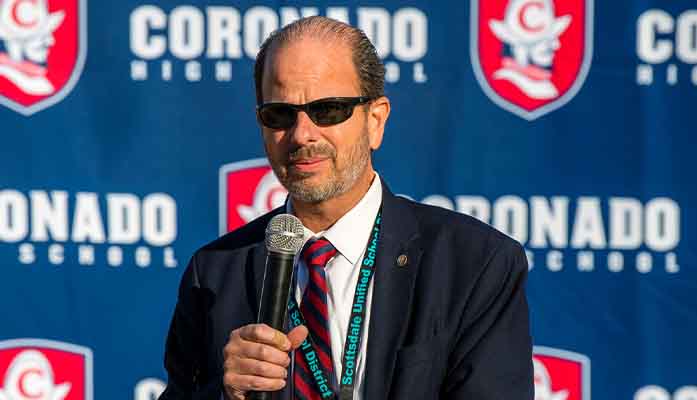
Scottsdale Unified School District (SUSD) is once again facing another Open Meeting Law complaint over a non-public advisory committee.
The complaint, filed last month with the Arizona Attorney General’s Office, claims that SUSD Superintendent Scott Menzel has again violated Open Meeting Law during his phased approach to closing schools.
The Scottsdale resident who filed the complaint told AZ Free News that he felt compelled to look into SUSD’s process for school closures in response to the community shock over the governing board’s decision to close Pima Elementary School and Echo Canyon School last December.
The closures brought $2.5 million in savings to the district. SUSD began looking into the closing and consolidating of schools, among other solutions, to address an $8 million budget deficit driven by declining enrollment.
This latest complaint claims that SUSD’s non-public Phase II Design Advisory Team was formed at the direction of the board and therefore required to be open to the public. Superintendent Menzel encouraged the governing board to authorize the design advisory team during a regular governing board meeting last November.
The next month, during the same meeting to close the Pima and Echo Canyon schools, the governing board discussed the design advisory team’s formation. In that meeting, Menzel and SUSD governing board president Donna Lewis strategized on ways for the board to direct the design advisory team’s formation but style it as a superintendent’s committee. The board indicated that it wanted Menzel to move forward with the team, but didn’t take a vote to create the team.
The design advisory team operates under the classification of a Superintendent Advisory Committee, which is exempt from Open Meeting Law requirements. The newly filed complaint alleges that the governing board’s involvement in the creation of the Phase II Design Advisory Team makes that classification untrue.
The Phase II Design Advisory Team is charged with crafting recommendations on schools to the board, including further closures or consolidations.
The resident behind the complaint told AZ Free News that he filed against the district after SUSD personnel denied him entry to one of the design advisory team’s meetings in person.
SUSD told AZ Free News that it hasn’t received notification of this complaint.
SUSD got into trouble last year for similar non-public advisory committees.
Last summer, Attorney General Kris Mayes found SUSD had violated Open Meeting Law for using advisory committees in a manner similar to the alleged violation outlined in the complaint.
“The Open Meeting Law does not permit a governing board to evade the public meeting requirements by ‘informally’ forming or establishing, or by directing a superintendent to establish, a committee to perform work that would otherwise need to be conducted in public,” stated Mayes. “[W]e caution against an overly narrow reading of the law focused exclusively on the circumstances of a committee’s creation.”
The Phase II Design Advisory Team has held five meetings since it began in March. The team consists of two facilitators, Karen Benson and Quintin Boyce, and 45 members.
28 parents or guardians on the team represent current students at 11 schools: Anasazi Elementary School, Cheyenne Traditional School, Copper Ridge School, Desert Canyon Elementary School, Desert Canyon Middle School, Desert Canyon Mountain High School, Redfield Elementary School, Laguna Elementary School, Saguaro Middle School, Mountainside Middle School, and Mohave Middle School.
Other team members include eight SUSD staff members, six homeowners in the community, one community organization member, and one university partner.
AZ Free News is your #1 source for Arizona news and politics. You can send us news tips using this link.