by Staff Reporter | Mar 18, 2026 | Education, News
By Staff Reporter |
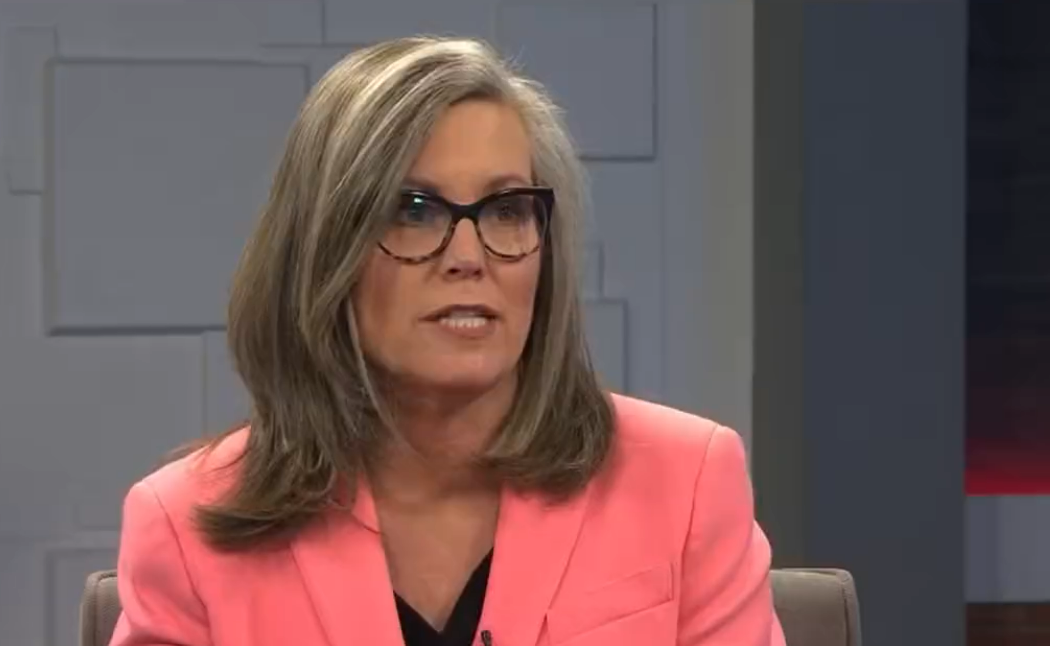
Gov. Katie Hobbs fired an Arizona State Board of Education (ASBE) member following pressure from a public school activist group, email records revealed.
The emails obtained and published by FOIAzona revealed that Hobbs heeded a demand from Save Our Schools Arizona (SOSAZ) to fire former ASBE member Jenny Clark due to her general support for school choice.
SOSAZ led a ballot initiative in 2022 in an attempt to overturn the legislation that universalized Arizona’s school choice within the Empowerment Scholarship Account (ESA) Program. The effort was unsuccessful after SOSAZ far overestimated their signature numbers when they turned in their signature sheets.
SOSAZ lobbyist Beth Lewis emailed Hobbs chief of staff Chad Campbell and deputy chief of staff Lourdes Pena in January of last year with the demand to fire Clark and another board member, Katherine Haley. Lewis alleged the pair were “anti-public school” due to their school choice affiliations.
Lewis recommended Hobbs replace Clark with an ESA parent of a special needs student, suggesting Kathy Boltz, a member of the SOSAZ board. Haley’s recommended replacement was Alison Bruening-Hamati, an administrator with the Tempe Elementary School District.
Three days after that initial email, Lewis sent a follow-up email to stress the urgency of both Clark and Haley’s removals, citing an upcoming (at the time) ASBE meeting to update the ESA Parent handbook.
Pena responded that they had “a plan in place to replace Clark,” and that they were holding “more ongoing convos” about Haley. Not much later, the former would be given the boot. For unknown reasons, the latter was permitted to remain on the board.
A little over three weeks later, Clark announced on social media that Hobbs’ office ignored her refusal to resign and notified her of a forthcoming letter confirming the end of her term. When that letter hadn’t arrived six days later, Clark again posted online to notify of the absence of the letter. Within hours, the governor’s office sent a letter notifying Clark that she had been replaced since her term had expired.
Several other members of the board were serving on expired terms when Hobbs ousted Clark. However, in a letter last March announcing the appointment of Lupita Hightower to replace former ASBE board member Anna Tovar, Hobbs’ office claimed no other ASBE members were serving expired terms. However, that was not true.
Haley, now the president, had her term expire last January. Both vice president Scott Hagerman and Jason Catanese had their terms expire in January 2024.
At the time of Hobbs’ letter last March, Karla Phillips-Krivickas and Jacqui Clay had unexpired terms. However, both of their terms expired this January.
Hightower did not replace Clark. Kathleen Wiebke, whose term was set to expire in 2029, replaced Clark last March but passed away in December.
ASBE also has two vacancies at present, one seat for a public member and one seat for a charter school administrator.
In all, five of the 11 board members are serving on expired terms and two are vacant.
Lewis, the author of the emails, responded that the publishing of her emails was “hilariously stupid” and accused the women she sought to remove from ASBE as “working to destroy public education.”
“[Y]all are just pearl clutching — take luck!” said Lewis.
AZ Free News is your #1 source for Arizona news and politics. You can send us news tips using this link.
by Ethan Faverino | Mar 18, 2026 | Education, News
By Ethan Faverino |
America First Legal (AFL) has launched an investigation into the Flagstaff Unified School District #1 (FUSD) over its handling of a large-scale student walkout and anti-ICE protest on January 28, 2026.
AFL filed a detailed public records request with the district, demanding transparency about the event in which hundreds of students left school grounds without apparent parental notification or consent.
According to KNAU, approximately 700 to 800 students from multiple FUSD schools—including Coconino High School, Flagstaff High School, Mount Elden Middle School, and Sinagua Middle School—participated in a coordinated walkout beginning around 11:30 a.m.
Students marched more than a mile across busy intersections to Flagstaff City Hall, where they lined the sidewalks with anti-ICE messages protesting U.S. Immigration and Customs Enforcement policies. Students from some charter schools also joined the demonstration, which appeared to be part of a broader national action against immigration enforcement.
America First Legal’s request highlights serious concerns that school employees actively facilitated the protest by escorting students off campus and supervising the march, despite no evidence of prior parental consent or notification.
According to AFL, the district has not publicly disclosed when it first became aware of the planned event, how it prepared its response, the extent of staff involvement in organizing or assisting, or any disciplinary consequences for students who left class or school property without authorization.
The organization argues that these actions may have violated parents’ fundamental constitutional rights to direct their children’s education and upbringing, as well as Arizona’s Parenal Bill of Rights and related federal laws that protect pupil privacy and related rights.
“Parents do not surrender their rights at the schoolhouse gate,” stated James Rogers, Senior Counsel at America First Legal. “When hundreds of students are permitted to leave campus during the school day for a political protest, families deserve complete transparency about who approved it, how it was supervised, and why parents were not notified.”
The public records request, submitted under the Arizona Public Records Law, seeks a wide range of documents from August 1, 2025, onward. These include:
- Records of FUSD employees who organized or participated in the protest.
- Communications and preparations related to the event.
- Details on how students and staff were processed back onto school property that day.
- Policies on students leaving campus and any parental consent communications.
- Social media posts, flyers (including one titled “Walk Out Against ICE”), and messages via platforms like ParentSquare.
Rachel Griffin, Attorney at America First Legal, added: “Schools exist to educate children, not to sideline parents, and certainly not to indoctrinate students. This investigation seeks basic answers about how this political protest was handled and whether the district respected parental rights and the rule of law. America First Legal will bring the truth into the light.”
Ethan Faverino is a reporter for AZ Free News. You can send him news tips using this link.
by Staff Reporter | Mar 16, 2026 | Education, News
By Staff Reporter |
The Arizona Department of Education (ADE) accused a major media outlet of misrepresenting the amount of fraud that occurs within the state’s school choice program.
Per ADE, 12News claimed the Empowerment Scholarship Account (ESA) Program had fraud totaling 20 percent. ADE said this figure was false, and that the true fraud rate sits at 0.3 percent.
The 20 percent claim originated from a risk-based audit — an audit of limited scope — which targeted specific higher-risk participants and accounts. It does not account for the entire ESA Program population, says ADE.
ADE presented the 0.3 percent figure from a study by Stanford PhD on a random sample to obtain a more accurate assessment of the entire ESA population. That study, which reviewed 3,000 random ESA orders between July 2025 and February 2026, also concluded that unallowable spending amounted to less than two percent of the total.
ADE Superintendent Tom Horne demanded 12News issue a retraction.
“A ridiculous figure of 20 percent fraud has been circulating concerning ESA purchases which resulted from a total misinterpretation of data provided to Channel 12. The 20 percent figure represented program participants that ADE had selected for risk-based auditing,” said Horne in a press release. “Continued use of the 20% fraud allegation is an outrageous misrepresentation to the public that must stop.”
By comparison, Horne noted, other government programs have higher rates of improper spending: Medicaid totals over seven percent, food stamps total over nine percent, and unemployment insurance totals over 14 percent.
Horne clarified that the unallowable purchases rate doesn’t constitute fraud necessarily. The superintendent said “most” of those purchases were confirmed as “innocent mistakes” such as improper form completions or viewing certain unpermitted educational items as permitted, like backpacks or lunch boxes.
Horne said ADE promptly recovers misspent funds, and has recovered over $1.2 million.
The disputed 20 percent figure was mentioned in multiple articles by 12News, including one of the latest pieces of coverage published on Wednesday.
“According to state records obtained by 12News Investigates, nearly 20% of ESA parents or at least 18,000 ESA account holders, have misused voucher funds,” read Wednesday’s article.
The original 20 percent figure by 12News stemmed from a report on public records reviewed by the outlet which estimated that misspending “could” amount to 20 percent of all purchases in the ESA Program. The report stated that over 18,600 out of the 102,000 ESA account holders had at least one unallowable purchase over the course of a year.
Horne said at the time that the percentage provided wasn’t totally representative of fraud; rather, the superintendent said “most of it” was attributable to mistakes by the parents.
While critics of the program highlight the millions ADE is forced to recover, mainly from misspending and marginally from fraud, supporters of the program highlight the millions saved by children entering the ESA Program rather than their designated public district school system.
Goldwater Institute director of education policy, Matt Beienburg, said in a press release that wrongful spending occurs just as much, if not more, in the public school district system.
“It’s also worth observing that just 52 cents of every dollar sent to Arizona district schools now makes it to classroom instruction according to the state auditor general,” said Beienburg. “Among the many uses of those funds outside the classroom: a $500,000 trip to Las Vegas by a school district that promptly cut bus services for students; a district spending $4,000 per person to send staff to Napa, California for a conference featuring wine tastings, a district spending $18,500 on ‘membership dues and for staff to attend golf tournaments,’ and more.”
AZ Free News is your #1 source for Arizona news and politics. You can send us news tips using this link.
by Ethan Faverino | Mar 11, 2026 | Education, News
By Ethan Faverino |
Arizona Superintendent of Public Instruction Tom Horne called on state lawmakers and the Governor to prioritize additional funding for the School Safety Program (SSP) in the upcoming state budget, citing a disturbing incident last week at Sunland STEAM Academy in Phoenix where a firearm was discovered on an elementary school campus.
The Roosevelt School District was placed on lockdown on Wednesday, March 4, after a student reported a weapon.
The Phoenix Police Department responded, removed the firearm, and detained two students in connection with the incident. No one was harmed, and the school has since resumed normal operations.
“The discovery of a gun on an elementary school campus is very disturbing and once again shows how important it is that schools have armed officers on campus,” explained Superintendent Horne. “My biggest fear is that a maniac with a gun shoots up a school, killing or wounding children and adults, as has happened in other states.”
Horne emphasized the urgency of strengthening the School Safety Program, which provides grants for School Resource Officers (SROs), School Safety Officers, counselors, social workers, and other personnel to enhance campus security.
“For the upcoming state budget, the legislature and Governor are going to consider added funding for the highly successful School Safety Program so we can add more officers on campuses. They must do so,” Horne added. “The need is clearly there, and we must have safe schools in Arizona.”
Up to now, the program has never denied a grant request, a record Horne hopes to maintain. “Imagine if a school asked for an officer, but the funding was not available, and a maniac got on campus and killed people. Parents would never forgive that,” he said.
The SSP primarily relies on state dollars. According to the Arizona Department of Education, as of the 2025-26 school year, the program currently funds personnel at over 1,077 awarded schools across 14 counties, including:
- 369 School Counselors
- 143 Social Workers
- 247 School Resource Officers
- 3 Juvenile Probation Officers
- 243 School Safety Officer positions
The grant request process for schools without officers remains open through mid-April. To date, districts and charters have requested approximately $103 million for the FY27 School Safety Program, which would fund more than 700 additional positions for officers and counselors, with more requests anticipated.
“The high number of requests for money to pay for officers and counselors speaks volumes to the concerns school leaders have about campus safety,” Horne concluded. “As last week’s incident in Phoenix shows, the need for officers is great. The legislature and Governor must not fail in their efforts to find the resources schools need to protect innocent lives.”
In September 2025, Superintendent Horne submitted a legislative budget request for $180 million to sustain and expand the program. Current state funding, including initial appropriations and carryover, totals just over $128 million, supplemented by $20 million in federal dollars—both set to expire this year.
Approval of the $180 million request would maintain existing levels and provide an additional $32 million to add more officers and training to schools across the state.
Ethan Faverino is a reporter for AZ Free News. You can send him news tips using this link.
by Ethan Faverino | Mar 2, 2026 | Education, News
By Ethan Faverino |
Arizona Senate Republicans are moving forward with legislation to strengthen school safety and emergency preparedness statewide, advancing a measure to allocate $3.2 million for enhanced communication and coordination during school emergencies.
The bill, SB 1582, cleared a key committee hurdle and is now headed toward a full Senate vote, with Republicans emphasizing their commitment to student protection amid unanimous Democratic opposition.
Sponsored by Senator Kevin Payne (R-LD27), SB 1582 appropriates $3.2 million from the state general fund in fiscal year 2026-2027 to the Arizona Department of Education for the school safety program established under A.R.S. § 15-154. The funding supports initiatives to improve interoperability and communication systems between schools, law enforcement, and first responders.
“This is exactly the kind of proactive, commonsense action that Arizonans expect from their Legislature,” stated Senator Payne in a recent press release announcing the advancement of school safety funding. “SB 1582 provides funding to enhance communication between schools and law enforcement, which is crucial for effective emergency response.”
“Republicans supported this bill because protecting children should never be a controversial issue. The fact that every democrat voted against it speaks volumes, but it won’t deter us from doing what’s right for students, parents, and educators across the state,” Payne added. “Voting against funding that improves school safety and emergency response is not principled; it’s irresponsible. When politics takes precedence over protecting children, lawmakers fail the very communities they were elected to serve.”
The bill updates requirements for communication systems funded through related programs, ensuring they are compatible, reliable, and effective during crises. It also allocates funding to the Arizona Department of Administration (ADOA) for the School Safety Interoperability Fund, strengthening coordination and promoting safer learning environments across the state.
Senator Mark Finchem (R-LD1), a retired law enforcement officer, expressed frustration with the Democratic opposition. “In the realm of public safety, there are no second chances; when communication fails, people can get hurt or even killed. SB 1582 would provide practical tools to help first responders during a school emergency.”
“Yet today, democrats chose to vote no. Tomorrow, they’ll likely use ‘school safety’ as a talking point when it’s politically convenient or when they want to score rhetorical points against common-sense policies,” continued Finchem. “This is not leadership; it’s hypocrisy. You cannot oppose funding that protects children and then claim the moral high ground. When it’s time to take action instead of just talking, their priorities are clear, and Arizona families deserve better.”
SB 1582 now awaits a full Senate vote.
Ethan Faverino is a reporter for AZ Free News. You can send him news tips using this link.
by Ethan Faverino | Feb 25, 2026 | Education, News
By Ethan Faverino |
The Arizona House of Representatives passed HCR 2003, the Protect Girls’ Sports in Arizona Act, on February 23, 2026, in a vote of 32 ayes to 25 nays.
Sponsored by Rep. Selina Bliss (R-LD1), the measure now advances to the Arizona Senate. If approved by the Senate, it would refer the proposed law to Arizona voters for consideration on the November 2026 general election ballot.
HCR 2003 seeks to require schools and athletic associations to designate interscholastic and intramural athletic teams or sports as “males/men/boys,” “females/women/girls,” or “coeducational/mixed,” based on an individual’s biological sex as recorded at birth on the original birth certificate. Teams designated for females would not be open to biological male athletes.
The resolution also includes stronger privacy protections, prohibiting schools and athletic associations from authorizing individuals to use restrooms, locker rooms, shower rooms, or other private athletic facilities not designated for their biological sex, effective January 1, 2027.
The measure restores and strengthens elements of Arizona’s 2022 Save Women’s Sports Act (SB 1165), which faced partial blocks by the Ninth Circuit Court of Appeals, creating uncertainty for schools, families, and athletes.
“Today the House acted to protect fair competition for girls across Arizona,” stated Rep. Bliss. “Women’s sports were created because biological differences matter. When those differences are ignored, girls lose roster spots, scholarships, and opportunities they earned. HCR 2003 gives voters the chance to protect female athletes and establish clear, durable rules for schools.”
Additional provisions of the proposed law include:
- Allowing athletes to participate on teams aligned with their biological sex or on coeducational teams.
- Prohibiting government entities, licensing organizations, accrediting bodies, or athletic associations from taking adverse action against schools or associations that maintain separate teams for female athletes.
- Providing a private cause of action for athletes deprived of opportunities or harmed by violations, including for injunctive relief, damages (including for psychological, emotional, or physical harm), attorney fees, and costs.
- Protecting against retaliation for reporting violations, with similar legal remedies available.
- Applying to public and qualifying private schools serving K-12.
“Court rulings have created uncertainty for schools and families,” Rep. Bliss added. “This referral allows Arizona voters to decide whether girls’ sports should remain for girls. It protects privacy in locker rooms and showers and restores clarity statewide.”
HCR 2003 now heads to the Arizona Senate for further consideration. If approved, it will be on this year’s general election ballot.
Ethan Faverino is a reporter for AZ Free News. You can send him news tips using this link.