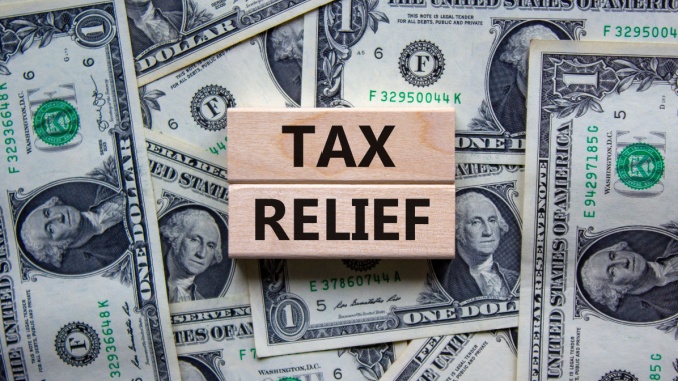
The U.S. Department of the Treasury reported Tuesday that millions of Americans claimed tax relief under President Donald Trump’s Working Families Tax Cuts during the most recent filing season. According to the analysis, low- and middle-income households received the largest share of the benefits.
According to a June 2 press release from the Treasury Department, taxpayers claimed approximately $82 billion in individual tax relief through the April filing deadline under provisions included in the Working Families Tax Cuts. Treasury officials said the total is expected to increase as taxpayers who requested filing extensions continue submitting returns.
Treasury Secretary Scott Bessent said the data demonstrates that the tax package delivered significant relief to working Americans and families.
“American families and workers overwhelmingly benefited from the Working Families Tax Cuts, receiving the largest share of the historic tax relief delivered this past filing season,” Bessent said. “This analysis confirms President Trump’s tax policies deliver substantial tax cuts to hardworking Americans and provide greater relief and financial certainty to low- and middle-income households.”
While Iran’s economy is in free fall, the regime has chosen to co-opt digital asset technologies for its own corrupt agenda, including evading sanctions and transferring wealth out of the country. Iran’s current economic chaos is proof that @POTUS’ maximum pressure campaign has… https://t.co/CJPNSgccqh
— Treasury Secretary Scott Bessent (@SecScottBessent) June 2, 2026
The Treasury Department stated that without the legislation, taxpayers would have faced the scheduled expiration of the 2017 Tax Cuts and Jobs Act, which officials said would have resulted in approximately $5 trillion in tax increases over time. According to the Treasury, 97% of filers who received a tax cut during the most recent filing season would have owed more in taxes absent the extension of the 2017 tax provisions.
The analysis found that tax relief was concentrated among households earning less than $200,000 annually. The Treasury reported that 96% of filers receiving a tax cut earned less than $200,000 per year, while nearly 70% earned less than $100,000.
Among taxpayers earning between $100,000 and $200,000 who claimed one of the tax provisions, the average tax reduction exceeded $1,250. Taxpayers earning between $50,000 and $100,000 who claimed one of the provisions received an average tax cut of more than $815.
The report highlighted several signature provisions included in the package. The Treasury reported that more than 7.5 million filers claimed the “No Tax on Tips” deduction, receiving an average deduction of more than $7,000. According to the department, 90% of taxpayers claiming the deduction earned less than $100,000 annually, while 99% earned less than $200,000.
More than 29 million filers claimed the “No Tax on Overtime” deduction, with an average deduction exceeding $3,100. The Treasury reported that 75% of taxpayers using the provision earned less than $100,000 annually, while 96% earned less than $200,000.
The department also reported that more than 35 million seniors claimed the Enhanced Deduction for Seniors, receiving an average deduction of more than $7,500. According to the Treasury, 68% of participating seniors earned less than $100,000 annually and 94% earned less than $200,000.
Other provisions cited in the report included the “No Tax on Car Loan Interest” deduction, which the Treasury said was claimed by more than 1.4 million taxpayers purchasing qualifying American-made vehicles. Those taxpayers received an average deduction of more than $1,800. The Treasury reported that 62% of claimants earned less than $100,000 annually and 98% earned less than $200,000.
The Treasury also reported that more than 5.5 million Trump Accounts have been opened since the program’s launch, with approximately 1.4 million qualifying for a $1,000 pilot contribution. According to the department, 86% of the accounts are linked to families earning less than $200,000 annually.
The report further found that nearly 40 million families claimed the enhanced Child Tax Credit, which the Treasury noted was permanently expanded under the legislation. Approximately 65% of participating families earned less than $100,000 annually, while 89% earned less than $200,000.
In addition, the Treasury reported that more than 127 million taxpayers—representing roughly 90% of all filers—claimed the permanently doubled standard deduction during the filing season. The department said the provision continues to simplify tax filing requirements for millions of Americans.
Congressman Abraham Hamadeh (R-AZ-08) has introduced the Military and Veterans Fuel Discount Act of 2026, a bipartisan measure designed to deliver direct financial relief to service members, veterans, and their families by providing discounts on fuel purchased at military exchange stores.
The legislation, H.R. 9027, is co-sponsored by Representatives Don Bacon (R-NE-02), Eugene Vindman (D-VA-07), Don Davis (D-NC-01), and Jimmy Panetta (D-CA-19). It authorizes the Secretary of Defense to implement a program offering discounts on motor fuel sold at exchange stores and dispensed directly into vehicles owned by eligible patrons.
“As part of my unwavering commitment to America’s military heroes and keeping my promise to improve service members’ lives, I introduced legislation authorizing a fuel discount at military exchange pumps to lower living costs for our troops, veterans, and dependents,” stated Congressman Hamadeh.
The bill would allow the Secretary of Defense to provide a base discount on gasoline and diesel fuel equal to the federal fuel tax rate, which is at least 18.4 cents per gallon for gasoline and 24.4 cents per gallon for diesel. It also authorizes supplemental discounts to help offset state and local fuel taxes when applicable.
These costs disproportionately impact military families, veterans, and retirees, who often face long commutes to bases, training facilities, work, or VA medical appointments. With inflation and rising transportation costs continuing to strain household budgets, many service members spend a significant portion of their income on fuel.
Discounts would be applied automatically at the time of sale to the maximum extent practicable. The authority for the program would terminate on September 30, 2029.
The legislation includes safeguards to prevent fraud or abuse, prohibits the resale of commercial use of discounted fuel, and requires the Secretary of Defense to submit annual reports to Congress detailing program usage, costs, gallons sold, and any implementation issues.
“Fuel is one of the few products sold by exchanges still subject to tax,” added Hamadeh. “This discount, equal to the federal fuel tax, shows profound gratitude to our nation’s heroes who have borne the heavy costs of war defending our freedoms. This common-sense step delivers real relief to our selfless service members and their families.”
Ethan Faverino is a reporter for AZ Free News. You can send him news tips using this link.
Retail sales increased for the seventh consecutive month in April, highlighting the resilience of American consumers despite rising gas prices and elevated inflation.
According to the CNBC/NRF Retail Monitor, total retail sales excluding automobile dealers and gas stations increased 0.34% seasonally adjusted from March and rose 5.73% unadjusted from April of 2025. That follows gains of 0.4% month-over-month and 6.59% year-over-year in March.
“Retail sales continued to grow in April despite higher gas prices driven by the ongoing conflict in Iran, cautious consumer sentiment and the persistent concerns about sustained inflation,” stated NRF President and CEO Matthew Shay.
Core retail sales, which also exclude restaurants, posted a smilier 0.34% month-over-month gain and climbed 5.53% year-over-year. For the first four months of 2026, total sales were up 6.07% year-over-year, while core sales rose 5.99%.
Sales growth was broad-based, rising in eight of nine major categories on a yearly basis and in all but one category on a monthly basis. Clothing and accessories stores led the way with a 0.59% month-over-month increase and a strong 9.75% year-over-year gain.
Sporting goods, hobby, music and book stores advanced 0.12% month-over-month and 8.55% year-over-year, while health and personal care stores rose 0.45% and 8.42% respectively. Digital products, including electronic books and games, posted the strongest monthly gain at 1.11% and climbed 8.09% annually.
Other categories showing positive momentum included general merchandise stores (up 0.15% month-over-month and 6.19% year-over-year), electronics and appliance stores (up 0.16% and 4.03%), and grocery and beverage stores (up 0.36% and 3.21%).
Furniture and homes furnishings stores saw a slight 0.06% monthly decline but still posted a 2.58% annual increase. Building and garden supply stores edged up 0.009% for the month but were down 2.74% from the prior year.
“Spending on household priorities remains solid, supported by a steady labor market, wage growth and a significant influx of cash from tax refunds,” added Shay. “While consumers are mindful on costs, retailers are working hard to keep everyday goods affordable for American families.”
Ethan Faverino is a reporter for AZ Free News. You can send him news tips using this link.
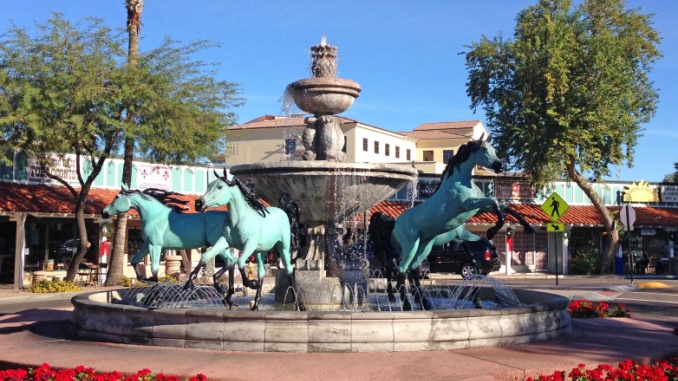
The City of Scottsdale has issued a Truth in Taxation notice advising residents that city officials may consider an increase in the primary property tax levy for fiscal year 2026-27 as part of the municipal budget process.
According to Scottsdale’s public notice and supporting budget documents, the city is proposing a primary property tax levy increase tied largely to Arizona’s statutory two-percent adjustment, while projecting that the primary property tax rate itself could decline due to growth in assessed property values.
The Arizona Daily Independentreported that Scottsdale is proposing an increase in primary property taxes of $681,888, or 1.70%, above the prior year’s levy level, excluding revenue generated through new construction and changes related to voter-approved bonded indebtedness or overrides.
Scottsdale’s published notice states that the city “may increase” its primary property tax levy over last year’s level and emphasizes that the notice itself does not mean a tax increase has been approved. Instead, the city said the notice reflects the possibility that the City Council could discuss and potentially adopt a levy increase during the budget process.
According to the city, the current primary property tax rate of $0.4891 per $100 of assessed valuation could decrease to as low as $0.4801 as rising assessed property values offset portions of the proposed levy increase.
City budget documents show Scottsdale’s proposed FY 2026-27 primary property tax levy totals approximately $41.29 million, an increase of about $1.02 million over the current fiscal year’s $40.27 million levy. City officials reported the increase is primarily attributable to the statutory two-percent adjustment and includes repayment to the Risk Management Fund for tort liability claim payments made during calendar year 2025.
Scottsdale’s proposed secondary property tax levy, which is used for repayment of voter-approved general obligation debt, is also forecast to increase. According to city documents, the proposed secondary levy would rise from $34.85 million in FY 2025-26 to $36.70 million in FY 2026-27 due to increased debt service obligations.
Despite those levy increases, Scottsdale projects the combined city property tax rate could decrease from $0.9124 to approximately $0.9068 per $100 of assessed valuation because of growth in the city’s net assessed property values. City officials estimate that a homeowner with an assessed property value of $100,000 would pay approximately $90.68 in combined city property taxes under the proposal.
The city has scheduled a Truth in Taxation hearing, Property Tax Public Hearing, and Municipal Streetlight Improvement District hearing for June 9 at 5 p.m. at Scottsdale City Hall Kiva, located at 3939 N. Drinkwater Boulevard. Meetings will also be broadcast on Cox Cable Channel 11 and streamed through Scottsdale’s website.
Following those hearings, Scottsdale officials plan to consider formal adoption of property tax ordinances during the City Council meeting scheduled for June 23.
The Joint Economic Committee (JEC) released an update Thursday showing inflation remained above the Federal Reserve’s target in April while consumer spending increased and personal savings declined.
According to the JEC’s Monthly Expenditures Update, the headline personal consumption expenditures (PCE) price index increased 0.40% from March to April, while core PCE inflation, which excludes food and energy prices, rose 0.24%. The annual inflation rate from April 2025 to April 2026 measured 3.77% for headline PCE and 3.29% for core PCE, both exceeding the Federal Reserve’s stated 2% inflation target.
The PCE index is the Federal Reserve’s preferred inflation measure and tracks changes in prices paid by consumers for goods and services.
The JEC reported that spending increased during the same period while savings declined. Real personal consumption expenditures increased by 0.11%, representing approximately $18.08 billion in additional spending. Real spending on services increased 0.19%, or $21.47 billion, while real spending on goods rose 0.08%, or $4.7 billion. At the same time, the nominal personal savings rate declined by 0.6 percentage points to 2.6%.
Y/Y, headline PCE price index inflation was 3.77%, which is higher than the Federal Reserve’s target of 2% & core PCE price index inflation was 3.29%. M/M, headline personal income remained unchanged, or $19 million, while real disposable personal income per capita decreased by…
— Joint Economic Committee Republicans (@JECRepublicans) May 28, 2026
According to the committee’s update, headline personal income remained effectively unchanged month-over-month, increasing by approximately $19 million, while real disposable personal income per capita decreased by 0.50%. The report stated that after-tax income increased more slowly than consumer prices during the month.
The figures align with data released Thursday by the U.S. Bureau of Economic Analysis (BEA), which reported increases in both consumer spending and inflation during April. According to the BEA, personal income increased by $210.1 billion, or 0.8%, while disposable personal income increased by $189.4 billion, or 0.8%. Personal consumption expenditures increased $47.8 billion, or 0.2%.
The BEA reported that prices for personal consumption expenditures increased 0.4% month-over-month and 3.8% annually, while core PCE prices increased 0.2% during April and 3.3% over the previous twelve months.
The JEC also released its Gross Domestic Product Update for the second estimate of first-quarter 2026 economic activity.
According to the committee, real gross domestic product increased 1.62% from the fourth quarter of 2025 to the first quarter of 2026. Current-dollar GDP increased 5.15%, or approximately $396.9 billion, bringing the total size of the U.S. economy to $31.819 trillion.
JEC Chairman Rep. David Schweikert (R-AZ01), who is also running for governor of Arizona, discussed affordability and inflation during a segment with KTAR host Mike Broomhead, describing what he characterized as the continuing effects of “Biden inflation” on Arizona households.
“For people in Arizona, for a whole segment of our working middle class — you know, hardworking population — they’re poorer today than they were five years ago,” Schweikert said. “We were one of the epicenters of Biden inflation. Then you actually do policies from particularly the governor’s office of not recruiting new businesses here to compete for your willingness to work. So affordability — because our wages haven’t gone up — we’re now 45th in affordability. That’s miserable. I mean how many people can afford a house right now?”
Arizona’s working middle class is poorer today than five years ago. Wages are flat, housing is out of reach, and families are trying to make the mortgage and car payment.
If we want affordability, we need jobs that force businesses to compete for Arizona workers again. pic.twitter.com/lU9c983UUT
— David Schweikert (@DavidSchweikert) May 27, 2026
In a post to X on Thursday, he wrote, “If we’re serious about affordability, the first thing we do is raise wages by bringing employers here that have to compete for Arizona workers.”
The committee’s GDP update reflected the Bureau of Economic Analysis’ second estimate for first-quarter economic growth. The full Joint Economic Committee Monthly Expenditures Update and GDP Update are available through the committee’s website.
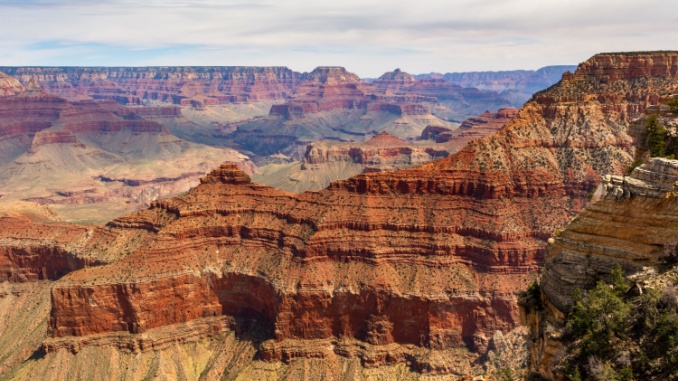
As Summer RV travel peaks across the United States, new research highlights stark differences in crowding at America’s national parks. Arizona’s iconic Grand Canyon National Park stands as a major draw for RV enthusiasts, ranking ninth busiest overall despite a cooling trend in 2025.
According to data from Blue Capital Holdings, RV campers flocked to Glacier National Park in Montana more than any other over the past five years, logging more than 429,000 summer visits (June-August) from 2021 to 2025. Yosemite National Park in California followed closely in second place.
Top 5 Most Popular National Parks for Summer RV Camping (2021-2025):
Glacier National Park, Montana – 429,693 visits
Yosemite National Park, California – 423,672 visits
Great Smokey Mountains National Park, Tennessee – 333,739 visits
Olympic National Park, Washington – 280,272 visits
Acadia National Park, Maine – 158,105 visits
“Summer shows just how concentrated RV travel has become around a small number of national parks,” stated Blue Capital Holdings CEO Rich Turasky. “Glacier and Yosemite are in a league of their own, and together they logged more than 850,000 summer RV visits over the past five years. What is interesting is that popularity does not always mean momentum. Glacier still ranks first overall, but its numbers slipped in 2025, while Yosemite surged by 43%. Rocky Mountain also climbed 23%, and Kings Canyon rose 42%, so there are still parks seeing very strong summer demand.”
Grand Canyon National Park in northwestern Arizona recorded 124,968 summer RV visits over the five-year period, securing ninth place nationally. The park saw 26,075 visits in 2024 before declining roughly 20% to 20,854 in 2025, reflecting broader patterns where many headline destinations experienced softening demand amid concerns over heat, crowding, and access.
Arizona’s crown jewel continues to captivate travelers seeking its world-renowned vistas, dramatic landscapes, and unique Southwest character. While not topping the list, the Grand Canyon remains a bucket-list staple for the RV campers drawn to Arizona’s natural wonders.
According to the National Park Service, Grand Canyon’s North Rim reopened as of May 15, 2026, following impacts from the Dragon Bravo Fire. All paved roadways within the park have reopened, restoring access to many iconic viewpoints such as Point Imperial, Cape Royal, Roosevelt Point, and Angels Window.
The North Rim Campground is expected to reopen in June 2026 for tent and RV camping, however there will be no water or RV hookups available — campers must bring all their own portable water.
Stage 2 fire restrictions also remain in effect throughout the 2026 season due to limited water resources, prohibiting wood and charcoal fires.
Several trails remain closed due to fire impacts, including Bright Angel Point, Widforss, Transept, Uncle Jim Trail, and sections of the Ken Patrick Trail. No overnight lodging is available on the North Rim inside the park this season, though options exist outside the park boundaries.
At the other end of the list, several parks recorded dramatically lower traffic, providing quieter alternatives for summer travel.
Top 5 Least Popular National Parks for Summer RV Camping (2021-2025):
Badlands National Park, South Dakota – 1,845 visits
Death Valley National Park, California – 4,245 visits
Big Bend National Park, Texas – 4,979 visits
Guadalupe Mountains National Park, Texas – 5,531 visits
Canyonlands National Park, Utah – 6,138 visits
“At the same time, some of the biggest names lost ground. Great Smoky Mountains fell 19%, Grand Canyon was down 20%, and Yellowstone dropped 31% year on year,” added Turasky. “That suggests RV travelers are not just following the most famous names blindly, but are being influenced by heat, crowding, access, costs and the overall experience once they arrive. The least-visited summer parks also tell their own story. Places like Death Valley and Big Bend are spectacular, but summer can be a difficult time to visit them in an RV. For travelers willing to plan carefully, though, the lower numbers can mean a much quieter national park experience.”
Ethan Faverino is a reporter for AZ Free News. You can send him news tips using this link.