by Matthew Holloway | Dec 17, 2025 | News
By Matthew Holloway |
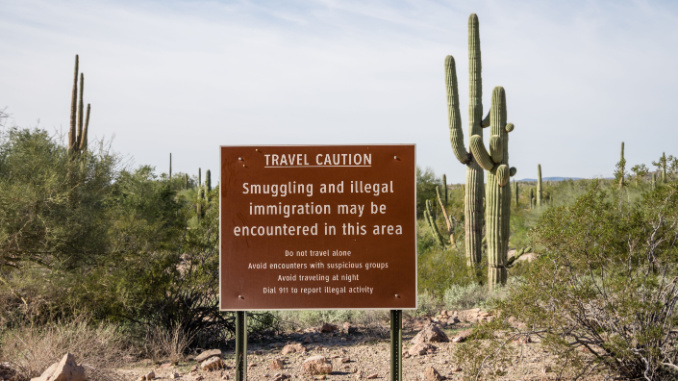
House Republicans, led by Arizona Congressman Abe Hamadeh (R-AZ-08), unveiled legislation Friday proposing the creation of a permanent national memorial in Washington, D.C., honoring Americans killed by individuals unlawfully present in the United States.
The proposal would establish a permanent memorial dedicated to victims of crimes committed by illegal immigrants, a category House Republicans say has been overlooked in national remembrance efforts.
At a Friday press event, Hamadeh said the bill “authorizes a permanent national memorial in Washington, D.C., honoring U.S. citizens and lawful residents whose lives are taken by individuals unlawfully present in the United States.” He added, “But in many ways, it also shames the politicians who allowed this situation to happen.”
In a later post to X, he wrote in part, “Humbled and grateful to lead this effort to establish a memorial in honor of the victims of Biden’s border crisis. Thank you to the incredible Angel Parents for sharing their experiences, my congressional colleagues for joining this effort, and the @TABSReport American Border Story for fighting alongside us.”
According to Fox News, the legislation is being led by Republican lawmakers who say the memorial would serve as both a place of remembrance and a public acknowledgment of the consequences of federal immigration policy failures. The proposal calls for a federally designated site that would memorialize victims while remaining nonpartisan in its presentation.
Newsmax reported that eight co-sponsors, all Republicans, joined Hamadeh, that The American Border Story (TABS) would raise funds for the monument from private sources, and that Aagel families would select a design and an architect.
Congressman Andy Biggs (R-AZ-05) attended the event alongside Hamadeh and highlighted the disparity between the Biden and Trump administrations’ responses to enforcing immigration law. “They ended the Remain in Mexico policy, restarted catch and release,” he told reporters.
TABS Executive Director Nicole Kiprilov told Fox News, “I’d like to thank President Trump for leading an historic administration that has put these victims and families at the center of our immigration agenda.”
“Secretary Kristi Noem, border czar Tom Homan and the entirety of the Trump administration has been working night and day tirelessly to ensure that our border is secure and that these tragedies that the Biden administration allowed to happen will never happen again,” she added.
The proposal comes amid ongoing debates in Congress over border security, immigration enforcement, and the humanitarian and public safety impacts of illegal immigration. Republicans have repeatedly cited crime victimization as part of the broader argument for stronger border controls and immigration reforms.
Democrats have previously criticized similar proposals, arguing that crime rates among immigrants do not justify singling out a specific category of offenders. The Fox News report notes that the legislation is expected to face opposition as it moves through the legislative process.
Matthew Holloway is a senior reporter for AZ Free News. Follow him on X for his latest stories, or email tips to Matthew@azfreenews.com.
by Matthew Holloway | Dec 16, 2025 | Education, News
By Matthew Holloway |
The U.S. Department of Education under Secretary Linda McMahon has formally restored Grand Canyon University’s nonprofit status, a reversal of a years-long dispute that had kept recognition of the Phoenix-based university’s tax-exempt classification in limbo.
The Department of Education’s (USDOE) action means it will now consider Grand Canyon University (GCU) a nonprofit institution for federal purposes, aligning its treatment under federal student-aid rules with the university’s longstanding recognition as a nonprofit by the Internal Revenue Service.
“We are appreciative that officials within the current Department of Education adhered to the recent Ninth Circuit decision in our favor and conducted an objective and thorough review of GCU’s operations in determining GCU’s nonprofit status under the correct legal standard,” GCU President Brian Mueller said in a statement. “We look forward to working with the Department in a cooperative manner moving forward and being part of the conversation to address the many challenges facing higher education.”
The move follows a May decision by the USDOE to reverse a $37 million fine against GCU, imposed under the Biden administration with prejudice. The fine was the largest ever levied by the agency against a university.
In November 2024, the U.S. Court of Appeals for the Ninth Circuit ruled that the Department of Education had unlawfully denied GCU nonprofit status and remanded the matter to the department for reconsideration under the correct legal standard. In 2018, the IRS reaffirmed GCU’s 501(c)(3) tax-exempt status after a multi-year audit, concluding that the university met all requirements of a nonprofit educational institution.
The restoration of nonprofit recognition comes as several Arizona members of Congress and other lawmakers have publicly advocated for the university’s status.
U.S. Rep. Eli Crane (R-AZ02) took to X on Monday to highlight the Education Department’s decision, calling the reinstatement of nonprofit status a significant development for the institution.
U.S. Rep. Andy Biggs (R-AZ05) also posted on X following the department’s announcement, noting the change in federal recognition and urging continuation of support for aligned legislative efforts.
In previous years, Arizona Republican lawmakers, including Reps. Gosar and Biggs had criticized the Department of Education’s handling of the university’s nonprofit status and its regulatory actions. They characterized earlier denials and fines as misplaced or excessive and called for greater alignment between federal treatment and GCU’s IRS-recognized status, per the Arizona Sun Times.
Gosar told the outlet at the time, “GCU is being targeted for its religious views and for being the largest Christian university in the country. The Department of Education should recognize GCU’s lawful nonprofit status and stop the harassment.”
With the Education Department’s updated decision, the agency will now consider GCU’s application as a nonprofit institution in future federal evaluations, including eligibility for Title IV federal student financial aid programs.
“This decision removes the cloud of confusion over our nonprofit status and allows us to put our complete focus and resources on our mission to provide affordable, Christian higher education to students from all socioeconomic backgrounds,” Mueller added. “We are excited to move forward with clarity and purpose.”
According to the university, nonprofit recognition is also expected to expand access to private scholarships restricted to nonprofit institutions, increase eligibility for nonprofit-specific grants and partnerships, restore eligibility for future government relief programs, reduce legal expenses associated with defending its status, and solidify GCU’s standing as a voting member of NCAA athletics.
Matthew Holloway is a senior reporter for AZ Free News. Follow him on X for his latest stories, or email tips to Matthew@azfreenews.com.
by Matthew Holloway | Dec 15, 2025 | News
By Matthew Holloway |
Congressman Andy Biggs (R-AZ-05), a declared candidate for Arizona governor in 2026, has accused Tucson Mayor Regina Romero of encouraging obstruction of a federal law-enforcement operation after she posted on social media during active immigration enforcement last week.
In a post on X that drew hundreds of reactions, Biggs criticized Romero for alerting residents to the presence of a Homeland Security Investigations (HSI) operation near Flowing Wells and Miracle Mile on the morning of Dec. 10.
“Unbelievable,” Biggs wrote. “Why is the mayor of Tucson encouraging obstruction of a lawful federal police operation? Could it be because she favors those who are illegally in the country over American citizens?”
Biggs’ post included a screenshot of a Facebook message Romero published during the operation. In the post, Romero told residents that federal agents were active in the Miracle Mile area and urged people to remain peaceful while protesting or documenting the activity.
“You have the right to protest and document these activities,” Romero wrote. “It is very important to remain peaceful while you do.”
Romero later defended the post in comments on KOLD News 13, saying the alert was intended to calm the situation and keep the community informed about ongoing immigration enforcement activity. “I just want to make sure that we don’t provoke any confrontations,” Romero said.
Reaction locally was mixed, with some residents praising transparency and others questioning whether publicly sharing the location of an active law enforcement operation could endanger agents or allow enforcement targets to evade arrest.
Video of Romero’s Facebook post and surrounding commentary circulated widely on social media, including a clip shared by Libs of TikTok, which amplified both the mayor’s message and Biggs’ criticism.
According to federal officials cited by local media, the Dec. 10 enforcement action involved executing a search warrant at a business park near Flowing Wells and Miracle Mile, which includes AG Trucking, as part of an investigation into alleged cabotage violations and unlawful labor practices.
The Dec. 10 action marked the second major federal enforcement operation in Tucson in less than a week.
On Dec. 5, HSI, working with IRS Criminal Investigation, ICE Enforcement and Removal Operations, and U.S. Border Patrol, executed 16 federal search warrants across southern Arizona, according to ICE. The coordinated operation targeted multiple Taco Giro restaurant locations, associated residences, and other properties as part of a multiyear investigation into a transnational criminal organization.
Federal authorities reported that 46 individuals were taken into custody on immigration-related allegations, along with two additional arrests connected to interference with law enforcement activity during the Dec. 5 operation.
Protests erupted outside a Taco Giro location at 610 N. Grande Ave., where demonstrators temporarily blocked federal agents inside a gated parking area using a bike lock. According to Fox News, agents deployed tear gas, pepper balls, and smoke grenades to disperse the crowd. Two HSI Special Response Team operators were injured during the incident, one suffering a ruptured bicep and another a knee injury.
The Tucson Police Department assisted with traffic control during the incident but did not deploy force, according to a statement cited by Tucson.com.
U.S. Rep. Adelita Grijalva (D-AZ-07) later claimed she was pepper-sprayed while attempting to gather information at the scene, referring to ICE as “a lawless agency under this Administration – operating with no transparency, no accountability, and open disregard for basic due process.”
Mayor Romero and Vice Mayor Lane Santa Cruz condemned the federal response, in statements to AZ Luminaria, describing the deployment of smoke grenades and pepper balls as a “disproportionate use of force” against protesters, including an elected member of Congress.
Assistant Secretary of the Department of Homeland Security Tricia McLaughlin stated, however, that Grijalva was in the vicinity of protesters who were obstructing officers, but was not directly targeted by federal agents.
She wrote in a post to X, “If her claims were true, this would be a medical marvel. But they’re not true. She wasn’t pepper sprayed. She was in the vicinity of someone who *was* pepper sprayed as they were obstructing and assaulting law enforcement. In fact, 2 law enforcement officers were seriously injured by this mob that @Rep_Grijalva joined. Presenting one’s self as a ‘Member of Congress’ doesn’t give you the right to obstruct law enforcement. More information forthcoming.”
Two protesters from the Dec. 5 incident, Sheryl Anna Rowe and Ryan Michael Seal, now face federal charges, according to KOLD. Rowe is charged with assault on a federal agent, while Seal faces charges related to damage to government property.
The raids led to temporary closures at seven Taco Giro locations as of Thursday. As of this report, no criminal charges have been announced in connection with either the Dec. 5 or Dec. 10 enforcement actions beyond the protest-related cases.
Matthew Holloway is a senior reporter for AZ Free News. Follow him on X for his latest stories, or email tips to Matthew@azfreenews.com.
by Matthew Holloway | Dec 15, 2025 | News
By Matthew Holloway |
Arizona Senate Appropriations and Transportation Committee Chairman David Farnsworth (R-LD10) is calling attention to a rise in runaway and missing youth cases involving group homes and residential treatment campuses. He announced efforts to develop a pilot program aimed at improving prevention and response.
In a statement released last week, Farnsworth said he is working with local officials and law enforcement in the Town of Queen Creek to explore funding for two full-time, specialized police officers dedicated to addressing missing-from-care incidents. The proposed positions would focus on prevention efforts, rapid response when a youth is reported missing, and thorough investigations.
Farnsworth said he is engaging with group-home operators, municipal leaders, and law enforcement to develop a three-pillar framework centered on prevention, response, and investigation. While the plan is still in development, Farnsworth said the long-term objective is to craft legislation that could establish a statewide model for addressing runaway and missing youth cases.
“We must recognize the growing issue of missing and runaway youth in these settings; it is a pressing concern that requires our attention,” Farnsworth said.
“By collaborating with local leaders and public safety experts, we can develop thoughtful and effective solutions. This proactive approach is the first step toward enhancing child safety and ensuring a brighter future for our community. My goal is to create legislation that not only addresses these challenges in Queen Creek but also serves as a positive example for communities throughout Arizona, making the protection of our vulnerable population a top priority.”
Queen Creek has been identified as a focal point for the initiative due to a significant increase in missing youth incidents tied to residential treatment campuses and group-home settings located in the area. Those facilities serve some of Arizona’s most vulnerable children, prompting renewed concern among lawmakers and local leaders.
According to the Queen Creek Police Department’s Missing Persons page on Facebook, three missing persons posts have been created since September 1st, with two of them listed as found, and one, 14-year-old Abrianna Madrid, still listed as missing since November 13th.
Queen Creek Vice Mayor Leah Martineau expressed support for the effort, citing the risks faced by youth who leave group-care and residential treatment settings without authorization.
“Youth who leave residential treatment and group-care settings without authorization face very real dangers, and Queen Creek is committed to addressing that reality head-on,” Martineau said. “Our role as a community is to strengthen safeguards, respond quickly when a child is missing, and ensure each situation receives the focused attention it deserves.”
Martineau said the proposed pilot program positions Queen Creek to serve as a test case for solutions that could be adopted by other Arizona communities, if successful.
Details of the pilot program, including funding mechanisms and legislative language, have not yet been finalized. Farnsworth said additional discussions with stakeholders will continue as the proposal takes shape.
Matthew Holloway is a senior reporter for AZ Free News. Follow him on X for his latest stories, or email tips to Matthew@azfreenews.com.
by Matthew Holloway | Dec 14, 2025 | News
By Matthew Holloway |
Arizona Congressman Paul Gosar (R-AZ-09) is renewing his push to dismantle the Optional Practical Training (OPT) program, doubling down on efforts he began earlier in the year by urging Congress to terminate the program outright rather than merely condemning employers who use it.
In a Dec. 11 op-ed published by the Daily Signal, Gosar argued that OPT has evolved into an unauthorized guest-worker system that disadvantages American graduates while rewarding corporations that favor foreign labor over U.S. workers.
In his op-ed, Gosar wrote that OPT was created “by bureaucratic fiat in 1992,” later “radically expanded” by the Obama administration, which he argued did so without congressional authorization. He argued that the program has since grown into what he described as a de facto guest-worker system. The congressman described OPT as “a massive, unauthorized foreign guest-worker pipeline to operate outside the law, undercut American students, and expose our nation to significant economic and national-security risks.”
The renewed call follows Gosar’s September criticism of major corporations and institutions for exploiting OPT to hire foreign workers at lower cost. In that earlier statement, Gosar accused businesses of favoring foreign workers over Americans by using the program to avoid payroll taxes and to undercut wages, a charge he now says requires legislative correction rather than corporate shame alone.
At the time he wrote in a post to X, “OPT incentivizes greedy businesses to fire Americans & replace them with inexpensive foreign labor by avoiding having to pay FICA and Medicare payroll taxes and other employee benefits. My bill, HR 2315, would terminate the OPT Program.”
OPT allows foreign students on F-1 visas to work in the United States for up to 12 months after graduation, with an additional 24-month extension available for STEM graduates. Unlike H-1B visas, OPT is not capped by Congress, and many F-1 OPT participants are generally exempt from FICA (Social Security and Medicare) taxes for a period under federal tax residency rules, creating a cost advantage for employers in many cases.
Gosar argues the structure incentivizes companies to bypass American workers while skirting congressional limits on employment-based visas. In his op-ed, he described OPT as a “shadow substitute for the H-1B visa program” that has expanded through executive action over multiple administrations.
He wrote, in part, “Why would we invite foreign students from strategic competitors to work inside America’s most sensitive research, technology, and defense sectors—often without meaningful oversight? Why would we maintain an unregulated guest-worker pipeline that Congress never approved? And why would we subsidize it with taxpayer dollars? The answer is simple: We shouldn’t.”
Gosar explained that the program incentivizes corporations to favor foreign workers by exempting OPT participants from payroll taxes, a structure he argues disadvantages American graduates entering the workforce.
To address the issue, he is calling on Congress to pass his March 2025 legislation, the Fairness for High-Skilled Americans Act (HR2315), which would permanently end the OPT program and prohibit future executive-branch work-authorization programs without explicit congressional approval.
The congressman framed the issue as both an economic and constitutional concern, arguing that immigration and labor policy should be set by lawmakers rather than federal agencies. He also cited national-security risks tied to insufficient oversight of foreign nationals working in sensitive industries under OPT.
In a post to X on Dec. 12, Texas Congressman Chip Roy’s office announced his support for Gosar’s efforts, writing, “Rep. Roy is proud to join @RepGosar in ending the fraud-ridden Optional Practical Training (OPT) program that displaces American tech workers and undermines our national security. Let’s get it done.”
Supporters of OPT, including universities and business groups, argue that the program helps fill workforce shortages and makes U.S. schools more competitive in attracting international students. Critics counter that the program’s scale, which has grown to hundreds of thousands of participants annually, distorts labor markets and suppresses wages for entry-level American workers. Department of Homeland Security Data shows that 194,554 OPT students had employment authorization documentation and employer information filed in 2024.
Gosar’s latest push signals a renewed legislative challenge, placing OPT squarely in the ongoing national debate over immigration, workforce policy, and executive authority.
Whether Congress will act on the proposal remains uncertain. Still, Gosar’s redoubled effort suggests the issue is unlikely to fade as lawmakers consider broader immigration and labor reforms in the coming year.
Matthew Holloway is a senior reporter for AZ Free News. Follow him on X for his latest stories, or email tips to Matthew@azfreenews.com.