by Ethan Faverino | Oct 21, 2025 | Education, News
By Ethan Faverino |
A new study has revealed that Arizona has one of the lowest college graduation rates in the nation at 49.58%.
Ranking eighth worst in the U.S., Arizona’s graduation rate falls 11.34% below the national average of 60.92%, according to the latest data from the U.S. Department of Education’s National Center for Education Statistics.
The study, conducted by Hennessey Digital, analyzed graduation rates across all colleges in each state, highlighting a troubling trend for Arizona, where only 49.58% of the students in the cohort completed their degrees within 150% of the normal program completion time (4 years).
This places Arizona alongside other struggling states, making it one of the eight states below 50% graduation.
“Regardless of what you’re studying, college can be a challenging time, said CEO of Hennessey Digital, Jason Hennessey. “For many, it’s the first experience of independence, a change from the environment you’ve grown up in and ultimately, incredibly intense. It’s not surprising to see that many drop out of their courses before graduation, but ultimately, every student needs to consider what’s going to make them happy and successful and an academic path is not always going to achieve that.”
The research identifies Alaska as the state with the lowest college graduation rate at 32.93%, a staggering 27.99% below the national average. Only 735 of 2,232 students in Alaska’s cohort completed their degrees.
Following closely are Nevada, with 45.20% completion, with 4,932 out of 10,912 students graduating, and New Mexico, with 47.80% completion and 3,523 out of 7,370 students graduating. Both are struggling with significant gaps in degree completion compared to the national average.
In contrast, Massachusetts leads the nation with a 75.41% graduation rate, 14.49% above the national average, with 40,011 out of 53,060 students completing their degrees.
Rhode Island follows at 73% with 8,835 of 12,103 students graduating and then Connecticut at 70.77% with 14,898 of 21,052 students graduating.
Ethan Faverino is a reporter for AZ Free News. You can send him news tips using this link.
by Ethan Faverino | Oct 20, 2025 | News
By Ethan Faverino |
The Arizona Corporation Commission (ACC) has announced a landmark $132.91 million settlement with Vanguard Marketing Corporation and The Vanguard Group, Inc. to address failures in supervising registered persons and disclosing potential tax consequences to investors.
The settlement follows a change in investment minimums for certain Vanguard target-date retirement funds, which resulted in significant, unanticipated capital gains taxes for investors.
The agreement is the result of a three-year, multi-state investigation led by a task force coordinated through the North American Securities Administrators Association (NASAA), in conjunction with a parallel investigation by the U.S. Securities and Exchange Commission (SEC).
In Arizona alone, 3,675 Vanguard account holders were financially impacted, with additional Arizona investors affected through non-Vanguard custodians.
The settlement ensures full restitution for all affected investors nationwide who faced unexpected tax liabilities due to Vanguard’s oversight.
The SEC has established a Fair Fund to manage the distribution of the $132.91 million settlement, which Vanguard has already paid. The Fair Fund administrator will identify eligible investors, including those in Arizona holding Vanguard funds through non-Vanguard custodians.
Officials at Vanguard have yet to admit or deny the findings of the investigations by the ACC or SEC.
The SEC will oversee the distribution process for all states, including Arizona, to ensure fair and efficient restitution.
Ethan Faverino is a reporter for AZ Free News. You can send him news tips using this link.
by Ethan Faverino | Oct 17, 2025 | News
By Ethan Faverino |
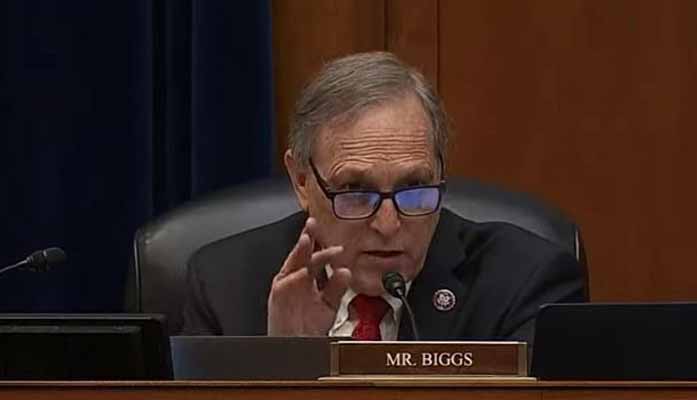
The Biggs for Arizona campaign announced a strong Q3 fundraising haul of $564,075, marking the strongest quarterly total of the campaign cycle to date. This significant increase from the previous quarter brings the campaign’s 2025 fundraising total to over $1.2 million.
With more than 4,000 new donors added in Q3, the campaign ended September with $630,187 cash on hand, demonstrating strong financial momentum heading into the critical stages of the 2026 Arizona gubernatorial race.
“As I continue to travel across Arizona and share my vision of freedom for our state, more and more voters are coming on board to show their support,” said Rep. Andy Biggs. “It’s clear we deserve better than the weak leadership and petty vetoes Katie Hobbs has built her office around, but it will take someone with the relationships and experience at the State Capitol and beyond to lead our state from Day One. Our campaign is making this case to voters every single day, and the results show we are on the right track. There’s no doubt we will be well-equipped to defeat Katie Hobbs in November 2026.”
Representative Andy Biggs (AZ-05) has garnered endorsements from key conservative figures, including President Trump, the late Charlie Kirk, and Turning Point CEO Erika Kirk. Congressmen Eli Crane and Paul Gosar, as well as Maricopa County Supervisors Debbie Lesko and Mark Stewart, also support his campaign. Recent polls show that Rep. Biggs is leading the Republican gubernatorial primary with a commanding 22-point advantage over Karrin Taylor Robson and a 37-point lead over Rep. David Schweikert. This substantial lead shows Biggs’ strong support among Arizona voters and his position as the frontrunner in the race.
Arizona State Representative Leo Biasiucci echoes this sentiment, saying, “Whether it’s at Republican events across Arizona or at the State Capitol, I’m hearing the same thing: Arizonans are ready for Andy Biggs as our next Governor. This strong quarter shows Andy is putting in the work and exceeding expectations on the fundraising front, which will only boost the momentum he has with grassroots conservatives across the state.”
Ethan Faverino is a reporter for AZ Free News. You can send him news tips using this link.
by Ethan Faverino | Oct 16, 2025 | Economy, News
By Ethan Faverino |
The National Federation of Independent Business (NFIB) Small Business Optimism Index dropped 2 points in September to a score of 98.8, marking the first decline in three months.
Despite remaining above the 52-year average of 98, the dip reflects growing concerns among small business owners grappling with inflationary pressures, supply chain disruptions, and persistent labor shortages. The Uncertainty Index climbed 7 points to 100, making it the fourth-highest reading in over 51 years.
NFIB Chief Economist Bill Dunkelberg said, “Optimism among small business owners decreased in September. While most owners evaluate their own business as currently healthy, they are having to manage rising inflationary pressures, slower sales expectations, and ongoing labor market challenges. Although uncertainty is high, small business owners remain resilient as they seek to better understand how policy changes will impact their operations.”
In Arizona, small business owners echoed with national concerns: “Unfortunately, Arizona small business owners are facing the same sort of challenges we see in the national survey,” NFIB State Director Chad Heinrich said. “The ongoing labor shortage and inflationary pressures are giving small business owners pause in this economy. They’re focused on meeting their customers’ needs and retaining their workforce.”
Key findings from the September survey include:
- Inflation and Supply Chains: Inflation emerged as a significant issue, with 14% of owners citing it as their top business problem, up 3 points from August. A net 24% raised selling prices, up 3 points, and a net 31% plan to increase prices in the next three months, up 5 points. Supply chain disruptions impacted 64% of owners, a 10-point jump from August.
- Labor Market Struggles: 32% of owners reported unfilled job openings, unchanged from August. Of the 58% that are hiring or trying to hire, 88% faced a shortage of qualified applicants. A net 16% plan to create jobs in the next three months (up 1 point) is the highest since January 2025. Labor quality is tied with taxes as the top concern, cited by 18% of owners.
- Inventory and Sales: A net negative 7% viewed current inventory as “too low,” down 7 points—the largest monthly decline in the survey’s history. A net negative 7% reported higher nominal sales over the past three months, up 2 points, but a net 8% expect higher real sales volumes (down 4 points).
- Earnings and Investments: Actual earnings improved, with a net negative 16% reporting profit trends, up 3 points, and the highest since December 2021. Among those with lower profits, 33% cited weaker sales and 17% pointed toward material costs. Capital outlays remained steady, with 56% of owners reporting expenditures, primarily on equipment and vehicles.
- Financing Challenges: A net 7% reported tougher loan conditions, up 4 points and the highest this year. The average rate on short-maturity loans rose 8.8%. Regular borrowing increased, with 26% of owners reporting loans, up 3 points.
Despite these challenges, 57% of owners rated their business health as “good,” up 3 points, while 11% said “excellent,” down 3 points.
Taxes and labor quality tied as the top concerns, each cited by 18% of owners, while poor sales (10%) and government regulations (6%) remained notable issues.
Ethan Faverino is a reporter for AZ Free News. You can send him news tips using this link.
by Ethan Faverino | Oct 15, 2025 | News
By Ethan Faverino |
Michael Calles, a fourth-generation Arizonan, U.S. Navy and U.S. Army Veteran, and retired Phoenix Police Officer with 25 years of experience, has officially announced his candidacy for Glendale City Council in the Barrel District.
Running against incumbent Councilmember Bart Turner, Calles aims to restore transparency, accountability, and ethical governance to City Hall while addressing the growing concerns of Barrel District residents.
Calles, a political newcomer, brings a lifetime of public service to his campaign with a platform centered on strengthening public safety, investing in families and youth, revitalizing neighborhoods, and advocating for lower taxes, lower utilities, and robust economic investment in the Barrel District.
His announcement comes at a pivotal moment, as Barrel District citizens express frustration with what they describe as Councilmember Turner’s lack of responsiveness and transparency.
In a press release announcing the launch of his campaign, Calles wrote, “Glendale residents deserve safe neighborhoods, fiscal responsibility, and a City Council that works for them, not one that wastes taxpayer dollars. I’m running to restore trust, strengthen public safety, and deliver real results for families in the Barrel District.”
The Calles campaign is gaining momentum as residents rally for change in the Barrel District. His commitment to transparent governance and fiscal responsibility appears to resonate with voters seeking a City Council that reflects their values and priorities.
“I’m tired of seeing Glendale residents ignored while political insiders look out for themselves,” said Calles. “I believe city leaders should listen, respond, and lead with integrity — values I have lived every day through decades of service in law enforcement, the military, and as a mentor to local youth. Now, I am ready to bring that same honesty, discipline, and responsiveness to City Hall.”
Ethan Faverino is a reporter for AZ Free News. You can send him news tips using this link.