Retail sales increased for the seventh consecutive month in April, highlighting the resilience of American consumers despite rising gas prices and elevated inflation.
According to the CNBC/NRF Retail Monitor, total retail sales excluding automobile dealers and gas stations increased 0.34% seasonally adjusted from March and rose 5.73% unadjusted from April of 2025. That follows gains of 0.4% month-over-month and 6.59% year-over-year in March.
“Retail sales continued to grow in April despite higher gas prices driven by the ongoing conflict in Iran, cautious consumer sentiment and the persistent concerns about sustained inflation,” stated NRF President and CEO Matthew Shay.
Core retail sales, which also exclude restaurants, posted a smilier 0.34% month-over-month gain and climbed 5.53% year-over-year. For the first four months of 2026, total sales were up 6.07% year-over-year, while core sales rose 5.99%.
Sales growth was broad-based, rising in eight of nine major categories on a yearly basis and in all but one category on a monthly basis. Clothing and accessories stores led the way with a 0.59% month-over-month increase and a strong 9.75% year-over-year gain.
Sporting goods, hobby, music and book stores advanced 0.12% month-over-month and 8.55% year-over-year, while health and personal care stores rose 0.45% and 8.42% respectively. Digital products, including electronic books and games, posted the strongest monthly gain at 1.11% and climbed 8.09% annually.
Other categories showing positive momentum included general merchandise stores (up 0.15% month-over-month and 6.19% year-over-year), electronics and appliance stores (up 0.16% and 4.03%), and grocery and beverage stores (up 0.36% and 3.21%).
Furniture and homes furnishings stores saw a slight 0.06% monthly decline but still posted a 2.58% annual increase. Building and garden supply stores edged up 0.009% for the month but were down 2.74% from the prior year.
“Spending on household priorities remains solid, supported by a steady labor market, wage growth and a significant influx of cash from tax refunds,” added Shay. “While consumers are mindful on costs, retailers are working hard to keep everyday goods affordable for American families.”
Ethan Faverino is a reporter for AZ Free News. You can send him news tips using this link.
Maricopa County Recorder Justin Heap has asked the Maricopa County Superior Court to hold the Maricopa County Board of Supervisors in civil contempt, claiming the Board has failed to comply with a court order issued more than six weeks ago restoring election authority and resources to the Recorder’s Office.
The filing comes 43 days after Maricopa County Superior Court Judge Scott Blaney ruled that the Board of Supervisors has exceeded its statutory authority by assuming control over election functions assigned by Arizona law to the County Recorder.
In an Application for Order to Show Cause filed on May 28, 2026, Heap argued the Board has continued to exercise powers the court determined belong to the Recorder’s Office while refusing to return critical election personnel, systems, and resources.
“The Court settled these issues 43 days ago,” stated Heap. “Since then, the Board has refused to comply, continued exercising powers the Court ruled it does not possess, and even interfered with Recorder personnel carrying out their lawful duties at Recorder-operated election sites.”
The dispute stems from a lawsuit filed by Heap against the Board after disagreements over election administration responsibilities, funding, and operational control.
In its April ruling, the court rejected the Board’s argument that it possessed “plenary” authority over county election administration. Blaney wrote that Arizona election statutes specifically assign numerous election duties to the Recorder and that the Board cannot assume those responsibilities without legislative authorization or the Recorder’s consent.
The court found that Arizona law designates the Recorder as the responsible official for 111 election-related functions assigned to the “recorder or other officer in charge.” As a result, Blaney ordered the Board to restore authority, personnel, and election systems to the Recorder’s Office or immediately fund replacement systems.
The ruling also directed the Board to release election-related funding appropriated for the Recorder and prohibited the Board from exercising election functions delegated by law to the Recorder.
According to Heap’s latest filing, the board has yet to return election IT personnel, servers, databases, websites, and other systems necessary for the Recorder’s Office to carry out its statutory responsibilities. The filing further claims the board has refused to authorize the use of state and federal funds appropriated for election administration.
Heap also pointed to actions taken during recent May jurisdictional elections, stating that the county’s Elections Director instructed poll workers at Recorder-operated ballot replacement sites to disregard directions from the Recorder’s Office staff regarding voter information requirements under state law.
Additionally, the Recorder’s Office argues that the Board adopted a resolution asserting authority over early ballot drop boxes during the early voting period despite the court’s injunction and Arizona statutes assigning that responsibility to the Recorder.
The Recorder’s Office contends these actions represent continued violations of the court’s order rather than delays in implementation. The filing states that Recorder officials attempted to negotiate phased transition plans, resource-sharing agreements, and other cooperative solutions which were rejected by the Board.
Heap is now asking the court to order the Board to appear and explain why they should not be held in contempt, impose sanctions sufficient to compel compliance with the April ruling, and award attorney fees and court costs.
“The voters of Maricopa County deserve election administration that follows the law, respects the courts, and remains focused on conducting elections that are lawful, secure, accurate, accessible, and worthy of the public’s trust,” added Heap.
Ethan Faverino is a reporter for AZ Free News. You can send him news tips using this link.
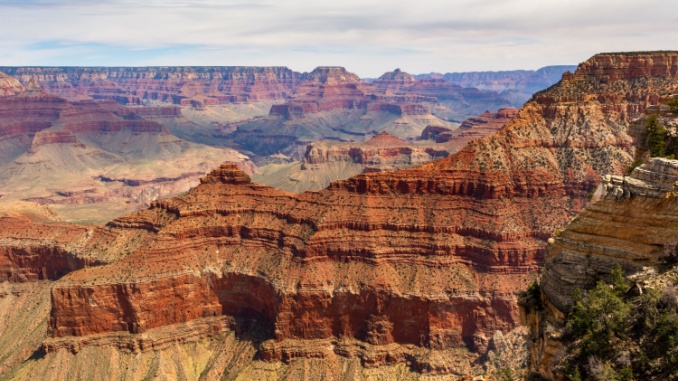
As Summer RV travel peaks across the United States, new research highlights stark differences in crowding at America’s national parks. Arizona’s iconic Grand Canyon National Park stands as a major draw for RV enthusiasts, ranking ninth busiest overall despite a cooling trend in 2025.
According to data from Blue Capital Holdings, RV campers flocked to Glacier National Park in Montana more than any other over the past five years, logging more than 429,000 summer visits (June-August) from 2021 to 2025. Yosemite National Park in California followed closely in second place.
Top 5 Most Popular National Parks for Summer RV Camping (2021-2025):
Glacier National Park, Montana – 429,693 visits
Yosemite National Park, California – 423,672 visits
Great Smokey Mountains National Park, Tennessee – 333,739 visits
Olympic National Park, Washington – 280,272 visits
Acadia National Park, Maine – 158,105 visits
“Summer shows just how concentrated RV travel has become around a small number of national parks,” stated Blue Capital Holdings CEO Rich Turasky. “Glacier and Yosemite are in a league of their own, and together they logged more than 850,000 summer RV visits over the past five years. What is interesting is that popularity does not always mean momentum. Glacier still ranks first overall, but its numbers slipped in 2025, while Yosemite surged by 43%. Rocky Mountain also climbed 23%, and Kings Canyon rose 42%, so there are still parks seeing very strong summer demand.”
Grand Canyon National Park in northwestern Arizona recorded 124,968 summer RV visits over the five-year period, securing ninth place nationally. The park saw 26,075 visits in 2024 before declining roughly 20% to 20,854 in 2025, reflecting broader patterns where many headline destinations experienced softening demand amid concerns over heat, crowding, and access.
Arizona’s crown jewel continues to captivate travelers seeking its world-renowned vistas, dramatic landscapes, and unique Southwest character. While not topping the list, the Grand Canyon remains a bucket-list staple for the RV campers drawn to Arizona’s natural wonders.
According to the National Park Service, Grand Canyon’s North Rim reopened as of May 15, 2026, following impacts from the Dragon Bravo Fire. All paved roadways within the park have reopened, restoring access to many iconic viewpoints such as Point Imperial, Cape Royal, Roosevelt Point, and Angels Window.
The North Rim Campground is expected to reopen in June 2026 for tent and RV camping, however there will be no water or RV hookups available — campers must bring all their own portable water.
Stage 2 fire restrictions also remain in effect throughout the 2026 season due to limited water resources, prohibiting wood and charcoal fires.
Several trails remain closed due to fire impacts, including Bright Angel Point, Widforss, Transept, Uncle Jim Trail, and sections of the Ken Patrick Trail. No overnight lodging is available on the North Rim inside the park this season, though options exist outside the park boundaries.
At the other end of the list, several parks recorded dramatically lower traffic, providing quieter alternatives for summer travel.
Top 5 Least Popular National Parks for Summer RV Camping (2021-2025):
Badlands National Park, South Dakota – 1,845 visits
Death Valley National Park, California – 4,245 visits
Big Bend National Park, Texas – 4,979 visits
Guadalupe Mountains National Park, Texas – 5,531 visits
Canyonlands National Park, Utah – 6,138 visits
“At the same time, some of the biggest names lost ground. Great Smoky Mountains fell 19%, Grand Canyon was down 20%, and Yellowstone dropped 31% year on year,” added Turasky. “That suggests RV travelers are not just following the most famous names blindly, but are being influenced by heat, crowding, access, costs and the overall experience once they arrive. The least-visited summer parks also tell their own story. Places like Death Valley and Big Bend are spectacular, but summer can be a difficult time to visit them in an RV. For travelers willing to plan carefully, though, the lower numbers can mean a much quieter national park experience.”
Ethan Faverino is a reporter for AZ Free News. You can send him news tips using this link.
Senate Republicans have advanced legislation aimed at strengthening private property rights and streamlining the removal of unlawful occupants from homes and residential properties.
Senate Bill 1426, sponsored by Senator Wendy Rogers (R-LD7), passed the legislature on May 26, 2026, and is now headed to the Governor’s desk.
The legislation strengthens Arizona’s forcible entry and detainer statutes by creating a clearer, faster process for property owners to reclaim their homes from squatters. SB 1426 defines specific conditions under which a person is considered an unauthorized occupant — including individuals who are not current or former tenants, immediate family members, or parties to any verbal or written agreements to occupy the property. It also established criteria for situations involving forcible entry into residential homes not open to the public.
Key provisions of the bill include:
Allowing courts to issue a writ of restitution immediately upon judgement in qualifying cases involving unauthorized occupants.
Directing the Arizona Supreme Court to adopt rules for the expeditious resolution of these claims.
Preserving all existing protections and remedies under the Arizona’s Residential Landlord and Tenant Act.
“Private property rights are not a suggestion; they are a cornerstone of our freedoms,” stated Senator Rogers. “If someone breaks into your home, moves into your property, and refuses to leave, the law should stand with the homeowner, not the unlawful occupant. That’s just common sense.”
Hats off to ALL the law enforcement, constables, sheriffs and our astute Senate legal policy advisor Brooke Huppenthal who got this DONE… protecting Arizonans! A wonderfully collaborative effort. 🔥 https://t.co/PGfb34MacE
Rogers emphasized that the bill resulted from extensive collaboration with stakeholders, lawmakers, and law enforcement. “This bill has been years in the making,” added Rogers. “The overwhelming support we’ve received, including from members of law enforcement who deal with these situations firsthand, shows just how badly these reforms are needed. Arizonans shouldn’t have to spend months fighting to reclaim property they already own. SB 1426 cuts through the red tape, closes loopholes that have been exploited for too long, and puts homeowners back where they belong—in control of their property. I’m proud to see this legislation finally reach the governor’s desk and hopeful she will sign it into law so Arizona families can receive the protections they deserve.”
The bill amends Arizona Revised Statutes sections 12-1171 and 12-1173. Among other updates, it expands the definition of forcible detainer to include unauthorized persons who refuse to leave a residential property after reasonable request from the owner or authorized agent, provided multiple safeguards are met.
Ethan Faverino is a reporter for AZ Free News. You can send him news tips using this link.
The Republican Study Committee (RSC) held a fraud roundtable last week, led by Representative Brandon Gill (TX-26), calling for aggressive action and criminal prosecutions in response to a major Medicaid fraud scheme in Ohio uncovered by investigative reporting.
The event follows a Daily Wire investigation by reporter Luke Rosiak, which revealed how convicted felons and foreign nationals established 288 shell companies to fraudulently bill taxpayers for home health services that were never even provided.
The scheme defrauded Ohio’s Medicaid program of approximately $250 million. One single building in Columbus reportedly housed 94 fake companies that billed out $66 million.
Rosiak exposed the operation in about two months by analyzing publicly available data that state Medicaid officials had allegedly overlooked for four years.
Rep. Gill, who chairs the newly formed House Oversight Committee Task Force on Defending Constitutional Rights and Exposing Institutional Abuses, announced that the task force will launch a formal investigation equipped with subpoena power to pursue accountability and issue criminal referrals.
“Whenever you bring in infinity third worlders into American society from low trust countries, you kind of expect low trust behavior, and that’s what we’ve seen here,” stated Gill. “The American people want to know that their tax dollars are actually being used for the American people, not for foreigners, not for fraudsters. Our job is to stop it, to get the bad guys in jail by issuing criminal referrals.”
The roundtable aligns with broader Republican efforts to combat waste, fraud, and abuse in federal healthcare programs. These initiatives build upon the White House Fraud Task Force established by President Donald Trump and Vice President JD Vance, which has already deferred billions in Medicaid reimbursements from non-compliant states and imposed a hold on new hospice and home health care licenses until integrity requirements are met.
RSC Vice Chair Ben Cline (VA-06) emphasized the impact on legitimate beneficiaries: “Fraud is not a victimless crime. Fraudsters steal money from innocent people who are meant to benefit from these programs, Medicare, Medicaid, home health. One of the main weapons that we have is transparency.”
Additional remarks from members in attendance included:
Rep. Michael Cloud (TX-27): “It’s unfortunate when people come to this country, have no intent in helping build this country, but are just simply here to defraud the American citizens who are here and working to build this country. The waste, fraud, and abuse is turned into a money laundering scheme for leftist organizations.”
Rep. Laurel Lee (FL-15): “We are not providing federal funding for the purpose of subsidizing negligence, incompetence, or corruption. Every dollar that is stolen is $1 that is no longer available for vulnerable Americans who actually need these services.”
Rep. Tim Burchett (TN-02): “We found over a trillion dollars in duplication and increased bureaucracy. Every time the Democrats holler and say, ‘Oh, you’re cutting this program,’ you’re damn right. We’re cutting the waste, abuse, and fraud.”
Rep. Mike Kennedy (UT-03): “This criminal behavior is enriching filthy individuals who deserve to be in jail. If there are doctors on the tape, they should do the perp walk and go to jail. Their license should be taken and never returned.”
Rep. Abe Hamadeh (AZ-08): “This is not just going to be hearings after hearings. It’s going to be arrests and prosecutions. We have to end this now. What we’re uncovering is criminals.”
Republicans characterized the Ohio Medicaid scam as a stark example of systemic vulnerabilities in federal healthcare programs that deflect critical resources away from the people who depend on these services.
The roundtable highlighted the GOP’s commitment to greater transparency, aggressive enforcement, and criminal prosecutions to protect taxpayer dollars and restore integrity to these programs.
Ethan Faverino is a reporter for AZ Free News. You can send him news tips using this link.