by Ethan Faverino | Jun 8, 2026 | News
By Ethan Faverino |
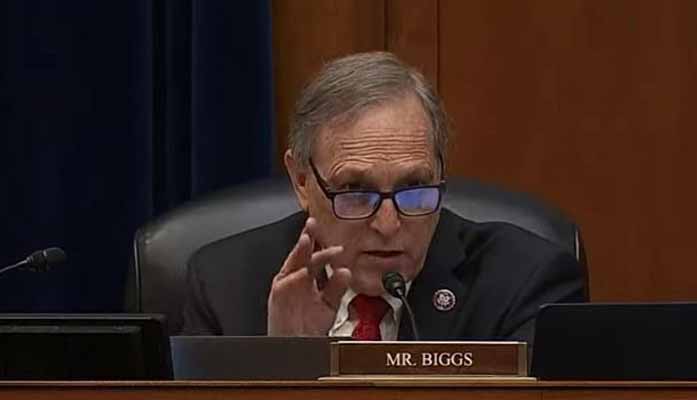
Arizona House Majority Leader Michael Carbone (R-LD25) has endorsed Congressman Andy Biggs for Governor, praising his proven ability to unite lawmakers and advance conservative priorities through collaboration with the Legislature.
Carbone, who represents Maricopa County’s West Valley, becomes the 44th current or former state legislator to publicly back Biggs and the first member of State House leadership to do so.
“We need conservative leadership ready to work with the Legislature and advance policies that bring down the cost of living on Arizonans so our state can prosper,” stated Carbone. “Andy Biggs is the best choice to do that from day one as Governor. He understands the legislative process at the Capitol and knows what it takes to make our state thrive. He’ll be a great advocate for the West Valley and for all of Arizona as Governor.”
Carbone also joins the growing list of West Valley elected officials supporting Biggs, including U.S. Congressman Abe Hamadeh, Maricopa County Supervisor Debbie Lesko, Arizona State Senator Janae Shamp, and Arizona State Representatives Nick Kupper, Lisa Fink, Michele Peña, David Livingston, and Beverly Pingerelli.
“Majority Leader Carbone has been a champion for thoughtful conservative policies, like expanding our nuclear capabilities to bring utility costs down and supporting pro-growth policies for our Arizona small businesses,” said Congressman Biggs. “Our campaign is focused on building out our support amongst Republican leaders and voters with a positive vision that brings our party together. With less than three weeks until ballots go out for the Republican primary election, we are well prepared for a victory on July 21st before defeating Katie Hobbs in November.”
Biggs has consistently maintained a commanding lead in the Republican primary field, according to multiple independent polls conducted since September 2025. A survey by NextGen Polling found Biggs ahead by 42%, while Emerson College showed him leading by 33%. GrayHouse reported a 24% advantage and Pulse Decision likewise found Biggs leading by 24%.
The most recent poll, conducted by Noble Predictive Insights, lists Biggs leading the Republican primary field by 30%. The study, conducted May 5-7, 2026, among 996 registered voters in Arizona including 375 registers Republicans, shows Biggs rising to 48% — up from 40% in February.
Biggs leads across key GOP demographics, including:
- Men: 50% Biggs – 21% Schweikert
- Women: 46% – 15%
- Voters Aged 65+: 57% – 17%
- Conservatives: 52% – 16%
- Trump Supporters: 55% – 16%
- Hispanic Republicans: 57% – 9%
Biggs is the only candidate in the Arizona Republican gubernatorial primary endorsed by both President Trump and the late Charlie Kirk. Additional high-profile support includes endorsements from Turning Point CEO Erika Kirk, Arizona Congressmen Eli Crane, Paul Gosar, Abe Hamadeh, and Texas Governor Greg Abbott, and Maricopa County Supervisors Debbie Lesko and Mark Stewart.
Biggs has also secured backing from influential conservative organizations including Turning Point Action, Moms for America Action, and Gun Owners of America-Arizona Chapter. Law enforcement support includes former Pinal County Sheriff Mark Lamb, Pinal County Attorney Brad Miller, the Arizona Law Enforcement Association, and the Arizona Council of Prisons Locals.
Rep. Biggs leads all Republican gubernatorial candidates in fundraising, with $2.7 million raised and $1.1 million cash on hand, an advantage of more than 10:1 over his closest primary competitor. He has set multiple personal funding records throughout the 2026 cycle.
Ethan Faverino is a reporter for AZ Free News. You can send him news tips using this link.
by Ethan Faverino | Jun 6, 2026 | News
By Ethan Faverino |
The Arizona State Troopers Association, representing more than 1,200 troopers and 750 civilian employees of the Arizona Department of Public Safety, has endorsed Warren Petersen for Attorney General, delivering a significant boost to the challenger in Arizona’s race.
The endorsement marks the latest in a series of high-profile law enforcement backing for Petersen, who has earned support from multiple major police organizations and elected officials across the state and country.
“Throughout his time in the Arizona Legislature, Warren Petersen has always been a friend to the Troopers and to law enforcement around the state,” stated President of the Arizona State Troopers Association, Jeff Hawkins. “Arizonans – and the men and women who serve in law enforcement – deserve an Attorney General who stands with and fights for them against the lawlessness that threatens to overcome our society. I know that Warren will continue to do just that as our next Attorney General, just as he has over his time in public service.”
The Arizona State Troopers Association is the sole organization dedicated to representing the interests of Arizona Department of Public Safety employees. Its endorsement highlights Petersen’s longstanding commitment to supporting those who protect Arizona communities.
Petersen expressed gratitude for the backing and highlighted his record of partnership with law enforcement:
“I’m honored to earn support from the Arizona State Troopers Association,” said Petersen. “It has been an honor to work with the association to advance the interests of the men and women who serve our state in the Department of Public Safety. Our State Troopers sacrifice their lives and time with their family to keep Arizona safe. As Attorney General, I look forward to continued partnership with our men and women in uniform. I will always fight for law enforcement and our Arizona State Troopers.”
Petersen’s support for law enforcement includes consistent advocacy for securing funding for specialized task forces, strengthening officer recruitment and retention efforts, and ensuring the aggressive prosecution of violent offenders.
With this latest endorsement, Petersen now holds the backing of Arizona’s largest police organizations — including the Arizona Police Association, the Fraternal Order of Police, the Phoenix Police Sergeants and Lieutenants Association, and now the Arizona State Troopers Association — a level of unified support for a challenger to the incumbent Attorney General that is unprecedented in state history.
The growing coalition of law enforcement leaders supporting Warren Petersen for Arizona Attorney General also includes:
- Utah Attorney General Derek Brown
- Idaho Attorney General Raul Labrador
- West Virginia Attorney General JB McCuskey
- Indiana Attorney General Todd Rokita
- Yavapai County Sheriff Ross Teeple
- Gila County Attorney Brad Beauchamp
- Pinal County Attorney Brad Miller
- Mohave County Attorney Matt Smith
- Former Maricopa County Sheriff Joe Arpaio
- Border Patrol Veteran Art Del Cueto
Ethan Faverino is a reporter for AZ Free News. You can send him news tips using this link.
by Ethan Faverino | Jun 6, 2026 | News
By Ethan Faverino |
Senator David Farnsworth (R-LD10) paid tribute to the life and courageous work of investigative reporter Don Bolles, earlier this week, marking the 50th year anniversary of his assassination and reaffirming the enduring importance of journalistic integrity and accountability.
On June 2, 1976, Bolles, a reporter for the Arizona Republic and one of the founding members of Investigative Reporters and Editors (IRE), was mortally wounded when a bomb detonated beneath his vehicle in a Phoenix parking lot. He succumbed to his injuries 11 days later on June 13, 1976 at age 47. Prior to the attack, Bolles had been lured to a downtown hotel by a source promising information on land fraud linked to organized crime, in which the source never appeared.
Bolles dedicated his career to exposing organized crime, political corruption, and influence peddling in Arizona. His murder sent shockwaves across the nation and galvanized the journalistic community.
In the wake of his assassination, IRE members launched a major collaborative investigation not only into Bolles’ killing but into deeper systemic corruption that enabled such violence against a reporter in broad daylight. Their efforts underscored a powerful message: assassinating a journalist would not silence the press but would instead amplify scrutiny of the powerful interest involved.
“Don Bolles paid the ultimate price in pursuit of the truth. Fifty years later, his sacrifice still serves as a reminder that corruption thrives when good people look the other way,” stated Senator Farnsworth. “Don Bolles may not have succeeded in rooting out every instance of crime and corruption he set out to expose, but he succeeded in something equally important: he opened the eyes of countless Arizonans to the fact that corruption existed and demanded attention.”
In March, Senate Republicans advanced legislation to honor Bolles’ legacy alongside that of Charlie Kirk. SB 1686, sponsored by Senator Jake Hoffman (R-LD15), would rename Wesley Bolin Plaza as the Wesley Bolin and Charlie Kirk Freedom Plaza. The bill would also authorize the placement of memorials commemorating both Kirk and Bolles within the plaza. It is currently pending in the Arizona House of Representatives.
“In many ways, I am serving in the legislature because of Don Bolles and the awareness his work created,” added Farnsworth. “His story instilled in me a belief that public service comes with a responsibility to challenge corruption wherever it exists and to demand accountability from those entrusted with power. Fifty years later, I still feel obligated to do my part.”
The legislation includes specific provisions for the memorials, emphasizing private funding:
- No public monies are authorized for the costs of either memorial.
- All fundraising and contracts for design and construction are the responsibility of private proponents.
- The authorizations include delayed repeal provisions effective after September 30, 2029.
Fifty years after his death, Don Bolles is remembered not only as a victim of violence but as a martyr for truth whose work helped elevate public awareness of corruption and reinforced the vital role of a free and independent press in safeguarding democracy.
Ethan Faverino is a reporter for AZ Free News. You can send him news tips using this link.
by Ethan Faverino | Jun 4, 2026 | Education, News
By Ethan Faverino |
The Joint Legislative Audit Committee (JLAC) voted June 1st to direct the Arizona Auditor General to conduct two targeted special audits examining student safety in schools and the administration of federal childcare assistance funds.
One audit will focus on school safety practices statewide, marking the fourth special review of the issue. It will specifically include the Phoenix Union High School District following recent serious incidents of campus violence, including the August 2025 stabbing of a student at Maryvale High School.
The Auditor General will assess whether Arizona schools have properly adopted and implemented emergency response policies, thoroughly investigated student safety allegations, and complied with the state’s mandatory reporting laws.
In a separate action, the JLAC approved a special audit of Arizona’s administration and oversight of the federal Child Care and Development Fund (CCDF). The program, primarily administered by the Arizona Department of Economic Security, provides childcare assistance to qualifying families.
“JLAC took bipartisan action to get answers on two issues that matter to Arizona families,” said Chairman Matt Gress (R-LD4). “Parents deserve to know whether schools are prepared to respond to credible threats and whether serious safety concerns are being handled properly. Taxpayers deserve to know whether hundreds of millions of federal childcare dollars are being managed responsibly. These important audits will establish the facts, identify gaps, and help us determine what needs to change.”
Arizona spent around $573 million in federal CCDF funding during fiscal year 2024. The audit follows previous State Single Audit findings that identified deficiencies in provider oversight, questioned costs, and reporting.
The review arrives amid growing national concerns about fraud and abuse in publicly funded assistance programs. Federal officials have highlighted risks across the country, including recent charges announced by the U.S. Department of Justice in Minnesota against 15 defendants in alleged fraud schemes involving more than $90 million, some tied to childcare assistance programs.
The Auditor General’s examination of the CCDF will cover the approval and monitoring of childcare providers, inter-agency oversight responsibilities, and the accuracy and propriety of program expenditures from fiscal years 2021-25. The review may also extend to participation providers and other areas deemed necessary by the Auditor General, with particular attention to higher-risk periods during and after COVID.
“The fraud scandals unfolding in other states are a warning sign,” added Gress. “Arizona should not wait for a crisis before asking hard questions. When hundreds of millions of dollars flow through a program, strong oversight is not optional. This audit will help determine whether taxpayer dollars are protected, safeguards are working, and childcare assistance is reaching the families it is meant to serve.”
The school safety audit, which received unanimous approval, will begin following completion of the third school safety special audit now underway. It is scheduled to be completed on or before December 31, 2027. The Child Care and Development Fund audit will require cooperation from relevant state agencies and entities involved in federal childcare funding.
Ethan Faverino is a reporter for AZ Free News. You can send him news tips using this link.
by Ethan Faverino | Jun 2, 2026 | Economy, News
By Ethan Faverino |
Congressman Abraham Hamadeh (R-AZ-08) has introduced the Military and Veterans Fuel Discount Act of 2026, a bipartisan measure designed to deliver direct financial relief to service members, veterans, and their families by providing discounts on fuel purchased at military exchange stores.
The legislation, H.R. 9027, is co-sponsored by Representatives Don Bacon (R-NE-02), Eugene Vindman (D-VA-07), Don Davis (D-NC-01), and Jimmy Panetta (D-CA-19). It authorizes the Secretary of Defense to implement a program offering discounts on motor fuel sold at exchange stores and dispensed directly into vehicles owned by eligible patrons.
“As part of my unwavering commitment to America’s military heroes and keeping my promise to improve service members’ lives, I introduced legislation authorizing a fuel discount at military exchange pumps to lower living costs for our troops, veterans, and dependents,” stated Congressman Hamadeh.
The bill would allow the Secretary of Defense to provide a base discount on gasoline and diesel fuel equal to the federal fuel tax rate, which is at least 18.4 cents per gallon for gasoline and 24.4 cents per gallon for diesel. It also authorizes supplemental discounts to help offset state and local fuel taxes when applicable.
These costs disproportionately impact military families, veterans, and retirees, who often face long commutes to bases, training facilities, work, or VA medical appointments. With inflation and rising transportation costs continuing to strain household budgets, many service members spend a significant portion of their income on fuel.
Discounts would be applied automatically at the time of sale to the maximum extent practicable. The authority for the program would terminate on September 30, 2029.
The legislation includes safeguards to prevent fraud or abuse, prohibits the resale of commercial use of discounted fuel, and requires the Secretary of Defense to submit annual reports to Congress detailing program usage, costs, gallons sold, and any implementation issues.
“Fuel is one of the few products sold by exchanges still subject to tax,” added Hamadeh. “This discount, equal to the federal fuel tax, shows profound gratitude to our nation’s heroes who have borne the heavy costs of war defending our freedoms. This common-sense step delivers real relief to our selfless service members and their families.”
Ethan Faverino is a reporter for AZ Free News. You can send him news tips using this link.