More schisms have appeared between the state’s Democrat Chief Executive and Republican legislative leadership.
Earlier this month, Senate Majority Whip Sine Kerr, the Chair of the chamber’s Committee on Natural Resources, Energy & Water, announced her resignation from the Governor’s Water Council. Senator Kerr sent a letter to Governor Hobbs, which outlined the rationale behind her thinking.
FOR IMMEDIATE RELEASE: Senate Republicans Withdraw From Governor's Water Policy Council Beholden to Out-of-State Special Interests@SineKerrpic.twitter.com/5bDvkK7vn1
In a subsequent statement, Kerr explained her reasoning for the decision, writing, “The Governor’s Water Policy Council is nothing more than a forum to rubberstamp the progressive environmental goals of special interest groups. Its ultimate objective has nothing to do with serving the best interests of our Arizona citizens and stakeholders who will be greatly impacted by any newly adopted groundwater management policy. The radical agenda being pushed has the potential to damage our economy and kill the livelihoods of our farmers and ranchers. Sadly, this community is not being provided with fair representation at the table.”
Kerr vowed to keep up her efforts to effect legislative change over the state’s water policies in spite of her perceptions of Hobbs’ current track with those endeavors. She said, “I’m incredibly disappointed in the Governor’s approach that seeks to alienate the voices of Arizona’s multi-generational land and water stewards. This extreme departure from Arizona’s historical, collaborative approach to water management favors her own political gains over sound policymaking. Had her approach been taken over the last forty years, we would not have the tools we have today under the Groundwater Management Act, or the major victories for water augmentation, conservation, reuse, recharge, and irrigation efficiency we have adopted at the Legislature in recent years. I plan to continue my work at the Legislature, in collaboration with the agriculture community, to adopt solutions on basin management issues that will benefit all Arizonans and help with continued efforts in security our water future.”
On January 9, Governor Hobbs created the Water Policy Council “to analyze and recommend updates, revisions and additions to the 1980 Arizona Groundwater Management Act (GMA) and related water legislation, which shall include without limitation, analysis and recommendations for groundwater management outside current Active Management Areas.”
On May 4, Hobbs rolled out the members of the Council, saying, “I’m committed to passing water policies that meet this moment and tackle the challenges we face. I know that with our new Water Policy Council, we will develop the path forward and ensure our state’s natural resources are available for generations of Arizonans to come.”
The Republican Senator wasn’t the only member to leave the Council. The Arizona Farm Bureau, on October 13, also announced that it would be withdrawing from the Governor’s panel, citing a “disappointment in what has been the works of the Rural Groundwater Committee of the Council. Stefanie Smallhouse, the President of the Bureau said, “After months of deliberation, the committee’s direction, and thereby the outcome of the greater Council, appears to be pre-determined as essentially a cross between the seriously flawed attempts of the past and an AMA. At best, our priorities have been given very little committee consideration or, at worst, have been totally dismissed. This is unacceptable to our members, farm and ranch families who will undoubtedly be impacted directly and immediately by any rural groundwater regulatory framework.”
Daniel Stefanski is a reporter for AZ Free News. You can send him news tips using this link.
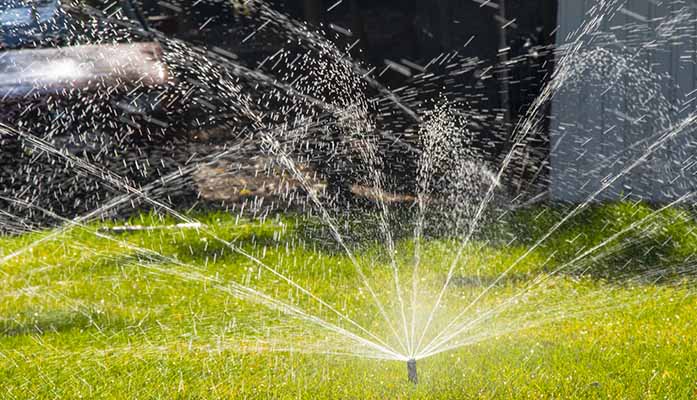
The town of Gilbert is offering up to $800 to residents and up to $3,000 to non-residential customers who swap their lawns for desert landscaping that uses less water.
The financial incentive in the Grass Removal Rebate programs isn’t cash: it’s applied as credit on the recipient’s water bills, and may take up to two bill cycles to appear. A Gilbert spokesperson told AZ Free News that they have a total of $120,000 per year to issue on their rebate programs, and that the allocated funding within that budget may change from year to year based on the popularity of each program.
Those who don’t qualify include those who have removed or are currently removing their lawns, those living in non-single family residential properties, and those with grass areas watered by flood or well water.
The grass must also be healthy and growing at 50 percent density, as well as routinely and permanently irrigated by a landscape irrigation system.
Gilbert residents may now be eligible to receive up to $800 for replacing their lawns with low-water-use landscaping.
The rebate requires an inspection of the resident’s grass landscape. The amount received by residents for the lawn removal also depends on the lawn’s size. On the low end, properties with 200 to 399 square feet of grass are worth $100; on the high end, those with over 1,000 square feet of grass are worth $500.
The additional $300 from the town comes as a reward for planting new shade trees or low water-use plants. Residents with a rebate area with at least 50 percent low-water-use or drought-tolerate plant coverage may receive an additional $200. Residents may also receive up to a $100 rebate for planting two trees from the Arizona Department of Water Resources’ Low-Water-Use/Drought-Tolerant Plant List.
As for non-residential customers, like HOAs and businesses, grass removal comes at $1 per square footage of grass, with a $3,000 cap.
Anyone who receives $600 or more in water bill credits must complete a W9 for the Gilbert Water Conservation, as per the Biden administration IRS reporting requirement enacted last year.
Those aren’t the only water conservation financial incentives that Gilbert has offered. The town introduced rebates up to $250 for residential, $400 for non-residential properties to install smart irrigation controllers.
Another municipality, Tucson, opted for involuntary compliance with water conservation. Last month, the city of Tucson prohibited new builds from installing lawns and reduced their water flow; in May, they increased water rates by reclassifying several winter months — billed at a lower rate — into summer months. The city of Phoenix cut water allowance, as well as raised its water usage fees.
Corinne Murdock is a reporter for AZ Free News. Follow her latest on Twitter, or email tips to corinne@azfreenews.com.
Earlier this month, Tucson outlawed lawns and reduced water flow in new constructions.
The Tucson City Council approved the changes through two action items presented during a regular meeting. Both measures were proposed to increase water conservation.
The lawn ban, Ordinance 12005, targets “ornamental turf” — that is, grass intended only for aesthetic, not functional or practical purposes. Functional turf would be considered grassy areas such as school playgrounds, parks, sports fields, dog parks, or golf courses. Other drought-hit states like California have imposed similar bans on ornamental turf. In 2021, Nevada became the first state to ban ornamental turf, which goes into effect in 2027.
The council explained in a public statement that they originally wanted to ban ornamental turf in new developments only. However, stakeholders and the public expressed concern that the ban wouldn’t result in meaningful water conservation since new developments already have minimal allowance for ornamental turf.
Tom Prezelski with Rural Arizona Action spoke in favor of the issue. Prezelski was formerly a state representative, tribal planner for the Tohono O’odham Nation and Pascua Yaqui Tribe, coordinator for the Stop Corruption Now Arizona campaign, quality control specialist with CHISPA, and coordinator with the Arizona Democratic Party.
The water flow reduction, Ordinance 12009, requires new constructions to use Environmental Protection Agency (EPA) WaterSense certified fixtures. WaterSense, a voluntary EPA partnership, products and services use at least 20 percent less water, seeking to cut into the national average of 82 gallons used by Americans daily at home.
WaterSense began through talks in 2004 with stakeholders prior to launching in 2006 in San Antonio, Texas at the American Water Works Association’s Annual Conference & Exposition.
The city approved the ordinance unanimously; no citizens issued public comment on the subject.
Councilman Steve Kozachik asked whether there would be leeway for builders who run into supply chain issues — something that has plagued the country throughout the last few years. City officials said that builders could apply for a waiver through their building official.
Watch the council discussion of the two water conservation items here:
Tucson, along with the city of Phoenix and the state, also traded away its Colorado River water rights in exchange for federal infrastructure funding. The city received $44 million for the deal; Phoenix received $60 million.
The funds come from the Inflation Reduction Act (IRA) and the Bipartisan Infrastructure Law (BIL). Those two laws set aside a combined $15.4 billion to combat drought.
Gov. Katie Hobbs forfeited three million acre-feet of Colorado River water rights over the next three years. That plan, the Lower Basin Plan, equates to $1.2 billion in federal funding altogether. Hobbs splits the funding with the two governors who signed onto the plan: California Gov. Gavin Newsom and Nevada Gov. Joe Lombardo.
#Tucson is setting the standard in water conservation. Under my leadership and the Council, the City of Tucson has signed an agreement with @usbr to voluntarily reduce our #water allocation from the #ColoradoRiver. https://t.co/WWgYY8PeMP
One Arizona legislator’s relentless efforts to deliver water to families in the Rio Verde Foothills appear to have paid off.
On Tuesday, the Arizona Senate passed SB 1432, which included Representative Alexander Kolodin’s HB 2561 as an amendment, sending it to the Governor’s Office for her decision.
Governor Hobbs is expected to sign the bill.
Twenty Senators voted to approve the measure, eight members opposed, and two did not vote.
Kolodin had several people to thank for the bill’s progress, which he did so in a press release, saying, “It took a team effort by an unlikely coalition to defeat the establishment’s army of lobbyists and solve what should have been a simple problem. A few people deserve special mention. My seatmate, John Kavanagh, put in yeoman’s work shepherding this legislation through the Senate. Senator Wadsack worked with us to integrate our bill with her own significant water reform legislation. She and my other colleagues in the Arizona Freedom Caucus withstood tremendous pressure to stand firm and help me to complete the people’s work. I also want to thank Representative Cook for his consistent efforts to help the people of Rio Verde as well as Representative Terech, the chief negotiator for the Democrats, for her months of effort to arrive at a bipartisan solution to a problem that no other part of government has been able or willing to resolve. This is not the first water crisis Arizona has faced and it will not be the last. But, today, we proved that the era of kicking the can down the road is over. This legislature is ready, willing, and able to roll up its sleeves and solve the problem – together.”
The state representative urged Hobbs to sign his bill and give the people of Rio Verde Foothills the relief that they have been seeking for months, stating, “We should not have had to fight so hard just to get Arizonans water, but our work is now complete thanks to the efforts of these and countless others. Katie Hobbs should immediately sign this bill and restore water to the people. Rio Verde Foothills – we applaud your fight and community spirit! Hold on tight, relief is on the way!”
After HB 2561 passed the Arizona House last month, freshman representative Justin Heap shared insight on how hard his colleague had worked to get his proposal to where it stood at that moment, tweeting:
“Politics is a profession defined by indolence & self-aggrandizement. Because of this, truly remarkable efforts by leaders to help the people they represent often go unnoticed & unrewarded. For this reason, I would like to acclaim my colleague @realAlexKolodin of District 3. No bill has been more fiercely contested or required more effort this year then the task of getting water to the 900 residents of Rio Verde Foothills who’ve been without reliable access to water since 2022. As their House Rep Alex made it his mission to get them water. It was a herculean task for a freshman legislator, against opposition from cities, the county BofS, the Governor’s Office, even his own party. Alex was undaunted.”
Daniel Stefanski is a reporter for AZ Free News. You can send him news tips using this link.
Arizona received some significant news this week when it came to its water future.
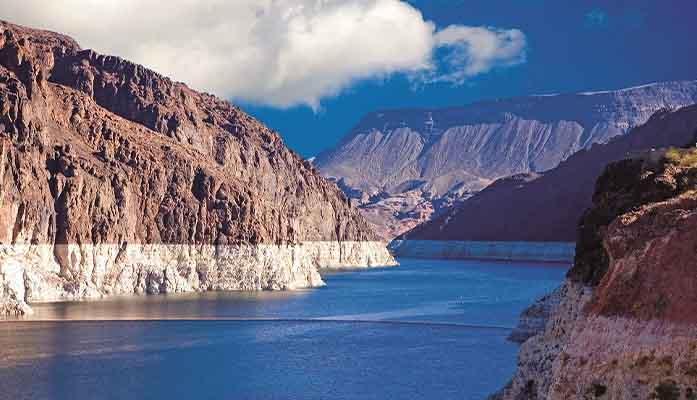
On Monday, Democrat Governor Katie Hobbs released a statement in conjunction with California’s and Nevada’s governors, announcing that “the Colorado River Lower Basin States have developed a plan to conserve 3 million acre-feet over the next three years to protect the Colorado River system.”
The three governors also sent a letter to U.S. Department of the Interior Secretary Deb Haaland, informing her of their support for this plan. The governors’ release revealed that “the Lower Basin Plan has been submitted to the Bureau of Reclamation with all Seven Colorado River Basin States supporting its evaluation as an action alternative within the Near-Term Colorado River Operations Draft Supplemental Environmental Impact Statement (Draft SEIS).”
Hobbs issued the following statement to accompany her announcement: “The Lower Basin Plan is the product of months of tireless work by our water managers to develop an agreement that stabilizes the Colorado River system through 2026. Thanks to the partnership of our fellow Basin States and historic investments in drought funding, we now have a path forward to build our reservoirs back up in the near-term. From here, our work must continue to take action and address the long-term issues of climate change and overallocation to ensure we have a sustainable Colorado River for all who rely upon it.” According to the Department of the Interior, “the consensus-based proposal – agreed upon by the three Lower Basin states – commits to measures to conserve at least 3 million-acre-feet (maf) of system water through the end of 2026, when the current operating guidelines are set to expire. Of those system conservation savings, 2.3 maf will be compensated through funding from the historic Inflation Reduction Act, which is supporting efforts to increase near-term water conservation, build long term system efficiency, and prevent the Colorado River System’s reservoirs from falling to critically low elevations that would threaten water deliveries and power production. Under this consensus proposal, the remaining system conservation needed for sustainable operation will be achieved through voluntary, uncompensated reductions by the Lower Basin states.”
Interior Secretary Haaland said, “There are 40 million people, seven states, and 30 Tribal Nations who rely on the Colorado River Basin for basic services such as drinking water and electricity. Today’s announcement is a testament to the Biden-Harris administration’s commitment to working with states, Tribes and communities throughout the West to find consensus solutions in the face of climate change and sustained drought,”
Some Democrat legislators reacted positively to the news out of the Governor’s Office. Senator Mitzi Epstein tweeted: “Smart goals are measurable, verifiable, and enforceable. This smart plan will conserve water – via voluntary agreements among Tribes, cities, & agriculture – to reduce the risk to Lakes Mead and Powell thru 2026. Thank you Governor Hobbs!
🌦🌊Water News!
Smart goals are measurable, verifiable, and enforceable. This smart plan will conserve water -via voluntary agreements among Tribes, cities, & agriculture- to reduce the risk to Lakes Mead and Powell thru 2026.
And Senator Christine Marsh added, “Thank you Governor Hobbs. I’m glad Arizona was able to reach a short-term agreement to address our water shortage.”
Thank you Governor Hobbs. I’m glad Arizona was able to reach a short-term agreement to address our water shortage. https://t.co/AssAUnJzQW
— Senator Christine Marsh (@ChristinePMarsh) May 22, 2023
Daniel Stefanski is a reporter for AZ Free News. You can send him news tips using this link.