I’ve written frequently here in recent years about the financial fiasco that has hit Ford Motor Company and other big U.S. carmakers who made the fateful decision to go in whole hog in 2021 to feed at the federal subsidy trough wrought on the U.S. economy by the Joe Biden autopen presidency. It was crony capitalism writ large, federal rent seeking on the grandest scale in U.S. history, and only now are the chickens coming home to roost.
Ford announced on Monday that it will be forced to take $19.5 billion in special charges as its management team embarks on a corporate reorganization in a desperate attempt to unwind the financial carnage caused by its failed strategies and investments in the electric vehicles space since 2022.
Cancelled is the Ford F-150 Lightning, the full-size electric pickup that few could afford and fewer wanted to buy, along with planned introductions of a second pricey pickup and fully electric vans and commercial vehicles. Ford will apparently keep making its costly Mustang Mach-E EV while adjusting the car’s features and price to try to make it more competitive. There will be a shift to making more hybrid models and introducing new lines of cheaper EVs and what the company calls “extended range electric vehicles,” or EREVs, which attach a gas-fueled generator to recharge the EV batteries while the car is being driven.
In an interview on CNBC, Company CEO Jim Farley said the basic problem with the strategy for which he was responsible since 2021 amounts to too few buyers for the highly priced EVs he was producing. Man, nobody could have possibly predicted that would be the case, could they? Oh, wait: I and many others have been warning this would be the case since Biden rolled out his EV subsidy plans in 2021.
“The $50k, $60k, $70k EVs just weren’t selling; We’re following customers to where the market is,” Farley said. “We’re going to build up our whole lineup of hybrids. It’s gonna be better for the company’s profitability, shareholders and a lot of new American jobs. These really expensive $70k electric trucks, as much as I love the product, they didn’t make sense. But an EREV that goes 700 miles on a tank of gas, for 90% of the time is all-electric, that EREV is a better solution for a Lightning than the current all-electric Lightning.”
It all makes sense to Mr. Farley, but one wonders how much longer the company’s investors will tolerate his presence atop the corporate management pyramid if the company’s financial fortunes don’t turn around fast.
To Ford’s and Farley’s credit, the company has, unlike some of its competitors (GM, for example), been quite transparent in publicly revealing the massive losses it has accumulated in its EV projects since 2022. The company has reported its EV enterprise as a separate business unit called Model-E on its financial filings, enabling everyone to witness its somewhat amazing escalating EV-related losses since 2022:
2022 – Net loss of $2.2 billion
2023 – Net loss of $4.7 billion
2024 – Net loss of $5.1 billion
Add in the company’s $3.6 billion in losses recorded across the first three quarters of 2025, and you arrive at a total of $15.6 billion net losses on EV-related projects and processes in less than four calendar years. Add to that the financial carnage detailed in Monday’s announcement and the damage from the company’s financial electric boogaloo escalates to well above $30 billion with Q4 2025’s damage still to be added to the total.
Ford and Farley have benefited from the fact that the company’s lineup of gas-and-diesel powered cars have remained strongly profitable, resulting in overall corporate profits each year despite the huge EV-related losses. It is also fair to point out that all car companies were under heavy pressure from the Biden government to either produce battery electric vehicles or be penalized by onerous federal regulations.
Now, with the Trump administration rescinding Biden’s harsh mandates and canceling the absurdly unattainable fleet mileage requirements, Ford and other companies will be free to make cars Americans actually want to buy. Better late than never, as they say, but the financial fallout from it all is likely just beginning to be made public.
David Blackmon is a contributor to The Daily Caller News Foundation, an energy writer, and consultant based in Texas. He spent 40 years in the oil and gas business, where he specialized in public policy and communications.
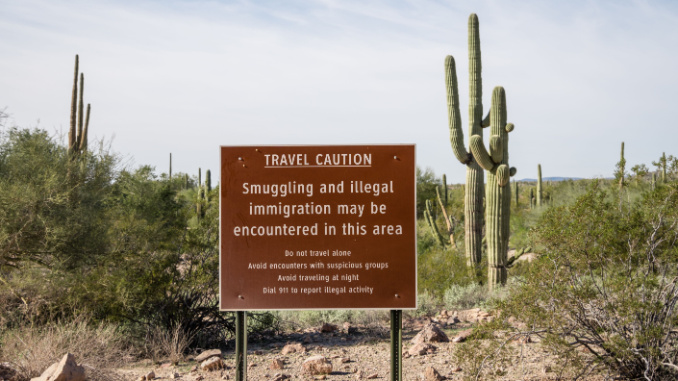
House Republicans, led by Arizona Congressman Abe Hamadeh (R-AZ-08), unveiled legislation Friday proposing the creation of a permanent national memorial in Washington, D.C., honoring Americans killed by individuals unlawfully present in the United States.
The proposal would establish a permanent memorial dedicated to victims of crimes committed by illegal immigrants, a category House Republicans say has been overlooked in national remembrance efforts.
At a Friday press event, Hamadeh said the bill “authorizes a permanent national memorial in Washington, D.C., honoring U.S. citizens and lawful residents whose lives are taken by individuals unlawfully present in the United States.” He added, “But in many ways, it also shames the politicians who allowed this situation to happen.”
🇺🇸LIVE LOOK🇺🇸
Congressman Hamadeh is joined by Angel parents, congressional colleagues, and representatives from The American Border Story for a press conference announcing his new bill memorializing victims of the border crisis. pic.twitter.com/ut8ZiyoLEc
— Office of Congressman Abe Hamadeh (@RepAbeHamadeh) December 12, 2025
In a later post to X, he wrote in part, “Humbled and grateful to lead this effort to establish a memorial in honor of the victims of Biden’s border crisis. Thank you to the incredible Angel Parents for sharing their experiences, my congressional colleagues for joining this effort, and the @TABSReport American Border Story for fighting alongside us.”
Humbled and grateful to lead this effort to establish a memorial in honor of the victims of Biden’s border crisis.
Thank you to the incredible Angel Parents for sharing their experiences, my congressional colleagues for joining this effort, and the @TABSReport American Border… pic.twitter.com/TdGAcXdTB4
According to Fox News, the legislation is being led by Republican lawmakers who say the memorial would serve as both a place of remembrance and a public acknowledgment of the consequences of federal immigration policy failures. The proposal calls for a federally designated site that would memorialize victims while remaining nonpartisan in its presentation.
Newsmax reported that eight co-sponsors, all Republicans, joined Hamadeh, that The American Border Story (TABS) would raise funds for the monument from private sources, and that Aagel families would select a design and an architect.
Congressman Andy Biggs (R-AZ-05) attended the event alongside Hamadeh and highlighted the disparity between the Biden and Trump administrations’ responses to enforcing immigration law. “They ended the Remain in Mexico policy, restarted catch and release,” he told reporters.
TABS Executive Director Nicole Kiprilov told Fox News, “I’d like to thank President Trump for leading an historic administration that has put these victims and families at the center of our immigration agenda.”
“Secretary Kristi Noem, border czar Tom Homan and the entirety of the Trump administration has been working night and day tirelessly to ensure that our border is secure and that these tragedies that the Biden administration allowed to happen will never happen again,” she added.
The proposal comes amid ongoing debates in Congress over border security, immigration enforcement, and the humanitarian and public safety impacts of illegal immigration. Republicans have repeatedly cited crime victimization as part of the broader argument for stronger border controls and immigration reforms.
Democrats have previously criticized similar proposals, arguing that crime rates among immigrants do not justify singling out a specific category of offenders. The Fox News report notes that the legislation is expected to face opposition as it moves through the legislative process.
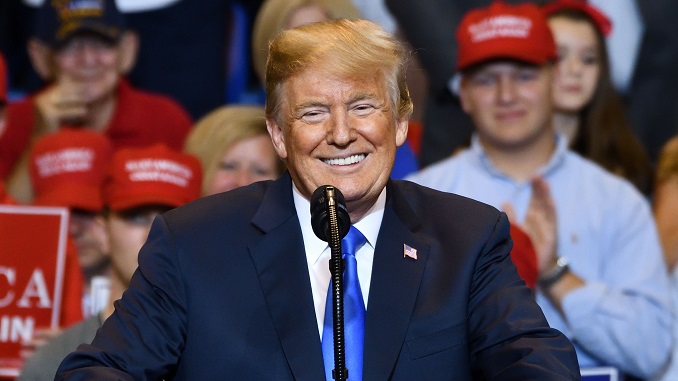
What a difference a year makes. As President Trump highlighted in his speech in Pennsylvania Tuesday, by any number of metrics, the economy is barreling full steam ahead. The sign he stood in front of said it all: “lower prices, bigger paychecks.” And the data backs him up. As he said Tuesday: “Pennsylvania is winning again.” Those words are no hollow rallying cry, they reflect real results.
Just weeks ago, the Bureau of Economic Analysis (BEA) revised its estimates for second-quarter 2025 economic growth, and the results were dramatic. Real gross domestic product surged at an annualized 3.8 percent rate, far stronger than the 3.0 percent estimate given just months earlier. It’s a stunning rebound after the last six months of the Biden era, when growth came in at 3.3 percent for the third quarter of 2024 and a truly anemic 1.9 percent for the fourth quarter.
That isn’t just chump change – that kind of growth doesn’t happen when consumers and businesses are on edge. It happens when Americans are confident, when households are spending, and when businesses are investing. As the BEA itself noted, this uptick came largely from rising consumer spending and a drop in imports (imports are subtracted from GDP).
What’s more, the “real final sales to private domestic purchasers” (which strips out the wild swings from trader and inventories and zeroes in on actual domestic demand) – one of the metrics economists use to compare one quarter to another – rose 2.9 percent in Q2. That’s a full percentage point stronger than previously believed.
This is no small rebound. After a rough start in 2025, with a slight contraction in Q1, the second quarter delivered a burst of energy, and proved that policies set in motion by the Trump administration are working.
You don’t have to stare at macroeconomic spreadsheets to sense the shift. Many Americans are now spending dollars, investing in their kids’ futures, stocking up the pantry, and buying gifts.
The 2025 Black Friday weekend delivered record-breaking numbers. According to Adobe Analytics, which tracks e-commerce, “U.S. consumers spent a record $11.8 billion online … marking a 9.1% jump from last year,” reported the Associated Press. And it wasn’t just Black Friday that set a record – consumers spent $6.4 billion online on Thanksgiving Day itself, another record.
That’s not just digital “click traffic;” that’s real money moving – money that represents families who feel secure enough to spend, businesses stockpiling inventory, and entrepreneurs launching new ventures. That kind of consumer vitality ripples outward.
As President Trump put it Tuesday in Pennsylvania: “We are bringing back real value to the American people.” That resonates – because people across income levels just proved with their wallets that they believe in this comeback.
Beyond holiday shopping and GDP headlines lies another signal of confidence and strength: retirement. Per the latest data from Fidelity Investments, the number of Americans with at least $1 million in their 401(k) accounts just hit a new record. About 654,000 Americans are now 401(k) millionaires – up sharply from 595,000 at the end of June, and up from 544,000 a year ago, representing a 20% surge from the Biden years.
This isn’t just financial fluff for the wealthy – this is a genuine barometer of middle-class Americans putting faith in the markets, stocks, and long-term saving. It means that working people who stashed cash through decades of effort are now seeing those savings efforts rewarded.
The rising number of 401(k) millionaires couldn’t have come at a better time. With traditional pensions disappearing, millions of Americans are forced to rely on defined-contribution retirement plans. The climb in 401(k) balances signals that people are adapting and succeeding.
Put together – the 3.8 percent GDP growth, the Thanksgiving/Black Friday spending splurge, the record-high 401(k) millionaires – and one conclusion becomes clear: the Trump economy is booming.
When families feel confident enough to save, invest, and spend, that’s when you know the recovery has legs. President Trump and his administration have laid the groundwork – lower regulation, pro-growth policies, and a renewed sense of optimism.
Tuesday in Pennsylvania, President Trump didn’t just talk about jobs and tariffs, he talked about restoring American dignity and opportunity. “We’re bringing back real value,” he said. And with the data now piling up, “real value” isn’t just a slogan. It’s a restoration of America’s economic foundation.
At this moment, for Americans across the board, the comeback isn’t merely a promise. It’s happening. And you can feel it, see it, and invest in it.
The Trump administration’s recent deployment of National Guard troops and federal resources to major U.S. cities reflects a growing majority of Americans who are fed up with inaction on public safety. After years of unchecked violence and open-air drug use, many see these moves not as overreach but as long overdue.
Fueling much of this primordial decay is a Fentanyl epidemic, which is now the leading cause of death for Americans under 50. Meanwhile, other rampant street drugs like meth and bath salts are inducing or worsening levels of psychosis, unlike anything in history. The result has been broken people, broken homes, broken cities, and unspeakable violence. Tents and waste sprawl across once beautiful urban centers while needles litter children’s playgrounds, and women avoid pumping their own gas after dark.
The United States’ rate of violent crime, such as rape, robbery, and assault, is nearly three times higher than Europe’s. And the homicide rate? That’s seven times higher. Worse still, an alarming number of these crimes are perpetrated by repeat offenders. Our criminal justice system is failing to carry out the duties of its most basic requirement: to protect the public from career criminals. A quick glance at any morning paper on any given day in any city across America will tell the story.
In Charlotte, NC, Ukrainian refugee Iryna Zarutska survived war only to be brutally stabbed to death on a train by a career criminal who never should have been free. The video of this horrific tragedy plays back in our nightmares over and again. We have seen enough.
The Cicero Institute’s new national poll puts numbers to this sadness and frustration:
82% support life in prison or the death penalty for aggravated murder, even when mental illness is involved.
63% want lenient judges removed from the bench.
75% support electronically monitoring transient sex offenders.
60% want automatic federal investigations into states that repeatedly release violent criminals, something the White House is already looking into.
But nothing captures the stakes more vividly than the testimonies of those who have to live with the consequences of failed policy. Stephen Federico, father of 22-year-old Logan Federico, gave emotional testimony before a House Judiciary subcommittee in Charlotte. He recounted how his daughter was “executed … on her knees begging for her life … begging for her hero, her father. Me. And I could not protect her.” He did not lean on political ideology. He called out a broken system that allowed a man with at least 39 arrests and 25 felonies to remain on the streets, serving little time despite a decade of violent and property crime. “There is only one thing that would have kept my daughter alive,” he said. “Putting a career criminal in prison.”
And if you think it ends there, it doesn’t.
In Kentucky, the anguish of one father has come to embody a nation’s rage. Years after his six-year-old little boy was stabbed to death by a man deemed “criminally insane,” that man was granted parole “good behavior.” Dean Tipton has vowed that if the system will not deliver justice for his son, he will. His words are not a threat born of malice, but of despair. Thankfully, proactive law enforcement officials in Florida picked up the murderer on a parole violation, sparing Mr. Tipton further trauma.
But Americans should not have to wait for a technicality to get violent predators off the street. The voice of America is saying, “Enough.”
While we face rising crime, record overdose deaths, and exploding homelessness, bickering and posturing dominate from the local to the federal level by those who are content with the status quo of death, disease, and despair. The average family does not care about partisan brinkmanship. They care about being safe in their own neighborhoods.
In Athens, GA, Laken Riley, a 22-year-old nursing student, was dragged off her morning jog, beaten, and murdered by an illegal alien who had already been arrested in the U.S. and released back onto our streets. This was not an accident or a tragedy of circumstance. It was the predictable result of a government that refuses to protect its citizens, releasing violent men again and again until they finally kill one of our daughters. Riley’s blood, like Iryna’s and Logan’s, cries out against a broken system that values ideology and excuses over human life.
Yet instead of focusing on these failures, Leftists consumed by political theater are eager to offer aid to our enemy rather than save our cities from this terror. America is not asking for cruelty but for safety. Voters are not asking the government to shrug at addiction or mental illness. They want public spaces reclaimed for families and small businesses, not surrendered to chaos.
That is what the poll numbers capture: a public demand for strong consequences that bring peace to our streets. People want dangerous offenders confined and controlled, drug dealers punished, transient sex offenders tracked, and public spaces cleared of disorder.
The new federal deployments mark a turning point. From state houses to our national capital, citizens are signaling to their elected officials that the duty of government is to protect them. And if current leaders cannot find the gumption to deliver security and justice, they should resign and make way for those who will.
Americans have seen enough. The public’s patience has expired. They are eager to support leaders who will match words with courageous action.
Stefani E. Buhajla is a pollster, political strategist, and Sr. Director of Communications at the Cicero Institute.
The Arizona Department of Homeland Security (AZDHS) has joined a lawsuit brought by 12 states that challenges the terms set by the Trump administration and FEMA for two federal grants that impact the prevention and response to terrorist attacks, securing the southern border, and bolstering emergency management capabilities.
The lawsuit, filed on November 4th was touted by Democrat Attorney General Kris Mayes as “the 30th lawsuit the Attorney General of Arizona has joined to stop the Trump administration’s federal overreach.” It argues that the grant terms in the Emergency Management Performance Grant (EMPG) and Homeland Security Grant Program (HSPG) depart from past practices, essentially making it more difficult for state, local, and Tribal partners to obtain and use the federal grant funds.
Mayes complained at the time, “The Trump administration is trying to claw back money we use to protect the border, including for protective equipment and vehicles for law enforcement on the ground, and to support emergency preparedness and terrorism response preparation. They are also trying to withhold 50% of the funds we use to respond to emergencies in Arizona.”
“Local, state, and Tribal public safety agencies rely on funding from the Homeland Security Grant Program to effectively protect Arizonans from vulnerabilities bad actors may wish to exploit,” AZDHS Director, Dr. Kim O’Connor said in a statement. “This funding is absolutely essential in keeping our citizens and communities safe.”
The lawsuit points to two of the imposed terms as “at issue”:
“A hold on EMPG funding until the State provides FEMA with ‘a certification of the recipient state’s population as of September 30, 2025,’ including an explanation of ‘the methodology it used to determine its population and certify that its reported population does not include individuals that have been removed from the State pursuant to the immigration laws of the United States.’”
“A reduction of the period of performance, i.e., the period in which grant recipients must complete all activities to be reimbursed, from three years to one year.”
The state attorney’s general argue that the accurate determination of a state’s population of lawful inhabitants “exceeds” the federal government’s “statutory authority, as no statute permits Defendants to impose such a hold,” “is contrary to law because 13 U.S.C. § 183 requires federal agencies to use U.S. Census Bureau data to allocate federal grant funding,” and “is arbitrary and capricious in violation of the Administrative Procedure Act (“APA”) because it is unexplained, does not reflect reasoned decision making, and ignores the States’ reliance interests on receipt of the EMPG funds unimpeded.” Finally, they argue that the action was issued without following procedural requirements.
Reasoning for these requirements is, however, provided in the FY 2025 DHS Standard Terms and Conditions, which states “compliance with this term is material to the Government’s decision to make or continue with this award and that the Department of Homeland Security may terminate this grant, or take any other allowable enforcement action.”
Mayes also appears aware of another facet of the administration’s reasoning, as stated in her November 4th statement: “the Trump administration has attempted to reduce FEMA’s role and shift the burden of emergency management to the States.”
President Trump noted during a June announcement in the Oval Office that his administration “want(s) to wean off of FEMA and we want to bring it down to the state level.” He added that states should be equipped to handle disasters directly, noting that he wants to “give out less money,” and to “give it out directly,” according to the Associated Press. He further placed the onus for disaster response onto state governors saying, “The governor should be able to handle it and frankly if they can’t handle the aftermath, then maybe they shouldn’t be governor.”