by Staff Reporter | Mar 1, 2026 | News
By Staff Reporter |
The Arizona House has passed a bill banning gender transitions for minors.
HB 2085 not only bans gender transition procedures to minors, it bans referrals and distribution of public funding to gender transition procedures. The bill defined procedures to include puberty blockers and hormone replacement drugs.
The legislation did include exemptions for individuals who were born with sex development disorders; who were endangered due to a physical disorder, physical injury, or physical illness; or who sustained an infection, injury, disease, or disorder caused or exacerbated by a gender transition procedure.
It is likely this bill is dead on arrival should it pass the Senate and hit the governor’s desk. Gov. Katie Hobbs supports gender transition procedures for minors, and her husband, Patrick Goodman, assisted children with gender transitions as a Phoenix Children’s Hospital Gender Support Program counselor.
The partisan divide was clear during House floor arguments for and against the bill.
Democrats argued HB 2085 violates parental and medical freedom.
Rep. Nancy Gutierrez (D-LD18), assistant minority leader, claimed parents had the right to decide for their children to transition their children.
Rep. Betty Villegas (D-LD20) argued puberty blockers and hormone therapies should be acceptable for gender transitions since they’re used to treat other ailments and defects.
Rep. Janeen Connolly (D-LD8) said gender transitions were a personal decision that should be beyond the scope of lawmakers. Connolly shared that one of her grandchildren, now 17 and identifying as “they/them,” had transitioned genders at 12 years old.
Rep. Stephanie Simacek (D-LD2) argued these decisions to transition genders weren’t made in haste since minors relied on parental consent to make the decision.
Across the aisle, Republicans argued the gender transitions of minors amounted to child abuse.
Rep. Lisa Fink (R-LD27), the bill sponsor, argued that allowing the puberty process to occur uninhibited was the prevailing treatment for gender dysphoria. Fink read off the myriad adverse health effects of puberty blockers and hormone replacement medications when applied to healthy children seeking gender transitions.
Rep. Rachel Keshel (R-LD17) accused those in support of gender transitions for minors of being inconsistent in their logic.
“It is my opinion that a parent that allows a child to permanently alter their body and potentially take away their ability to be parent one day, that is child abuse,” said Keshel.
Rep. Pamela Carter (R-LD4) countered that gender transitions don’t qualify as valid healthcare, and therefore not within the acceptable bounds of health decisions parents may make on behalf of their children.
“The physicians even now are stopping some of these procedures because they see the results of what happens to a minor when they realize what has happened: they cannot have children, or they are marred physically, emotionally for life,” said Carter. “Parents should be in charge of their children’s health, but to me this is not healthcare.”
Rep. Alexander Kolodin (R-LD3) questioned how Democrats could support irreversible procedures for minors given the universal agreement on age limits for other activities.
“Point of fact, there are many things our society does not allow minors to do: we don’t allow minors, at least up to a certain age, to drive. We don’t allow them to vote. We don’t allow them to drink. We don’t allow them to smoke,” said Kolodin. “We don’t even allow them to get tattoos because we’re worried that one day they will regret that decision. How much more so then should we not allow minors to engage in elective surgery that permanently disfigures them?”
AZ Free News is your #1 source for Arizona news and politics. You can send us news tips using this link.
by Ethan Faverino | Feb 25, 2026 | Education, News
By Ethan Faverino |
The Arizona House of Representatives passed HCR 2003, the Protect Girls’ Sports in Arizona Act, on February 23, 2026, in a vote of 32 ayes to 25 nays.
Sponsored by Rep. Selina Bliss (R-LD1), the measure now advances to the Arizona Senate. If approved by the Senate, it would refer the proposed law to Arizona voters for consideration on the November 2026 general election ballot.
HCR 2003 seeks to require schools and athletic associations to designate interscholastic and intramural athletic teams or sports as “males/men/boys,” “females/women/girls,” or “coeducational/mixed,” based on an individual’s biological sex as recorded at birth on the original birth certificate. Teams designated for females would not be open to biological male athletes.
The resolution also includes stronger privacy protections, prohibiting schools and athletic associations from authorizing individuals to use restrooms, locker rooms, shower rooms, or other private athletic facilities not designated for their biological sex, effective January 1, 2027.
The measure restores and strengthens elements of Arizona’s 2022 Save Women’s Sports Act (SB 1165), which faced partial blocks by the Ninth Circuit Court of Appeals, creating uncertainty for schools, families, and athletes.
“Today the House acted to protect fair competition for girls across Arizona,” stated Rep. Bliss. “Women’s sports were created because biological differences matter. When those differences are ignored, girls lose roster spots, scholarships, and opportunities they earned. HCR 2003 gives voters the chance to protect female athletes and establish clear, durable rules for schools.”
Additional provisions of the proposed law include:
- Allowing athletes to participate on teams aligned with their biological sex or on coeducational teams.
- Prohibiting government entities, licensing organizations, accrediting bodies, or athletic associations from taking adverse action against schools or associations that maintain separate teams for female athletes.
- Providing a private cause of action for athletes deprived of opportunities or harmed by violations, including for injunctive relief, damages (including for psychological, emotional, or physical harm), attorney fees, and costs.
- Protecting against retaliation for reporting violations, with similar legal remedies available.
- Applying to public and qualifying private schools serving K-12.
“Court rulings have created uncertainty for schools and families,” Rep. Bliss added. “This referral allows Arizona voters to decide whether girls’ sports should remain for girls. It protects privacy in locker rooms and showers and restores clarity statewide.”
HCR 2003 now heads to the Arizona Senate for further consideration. If approved, it will be on this year’s general election ballot.
Ethan Faverino is a reporter for AZ Free News. You can send him news tips using this link.
by Staff Reporter | Feb 23, 2026 | News
By Staff Reporter |
The Republican-led Senate is poised to vote on multiple bills that would impose greater restrictions on gender transition procedures in Arizona.
The Senate Health and Human Services Committee passed four bills targeting different aspects of gender transition procedures: Senate Bills 1014, 1177, 1094, and 1095. All with the exception of SB 1095 were heard in committee last week. All were passed without the support of Democratic lawmakers.
Progressive activists lined up to testify against the bills during the several committee hearings.
SB1095, which would ban gender transition procedures for minors, provoked testimony from several activist adults who identify as transgender.
Former Liberty Elementary School District governing board member, Paul Bixler, said SB1095 would harm, not help, children. Bixler, a man, identifies as a transgender woman.
Ruth Carter, an attorney, said SB1095 amounted to discrimination. Carter, a woman, identifies as a nonbinary individual.
Marilyn Rodriguez, Creosote Partners founder and lobbyist representing the ACLU, said SB1095 was impermissibly broad as written.
Sen. Lauren Kuby (D-LD8) called the bill discriminatory, and argued that lawmakers shouldn’t ban gender transition procedures since certain healthcare experts support those procedures as treatments for gender dysphoria.
“These are private, personal decisions, healthcare decisions, we shouldn’t be discriminating against transgendered youth or those who have gender dysphoria as is described,” said Kuby.
Sen. Analise Ortiz (D-LD24) said the legislature would be better focusing on making healthcare more affordable. Ortiz said the legislation was not only discriminatory but violative of parental rights laws.
“It bans healthcare for a specific group of people solely based on gender identity; that is discrimination no matter how you want to paint it,” said Ortiz.
Sen. Mark Finchem (R-LD1), the bill sponsor, disputed the narratives of his Democratic colleagues that healthcare experts were to be trusted fully and that gender transition procedures were appropriate for minors.
“To those who worship the grounds that doctors walk on: they also said cigarettes were good for you,” said Finchem. “[Permanently altering treatments like mastectomies] are decisions that kids are being talked into, in some cases. I didn’t just dream this bill up myself. This came from kids and parents. More kids than parents.”
Majority Leader John Kavanagh (R-LD3) questioned the logic of his Democratic colleagues that parents had a right to submit children to irreversible medical treatments, but not the right to decide whether their children should be called by certain pronouns or alternative names in school.
SB 1014 would require health insurers to offer coverage for detransition procedures should those insurers provide coverage for gender transition procedures. It would also issue reporting requirements on insurance claims for gender detransitions.
“Detransitioners are people too; they deserve the same care as those who are manipulated into believing they have gender dysphoria, which leads them to undergo gender transition surgery that they later regret,” said the bill sponsor, Sen. Janae Shamp (R-LD29), in a press release. “This legislative package puts their long-term well-being above politics and ideology.”
Jeanne Woodbury, a lobbyist for the ACLU, argued the reporting requirements within the bill would result in discriminatory outcomes.
Bixler, the transgender-identifying former school board member, claimed the bill would result in providers refusing to provide gender transition procedures.
SB 1177 would ban public funding for gender transition procedures.
Sen. Wendy Rogers (R-LD7), the bill sponsor, explained during Wednesday’s HHS hearing that she discovered taxpayers were funding gender transition treatments for prisoners. Rogers also discovered that individuals were being arrested on purpose in order to receive free gender transition treatments.
“Taxpayer dollars should never be used to bankroll irreversible procedures on children,” said Rogers in a later press release. “This legislation draws a hard line and makes clear that public funds will not subsidize experimental or life-altering interventions on minors.”
Ashton Allen expressed support on behalf of Center for Arizona Policy. Allen said subsidies should be tied to valid medical treatments, which he said gender transition procedures weren’t.
Woodbury, the transgender-identifying ACLU lobbyist, argued against Rogers’ claims and said the treatments were affordable. Woodbury also said an end to subsidization would lead to excessive medical risks associated with forced detransitions.
Minority Whip Rosanna Gabaldon (D-LD21) said ending subsidies was “extreme and punitive,” as well as “unfair and dangerous.”
Sen. Sally Ann Gonzales (D-LD20) accused Rogers of faking a story that individuals were getting themselves arrested in order to receive free gender transition treatments. Gonzales called the bill discriminatory.
Sen. Shamp questioned why drugs historically considered to be dangerous were suddenly ethical in the context of gender reassignment.
“Lupron was deemed cruel and unusual punishment being utilized in the prison system for sex offenders, rapists. But now we want Arizona taxpayers to pay for that drug to be utilized for gender reassignment? How the heck did we get here?” said Shamp.
SB 1094 would allow individuals to seek damages in court against physicians who performed gender reassignment surgeries on them as minors. Kavanagh sponsored the bill.
“When permanent procedures are performed on minors who suffer harm, there must be consequences,” said Kavanagh in a press release. “These reforms restore transparency and provide a pathway to just compensation for those harmed.”
AZ Free News is your #1 source for Arizona news and politics. You can send us news tips using this link.
by Staff Reporter | Feb 1, 2026 | Education, News
By Staff Reporter |
Arizona Senate Republicans are refusing to let a parental rights bill die under Gov. Katie Hobbs’ heavily-used veto pen.
Senate Republican leadership revived the legislation through a concurrent resolution, passed out of committee on Wednesday. This legislative pathway allows the slim Republican majority to avoid another inevitable veto from the governor.
SCR 1006 from Senate Majority Leader John Kavanagh (R-LD3) directly challenges the supremacy of transgender-affirming policies and practices within schools.
“Parents have a fundamental right to know what’s happening with their kids at school, and students deserve privacy and safety. No 14-year-old girl should be forced to stand naked in a shower with an 18-year-old man who thinks he’s a girl,” said Kavanagh. “Families shouldn’t be sidelined, and schools shouldn’t be forced into confusion. This reflects what most Arizonans already believe, and it gives them the final say.”
If passed, the resolution would have voters decide whether to require schools to obtain parental permission prior to engaging in transgender-affirming behaviors: referring to a minor student by a name other than the one listed on school records, or referring to a minor student using pronouns that differ from that student’s biological sex.
Voters would also decide whether public schools must provide reasonable accommodations: access to a single-occupancy or employee restroom or changing facility for any individual unwilling to use the facility designated for their biological sex.
Lastly, voters would decide whether individuals could sue public schools for subjecting them to transgender-affirming policies, such as encountering an individual of the opposite sex in a restroom or changing facility designated for their biological sex, or being required to share sleeping quarters with a person of the opposite sex.
Gov. Hobbs vetoed two bills that contained these legislative provisions last year (SB 1002 and SB 1003). In identical letters, Hobbs said the state had more pressing matters than asserting parental rights over transgenderism within schools.
“[These] bill[s] will not increase opportunity, security, or freedom for Arizonans. I encourage the legislature to join with me in prioritizing legislation that will lower costs, protect the border, create jobs, and secure our water future,” said Hobbs.
AZ Free News is your #1 source for Arizona news and politics. You can send us news tips using this link.
by Matthew Holloway | Jan 14, 2026 | News
By Matthew Holloway |
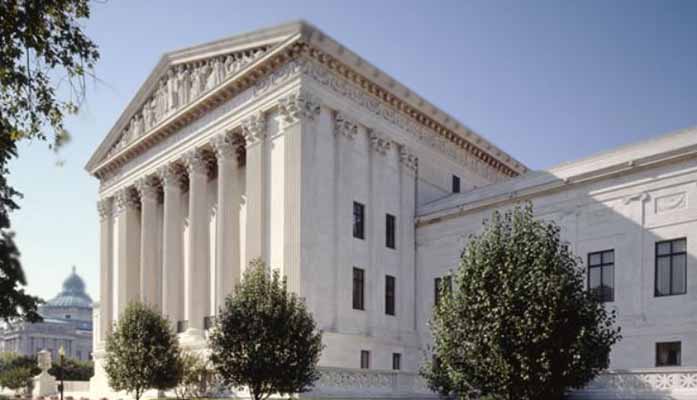
Arizona Senate President Warren Petersen (R–LD14) said he believes the U.S. Supreme Court is likely to uphold state laws that protect girls’ and women’s sports, following oral arguments in a closely watched case on whether biological males may compete in female athletic competitions.
Petersen attended oral arguments in West Virginia v. B.P.J. in Washington, D.C., where the Court heard challenges to state-level laws restricting participation in girls’ sports based on biological sex.
“It was an incredible experience to be in the Supreme Court with the justices in the room hearing their arguments,” Petersen said in an interview with AZ Free News following the hearing. “If I’m reading the room, I think we win this six to three.”
Petersen explained that much of the questioning from the Justices centered on the definition of sex under the law, rather than transgender status itself. “What it’s really boiling down to is the definition of sex,” he said. “They’ve conceded that it’s about sex. They’re not even arguing that it’s about transgender status.”
He described a moment during questioning in which Justice Alito pressed attorneys defending the challenge to the laws on how to define the term “woman,” calling the exchange revealing.
Petersen and House Speaker Steve Montenegro (R-LD29) joined the case through an amicus brief in September 2025 after Arizona Democrat Attorney General Kris Mayes declined to defend the Save Women’s Sports Act. Under Arizona statute, that authority shifted to legislative leadership.
“Unfortunately, you have an attorney general who’s not willing to defend our laws,” Petersen said. “But fortunately, the statute gives the Senate President and the Speaker standing. We were able to intervene and defend the law, and we’ve taken it all the way here.”
Petersen characterized the law as “common sense” and said lawmakers felt compelled to see it defended at the highest level.
“This is the same Women’s Sports Act to protect our girls and make sure they have these opportunities,” he said. “This law needed to be defended.”
Beyond athletics, Petersen said the case raises broader questions about state authority and federal overreach. “If they get this wrong, it would be devastating,” he said. “It would mean that your daughters, your granddaughters, your sisters—their chances to compete in sports and be champions—those dreams are shot.”
Petersen noted that while most states have enacted protections for girls’ sports, a Supreme Court ruling striking those laws down nationwide would leave states with no recourse. “At least if they leave it to the states, there would be some safe harbors,” he said. “If they ruled against everybody, there would be nowhere girls could go.”
Critics of the laws argue that they discriminate against transgender individuals. Petersen rejected that framing, saying the laws preserve opportunities while maintaining fairness.
“They still have opportunities,” he said. “They can be part of a co-ed team; they can play with people of the same biological sex or even create their own leagues. What they can’t do is play in biological girls’ sports.”
He added that the issue is necessary and unavoidable, pointing to female athletes who have lost titles and opportunities under policies that allow biological males to compete in girls’ categories.
If the Supreme Court upholds the laws, Petersen said no new legislation would be required in Arizona. “We already have the law,” he said. “We just want the law that we passed to be upheld.”
If the Court issues a narrow or adverse ruling, Petersen said lawmakers may be forced to explore alternative legislative approaches, though he cautioned that a sweeping loss could take years—or longer—to undo.
“That’s why it’s so critical they get it right,” he said. “If they get it wrong, it’s no different than Roe v. Wade. It could be decades, if ever, until it gets fixed.”
The Court is expected to issue its ruling as late as June this year, according to Petersen.
Matthew Holloway is a senior reporter for AZ Free News. Follow him on X for his latest stories, or email tips to Matthew@azfreenews.com.