Arizona Superintendent of Public Instruction Tom Horne criticized the lenient sentencing of Daniel Hollander. Hollander was arrested in January 2025 after breaking into Legacy Traditional School–East Tucson with a gun and knife, threatening to kill children and “make them famous.”
Hollander faced charges of attempted terrorism, interfering with an educational institution, weapons misconduct on school grounds, and burglary. He was sentenced to only 18 months in prison followed by probation, a punishment Horne deems inadequate to protect Arizona’s students.
Hollander’s arrest was made possible by the swift and courageous actions of Tucson police officer William Bonanno, a school safety officer funded through the Arizona Department of Education’s school safety program.
“We avoided that tragedy by the skin of our teeth,” said Superintendent Horne. “Tucson Police Officer William Bonanno was the safety officer on campus. He was hired just two weeks before the incident. He is experienced and brave, and after being alerted to a problem on campus, he checked an open door and found the would-be perpetrator with a gun and a knife. Because of his experience and courage, he did not wait for backup but immediately arrested the individual.”
In a statement following the sentencing in Pima County Superior Court, Horne expressed outrage at the prosecutor’s recommendation of just one year in prison and 10 years’ probation.
“As a former Attorney General, I know that the public is entitled to be protected from people like this defendant,” Horne stated. “The judge increased it to 18 months, but could not do more in view of the prosecutor’s recommendation. Probation is not perfect. If this individual has a bad day, he could go into a school and kill students. In my opinion, the prosecutor’s recommendation should have been at least 20 years in prison to protect our children.”
Horne emphasized his administration’s commitment to school safety, noting that the number of police officers in Arizona schools has risen from 190 to 585 over the past two years.
Just before the incident, the Arizona Department of Education identified unused funds and reopened grant opportunities, enabling the hiring of Officer Bonanno.
“I urge the schools to consider that a maniac could invade a school and kill 20 students, as has happened in other states, and could happen here. This is my worst nightmare,” said Horne.
Horne’s administration remains dedicated to strengthening school safety measures to protect Arizona’s students from threats like these.
Ethan Faverino is a reporter for AZ Free News. You can send him news tips using this link.
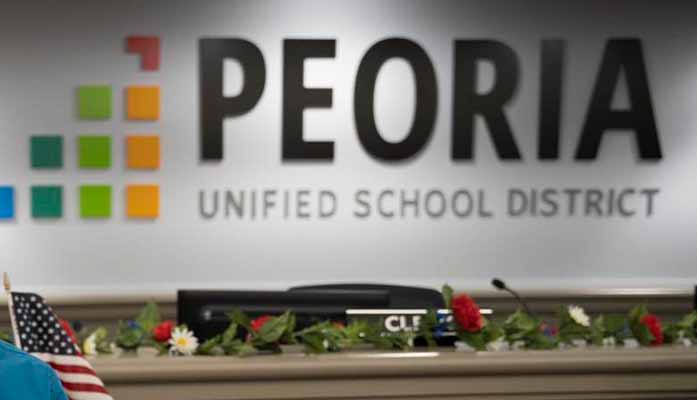
If Peoria Unified residents were skeptical about students being brainwashed with diversity, equity, and inclusion ideologies, rewatching the August 28, 2025, school board meeting should remove all remaining doubts. Current students delivered a majority of the 63 public comments against the cancellation of DEI-infused performing arts programs. The only problem is that these programs were never slated to be eliminated. Listen to PUSD school board members’ comments here.
A passionately misinformed parent created a Change.org petition claiming that the PUSD school board planned to cut ties with the Educational Theatre Association (EdTA), the National Association for Music Education (NAfME), and the National Dance Education Organization (NDEO). Unfortunately, this parent took no initiative in contacting the board before circulating the petition. The parent also failed to direct activism efforts toward those organizations that practice discrimination against white students. It would have been great for the kids to bombard them with calls, emails, and demands to remove the racist policies from their websites.
Oh, well. Maybe next time…
Those who have actually followed the 2025 PUSD school board meetings understand that a majority of the board is working to eradicate DEI from school programs in compliance with President Trump’s Executive Order. Since the Department of Education prioritized the order, why wouldn’t school districts follow suit to protect federal resources? PUSD board members did their due diligence in contacting the Arizona Department of Education and consulting their lawyer in a closed session to ensure they weren’t jeopardizing Title II funding by renewing the agreements.
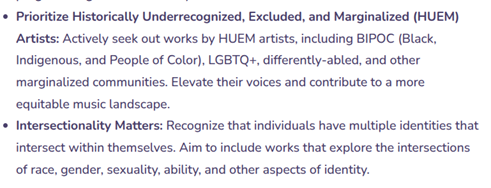
Not surprisingly, AZ State Superintendent Tom Horne and PUSD Superintendent K.C. Somers were in favor of keeping the programs despite these organizations’ defiance of federal mandates. The following screenshots are sourced directly from their websites. It only takes one or two clicks to find this information.
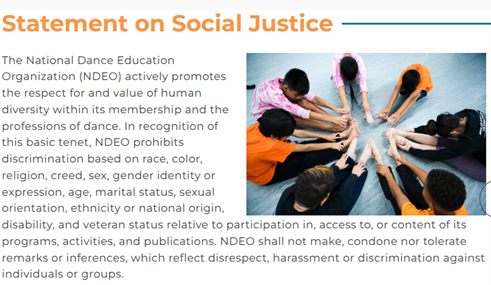
NDEO’s racial equity statements are currently parked behind information walls. Internet archives from 2020 reveal that the Advisory Board Director and CEO both met with equity consultants and agreed that NDEO should undergo a diversity audit to “help provide a roadmap for organizational and programmatic changes over the next few years, as NDEO embodies its commitment to becoming an anti-racist organization.” Their statement on social justice can be viewed below.
One leftist who instigated the PUSD protest was Washington Elementary School District (WESD) Board President Kyle Clayton. In 2023, Clayton was one of five board members who voted to terminate an 11-year relationship with Arizona Christian University due to the college’s stance on traditional marriage. At that time, Clayton—who identifies as an LGBT community member—said he was worried that Christian student-teachers would proselytize his children and make them feel bad about having two dads. It didn’t matter that ACU had never received a single complaint like this in 11 years.
Past board members in Clayton’s district signed anti-racism and LGBTQ+ affirming resolutions. The youngest WESD students are barely potty-trained. Let that sink in. Clayton willingly discriminates against people who believe in God and disagree with his lifestyle choices. This is the definition of bigotry. Clayton is not the kind of person who should be leading an elementary school district. WESD residents should be asking how and why radical, anti-Christian activists are sitting on their school board.
Ultimately, the PUSD school board protest made the adult activists look a bit foolish. Board Member Becky Proudfit—who historically supported DEI for students—clarified that the programs were “not in danger of being cut” but that the district endeavored to operate “in the bounds of legality.” She also reiterated that Title II funding is not a permanent solution and encouraged every speaker to contact the noncompliant organizations (as the petition starter should have done). Board Member Janelle Bowles—who is strongly against DEI— wholeheartedly agreed with Proudfit’s sentiments.
Although the students performed well during public comments, it was sad and exhausting to see so much misguided passion and wasted energy coming against leaders who are all working in their favor. Even conservative board members voted to keep programs with DEI components—albeit Board President Heather Rooks vehemently denounced EdTA’s racist ideologies, and another board member motioned to approve the programs with an attestation as part of their agreement with PUSD.
It’s a shame that the adults who gaslighted the children and influenced this demonstration lacked the foresight to protest the culprits causing the federal funding dilemma. If you’re going to encourage students to engage in activism, at least point them in the right direction. Of course, theatre, dance, music, and other artistic expressions provide students with an enriching experience and some lucrative post-secondary school opportunities.
Nevertheless, K-12 students don’t need to learn how to be “anti-racist” while playing a wind instrument. Gender identity is not a prerequisite for memorizing and delivering well-executed lines. And although the good Lord graced His black and brown people with more rhythm, white students shouldn’t be cut from recitals just because they’re born with melanin deficiency. Why any board member, superintendent, parent, or educator would advocate for DEI is beyond the comprehension of those who love all children the same, regardless of their ethnic background.
A final word to DEI champions: You would do best to listen to conservative black people instead of emotionally inserting yourselves into historical civil rights conflicts that don’t concern you. No one asked white liberals to fight battles or take on identity-based issues that didn’t affect their community 250 years ago. If leftists want to protest something, there is plenty of hatred directed at white, heterosexual, Christian conservatives today. People like me are doing just fine. We don’t need any handouts. The world would be a better, safer, more sane place if the adults on the self-righteous left took some time to study the true definition of diversity.
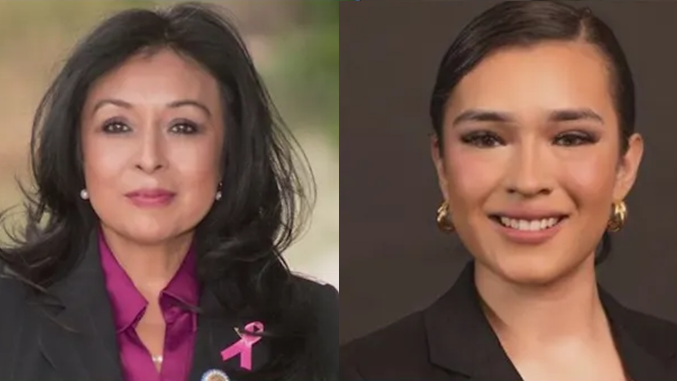
Arizona Superintendent of Public Instruction Tom Horne weighed in on the scandal involving Cartwright Elementary School District board members Lydia and Cassandra Hernandez. The mother-daughter duo allegedly tried to smuggle a box-cutter style knife into Maryvale High School just days after a fatal stabbing there claimed the life of a 16-year-old student. Horne called for both women to resign their public offices immediately.
As reported by Fox10, Officials with the Phoenix Union High School District (PXU) told the outlet that on August 25th, Arizona State Rep. Lydia Hernandez (D-LD24) and her daughter, Cassandra Hernandez, created a disturbance at Maryvale High School by “knowingly bringing an unauthorized weapon onto campus.” Lydia Hernandez denied the school district’s accusation in response to an inquiry from Fox10 but declined to comment further.
PXU confirmed in a statement that the two women were “attempting to circumvent our safety systems and knowingly bringing an unauthorized weapon onto campus.”
NEW: An Arizona lawmaker was escorted off Maryvale HS's campus for "testing" the school's weapon detectors with her daughter.
The school said Rep Lydia Hernandez & her daughter Cassandra (both Cartwright school board members) tried bringing a boxcutter onto campus, but it was… pic.twitter.com/vaWSonxwcz
The district stated in its announcement, “We will pursue all legal options, including pressing charges and trespassing the individuals from coming back to our campuses.”
Both women were recording the incident on their phones. At that point, “Lydia told the staff that she was video recording the interaction and that she was testing the weapon detection systems,” PXU said in a news release. Both women were then escorted from the premises.
Arizona SPI Horne released a statement condemning the women for the incident, saying, “This was an outrageous and indefensible stunt. For two school board members, one who is also a state legislator, to deliberately provoke a security disruption at a school is unconscionable. To do it at Maryvale High School where a student was tragically murdered in a classroom just a week earlier is unbelievably insensitive to the trauma that was inflicted on the students, teachers and staff of that school. These two board members should resign immediately.”
Horne continued, “The safety of our campuses is an absolute priority. Security personnel and safety officers need to do their jobs, and they cannot be diverted from protecting the campus by a juvenile and unnecessary act such as this. The actions of these board members show they do not appreciate the seriousness of ensuring campuses are safe places and the Cartwright Board must include members who are committed to school safety.”
Phoenix City Councilmembers Betty Guardado and Anna Hernandez released a joint statement similarly calling for both women to resign, according to KTAR.
“Their actions disrupted the fragile environment at Maryvale High School, were a blatant disregard for safety and school protocol, and were gravely insensitive to the students, families, and school staff still mourning the Maryvale student who died last week,” Guardado and Hernandez said. “The choice to target a school still reeling from trauma speaks volumes about their judgment and priorities as leaders. Such actions jeopardize the safety of students and staff alike, showing an alarming lack of responsibility and failure as public officials.”
From House Democratic Leadership: “Our hearts are with the family of the young man who was killed, Michael Montoya II, and with the Maryvale community that is hurting and mourning right now. Regarding the allegation involving Representative Lydia Hernandez, the incident spelled… pic.twitter.com/Rf13Pc1mAQ
Arizona House Democrat Leaders reacted with a statement saying, “The incident spelled out in the School District’s statement is serious and shocking.” The Democrat leaders noted that while they have “not yet had an opportunity to speak with Rep. Hernandez to get an explanation from her perspective…it should go without saying that nobody — elected official or otherwise — should engage in such reckless and potentially criminal behavior on a school campus.”
Channel 12 continued its clumsy crusade against school choice this week with a breathless report about fraudsters abusing Empowerment Scholarship Accounts to buy diamond rings and necklaces, flights and hotel stays, and even lingerie.
It paints a picture of a program rife with abuse. But is it?
The Arizona Department of Education gave Channel 12 the records for more than 1.2 million ESA requests. Yet when askedrepeatedly what percentage of those requests were fraudulent, Channel 12’s reporter refused to comment.
Why? Because the truth undermines the anti-ESA narrative.
The salacious report is intended to persuade policymakers who support ESAs to impose regulations that would undermine the ESA program. It goes without saying that anyone engaged in fraud should be prosecuted to the fullest extent of the law, and the Arizona Department of Education is appropriately cracking down on fraudsters. But before policymakers rush to amend the ESA program, they should know the context that Channel 12 left out.
ESA Misspending Is a Tiny Fraction of Total ESA Spending
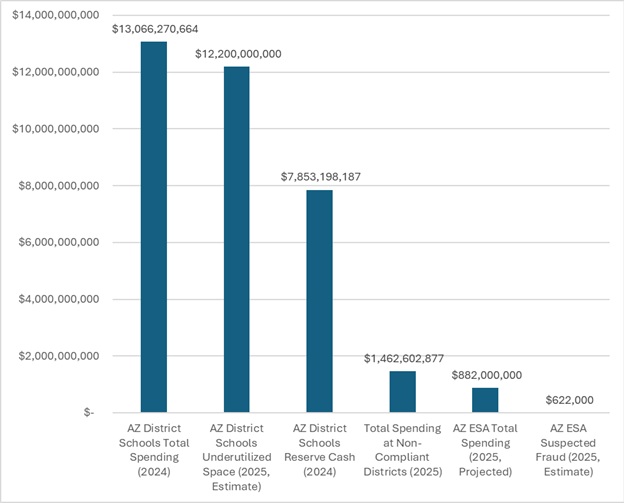
The ESA program currently serves about 90,000 students at a projected cost of $882 million this year and $939 million next year, or about 6.7% of the $14 billion spent on Arizona’s district schools. Families can use ESAs to purchase a wide variety of educational expenses to customize their child’s education.
The typical ESA student receives about $7,500 per year, compared with more than $15,300 per pupil at Arizona’s district schools. Students with special needs—who account for more than 19% of ESA students, compared with 14% of district school students—can receive more funding, although the accounts are still worth 90% of what the state spends on similarly situated students at public schools. According to the Common Sense Institute, “a disproportionate share of middle-income households use an ESA.”
On Tuesday, the Arizona Department of Education revealed that their internal audit had turned up $622,000 in ESA funds that are “possible fraud or misuse.”
That’s less than one-tenth of 1% of total ESA spending.
Ignoring Mountains, Covering Molehills
Meanwhile, there are 30 school districts that the Arizona Auditor General currently deems to be non-compliant with state reporting requirements or that have internal control deficiencies. The total spending in those districts is more than $1.4 billion, more than the total spending of the ESA program. Yet aside from its coverage of the disastrous overspending in the Isaac Elementary School District, Channel 12 has barely covered it at all.
For that matter, Channel 12 has ignored the $7.8 billion that Arizona school districts are holding in cash reserves. That’s about $7,000 per pupil. The reserves have grown $2 billion in two years, yet Channel 12 doesn’t evince even the slightest curiosity about why.
Nor is anyone at Channel 12 interested in the $12 billion worth of unused and underutilized buildings that districts are sitting on, often just to prevent private or charter schools from buying them.
Channel 12 found space in the aforementioned ESA exposé to mention that a judge recently ruled that the state supposedly “isn’t properly funding capital needs for its public schools,” but the station had no space to mention that school districts are sitting on $20 billion in cash reserves and underutilized buildings.
Indeed, Channel 12 has barely covered any of these facts even as they pump out multiple anti-ESA stories each week, despite the fact that the ESA program is dwarfed by the spending at non-compliant districts, district school cash reserves, and underutilized buildings.
School-choice opponents and their media allies are hyper-focused on ESA misspending because they want to pressure lawmakers to undermine the program via regulation.
The Arizona Department of Education adopted its risk-based auditing strategy—automatically approving ESA spending requests below $2,000, then auditing accounts on the back end—because Superintendent Tom Horne’s previous “review every penny” approach was causing massive backlogs and delays in approving expense requests and reimbursements.
There were nearly 11,000 transactions in quarter 3 of this year alone. It’s impossible for the department’s staff to review each transaction in a timely manner, but parents trying to teach their kids can’t wait months just to buy a textbook or pay their child’s tutor or school.
To Horne’s credit, he listened to parents and made some incremental improvements that make it easier for parents to use the program. Now a tiny percentage of ESA holders are taking advantage of the looser rules, but they will be forced to pay the money back and could face prosecution.
The Arizona Department of Education has suspended 400 accounts due to improper spending —just 0.4% of the total accounts—and has referred some to the Attorney General for further investigation and prosecution.
Punishing fraudsters is necessary. Every government program is subject to some amount of fraud and abuse, and it’s incumbent upon public officials to implement rules that keep fraud as close to zero as possible. But it is not in the public interest to undermine a program’s effectiveness, especially when that program is helping kids get access to a better education and a brighter future.
School-choice opponents are using misspending as a pretext. If that was their real concern, they’d be raising alarms about all the waste, fraud, and abuse in the district school system. They’re not really concerned with stopping the 0.4% of ESA holders committing fraud, they just don’t want the program to work for 99+% of families just trying to do right by their kids.
Supporters of education freedom and opportunity should ignore the manufactured outrage and work to ensure that the ESA program works well for the families it serves.
Jason Bedrick is a Research Fellow at The Heritage Foundation’s Center for Education Policy.
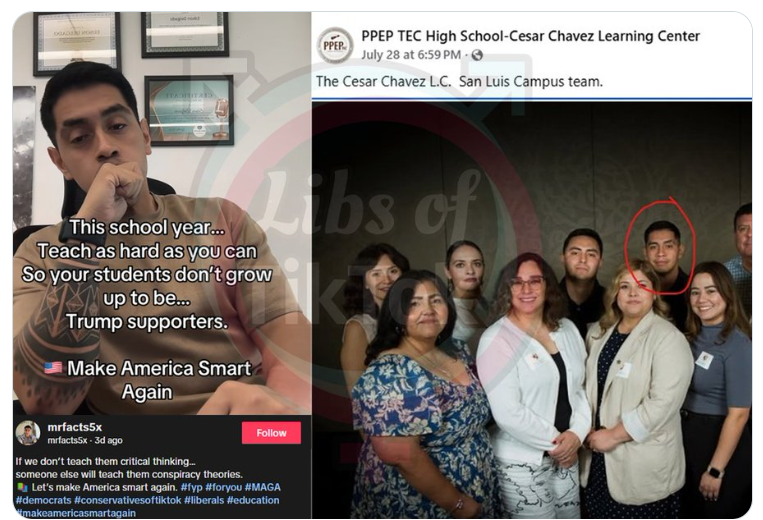
In a post to X earlier this week, Chaya Raichik’s ‘Libs of TikTok’ revealed a now-deleted video allegedly created by an educator at the PPEP TEC High School’s Cesar Chavez Learning Center in San Luis, Arizona. The video urged teachers to “teach as hard as you can[.] So your students don’t grow up to be… Trump supporters.”
In a screenshot of the post, a man believed to be PPEP TEC High School teacher Edson Delgado, posting under the now-deleted profile ‘mrfacts5x’ wrote, in full, “This school year… Teach as hard as you can[.] So your students don’t grow up to be… Trump supporters. Make America Smart Again.”
In the caption of the post, he added, “If we don’t teach them critical thinking… someone else will teach them conspiracy theories. Let’s make America smart again.”
Teacher at PPEP Cesar Chavez Learning Center in AZ wants to "teach" students so they don't grow up to be Trump supporters.
Libs of TikTok commented on the post, “Teacher at PPEP Cesar Chavez Learning Center in AZ wants to ‘teach’ students so they don’t grow up to be Trump supporters. Any comment @ppeptechs?? Do you condone teachers indoctrinating kids???”
The individual depicted in the post as ‘mrfacts5x’ bears a notable resemblance to Delgado, an educator who was honored by the office of Yuma County Superintendent Tom Hurt as doing “Great things at PPEP Tech!” In a March 25th post to Facebook and is identifiable through the certifications shown hanging behind him in the post to TikTok.
Several commenters on social media expressed reactions, ranging from concern to outrage. Political commentator Paul Szypula wrote, “Our schools are compromised.”
Columnist Emilia Henderson replied on X, “That teacher is PROGRAMMING kids with hatred for their own country. If PPEP allows this, they’re no school at all.. they’re a political FACTORY pushing Democrat obedience.”
Some critics of the TikTok post called for federal funding for PPEP TEC High School to be terminated, while others called for the teacher’s termination. At least one Arizona commenter, ‘JustADudeAZ,’ stated that he reported the incident to Arizona Superintendent of Public Instruction Tom Horne. He wrote, “Credit to Tom Horne for listening and getting back to me. He provided where to go to keep people like this teacher honest. If you see teaching like this you can report them directly using this site,” and provided a link to the Empower Hotline.
The hotline is “the forum to report about inappropriate lessons that detract from teaching academic standards such as those that focus on race or ethnicity, rather than individuals and merit, promoting gender ideology, social emotional learning, or inappropriate sexual content,” according to the Arizona Department of Education.
AZ Free News has reached out to PPEP TEC High School for comment but received no response by the filing of this article.