by Matthew Holloway | Feb 7, 2025 | Education, News
By Matthew Holloway |
Arizona Superintendent of Public Instruction Tom Horne announced his endorsement of new legislation proposed by Rep. Leo Biasiucci that would forbid Arizona schools from providing foods on campus which are deemed harmful. Horne was joined by Education Committee Chairman Rep. Matt Gress and Registered Nurse, Sen. Janae Shamp, announcing the bill to “cut the chemicals,” on Tuesday.
In a press release, the Arizona Department of Education (ADE) revealed that HB 2164 would establish a ban on schools serving or selling foods found to contain ingredients that scientific studies have found to be harmful to students health, including potassium bromate, propylparaben, titanium dioxide, brominated vegetable oil, yellow dyes 5 and 6, blue dyes 1 and 2, red dyes 3 and 40, and green dye 3.
“Our kids deserve better than artificial dyes and cheap fillers in their lunches. If we’re providing meals at school, they should be real, nutritious food—not the kind of processed junk that’s banned in other countries. This bill puts the health of Arizona’s children first, plain and simple,” Biasiucci said in the release.
In a statement, Horne said, “The time has come to eliminate harmful foods from public schools and vending machines. Synthetic food dyes are associated with behavioral issues which then affect a child’s ability to perform academically and engage socially.”
Horne explained the extent of the discrepancy between food ingredients permitted in other developed nations versus those allowed by federal authorities in the U.S.
“There are approximately 10,000 ingredients approved for use in the U.S. versus about 400 in Europe, and these issues need to be addressed. Replacing foods that contain these ingredients and synthetic dye with those that are minimally processed is achievable. Manufacturers have already worked over the past few years to remove trans-fat and reduce sodium to meet USDA requirements. ADE also administers the ‘Try it Local’ program which provides additional reimbursement to school nutrition program operators who purchase locally grown, minimally processed foods.”
Horne concluded his comments adding, “This is a familiar crusade for me. In 2006, I was successful in getting sugared sodas out of schools, and I am just as enthusiastic about seeing this effort succeed. I urge passage of this bill, and the governor should sign it.”
The move was hailed by actor, health food advocate, and an increasingly prominent figure in Arizona conservative politics, Rob Schneider, who said, “The needs of the most precious members of our community, our children, must come first. We can no longer allow school lunches to be junk foods filled with toxic chemicals, unhealthy additives, dyes and preservatives. Our kids deserve better! I look forward to working with Representative Leo Biasiucci and the wonderful Chef’s in Arizona to bring healthy organic real food to our state school’s lunch programs!”
In a post to X, Schneider followed up, “The KEEP AMERICA’S CHILDREN SICK Food Lobbyists are TRULY DESPICABLE (SEE VIDEO BELOW) & I am GLAD THE ARIZONA LEGISLATURE is NOT FALLING FOR THEIR ‘SICK’ LIES. They are JUST AS AWFUL PEOPLE AS THE CIGARETTE companies that CLAIMED THEIR PRODUCTS WERE NOT ADDICTIVE or CANCEROUS!”
Senator Shamp, who as President Donald Trump pointed out, “is not a politician—she’s a registered nurse,” and holds her degrees from ASU in Molecular Biosciences & Biotechnology with a Nursing degree from Grand Canyon University, enthusiastically endorsed the bill.
“What we feed our kids matters. Schools shouldn’t be serving ultra-processed, chemically engineered, junk food. I’m proud to back HB2164 because Arizona’s children deserve better. And this is just the beginning—I’m excited to launch the Make America Healthy Caucus with Rep. Biasiucci to start making real change. Let’s Make Arizona Healthy Again!”
Matthew Holloway is a senior reporter for AZ Free News. Follow him on X for his latest stories, or email tips to Matthew@azfreenews.com.
by Daniel Stefanski | Jan 31, 2025 | Education, News
By Daniel Stefanski |
School funding is a hot topic at the Arizona Legislature as the 57th Regular Session prepares to launch into its second month.
Arizona lawmakers and the Governor’s Office are wrestling over the looming expiration date for Proposition 123, which has helped fund the state’s K-12 schools since it was established under the previous Ducey administration.
One legislator in particular, Senator J.D. Mesnard, noted this deadline in the weekly newsletter published by Arizona Senate Republicans, saying, “With a new session comes a new opportunity to work on bills that may not have reached the finish line in the year prior. As such, I’m again working on a Proposition 123 extension plan to send to the ballot. This measure was first approved by voters in 2016. It allows a larger percentage from the state land trust to be distributed to our K-12 schools. Prop. 123 is set to expire this summer. With this in mind, Republicans backfilled the money allocated each year to K-12 schools within the last state budget, nearly $300 million, so there are no disruptions to this funding stream.”
Mesnard added, “The new Prop. 123 I’m proposing would be additional dollars on top of what we backfilled. My colleagues and I would like this money to go directly to teacher pay raises, with a goal of each educator receiving an additional $4,000 annually. I will keep you posted on the progress of Proposition 123 as well as other commonsense legislation that will hopefully receive the Governor’s signature.”
In Governor Katie Hobbs’ recent State of the State address, she touched on the vital importance of Prop 123, saying, “We must address the impending expiration of Prop 123, which provides critical funding for public schools and teachers. Renewing it is essential. If we fail to act, we are throwing away an opportunity to fund teacher pay raises and give Arizona’s children the opportunity they deserve – all without raising taxes on a single Arizonan. When Prop 123 originally passed, it was a bipartisan success and proved that Republicans and Democrats could come together and do the right thing for our students, teachers, and parents. So let’s put our kids first again and provide the certainty they and our schools need. Let’s address the Aggregate Expenditure Limit to make sure schools stay open. Let’s pass a Prop 123 extension to fund our schools without raising taxes.”
Following the Governor’s speech to both chambers of the Arizona Legislature, Senate President Pro Tempore T.J. Shope offered one of the Republican responses to her proposal. He said, “We will take action to equip our K-12 schools with quality educators at the front of every classroom by using a Proposition 123 renewal to increase teacher pay above the national average.”
Arizona Superintendent of Public Instruction Tom Horne has also weighed in on the Prop 123 debate. Earlier this month, he posted, “We must renew Prop 123 and increase the income from the land trust, which is overflowing with money, to increase teacher salaries.”
Daniel Stefanski is a reporter for AZ Free News. You can send him news tips using this link.
by Daniel Stefanski | Jan 30, 2025 | Education, News
By Daniel Stefanski |
A long-time Arizona legislator is calling on his state to add more protections to schools in response to a near-tragedy earlier this month.
Late last week, State Senator David Farnsworth issued a statement following a school safety incident in southern Arizona, where an off-duty officer in Tucson, who was serving as a school resource officer, detained an armed man who had been threatening children in the gymnasium at Legacy Traditional School East. The Republican-led Arizona Legislature has increasingly prioritized school safety efforts around the state to ensure that students, teachers, and other employees are protected from potential harms.
In recent years, the Arizona Legislature created the School Safety Program within the State Department of Education, which “support[s], promote[s], and enhance[s] safe and effective learning environments for all students by supporting the cost of placing school resource officers, juvenile probation officers, school counselors, and school social workers on school campuses.” According to information provided by the department, this program “is a competitive, state-funded grant that runs in three-year cycles.”
Senator Farnsworth said, “I applaud the Tucson School District for obtaining the grant and working in conjunction with local law enforcement to hire the off-duty Tucson Police Officer that saved the lives of the children and faculty present that day. We cannot continue to leave classrooms open with easy access for predators. We must come together as a community and encourage school districts to apply for the grant and put measures into place that protect the safety of students and school faculty. I am committed to working with stakeholders, school boards, and the Legislature to prioritize school safety legislation that safeguards Arizona schools from threats.”
Arizona Superintendent of Public Instruction, Tom Horne, added, “Only the heroic actions of the school resource officer, William Bonanno, prevented a catastrophe. He undoubtedly saved lives because of his incredible professionalism in that he was experienced enough to act quickly rather than wait for backup. The presence of an armed officer has sadly become a crucial element of campus safety, and this incident proves that beyond a doubt. The heroism of this officer means that more than 20 families have not experienced the tragic death or injury to an innocent child. As a parent who has suffered the loss of a child, I can tell you that you never get over it.”
Lawmakers will continue to work on solutions to increase security for the state’s schools in this current legislative session – especially with the potential near-miss in southern Arizona.
Daniel Stefanski is a reporter for AZ Free News. You can send him news tips using this link.
by Matthew Holloway | Jan 21, 2025 | Education, News
By Matthew Holloway |
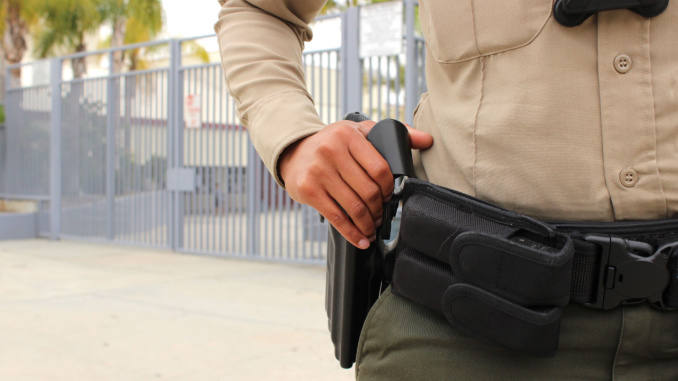
Arizona Superintendent of Public Instruction Tom Horne praised the heroic actions of Tucson Police Officer William Bonanno, deployed under a Department of Education program to Legacy Traditional School-East Tucson, after he was able to arrest armed suspect Daniel Hollander, 31. Hollander was reported by parents for “acting erratically” in the school parking lot and was arrested, armed with a knife and loaded handgun.
In a statement published by KVOA following the arrest, Horne told reporters, “Today we avoided the nightmare of an armed maniac harming innocent people on a school campus. The School Safety Officer who sought out and arrested this suspect deserves the highest praise. His presence on campus is due to funding provided by the School Safety Program managed by my department and demonstrates the value of this program so that incidents like this do not become tragedies.”
In a post to X, Horne wrote, “The School Safety Program helped save the lives of innocent children yesterday. Thank you to the School Resource Officer for helping to avert tragedy. I will fight to have an SRO on every campus to keep students safe.”
In an article from the Arizona Department of Education, Horne said that the actions of Officer Bonanno saved the lives of 20 students and saved their parents from having their lives ruined by the grief that would have resulted. He emphasized that the narrowly-averted tragedy serves to demonstrate the need for Arizona lawmakers to take action and fund more armed officers on school campuses, while calling upon them to ramp up criminal penalties for suspects entering school grounds with intent to injure or kill innocent people.
Horne said:
“For years, I have been pushing for more police officers in the schools, saying repeatedly that if a maniac Invades a school and kills 20 students as has happened in other states and could happen here, their parents would never recover. If they learned that the school could have had a police officer to defend their children funded by the Department of Education, and decided not to, you can imagine what they would feel about that decision making. By the skin of our teeth, we avoided that nightmare by a police officer, newly funded by the Department of Education annually, on the job arresting a man who was in a room with 20 students and additional adults, who said that he was going to make the students immortal by killing all of them.”
He added, “Only the heroic actions of the School Safety Officer, William Bonanno, prevented a catastrophe. He undoubtedly saved lives because of his incredible professionalism in that he was experienced enough to act quickly rather than wait for backup. The presence of an armed officer has sadly become a crucial element of campus safety, and this incident proves that beyond a doubt. The heroism of this officer means that more than 20 families have not experienced the tragic death or injury to an innocent child. As a parent who has suffered the loss of a child, I can tell you that you never get over it.”
“We cannot allow the status quo where not enough schools have armed officers to continue. More funding for officers and legislation that allows retired officers to become School Safety Officers or Resource Officers should be passed. Representative Matt Gress is sponsoring such a bill, HB 2074, which has passed the House Education Committee. It needs to be fast-tracked through the legislature and signed by the governor as soon as possible because, as we saw yesterday, lives are at stake.”
As reported by AZCentral, Tucson Police Chief Chad Kasmar told a Thursday presser that Officer Bonanno discovered Hollander sitting in the school gymnasium talking to himself. Not long before, students had filled the gymnasium waiting for classes to start. The Chief revealed that Hollander admitted he had been using narcotics for “several days” and admitted he was at the school with the intent to harm children.
“I can tell you with the preliminary history of this individual, it wouldn’t have been somebody that was probably on our radar,” Kasmar added.
Horne is urging the legislature to pass House Bill 2074, which is now out of committee, in order to push more funding out to districts to fund additional School Safety Officers.
State Rep. Matt Gress who sponsored HB 2074 said in a statement, “What happened in Tucson yesterday was an act of heroism that nearly became a terrible tragedy. Lives were saved because an armed officer was doing his job at the Legacy East campus. This proves that, sadly, no space is entirely safe, and we must do everything we can to protect innocent lives. My legislation will do that, and I call on all my colleagues, regardless of political affiliation, to get this bill passed, and I also call on Governor Hobbs to sign this bill when it reaches her desk. It is an essential, non-partisan issue that needs immediate attention.”
Matthew Holloway is a senior reporter for AZ Free News. Follow him on X for his latest stories, or email tips to Matthew@azfreenews.com.
by Staff Reporter | Jan 20, 2025 | Education, News
By Staff Reporter |
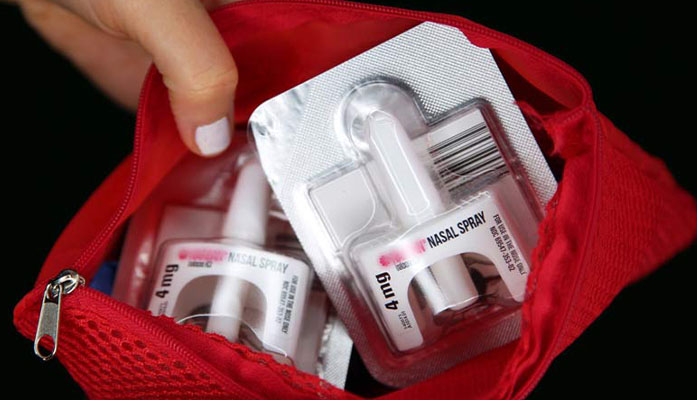
Arizona schools received over 4,000 overdose kits this past week, contributing to the thousands they have and will continue to receive.
The Arizona Department of Education (ADE) supplied the Narcan kits through its School Training Overdose and Intelligence Taskforce (STOP-IT) initiative.
In a press release, State Superintendent of Public Instruction Tom Horne hailed the kits as “lifesaving,” and pledged for more to be coming.
“The results have been excellent and represent my ongoing commitment to the health and safety of school-aged children,” said Horne. “They are to be congratulated for doing a tremendous amount of work in a short time and getting tangible results that will help protect children. We are grateful to the 20 medical societies, government agencies and state programs that have signed a letter of support promoting the integration of STOP-IT resources into our schools.”
Apart from this latest installment, ADE has supplied about 4,400 kits to 144 education agencies across the state.
Horne launched STOP-IT last May to supply the kits to schools. Last November, ADE announced that it began deliveries of over 16,000 kits in coordination with the Arizona Department of Emergency & Military Affairs (DEMA).
Schools signed up for these Narcan overdose kits through ADE’s online form after receiving permission from their districts.
ADE pledged to continue replenishment of overdose kits to ensure schools’ continued ability to handle opioid emergencies.
Nearly 60 percent of all fentanyl in the country comes through Arizona. Maricopa County maintains the second-highest overdose death rate among youth, according to Horne.
“Within the past three years, overdoses rose to the third leading cause of death in youth under age 18,” said Horne. “And according to the Department of Health Services, our state has recorded more than 1,300 non-fatal overdoses and 224 deaths in our kids since 2017. Those figures represent tragic situations for children and their families. As a state, we must do as much as possible to combat this scourge, which is why I am so proud of the meaningful progress made by the STOP-IT taskforce.”
Arizona reported over 1,900 opioid-related deaths and over 4,000 overdoses in 2023. 26 of those opioid-related deaths were among minors (those under the age of 17).
Last year, AZDHS recorded over 3,900 non-fatal opioid overdoses and over 1,300 confirmed opioid deaths. Total non-fatal overdoses among minors amounted to 94. Overdose deaths among minors for this year amounted to less than 10.
In partnership with ADE to make STOP-IT possible are the Arizona School Resource Officers Association, Arizona Counter Drug Task Force, Arizona School Administrators Association, Arizona Association of School Business Officials, Arizona Department of Health Services, Arizona School Boards Association, Arizona Society of Addiction Medicine, Arizona School Counselors Association, Arizona Chapter of the American College of Physicians, Arizona Association of School Psychologists, Arizona Health Care Cost Containment System, Arizona Interscholastic Association, Arizona Nurses Association, Arizona Medical Association, Arizona Chapter of the American Academy of Pediatrics, Arizona Chapter of the National Safety Council, National Association of School Nurses, School Nurses Association of Arizona, and the Substance Awareness Coalition Leaders of Arizona.
AZ Free News is your #1 source for Arizona news and politics. You can send us news tips using this link.