The city of Phoenix is planning to landlock the Arizona State Capitol with a light rail loop: the “Capitol Extension.” A cost estimate has yet to be announced.
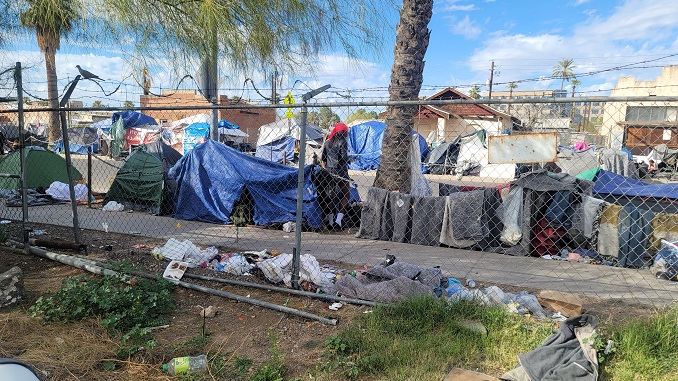
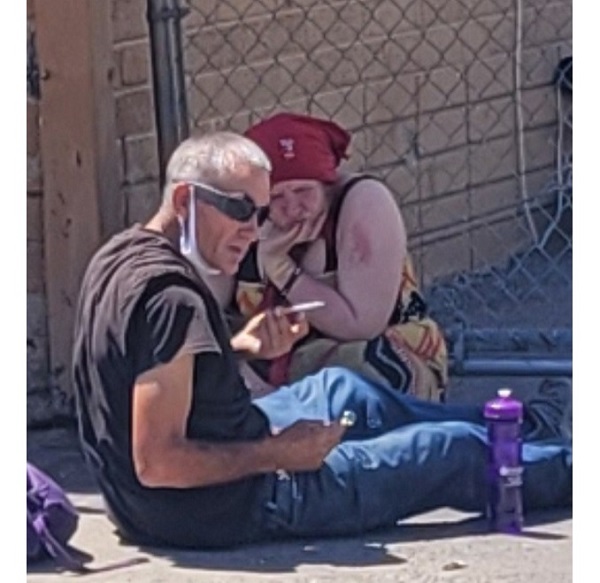
The Capitol Extension will form a 1.4 mile-loop with three stations around the capitol. It’s an addition to the existing Valley Metro Rail system from 3rd Avenue along Washington Street, 19th Avenue, and Jefferson Street. That runs right along the area of the infamous mass homeless encampment known as The Zone, prompting concerns about ridership and capitol grounds safety.
Crime has increased along the Valley Metro light rail system over the last few years. There were over 1,300 incidents in 2020, over 1,600 incidents in 2021, and nearly 2,500 incidents in 2022. According to city data reflected in a 12 News report last May, crime in and around public transit has risen consistently since 2016; the FBI data outlining this crime spike was last updated in 2021.
The extension also surrounds the adjacent Wesley Bolin Memorial Plaza, Supreme Court, Library Park, and U.S. District Court, stopping short of the current rail loop in front of Phoenix City Hall.
The Phoenix City Council and Valley Metro Rail Board of Directors issued this design — the Locally Preferred Alternative (LPA) — in November 2021. Plans for the Capitol Extension date back to actions taken by the Phoenix City Council and Valley Metro Rail Board of Directors in 2016.
Prior to construction, federal regulations require an Environmental Assessment. The assessment and preliminary engineering carry an estimated cost of $4.85 million. Preliminary engineering began in 2021 and is scheduled to run through the end of this year; the environmental assessment began this year and is scheduled to run through 2024.
The Capitol Extension isn’t scheduled to run until late 2027.
Final design and pre-construction is scheduled to begin in 2024 and last through 2025; then construction is scheduled to begin in 2025 and last through 2027; testing and certification is scheduled to begin in mid-2027, with no anticipated end date in sight; and revenue service is scheduled to begin in late 2027.
Construction will consist of three to four years of underground utility relocation; trackwork and street rebuilding; sidewalks, landscaping, and signage; stations and overhead electrification; and testing, certification, and operations.
According to a public meeting held earlier this month to discuss design of the tracks, stations, roadway, sidewalks, and street striping, the extension will be funded by 50 percent federal funds, 35 percent local funds, and 15 percent regional funds. Federal funding will come from the Capital Investment Grant (CIG) and Congestion Mitigation, Air Quality (CMAQ); regional funding will come from the Public Transportation Fund (PTF), and extension funds are included within Proposition 400; local funding will come from the Phoenix Transportation 2050 Sales Tax.
The city did disclose in the meeting that the funding breakdown may be subject to change depending on the availability of federal dollars.
The city of Phoenix began cleaning up the mass homeless encampment known as The Zone this week, after attempts to resist a court injunction to do so. Local residents and business owners have endured the burgeoning public health and safety hazards of the area for about three years.
The cleanups began on Wednesday. City officials reportedly won’t allow the homeless to return to the area if they don’t find shelter. About 900 homeless camped out in The Zone.
The cleanup has begun at “The Zone” on 9th Ave between Washington and Jefferson. pic.twitter.com/aKYZGaNqi3
The city also re-released a plan to address homelessness on Wednesday morning, largely centered on doubling down on efforts to place homeless individuals with relevant treatment programs. The plan was published originally late last month.
— City of Phoenix, AZ (@CityofPhoenixAZ) May 10, 2023
The city’s plan includes creating 800 more shelter beds by the end of 2024, and parsing out the $140 million committed beginning in July 2021. The city also proposed potentially leasing hotel rooms, using vacant plots, and creating a campsite of sorts.
The city noted in its plan that the five cleanups initiated since December resulted in placement of 67 percent of the several hundred offered services.
The CEO of the shelter at the heart of the Zone, Amy Shwabenlender with Human Services Campus, toldAZ Family that the cleanup was necessary, but not a “long-term solution.”
The city of Phoenix unsuccessfully fought the Maricopa County Superior Court order to clean up the Zone earlier this month. Within the same day of the city’s petition to extend the July deadline for cleanup, Maricopa County Superior Court denied the petition. Judge Scott Blaney rejected the city’s claim in its petition that it had already undertaken significant action.
“The Court interprets this argument as meaning the injunction is unnecessary because the City is already taking steps to abate the horrible conditions in the Zone,” wrote Blaney. “But the Court issued the Preliminary Injunction based, in part, upon the City’s past failure to address the issues in The Zone, as well as the City’s apparent lack of intent to do so until faced with possible judicial intervention.”
Blaney ordered the city to commence its cleanup of The Zone in late March. Blaney declared that the city had done nothing to improve the public nuisance caused by the mass homeless encampment burdening the downtown area. Rather, Blaney said that the city’s actions purporting to address the homeless crisis had served only to grow its bureaucracy and ineffective programs initiated by themselves and nonprofits over the years.
“With few exceptions, the action items about which city representatives testified centered around the creation of more bureaucracy, additional staff positions, and obtaining additional funding for programs to vaguely address homelessness in general,” stated Blaney. “The Court received very little evidence — if any — that the City intends to take immediate, meaningful action to protect its constituent business owners, their employees, and residents from the lawlessness and chaos in the Zone.”
Corinne Murdock is a reporter for AZ Free News. Follow her latest on Twitter, or email tips to corinne@azfreenews.com.
Last Friday, the Maricopa County Superior Court denied the city of Phoenix’s motion to extend the deadline imposed to clean up The Zone.
Maricopa County Superior Court Judge Scott Blaney apparently rejected the city’s insistence that they’d begun taking sufficient action.
“The Court interprets this argument as meaning the injunction is unnecessary because the City is already taking steps to abate the horrible conditions in the Zone,” wrote Blaney. “But the Court issued the Preliminary Injunction based, in part, upon the City’s past failure to address the issues in The Zone, as well as the City’s apparent lack of intent to do so until faced with possible judicial intervention.
In their motion to stay the court’s preliminary injunction, the city said it didn’t dispute the current conditions of the homeless encampments, but opposed the actions they were required to take, namely the court’s suggestion of campgrounds. The city took issue with the required deadline of July 10.
“[D]eciding how to spend taxpayers’ money, deliver services, and create new infrastructure for public housing is a legislative, not judicial function,” stated the city. “[T]he order intrudes into local law enforcement and prosecutorial discretion in what appears to be an order to take mandatory enforcement action — ignoring any analysis of the facts on the ground and ordering sweeping relief in its stead.”
The city further claimed that Blaney violated the constitutional separation of powers. It also seemed to question the judge’s description of homeless individuals’ conduct as a “nuisance.” Blaney’s ruling outlined the many ways that The Zone qualified as a public nuisance. The city said it couldn’t guarantee cleaning up The Zone.
“While the City seeks to maintain a clean and crime-free environment for its residents, those are outcomes that the City simply cannot guarantee, even with the expenditure of significant resources,” stated the city.
The city also claimed that Blaney’s order didn’t reflect public interest or the true desires of the Phoenix community. That contradicts the numerous business owners and residents of The Zone and elsewhere in the city that have complained about the homeless crisis.
“The City’s policies are the product of community meetings with policymakers, the gathering of information from all relevant stakeholders, and the advice of experts at the City and throughout the community,” wrote the city. “To circumvent this process and supplant the City’s plans with the Court’s own judgment is against public interest.”
🧵INBOX: Welcome to The Zone, the epicenter of the homeless crisis that @CityofPhoenixAZ refuses to solve. This man is one of many that will likely live and die on these streets under the city's current approach to homelessness. I investigated & uncovered shocking details… pic.twitter.com/snb8QkvjsA
The homeless crisis spiraled following the election of Mayor Kate Gallego, a Democrat, in 2019.
The Maricopa County Superior Court ruled in late March that the city of Phoenix was at fault for the current state of The Zone, and imposed a cleanup deadline this summer. The ruling came days after city officials promised to meet to discuss solutions for The Zone, in the wake of back-to-back murders.
Details of a settlement in a separate, federal case haven’t been publicized yet.
Democratic leadership has generally downplayed the urgency of the public nuisances and dangers presented by The Zone.
Corinne Murdock is a reporter for AZ Free News. Follow her latest on Twitter, or email tips to corinne@azfreenews.com.
Democrats like to believe they are the party of compassion and kindness, but the reality in most blue cities says otherwise. For years, homeless encampments have been springing up in liberal-run cities like Seattle, Portland, San Francisco, and Los Angeles. And in recent years, this trend made its way into Phoenix.
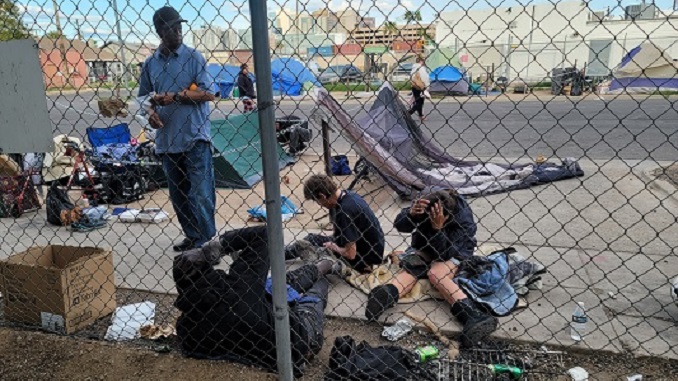
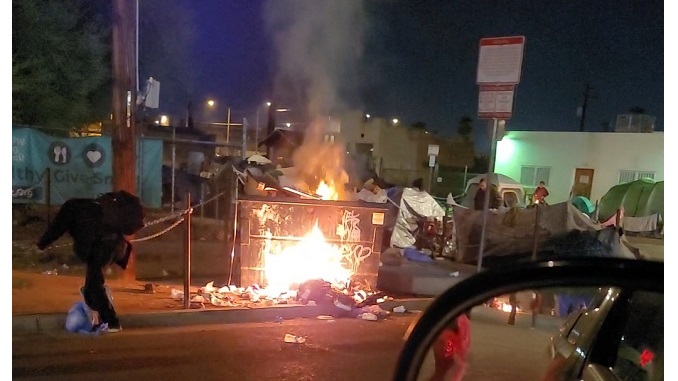
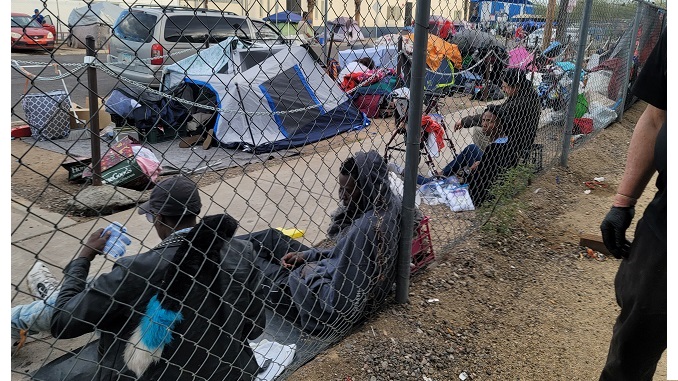
Just blocks from the state capitol, amidst what was once a thriving business district, a sprawling encampment of around 1,000 homeless has come to be known as “The Zone.” It’s a place where drug use, drug deals, defecation, urination, sexual acts, assaults, rape, and murder are frequently committed out in the open—often with little to no consequences. The problem has even gotten so bad that the Phoenix Fire Department won’t respond to calls inside The Zone without assistance from the Phoenix Police Department and assurance that the scene of the incident is secure.
But crime within The Zone is only one part of the problem…
Downtown Phoenix’s residents experienced a glimmer of hope in the ongoing homeless crisis last month after a court declared the city to blame. If the city doesn’t appeal the court’s order, it may be the end of the massive encampment known as “The Zone.”
The decision flies in the face of the precedent set by other cities: plans and spending that yield no favorable results, ultimately forcing the residents to learn to live with the crime and squalor. Yet, Phoenix may no longer be resigned to the same fate borne by most other major cities. Downtown property and business owners were vindicated in their belief: city officials’ plans, spending, and promises alone don’t qualify as results.
Requiring results of the city could mean The Zone may cease to exist in the near future — restoring a square mile of the current wasteland of city-sanctioned slums into a healthy business district — but only if the city of Phoenix decides to follow through on the court-ordered action to resolve the homeless crisis. Cleaning up The Zone would mean finding shelter and services for around 800 homeless residing in the area, according to a census conducted by the Human Services Campus late last month.
Homeless sit outside a business in The Zone.
The first bout of legal relief came for The Zone’s residents and business owners after the Maricopa County Superior Court ruled last month that the city of Phoenix was at fault for The Zone. The court ordered the city to show that it’s taking “meaningful steps” toward fixing The Zone. They have until July 10 to do so, with a trial date scheduled for June.
The ruling came days after the city of Phoenix promised to finally meet to fix The Zone, a promise prompted by back-to-back murders in the encampment.
Vice President for Legal Affairs at the Goldwater Institute, Timothy Sandefur, who submitted an amicus brief in the case, told AZ Free News that this ruling was a good first step toward remedying The Zone — but that the city has a ways to go.
“I think this is a first step and a very important one,” said Sandefur.
Sandefur said that the superior court indicated the best next steps for the city would be to build structured campgrounds and establish treatment programs, rather than continue with their current “housing first” approach.
However, notice of a settlement in a separate, federal case issued recently may complicate matters in finally getting the city of Phoenix to fix The Zone.
In the Arizona District Court case, the ACLU and the city held mediation about three weeks ago.
Details of the settlement weren’t made public. The Phoenix City Council plans to convene April 18 in an executive session — a meeting not open to the public — to discuss the terms of the settlement. At some point after, the Phoenix City Council will announce the settlement terms during a public meeting.
Of note, the city attempted to dismiss the superior court case — but not the federal case. The city also spent just shy of $100,000 fighting the superior court case.
Ilan Wurman, another lawyer on the lawsuit against the city, told AZ Free News that the court’s order to fix The Zone was thorough to the point where he imagined it would be difficult for the city to fight it.
“The court’s ruling is such a thorough victory for the business and property owners that it will be very hard for the city to overcome it at a full trial on the merits,” said Wurman. “We hope the city does the right thing and considers a settlement or simply follows through on the court’s instructions — that will save a lot of expense to taxpayers and it will be better for the unsheltered community as well.”
In remarks to the press, the city stresses that it has allocated around $140 million to solve the homeless crisis. However, there’s a difference between commitment and spending. Of the $120 million in COVID-19 relief funds received to address the homeless crisis, the city has only spent about 10 percent.
Of what little the city has spent for the homeless crisis, the Maricopa County Superior Court assessed that none of this spending has actually mitigated the crisis.
Homeless use drugs inside Phoenix’s sprawling encampment known as The Zone.
“With few exceptions, the action items about which city representatives testified centered around the creation of more bureaucracy, additional staff positions, and obtaining additional funding for programs to vaguely address homelessness in general,” stated Judge Scott Blaney. “The Court received very little evidence — if any — that the City intends to take immediate, meaningful action to protect its constituent business owners, their employees, and residents from the lawlessness and chaos in the Zone.”
However, in a recent interview, Mayor Kate Gallego indicated that the city was attempting to follow through on a “housing first” approach, and claimed that the city was “working very hard” to fix the homeless crisis.
As AZ Free News previously reported, “housing first” — also referred to as “permanent supportive” or “affordable” housing — holds the theory that the homeless will choose to seek employment, become financially responsible, and receive mental health care and/or substance abuse treatment if food and housing are provided. The theory also posits that enabling the homeless to choose their housing and support services will make them more likely to remain in that housing and stick with self-improvement initiatives.
Gallego shared that the city was working on launching seven new shelter options in partnership with various organizations, and that the city is hoping to receive additional help from both the state and federal government. She mentioned that she would meet with the Maricopa County Board of Supervisors.
Gallego disclosed that she recently spoke with Gov. Katie Hobbs about the homeless crisis — a conversation that had last occurred during Hobbs’ inauguration week in January. The mayor said that Hobbs was looking for additional resources to provide the city.
“Residents should feel confident that they’re going to see changes,” said Gallego. “The message we want to send to the public is that we recognize it’s a problem and we want to solve it.”
When questioned, Gallego didn’t directly deny that the city wouldn’t appeal the superior court’s decision.
In another interview, Gallego claimed that adequate law enforcement was taking place in The Zone. Gallego’s claim conflicted with the various investigative reports and witness accounts that depicted minimal law enforcement in The Zone.
“We treat every member of our community the same when they commit a crime. We want to be consistent and to enforce breaking the law,” said Gallego. “If you commit a crime, it is the same regardless of your housing status.”
However, the “Gaydos and Chad Show” testified to witnessing a myriad of criminal activity during a recent excursion in The Zone — including drug use, public defecation and urination, and prostitution — but not seeing any police presence. In response, Gallego claimed the city’s police were “too aggressive” when handling the homeless. The mayor cited the Arizona District Court case against the city as justification for her claim. However, that lawsuit concerned whether the city could enforce camping and sleeping bans, as well as whether the city had a right to seize or throw away items from homeless encampments as part of cleanup efforts. The lawsuit does not address police response to criminal activity.
Watch: The Zone – Homelessness and Crime Rampant in Phoenix
Corinne Murdock is a reporter for AZ Free News. Follow her latest on Twitter, or email tips to corinne@azfreenews.com.