MIKE BENGERT: SUSD Parents Are Learning The Hard Way That Elections Have Consequences

MIKE BENGERT: SUSD Parents Are Learning The Hard Way That Elections Have Consequences

By Mike Bengert |

During the most recent election for the Scottsdale Unified School District (SUSD) Governing Board, one slate of candidates campaigned on fiscal responsibility, academic excellence, parental rights, school safety, and a simple message: Just be honest.

That vision sounds appealing, but it doesn’t reflect where things stand today. For students and parents in SUSD, the reality has fallen short.

Unfortunately for the SUSD community, the three board members elected in the last election have lived up to their promise to “protect SUSD,” meaning protect Superintendent Scott Menzel.

Look at the records of Pittinsky, Sharkey and Lewis. What meaningful policy or solutions to any of the issues in SUSD have they offered?  They haven’t. They only attack Member Carney and Member Werner when they make a proposal. Dr. Lewis is basically useless letting Menzel run the show. Pittinsky, Sharkey and Lewis don’t seem to understand that Menzel works for them, and they work for the SUSD community.

SUSD is close to reaching a point of no return. And it may not survive another year of Menzel and this governing board.

Elections have consequences.

A review of the past few months shows just how bad things have gotten in SUSD.

Despite repeated assurances about transparency, open communication, and a willingness to listen, Dr. Menzel has failed to consistently follow through. Keeping the community fully informed and being honest with the SUSD community when it matters most, has often been lacking during Dr. Menzel’s tenure as superintendent.

It’s also worth remembering that during his tenure at SUSD, Dr. Menzel has been cited by the Arizona Attorney General’s Office for multiple violations of the state’s Open Meeting Law. For those who want to review it themselves, see Az Attorney General Opinion I24-004.

As a recent example of Menzel struggling with the truth, during the SUSD Governing Board Regular Meeting 1/6/2026 (@1:23:53 – 1:24:13), explaining what he had said to parents at Copper Ridge and Cheyenne, Dr. Menzel said, “…it made sense to move quickly to get feedback… [Emphasis added]”

Fast forward to SUSD Governing Board Meeting 3/10/2026 (@1:32:20 -1:32:41), where Dr. Menzel told the board that at the meetings with the Phase II families, “…the surveys would go out after we identified the three options to get feedback on what’s possible. So that would likely be late May, early June after the committee gets the chance to do its work  [Emphasis added].”

Not only did Menzel tell two different stories about what he told the parents, but he conveniently left out that once the committee completes its work on May 7th, the community will be surveyed, and that feedback will then be filtered and evaluated by District team members. (See slides 6 & 7 SUSD Phase II Design Advisory Team Meeting 1 March 26,2026.)

The results will then be presented to the Governing Board in October for a final decision. By that point, after the District staff has “vetted” the input, it’s hard not to expect recommendations that align with Menzel’s stated goal of “disrupting and dismantling” and reducing the footprint of SUSD.

The discussion at the board meeting on December 9, 2025, offers a revealing look at the kind of leadership guiding SUSD. The SUSD Governing Board Regular Meeting 12/9/2025 is particularly informative if you want to understand who sits on the board and how they approach transparency and community input. While I’ve highlighted a few key moments below, it’s worth listening to the full exchange on forming advisory committees, from the 1:12:36 mark to 1:32:26.

It’s also important to remember that the three newest board members were elected on the strength of their professional backgrounds and extensive experience in public education. The current board president has even been recognized as a superintendent of the year. Yet, based on this discussion, there are questions about their grasp of core aspects of Arizona law and parental rights in education.

Dr. Menzel, for his part, brings a long career in public education. He is clearly experienced in navigating these conversations, often speaking at length while offering few direct answers to the concerns raised by the community.  Menzel is much more of a politician than a school superintendent.

The last time Dr. Menzel appears to have spoken most candidly about who he is may have been during his tenure as superintendent of Michigan’s Washtenaw Intermediate School District. On May 14, 2019, he participated in an interview with WISD employee David Spitzel titled, Public Schools and Social Justice: An Interview With Dr. Scott Menzel, which was published on June 7, 2019, about a year before the SUSD Governing Board hired him in 2020.

It’s worth reading that interview. It provides insight into his views on equity, inclusion, and social justice, and offers context for his stated goal of “disrupting and dismantling” SUSD.

That interview was available to the Board prior to his hiring. Either it wasn’t carefully reviewed, raising questions about the thoroughness of the vetting process, or it was reviewed and aligned with what the Board was seeking at the time. Based on the Board’s actions since Menzel’s hiring, the latter seems more likely.

As if his focus on gender identity, social emotional learning (SEL), DEI and the lack of attention to academics haven’t done enough damage to SUSD with its declining enrollment resulting in a $8M-$9M budget shortfall, now he is, with the full support of the progressives on the Board, closing schools.

Elections have consequences.

On April 29, 2025, SUSD staff presented to the Governing Board, reporting a continued decline in district enrollment, which they attributed to factors outside of the district’s control, while at the same time ignoring the feedback from parents who have left the district citing issues that are within the control of the district but are not being addressed  (Strategic Enrollment Planning Study Session, slides 29 – 31).

Based on this trend, they projected a budget shortfall beginning in fiscal year 2026–2027. This meeting also marked the first time the Governing Board formally discussed the potential need to consider school closures.

Despite the commitments Dr. Menzel made in his message on the SUSD website titled School Repurposing and Enrollment Review, the process has not unfolded in that manner.

He stated:

“As we work through this process, it is important to remember that while district leadership may bring forward recommendations, the Governing Board makes the final decisions. We are committed to keeping you informed, listening to your input, and ensuring transparency every step of the way.”

— Dr. Scott A. Menzel, Superintendent

Follow the link to the site and note how, even after months, significant portions still read “coming soon.” The page continues to state that a Phase II Design Team is being developed, even though the team has already met multiple times. Under Community Engagement, the site highlights a “commitment to transparency and open communication,” which raises an important question: why were so many parents, and even Board members, surprised by the proposed closures of Echo Canyon and Pima schools?

Listening to comments from parents of those schools during fall Board meetings, it is difficult to reconcile their experiences with claims of transparency and meaningful engagement.

On October 7, 2025, the Board voted to schedule the legally required public hearing on school closures for November 13, 2025. Then, on December 9, 2025, the Board narrowly approved, by a 3–2 vote, the closure of Echo Canyon and Pima Schools as Phase I of the District’s plan to address the projected budget shortfall.

On November 18, 2025, after the public hearing and less than 30 days before the vote to close two schools, Dr. Menzel presented his vision for a “vibrant and thriving SUSD,” outlining a two-phase approach (and a potential Phase III) to addressing the deficit. Phases I and II are focused on reducing the SUSD footprint. Phase I included the closure of Echo Canyon and Pima. Phase II proposed additional closures, including Redfield and Laguna, along with boundary and school reconfiguration changes involving Cheyenne Traditional School, Copper Ridge, Desert Canyon ES and MS. The presentation, A Vibrant and Thriving SUSD: Reducing our footprint to increase our impact, is available for review.

During the Board meeting on December 9, 2025, (SUSD Governing Board Regular Meeting 12/9/2025), prior to the vote on school closures, Member Carney stated:

“So, on October 7th, I voted no to scheduling the public hearing regarding the potential closure repurposing of Echo and Pima because I believe that one of the things we should have done first before going down that road or this road of closures and repurposing was to create a board advisory oversight committee to gather data, have community input and weigh in on solutions.”

Her full comments can be heard from 1:12:36 to 1:15:25.

The Board then continued its discussion, with Member Sharkey asking at approximately 1:16:34 what Member Carney was requesting. He stated:

“It’s my understanding, and correct me if I’m wrong, if this is a board committee that really limits the communication, it’s subject to open meeting law the same as we are as opposed to a much more interactive committee, so I just want to make sure what I’m hearing [Emphasis added].”

This raises an important question: what does “much more interactive” mean? A board committee that operates under Arizona Open Meeting Law, where meetings are publicly noticed and open to attendance, or a superintendent-appointed committee operating outside that structure? Member Carney clarified her concerns at 1:16:58 –1:17:32:

“I’m asking for a board advisory committee. We’ve had superintendent committees that came to this conclusion tonight and we don’t even know who was on them or what work was done on them. I’m asking for a board advisory committee that the public is also asking for so that everyone can be involved, everyone has input and we can come to solutions together.”

Dr. Menzel then responded, explaining the distinction between committee types at 1:17:49–1:18:14:

“…that any committee established by the Board is subject to open meeting law, which means all of the agendas have to be posted 24 hours in advance, it’s got to follow all of those rules in terms of reporting of the minutes and that process. It is perfectly acceptable as an alternative, but it slows the process down in part, you can be more nimble with the superintendent-appointed committee [Emphasis added].”

When asked about transparency differences between the two models, he added at 1:18:50–1:19:17:

“So, all of the information that’s collected is still subject to public records request, so that would be available to the public.”

However, access through public records requests is not the same as attending meetings, hearing deliberations in real time, or participating in an open process.

Board President Dr. Lewis then suggested a possible “solution” to the problem. The problem she is trying to solve is whether or not to meet their legal obligations and responsibilities under the open meeting law or continue has they did in Phase I and hide what they are doing from the public. Listen to her comments at 1:19:20–1:19:38:

“So, in the name of flexibility and expediency, and being able to work as a superintendent’s committee keeping minutes and expressing those minutes more transparently might be the solution [Emphasis added].”

She continued at 1:20:58–1:21:17:

“…so, if committees are formed at our suggestion for the work to be vetted and we say it’s a superintendent’s committee, and there’s a posting of welcome … please try and get on this committee with us, we could help advocate for committee members without it blurring the lines.”

Later in the discussion, Member Werner noted at 1:24:26–1:25:35 that:

“Clearly, our community and families and staff have been blindsided, and this process has not been effective…”

Member Pittinsky also acknowledged confusion about the committee distinctions but stated:

“…do I believe that we should have more mechanisms for the community to be involved in the decisions that will follow tonight’s vote, whichever direction it goes as well as the decisions that are ahead? Absolutely.”

That comment can be heard at 1:26:00–1:26:39.

Pittinsky always talks but he does nothing to make anything happen. Rather than offering any kind of ideas to turn his words, (“more mechanisms for the community to be involved”) into action, he just pushes back on Member Carney.

Elections have consequences, and the current direction of SUSD reflects the outcome of those choices.

The governing board now operates with a progressive majority that has supported Superintendent Menzel’s approach to restructuring the district and closing schools. A Phase II Design Committee has already begun meeting outside of public view, with its findings expected to be reviewed by district staff before being presented to the Board in October.

Those recommendations are anticipated to align with the Phase II framework outlined in Menzel’s presentation, “A Vibrant and Thriving SUSD: Reducing our footprint to increase our impact.”

At the same time, recruitment is underway for a second committee, the Coronado Learning Community Design Team. Its stated purpose is:

“This team will guide the development of a comprehensive strategic plan designed to increase enrollment across all CLC schools and strengthen academic outcomes for all students. The work of the Design Team will help ensure that the Coronado Learning Community remains strong, sustainable, and focused on student success.”

This raises a broader question: if increasing enrollment and strengthening programs across CLC is a goal, why not make it a goal for the entire district?  Why were proposals centered on school closures and consolidation prioritized before broader district-wide alternatives were fully explored?

Members Carney and Werner have argued that school closures should be a last resort and have advocated for earlier, more inclusive evaluation of alternatives, including district-wide strategies to increase enrollment and stabilize schools.

For many in the community, that contrast highlights a concern about process and priorities, particularly whether all viable options are being fully considered before decisions are made.

Elections have consequences, and those consequences are now playing out in how these decisions are being shaped and implemented.

SUSD needs a change in leadership.

Mike Bengert is a husband, father, grandfather, and Scottsdale resident advocating for quality education in SUSD for over 30 years.
MIKE BENGERT: Menzel’s Goal Is To Disrupt And Dismantle SUSD

MIKE BENGERT: Menzel’s Goal Is To Disrupt And Dismantle SUSD

By Mike Bengert |

When Dr. Menzel was hired as Superintendent of Scottsdale Unified School District (SUSD), he arrived with a stated goal: to disrupt and dismantle what he believed were systems denying access and opportunity to students of color, students in poverty, and students with IEPs.

But was that truly the reality in SUSD before his arrival?

Regardless, Menzel has moved forward with exactly that approach, disrupting and dismantling the district. His emphasis on initiatives like gender identity and social-emotional learning, often at the expense of academic performance, has produced troubling results: school closures, declining academic outcomes, falling enrollment, record levels of non-classroom spending, teacher layoffs, and increasing staff turnover.

Disrupt and dismantle.

At the November 18, 2025, board meeting, Menzel outlined reductions in FTE staff at the district office over the past three years, arguing that all reasonable cost-cutting measures have been exhausted, leaving school closures as the only remaining option.

But is that really true?

When board members Amy Carney and Carine Werner raise concerns about wasteful spending or request detailed financial information, they are often ignored or told that staff are too busy to provide answers. Meanwhile, the expenditures they question are dismissed as not necessarily wasteful just because they disagree with them.

Not only has Menzel shown little interest in cutting favored programs or non-essential spending unrelated to improving academic performance, but he has also failed to address concerns raised in exit interviews, concerns that could help slow declining enrollment.

Disrupt and dismantle.

At a recent board meeting, it was announced that more than 130 applications had been submitted for the Phase II Design Team. Selections are underway, with the first meeting scheduled for March 26.

Menzel noted that Matt Pittinsky was the only board member to suggest closing more than two schools in Phase II. When asked by Menzel for input from the board about additional closures, Mike Sharkey responded that if the committee recommends closing three schools instead of two, “that’s great”—despite having campaigned on not closing schools. He added that committee members can “feel it out as it goes along” and gauge community reaction afterward.

Carney argued that school closures should be a last resort; Pittinsky disagreed, despite also campaigning against closures. He now claims more schools must be closed to maintain a “quality student experience.” But is this the same “quality” that has coincided with declining enrollment and revenue losses?

Carney pressed for early parent input through surveys, with Werner agreeing that community feedback should come at the beginning, not the end, of the process. Menzel, however, stated surveys would occur only after the committee completes its work, likely in late May or early June. Pittinsky, Sharkey, and Lewis supported that timeline.

While district leadership claims to value community input, their actions suggest otherwise. The committee is not being asked to explore solutions to the budget shortfall; they are being steered toward a predetermined outcome: closing schools.

For those who haven’t followed closely, the public comments from last fall’s board meetings tell the story. Parents from schools like Pima and Echo Canyon described being blindsided by closures, with little to no input. Even some board members indicated they were excluded from meaningful involvement.

According to the district, the Phase II Design Team members will “help inform discussions about enrollment trends, school facilities, and long-term sustainability through respectful, student-centered collaboration.”

But what does that actually mean?

A small group, selected by Menzel and guided by a district-paid consultant, is expected, over just a few weeks, to analyze years of enrollment data, financial trends, and demographic projections, and then “inform” district decisions.

Is that realistic?

So, what will this design team actually do?

In all likelihood, it will just validate decisions that have already been made by Menzel.

Over recent meetings, Menzel has presented Phase II “repurposing solutions.” One proposal involves relocating Cheyenne Traditional School (CTS) to Copper Ridge. He describes this as an opportunity to place a high-demand program in an underutilized facility with room for growth.

However, what goes unaddressed is the likely impact on enrollment. Moving CTS to the northernmost part of the district could drive families away, not attract them. CTS draws students from across the district, many within walking or biking distance of its current location. Relocating it would add significant travel time, potentially up to 20 extra miles per day for some families.

How many parents would make that commute? How many would instead leave CTS or SUSD altogether?

Similarly, how many Copper Ridge families would choose CTS or be willing to move to the Desert Canyon schools, or simply leave SUSD? These are critical questions, but they remain unanswered.

They could be answered now through parent surveys. Instead, feedback is being delayed until after decisions are effectively finalized.

If enrollment drops following a relocation, as seems likely, the result could be the eventual closure of CTS, the district’s last remaining traditional school, which could lead to even further declining enrollment and financial shortfalls for SUSD.

And that would align with Menzel’s stated goal: disrupt and dismantle.

Parents at Phase II schools should make their views known by contacting the Board and Menzel, using Let’s Talk, writing opinion pieces, participating in PTO meetings, and sharing information with parents through newsletters and social media. Don’t wait until decisions are final; speak up now. Community input is important.

Don’t let Menzel continue to disrupt and dismantle SUSD.

Mike Bengert is a husband, father, grandfather, and Scottsdale resident advocating for quality education in SUSD for over 30 years.
Drama Unfolds In Scottsdale School Closure Vote

Drama Unfolds In Scottsdale School Closure Vote

By Jonathan Eberle |

Hours after State Representative Matt Gress urged the Scottsdale Unified School District (SUSD) Governing Board to postpone its decision on whether to close two schools, the Board voted to permanently shutter Pima Elementary and Echo Canyon K-8—fueling frustration among families and intensifying scrutiny of the district’s financial review process.

Gress, who chairs the House Education Committee and co-chairs the Joint Legislative Audit Committee, had asked the Board to wait until February 1 before taking action. In a letter sent Monday, he warned that the district had not provided the public with a complete fiscal analysis or a thorough exploration of alternatives.

“Closing schools has lasting consequences. Before the board takes any action, the public should see a full explanation of the fiscal impact, the alternatives that were considered, and how the district plans to support the students who would be uprooted,” Gress wrote. “Based on what I have seen so far, that work is incomplete.”

At Tuesday’s meeting, the Governing Board voted 3–2 to permanently close both Pima Elementary and Echo Canyon K-8 beginning next school year. The decision comes as SUSD faces declining enrollment, rising operating costs, and a projected budget deficit that could reach $9 million by 2026.

Superintendent Dr. Scott Menzel told families that the district can no longer sustain all of its campuses under current conditions. “These realities make it increasingly difficult to sustain all of our schools in their current form while continuing to provide the world-class, future-focused education our community expects and deserves,” he said.

District data presented Tuesday showed that 12% of Pima families and 17% of Echo Canyon families have already enrolled in alternate district schools for next year—figures officials say reflect the difficult choices families are already making.

While the Board cited urgency, Gress countered that SUSD still has financial alternatives that would allow more time for a complete public review before making irreversible decisions. He emphasized that families deserve clarity before the district proceeds with closures that will significantly disrupt school communities.

“This decision can wait,” he said. “Taking the time to do this right will help the board make a more informed and beneficial choice.”

With the vote now final, the repurposing process for both campuses is scheduled to begin in the 2026–2027 school year—while families, lawmakers, and district officials continue to debate whether the closures were necessary, inevitable, or simply premature.

Jonathan Eberle is a reporter for AZ Free News. You can send him news tips using this link.

Cops Bust Scottsdale School Board Member’s Teen Rave

Cops Bust Scottsdale School Board Member’s Teen Rave

By Staff Reporter |

One of the Scottsdale Unified School District (SUSD) governing board members was busted by the cops for a party attended by teens.

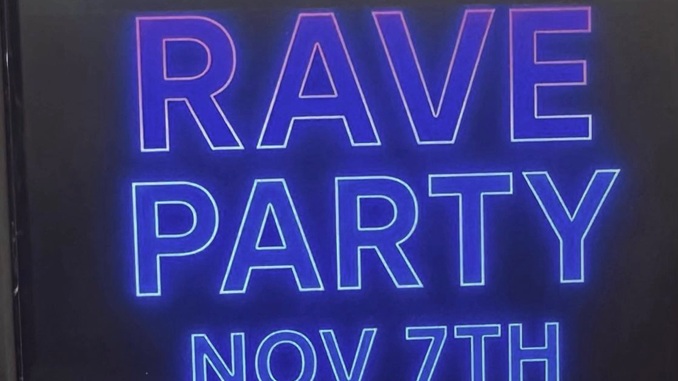
SUSD governing board member Matt Pittinsky threw a “rave party” for his teenage son’s birthday earlier this month that ended with police and an ambulance responding to the scene, per sources cited by the advocacy group, Scottsdale Unites For Educational Integrity. 

Pittinsky’s son attends Brophy College Preparatory School, a private high school, where Pittinsky sits on the board of regents. 

At a special meeting last week, one of Pittinsky’s neighbors addressed the board about the party. The neighbor said he witnessed a young girl taken to the hospital by first responders for alcohol poisoning. The neighbor questioned Pittinsky’s judgment, especially amid ongoing conversations about the potential closures of two schools: Echo Canyon School and Pima Elementary School.

“There was an underage girl hauled away in an ambulance for alcohol poisoning from a rave party at Mr. Pittinsky’s house,” said the neighbor. “Paradise Valley Police Department had to shut this mess down, and our neighborhood had a mess from it. It was quite the scene.” 

Along with his SUSD seat, Pittinsky is an Arizona State University (ASU) visiting scholar for the Sanford School. 

Pittinsky has also been CEO of Parchment, which manages and sends academic transcripts, and formerly CEO to Blackboard, a leading education software and learning management system company which he co-founded.

Blackboard received criticism over the years within the education and legal communities over alleged anticompetitive practices: lawsuits over alleged patent infractions and a steady acquisition of competitors that, essentially, forced educators to use them though Blackboard wasn’t their preferred vendor. 

An invitation for the Pittinsky party posted by a since-deleted Instagram user, “nov.7.funcoverflow,” said the party would last from 8 pm to “GTFO” (an acronym for “get the f*ck out”), and told guests to “BYOE,” which stands for “bring your own everything.” 

According to a letter from Pittinsky and his wife delivered to neighbors, the Pittinskys hired security to limit attendance to invited guests, and promised the party would last only until midnight. 

However, eyewitness accounts said that police “shut down” the party several hours into the festivities. Eyewitnesses also reported at least one teenager was taken away from the party in an ambulance.

Scottsdale Unites For Educational Integrity urged parents and community members to address the Pittinsky party during the SUSD’s regular governing board meeting on Tuesday.

Much of the public comment on Tuesday’s meeting focused on voicing opposition to the proposed closures of Echo Canyon School and Pima Elementary School.

Those who did address the Pittinsky party questioned Pittinsky’s dedication to student health and safety. 

Scottsdale resident Mike Bengert, a father and grandfather, asked for a complete, public investigation into the incident, as well as an apology and resignation from Pittinsky. Bengert’s remarks were met with applause.

“Hosting, permitting, or failing to prevent an environment in which underage drinking and medical emergencies could occur is deeply troubling,” said Bengert. “Why should the community trust your judgment on issues so critical to our public schools? Your actions suggest a disregard for the safety and wellbeing of the very students you are sworn to serve.” 

AZ Free News is your #1 source for Arizona news and politics. You can send us news tips using this link.

Petition Launched To Remove TPUSA ‘Club America’ At Scottsdale’s Saguaro High School

Petition Launched To Remove TPUSA ‘Club America’ At Scottsdale’s Saguaro High School

By Matthew Holloway |

A Change.org petition calling for the removal of a Turning Point USA (TPUSA) “Club America” chapter at Saguaro High School in Scottsdale lists 429 verified signatures on its page as of November 7, 2025. The petition—titled “Stop Political Hate Clubs in Arizona Schools”—urges Scottsdale Unified School District (SUSD) Governing Board members Carine Werner, Amy Carney, and Maricopa County Superintendent Shelli Boggs to dissolve the club, alleging it promotes “hate, division, or discrimination under the guise of ‘religious’ or ‘political’ values.”

The petition claims that TPUSA “has a documented history of targeting marginalized groups and spreading harmful rhetoric” and argues its presence “sends the message that intolerance is acceptable.” It adds, “While every student has the right to their own political beliefs, no club should be allowed to promote hate, division, or discrimination under the guise of ‘religious’ or ‘political’ values.” Funds raised through Change.org will support “awareness efforts, educational events, and promotional materials.”

Public comments on the petition echo those themes. Saguaro alumnus Seth wrote, “As a Saguaro alum, I am appalled that such a club would be allowed to exist… The very intention of Club America is to sew [sic] discord and position one side as morally right and the other as morally wrong.” Naleah of Peoria said, “This club is not freedom of speech; it is built on the premise and beliefs of a racist and sexist….” Ines of Scottsdale added, “Saguaro should be a community that nurtures its students into well-informed adults. Having a political group that is there to influence high school kids instead of properly educating them… is harming the fundamentals of education.”

TPUSA rebranded its high-school program as “Club America” in July 2025, but the petition refers to the Saguaro organization as a “Turning Point USA chapter.” The filing claims Saguaro recently approved the club under SUSD’s policy allowing student-led groups with staff sponsors, elected officers, and signed agreements. The district has not publicly confirmed the approval.

Scottsdale Unites for Educational Integrity, a parental-rights advocacy group, publicized the petition on X on Nov. 7, urging followers to email the SUSD board at GovBRD@SUSD.org to “uphold students’ rights to start a Turning Point club.” In the post, the group described the petition as “an effort to silence students at Saguaro High School who wish to launch a @TPUSA club,” quoting the petition’s claim that TPUSA clubs promote “discrimination under the guise of ‘religious’ … values.”

The advocacy group also alleged that Saguaro Principal Lisa Hirsch “previously allowed an antisemitic presentation to occur at Desert Mountain High School” when she was principal there—an allegation referencing a 2023 incident that drew statewide scrutiny. District communications at the time condemned hate speech and denied institutional antisemitism.

The event, also flagged by Scottsdale Unites for Education Integrity, involved a UNICEF club at Desert Mountain High School (DMHS) telling students that Israel has been illegally occupying, taking, and settling on land belonging to Palestinians; that Israel had engaged in ethnic cleansing and apartheid by forcibly displacing and discriminating against Palestinians; and that Israel unjustly tortured and imprisoned Palestinians, including 80 percent of Palestinian children. 

TPUSA, founded in 2012, has faced similar opposition in other Arizona districts. In October 2025, Snowflake High School denied a TPUSA club request citing a moratorium on new clubs dating to 2009, according to FOX 10 Phoenix.

SUSD did not immediately respond to requests for comment. A message sent through Change.org to petition starter Isabella Finley received no reply by press time.

Matthew Holloway is a senior reporter for AZ Free News. Follow him on X for his latest stories, or email tips to Matthew@azfreenews.com.