by Staff Reporter | Jan 4, 2026 | News
By Staff Reporter |
Corporate media is making the case that the state’s largest sheriff’s office still needs federal oversight for racial profiling.
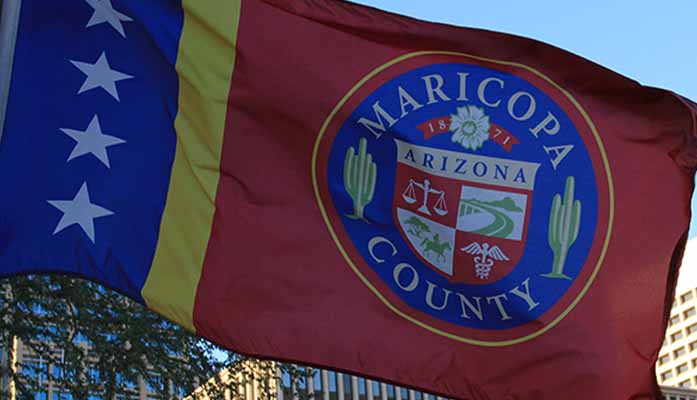
ABC 15 aired a segment criticizing a court filing requesting an end to the decade-long federal oversight of the Maricopa County Sheriff’s Office (MCSO). The oversight emerged from the Melendres v. Arpaio case, a class action complaint against allegedly racially motivated detentions that occurred during illegal migrant sweeps.
FOIAzona caught reporting errors made within a report by ABC 15 that no longer appears to be published, including the claim that MCSO filed the court motion.
However, it was the Maricopa County Board of Supervisors (MCBOS) who submitted that court filing earlier this month. MCBOS has budgetary power over MCSO.
In their court filing, MCBOS made the case that MCSO had long ago achieved 100 percent compliance in remedying issues of racially motivated detentions. The county argued that further federal oversight would only divert critical funds for public safety.
In a video explaining the filing, MCBOS Chairman Thomas Galvin said the end to federal oversight was long overdue.
“After 14 years, four sheriffs, and hundreds of millions of spent tax dollars, it is essential to defend taxpayer money if federal oversight is no longer warranted,” said Galvin. “All that’s left to enforce are matters unrelated to discriminatory policing which should be left to the sheriff who was elected by you: the Maricopa County residents.”
The 14 years of oversight have cost the county over $300 million in compliance. Around ten percent of those payments went to the court monitor, Robert Warshaw.
Leading up to MCBOS filing were months of allegations that Warshaw has a financial incentive to continue federal oversight of MCSO. Warshaw has earned over $30 million in monitor fees since taking on oversight of MCSO in January 2014 — around $3 million annually.
Warshaw faces similar accusations of exploiting federal oversight orders for personal gain in connection to his 15-plus years of monitoring the Oakland Police Department in California. There he earns over $1 million annually.
Warshaw has also earned millions from federal monitor assignments in New York, Michigan, and Louisiana.
Warshaw formerly served as the deputy drug czar for the White House Office of National Drug Control Policy under former President Bill Clinton.
Almost a decade ago, Judicial Watch reported on allegations that Warshaw allegedly employed “harsh” tactics that distracted from the county’s law enforcement activities.
Maricopa County Attorney Rachel Mitchell said Warshaw’s presence is no longer warranted.
“There is no defense for this ‘federal monitor,’” said Mitchell. “One more reason I like to get my news from the non-fiction section.”
Mitchell has been a vocal critic of Warshaw’s continued presence.
“It’s time we stop talking about Joe Arpaio — he is long gone and has been replaced by 3 different sheriffs from both political parties — and start talking about why the federal monitor, Robert Warshaw, is dragging this on and on,” said Mitchell in a May post. “Maricopa taxpayers should be outraged that we are at $350 million. Warshaw has no incentive to wrap this up.”
Back in October, Congressman Andy Biggs also asked Attorney General Pam Bondi to lift MCSO’s federal oversight. Supervisors Mark Stewart and Debbie Lesko, along with Mitchell, offered their support for the letter.
AZ Free News is your #1 source for Arizona news and politics. You can send us news tips using this link.
by Jonathan Eberle | Nov 17, 2025 | News
By Jonathan Eberle |
Newly surfaced documents and internal communications are raising new questions about political influence inside the Arizona Department of Child Safety (DCS), prompting calls for accountability from legislative leaders. Senate President Pro Tempore T.J. Shope is urging state and county prosecutors to provide an immediate update on whether investigations into the matter remain active.
The controversy centers on Sunshine Residential Homes, a group home provider that recently received a 30% rate increase from DCS. The company has been a significant donor to Governor Katie Hobbs and multiple Democratic political groups—connections that agency employees reportedly flagged as a source of concern.
According to internal messages and financial records reviewed by lawmakers, DCS staff expressed discomfort with the approval process for the rate hike. Employees referenced Sunshine Residential’s political ties to the Governor and suggested the situation placed agency leaders in an “uncomfortable position,” particularly after the provider allegedly pressured the state by threatening to shift services to the federal system unless the increase was approved.
Despite warnings that the higher rate would deepen an already-projected $13 million budget shortfall, DCS moved forward with the decision. Documents also show Sunshine Residential cited a substantial financial deficit to justify its request. However, financial records reportedly indicate the provider had $440,000 in operating income—figures that independent accounting experts said appeared inconsistent with the claimed shortfall.
These discrepancies have intensified questions about whether political considerations influenced decisions affecting vulnerable children in state care. In a letter sent Thursday to Attorney General Kris Mayes and Maricopa County Attorney Rachel Mitchell, Shope requested confirmation that any investigations into the potential “pay-to-play” conduct are ongoing. He also asked prosecutors to update the Legislature on the status of their reviews.
“These revelations are deeply disturbing,” Shope said. “If a provider donating hundreds of thousands of dollars to the Governor then pressures the state for a massive rate increase—and receives it—Arizonans deserve to know whether political influence played a role.”
Shope emphasized that the issue extends beyond partisan lines. “This is not a partisan issue—it’s a public trust issue,” he said. “If political donations influenced decisions inside DCS, especially decisions involving vulnerable children, that is unacceptable. We intend to get to the bottom of this.”
Jonathan Eberle is a reporter for AZ Free News. You can send him news tips using this link.
by AZ Free Enterprise Club | Sep 25, 2025 | Opinion
By the Arizona Free Enterprise Club |
Taxpayer-funded resources should not be used to tilt the scales of any election. This isn’t a difficult concept to understand. So, when Arizona State University (ASU) and PBS were exposed for colluding to help Katie Hobbs in the 2022 governor’s race against Kari Lake, we demanded accountability. We called on Arizona Attorney General Kris Mayes and Maricopa County Attorney Rachel Mitchell to launch a full investigation. After all, Arizona law is clear that universities must remain impartial and neutral in election-related activities.
In a ridiculous decision, both Mayes and Mitchell refused to take action on our complaint. But this battle is far from over.
The Illegal Use of Public Funds
This all began back in 2022 when Katie Hobbs was ducking just about everyone during her campaign for governor, most especially Kari Lake. It culminated in Hobbs’ refusal to debate Lake on Arizona PBS. From there, the process should’ve been simple. According to long-standing Arizona Citizens Clean Elections Commission (AZCCEC) rules, Kari Lake should have been provided with airtime, and the AZCCEC planned to do just that. But hours before Lake’s interview was scheduled to take place, the AZCCEC learned that Arizona PBS went behind their back to schedule an exclusive interview with Katie Hobbs—moving them to postpone Lake’s interview.
Then, last month, a series of emails came to light revealing that ASU leaders including President Michael Crow, former Arizona Republic publisher Mi-Ai Parrish, and Arizona PBS leaders allegedly colluded to jettison the debate rules to help Hobbs. This was a blatant and illegal use of taxpayer funds, and that’s why we filed a Hatch Act complaint with Mayes and Mitchell against ASU. But in a shocking and shameful decision, both decided against taking action…
>>> CONTINUE READING >>>
by AZ Free Enterprise Club | Sep 3, 2025 | Opinion
By the Arizona Free Enterprise Club |
If Katie Hobbs is thinking about what to do after her time as Governor is up, one option would be to test her skills in the Hide and Seek World Championships. After all, she proved during the 2022 gubernatorial election campaign that it’s what she’s best at.
After dodging any request to debate her opponent Kari Lake during her campaign, Hobbs also ducked reporters who dared to question her about it. She even hid in a restaurant bathroom after another reporter asked her why she didn’t like discussing politics.
All this hiding should have resulted in a simple decision. According to long-standing Arizona Citizens Clean Elections Commission (AZCCEC) rules, an opponent (in this case Kari Lake) should have been provided with airtime when a candidate (in this case Katie Hobbs) refused to debate. And the AZCCEC planned to do just that. But hours before Kari Lake’s interview was scheduled to take place, the AZCCEC learned that Arizona PBS went behind their back to schedule an exclusive interview with Katie Hobbs—moving them to postpone Lake’s interview.
If you think all this reeks of collusion, you’re right. And now, a public records request has made it clear. Katie Hobbs wasn’t playing hide and seek alone. She was purposefully aided by leadership at Arizona State University (ASU) and at PBS…
>>> CONTINUE READING >>>
by Matthew Holloway | Aug 31, 2025 | News
By Matthew Holloway |
The legal fight between Maricopa County Recorder Justin Heap and the County Board of Supervisors escalated Monday. America First Legal filed two motions on Heap’s behalf, and Arizona’s legislative leaders submitted an amicus brief supporting him.
In a press release, the County Recorder’s Office stated that the motions filed by America First Legal “reveal how the County Board of Supervisors and County Attorney Rachel Mitchell have weaponized county government against duly-elected Recorder Justin Heap simply because he dared to fulfill his statutory duties and protect the sanctity of Arizona elections.”
Heap said in a statement, “It’s unfortunate that the Board’s unprofessional and bad faith actions have forced us to litigate this issue; however, it’s significantly more unfortunate that the Board continues to deny the voters of Maricopa County the positive, common sense election integrity reforms that they voted for last November when they elected me. As I’ve promised from day one, I am working to ensure honest, secure, and transparent elections for every voter in Maricopa County. I am not, and will not, waiver in my commitment to executing on this promise. I’m grateful to America First Legal for standing by my side in this battle.”
America First Legal detailed Heap’s allegations in the first filing: “The Defendants — the members of the Maricopa County Board of Supervisors (‘BOS’) — have crossed from fiscal oversight into outright sabotage. Ignoring [state law] and decades of precedent, the BOS has refused to fund the Recorder’s ‘necessary expenses’ — from modern ballot-processing equipment to indispensable IT staff — while simultaneously seizing control of the very election functions its stonewalling endangers. The BOS’s obstruction is not mere bureaucratic foot-dragging; it is a calculated power grab that throttles the Recorder’s constitutional duty to administer secure, timely elections.”
In an amici filing in support of Heap, Arizona House Speaker Steven Montenegro and Senate President Warren Petersen’s legal representation call for a strict interpretation of state statutes which govern the responsibilities of the county recorder and board of supervisors. They argue that the “court should narrowly conclude that, based on the statutes’ plain language, when the statute authorizes ‘the county recorder or other officer in charge of elections’ to act, it is the recorder’s duty to ensure the statute is complied with unless the recorder expressly agrees to delegate that duty to another ‘officer in charge of elections.’”
As previously reported by AZ Free News, the months-long negotiations between Heap and the Board, led by Chairman Thomas Galvin, devolved steadily since Heap’s election and the replacement of Stephen Richer in January until finally collapsing into litigation in June.
The crux of the disagreement between the Board of Supervisors and County Recorder Heap rests upon a Shared Services Agreement (SSA) agreed to by Heap’s predecessor, Richer, who ardently opposed the election integrity efforts that Heap ran for office to enact. For nearly six months, the two county offices negotiated; however, Heap and the Supervisors were unable to reach an agreement, culminating in a lawsuit filed by Heap.
Since then, Heap has alleged that the Supervisors have “taken retaliatory actions” describing a series of measures that “make it impossible for him to do his job, including removing nearly all his election-related IT staff; seizing the servers, databases, and websites necessary to fulfill his duties; and restricting access to necessary facilities and equipment,” as reported by The Federalist.
In a second filing, Heap and America First Legal introduced allegations involving Maricopa County Attorney Rachel Mitchell, bringing a third County office into the fray in a dispute over who may represent the County Recorder, an attorney chosen by Heap or Maricopa County Attorney Rachel Mitchell. In the legal brief, they allege, “Attorney Mitchell originally appointed a criminal defense attorney to advise the Recorder; however, in April, America First Legal agreed to represent Heap pro bono, a move that Mitchell objected to.”
“When the Recorder complained that the original attorney appointed for him lacked sufficient subject matter expertise, County Attorney Mitchell appointed former Arizona Supreme Court Justice Andrew Gould to advise the Recorder only during negotiations with the Board. However, County Attorney Mitchell and the Board did not allow Justice Gould to litigate on the Recorder’s behalf,” the filing revealed.
But according to AFL, that wasn’t the end of it. “In May of 2025, Justice Gould specifically asked the Maricopa County Attorney’s Office for permission to litigate on Recorder Heap’s behalf but was not allowed to do so because the scope of his representation was limited to negotiation of the SSA and did not include litigation, and, accordingly, the County would not compensate him for litigation-related work.”
Mitchell responded by penning a letter to the AFL attorneys, writing in part, “This letter is to inform you that I am the Recorder’s attorney and that you do not represent the Maricopa County Recorder’s Office or Recorder Heap in his official capacity.”
Per The Federalist, AFL attorney James Rogers retorted that the “County Recorder is allowed to pick his own lawyer in litigation,” adding that Heap “is not subject to the whims of the county attorney.”
In the midst of the complex legal battle between the Recorder’s Office and the Board of Supervisors, which has drawn the attention of legislative leaders, the dispute with Mitchell adds yet another layer of infighting within the already divided county government, with the calendar counting down to the 2026 elections.
Matthew Holloway is a senior reporter for AZ Free News. Follow him on X for his latest stories, or email tips to Matthew@azfreenews.com.