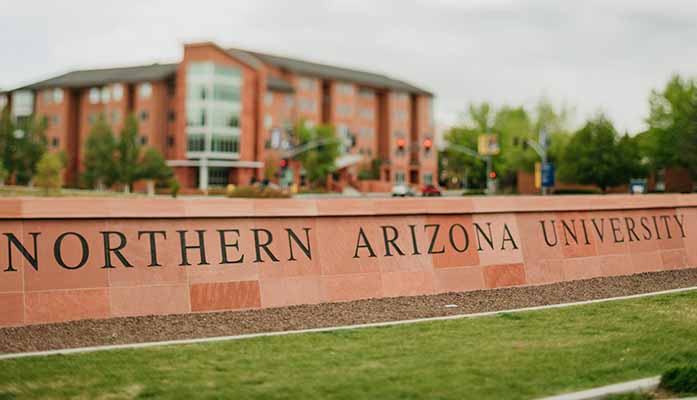
Several Northern Arizona University (NAU) students were captured on film targeting a Turning Point USA (TPUSA) table with vandalization, theft, and threats of violence.
These incidents occurred in the wake of the assassination of Charlie Kirk, the organization’s founder and former CEO. Kirk was assassinated last month during an open-air debate event at Utah Valley University.
Frontlines, the public awareness and news group associated with TPUSA, published footage of the incidents. The footage came from the field representative that advises the NAU chapter, Susie Sullivan.
In one video, a student pushed all the merchandise off the TPUSA chapter’s table before stealing a sign. In another video, a different student handed the table volunteers a note with a drawn depiction of Kirk’s assassination and an implied threat that those who share Kirk’s beliefs — or, Christians, which the individual characterized as “Nazis” — deserve death.
“A good Nazi is a dead one,” said the note. “Free speech!”
WATCH: As the Northern Arizona University @tpusastudents chapter conducted a tabling on campus, a student walked and swiped their merchandise off the table and onto the ground before stealing their sign. @TPUSA
The wife of NAU President Joe Luis Cruz Rivera and professor at NAU’s honors college, Rima Brusi, called Kirk (alluded to as “person X”) “morally repugnant” and “a bad person” following his assassination and preceding his memorial service in Phoenix, while acknowledging that his murder was “morally wrong” in a Facebook post:
“I’m honestly perplexed (not surprised but perplexed) at how many don’t seem to get this bit of logic but for what it’s worth, here it goes: 1) Murdering (including murdering person X) is wrong and 2) person X was demonstrably and consistently a bad person—these two statements are NOT mutually exclusive and almost any human brain should be able to handle both at the same time. Saying that ‘those who say X was a bad person who did damage are celebrating his murder’ is propaganda, not a logical conclusion — except when ‘those’ are truly ‘rejoicing’ (not just pointing out basic facts showing that X was a bad human, or reminding us of facts such as ‘the murder of W and Z went unacknowledged’). Anyway — perhaps those intent in erasing history from our classrooms would be open to the idea of adding ‘intro to philosophy: logic’ to the the curriculum. As ‘objective’ (and classic) a subject as they come. Don’t obey in advance. Buy and protect books for later sharing. Take screenshots of news in case they ‘disappear’. Download the contents of science databases. Support your librarian. Make truth and fact-checking as habitual and natural as teeth-brushing and food. Because truth IS nourishment, its protection is healthy, and its friends (science, research, literature, and why not – Wikipedia!) are our friends. Truth and fact-checking are the new and real herd immunity.”
TPUSA has reported over 62,000 new chapter requests from high school and college students since Kirk’s assassination. There are around 27,000 high schools and around 4,000 degree-granting postsecondary institutions, according to data from the National Center for Educational Statistics.
In other words: the amount of requests received to establish TPUSA chapters, if all nonduplicative and approved, would cover every single high school and postsecondary institution in the nation.
AZ Free News is your #1 source for Arizona news and politics. You can send us news tips using this link.
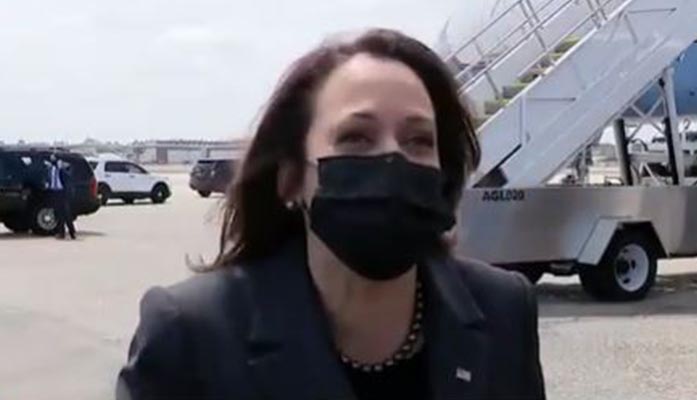
Vice President Kamala Harris plans to visit Northern Arizona University (NAU) next month as part of a tour to sell college students on key Democratic causes and increase young voter turnout.
Harris will encourage support for abortion rights, gun control, climate change reforms, progressive voting policies, and LGBTQ+ acceptance. The vice president alluded to the critical role of young voters in the upcoming presidential election.
“This generation is critical to the urgent issues that are at stake right now for our future,” said Harris. “It is young leaders throughout America who know what the solutions look like and are organizing in their communities to make them a reality. My message to students is clear: We are counting on you, we need you, you are everything.”
In Harris’ most recent appearance at Reading Area Community College in Pennsylvania last week, the vice president said that those who disagree with the progressive Democratic views on abortion, guns, climate change, voting, and sexuality are “extremists.”
Harris told the students that abortion was a constitutional right opposed by “extremists,” and that the Supreme Court had taken it away from them. The Constitution doesn’t enumerate abortion among individual rights; it doesn’t mention abortion at all.
“You all […] in your lifetime, witnessed the highest court in our land take a constitutional right that had been recognized from the people of America, from the women of America,” said Harris. “You all — your generation will have mothers and grandmothers that had more rights than you will have.”
Harris said that Biden would sign any bill passed by Congress codifying a right to abortion. Until then, Harris recommended the college students to mimic Mexicans, who “took to the streets” to codify abortion.
As for gun control, Harris advocated for an assault weapons ban, more extensive background checks, and nationwide red flag laws. The vice president characterized opponents to these reforms as “extremists.”
Also last week, President Joe Biden created the first-ever Office of Gun Violence Prevention. Biden placed Harris as the head of the effort. It appears that Harris may be more active in this role in contrast with her other role as the lead on mitigating the border crisis.
On voting policies, Harris took a shot at Georgia’s Christian leaders for their “hypocrisy” in banning the distribution of food and water to voters in line. Harris promulgated a debunked characterization of the law that Georgia made voting more difficult by criminalizing gifts of food and water. The Georgia law prohibits political entities seeking to influence voters from handing out refreshments.
“What happened to ‘love thy neighbor?’ The hypocrisy abounds,” said Harris.
Harris lamented the fact that not all states allow voters to use their student ID to vote. She promoted the practice of automatic voter registration.
Harris also painted opponents to diversity, equity, and inclusion as “extremists.”
“[D]espite what these extremist, so-called leaders are trying to do when they’re trying to get rid of DEI — diversity, equity and inclusion — we know that we’re going to stay committed to issues like equity,” said Harris. “Yeah, we want everyone to have an equal amount, but not everyone starts out on the same base. And so, if you give everyone an equal amount but you don’t start out on the same base, you’re still going to end up with people being treated differently.”
The White House announced Harris’ tour earlier this month. Harris is scheduled to appear at NAU on Oct. 17.
Corinne Murdock is a reporter for AZ Free News. Follow her latest on Twitter, or email tips to corinne@azfreenews.com.
A professor hailing from China with a World Economic Forum (WEF) background is behind critical race and gender theory research on children at two of Arizona’s taxpayer-funded universities.
Sonya Xinyue Xiao teaches psychological science and performs developmental research on moral and gender development at Northern Arizona University (NAU). Xiao was a postdoctoral scholar at the Arizona State University (ASU) T. Denny Sanford School of Social and Family Dynamics (SSFD) from 2020 to 2022, where she taught until last year. NAU has Xiao on a tenure track.
Presently, Xiao is also an affiliated research fellow for the Cultural Resilience and Learning Center (CRLC) in California and a member of the Diversity Scholars Network in the National Center for Institutional Diversity at the University of Michigan (UM). Xiao’s UM profile declares her social priority on children, youth, and families, with her specific focus pertaining to that priority on gender, sexuality, sexual orientation, race, ethnicity, social class, and socioeconomic status.
“[Xiao] is investigating how early adolescents’ multiple intersecting identities in gender and race/ethnicity are related to their prosocial behavior toward diverse others over time, with youth from diverse ethnic racial backgrounds,” stated her UM profile.
Additionally, Xiao has served as the programming committee member for the Sexual Orientation, Gender Identity and Expression (SOGIE) Caucus of the Society for Research in Child Development (SRCD) since 2021. The SRCD has repeatedly opposed efforts to restrict or ban gender transitions for minors.
Xiao’s published research papers have declared the need for parents to raise their children to embrace gender theory in themselves and their peers, under the claim that rejection results in poor social and emotional outcomes later in life, as well as to engage their children in diverse friendships, under the claim that those as young as preschoolers can be racist.
Characteristics aligning with progressive critical race and gender theories are what Xiao defines as “prosocial behaviors” throughout her research.
Finally, the last paper I started in grad school class on #gender is out in time for #PrideMonth! I was auditing carol's gender class, and that was the semester when covid hit….The paper has been in submission for 14months! Nonpaywalled version here: https://t.co/VEHUH7WEtN
— Sonya Xinyue Xiao, Ph.D. (@SonyaXinyueXiao) May 30, 2023
Last year, Xiao contributed to a chapter entry in a book, “Gender and Sexuality Development.” The chapter expanded the understanding of gender to many gender identities.
Check out this new meta-analysis on understanding predictors of prejudice toward trans individuals 👏 The authors tested 15 predictors, all but one are important (e.g.,political orientation, social dominance orientation, religiosity, gender essentialism) https://t.co/Q16biGeq2m
Xiao’s work includes “gender integration,” which studies the differences between genders with the ultimate goal of total integration. Xiao’s team with the T. Denny Sanford School of Social and Family Dynamics (SSSFD) holds the belief that gender is fluid and not binary; they receive federal funding through the Institute of Education Sciences (IES).
Xiao’s research has also relied on participants’ self-reported gender identities. Elsewhere, her current research team’s most recent release of preliminary findings asked children “how much they think they look like girls and how much they think they look like boys,” and reported that 10 percent thought they looked like both genders, and nearly one percent believing they didn’t look like either gender.
we are doing school-based research in AZ now and ask an open-ended question "what's your gender?” and the reader/experimenter says "for example, I am a girl."
In May, Xiao’s work on gender integration was featured in an IES blog series focusing on “research conducted through an equity lens.” SSSFD professor Carol Martin said that their work aims to achieve diversity, equity, and inclusion in education. Martin further insisted that teachers need to break up naturally-occuring gender segregation in their students to encourage diversity.
“We study the importance of having diverse classrooms (mixed-gender in our case) and breaking down barriers that separate people from each other but stress that this diversity matters only when it is perceived as inclusive and fosters a sense of belonging,” said Martin. “For some students, additional supports might be needed to feel included, and we hope to identify which students may need these additional supports and what types of support they need to promote equity in classrooms around issues of social belongingness.”
— Sonya Xinyue Xiao, Ph.D. (@SonyaXinyueXiao) May 6, 2023
According to her LinkedIn, Xiao attended Tianjin University of Science and Technology before beginning her career as a teacher at Zhenguang Primary School in Shanghai, China. While at Tianjin, Xiao had two notable back-to-back volunteering stints in 2010: first, a two-month gig at the Shanghai World EXPO 2010, then a month-long gig at the World Economic Forum (WEF) Summer Davos. For the latter gig with the WEF, Xiao reported providing document and verbal translation at the Lishunde Hotel, as well as assistance to conference attendees.
China’s practice of its cultural subversion tactics on U.S. soil, especially involving children, have been widely reported over the years, most recently concerning TikTok. While the Beijing-based company behind the app pushes content ranging from the mind-numbing to dangerous to foreigners, it restricts Chinese youth to a domestic version, Douyin, which contains only educational and inspirational content. In its short existence, TikTok has become a major influence in American children’s development.
Papers published while at ASU or NAU where Xiao was the principal author are listed below:
Xiao has also contributed in over a dozen other research papers uplifting critical race and gender theories, as well as promoting “nurturant parenting,” described as inductive discipline and punishment avoidance, versus the disciplinary model of “restrictive parenting,” described as punitiveness, corporal punishment, and strictness. That paper on nurturant versus restrictive parenting further advised that white parents should avoid restrictive parenting to ensure their children behaved better toward non-white peers.
Other papers to which Xiao contributed argued that white parents who claimed to be color-blind or were displaying evidence of “implicit racial bias” caused their children to have less empathy toward Black children.
Northern Arizona University (NAU) is crediting their largest first-year undergraduate class ever to its equitable tuition program favoring Native American students. NAU reported a 47 percent increase in new Native American undergraduate students, its largest ever.
As AZ Free News reported in February, the tuition program provides free tuition regardless of family income to Native Americans from Arizona’s 22 federally-recognized tribes but requires students of all other races to fall below a certain financial threshold to qualify.
In a press release issued on Monday, NAU President José Luis Cruz Rivera said the admissions boost afforded by the tuition program reflected the university’s ability to spur economic and social mobility.
“The accomplishments and backgrounds of our fall 2023 entering class demonstrates the life-changing opportunity for upward economic and social mobility that NAU’s exceptional academic programs offer, and I am pleased to see so many Arizonans from all walks of life entrust their educational futures to this great university,” said Cruz Rivera.
The program falls under the university’s financial aid program, Access2Excellence (A2E), which launched last April and initially was designed to only provide free tuition for Arizona residents with a household income below $65,000. It wasn’t until last November that the special exception for Native Americans from Arizona tribes came, at the behest of NAU’s Native American Advisory Board.
Cruz Rivera announced the special exception to the program during Native American Heritage Month.
At the time, the university explained the program’s special attention to Native American students was part of a “strategic priority” for serving Indigenous people nationwide. The vice president of the Office for Native American Initiatives, Ann Marie Chischilly, confirmed this equity focus for the free tuition program.
“We are dedicated to being the nation’s leading institution serving the indigenous peoples and providing a clear and affordable pathway to an exceptional education,” said Chischilly.
This fall’s undergraduate class also represented NAU’s largest number of Arizona resident students and Hispanic or Latino students.
The Arizona Board of Regents (ABOR) praised the success of NAU’s free tuition program.
This semester marks the start of @NAU's Access2Excellence tuition program – and the impact is already clear.
NAU is welcoming its 𝙡𝙖𝙧𝙜𝙚𝙨𝙩 number of first-year Arizona resident students and first-year Native American students in 𝙨𝙘𝙝𝙤𝙤𝙡 𝙝𝙞𝙨𝙩𝙤𝙧𝙮.
ABOR also highlighted the program in their latest annual report, released last week, as well as NAU’s $5 million pledge to prioritize indigenous people in curriculum and recruitment. The university’s pledge matches the $5 million from the Mellon Foundation.
According to NAU’s fall 2022 enrollment data, there were approximately 1,500 students identifying as American Indian or Alaskan Native.
Corinne Murdock is a reporter for AZ Free News. Follow her latest on Twitter, or email tips to corinne@azfreenews.com.
Arizonans are eligible to receive $1.03 billion in student debt relief, according to the latest estimates from the Biden administration.
Arizona’s cut accounts for about 2.6 percent of the $39 billion issued for 804,000 total borrowers (an average of over $48,500 per borrower). In a press release, the Department of Education (ED) clarified that the billion-odd in funds applied to over 20,500 borrowers in Arizona.
$1.03 billion for 20,500 borrowers averages about $50,200 per borrower: about $2,000 short of four years of in-state tuition at Arizona State University, $2,600 short of four years of in-state tuition at the University of Arizona, and $4,500 more than four years’ tuition at Northern Arizona University.
The relief constitutes the 12th-highest award from the Biden administration. The 11 other states above Arizona, in order from highest to lowest award amount, were: Texas, Florida, California, Georgia, New York, Ohio, Illinois, Michigan, North Carolina, Pennsylvania, and Virginia.
In a statement, President Joe Biden said that the past mistakes of the federal government were to blame for individuals not paying their debts. Biden also said that Republican lawmakers were hypocritical and dismissive for rejecting his sweeping student loan forgiveness.
“I have long said that college should be a ticket to the middle class — not a burden that weighs down on families for decades,” stated Biden.
The federal relief comes from the Income-Driven Repayment (IDR) plans launched by the Biden administration. The IDR plans slash undergraduate loan payments in half and abolish payments for low-income borrowers. The Biden administration determines IDR plans based on discretionary income: the difference between annual income and 150 percent of the poverty guideline based on the borrower’s family size and state of residence.
There are four possible IDR plans: Revised Pay As You Earn Repayment Plan (REPAYE) lasting 20 years for undergraduate loans only or 25 years for any graduate or professional loans, requiring 10 percent of discretionary income; Pay As You Earn Repayment Plan (PAYE) lasting 20 years, requiring 10 percent of discretionary income or a maximum based on the 10-year Standard Repayment Plan amount; Income-Based Repayment Plan (IBR), requiring 10 percent of discretionary income for new borrowers on or after July 1, 2014 and lasting 20 years, or 15 percent of discretionary income for older borrowers on or after July 1, 2014 and lasting 25 years, with both contingencies capped by the 10-year Standard Repayment Plan; and the Income-Contingent Repayment Plan (ICR) lasting 25 years, requiring 20 percent of discretionary income or projected payment on a repayment plan with a 12-year fixed payment adjusted to income.
Even if borrowers don’t fully pay off their loan balance under their IDR plan, the federal government will forgive the remaining loan balance. ED will also count months of nonpayment based on certain criteria toward the total repayment period: economic hardship deferment, repayment under other plans, and required zero amount payment periods. Additionally, ED offers borrowers total forgiveness of any remaining balance after 10 years of payments, rather than 20 or 25 years, should the borrower participate in both an IDR plan and the Public Service Loan Forgiveness (PSLF) Program.
ED began notifying eligible borrowers of the relief earlier this month. The Biden administration has issued over $116 billion in student loan relief for three million borrowers: an average of $38,600 per borrower.
That average is roughly several hundred dollars less than the average national total for four years of in-state tuition at a public college, and about equivalent to the average national total for just over one year of out-of-state tuition at a public college.
Corinne Murdock is a reporter for AZ Free News. Follow her latest on Twitter, or email tips to corinne@azfreenews.com.