by Staff Reporter | May 3, 2025 | News
By Staff Reporter |
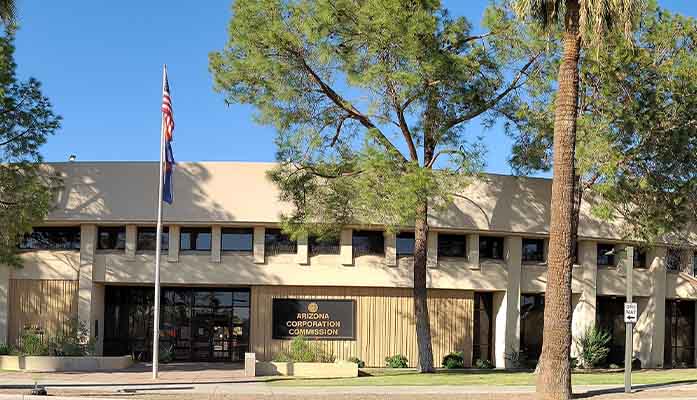
A commissioner with the Arizona Corporation Commission (ACC), Nick Myers, denies a power company is to blame for a woman’s death.
82-year-old Kate Korman died last May less than a week after the Arizona Public Service (APS) shut off her power for failure to pay. Per APS, Korman ceased paying in January and owed around $500.
The medical examiner’s report attributed Korman’s cause of death as chronic alcohol use with heart disease listed as a contributing factor and declared the manner of her death to be an accident caused in part by exposure to elevated temperatures.
ACC prohibits power shut offs based on a certain timeline — June 1 through October 15 — not based on temperatures. APS does offer a program allowing family members to oversee their loved one’s bills.
Myers opposed modifying policy to implement temperature-based shutoff restrictions. The commissioner also said the current shutoff restrictions have caused more problems than it aimed to solve.
“We are already at a point where the policies we have in place are causing massive debt within our lower income communities (an unintended consequence of those policies) and therefore I believe, and am attempting to verify, that the mental stress is actually CAUSING more deaths than they are saving (by way of suicides increasing). Furthermore, much of that debt, millions of dollars of it actually, are ultimately being transferred back to the rest of the customers, increasing bills, which is actually exacerbating the underlying problem of people not being able to pay their bills,” said Myers. “In a nutshell, at some point people (and their families, and possibly their communities, like churches) should be responsible, it shouldn’t all fall on utilities and the ratepayers of utilities. It’s ultimately an unsustainable catch-22, and we are possibly seeing that we are at that cusp right now.”
Myers defended APS in response to criticisms made by Jonathan and Adam Korman, the sons of the deceased woman. Korman maintains his mother died due to temperatures inside her home, and that APS bears responsibility for shutting off her power.
Myers asserted there existed no further remedies to mitigate heat exposure due to shutoffs. Myers indicated there were further details about the elder Korman’s death that would have cast her in a negative light.
“Alcoholism killed your mother, heat may have been a contributing factor, but the utility did go above and beyond what we require. There really are no more practical methods that can be implemented at this point,” said Myers. “We did address it and trust me, I’m sure the family doesn’t want made public what we found. This is another case where the utility did above and beyond what they needed to, and more importantly the shutting off of power for non-payment was NOT the cause of death.”
Myers also said the elder Korman’s children bore some of the responsibility for her death, since they were not keeping an eye on her.
“So you are really going to come after us, who have no control over the situation, when you failed to protect your own mother, even though there were multiple tools in place for you to use for that exact purpose?” said Myers. “I’m not just blaming your mom, I’m more blaming you for not looking out for your elderly mom. I refuse to tell utilities that they have to provide power to people that do not pay their bills. To be honest, I’m not even happy about many of the programs that they have in place to help, but I understand the need for them. The only problem is the customer, and their family, have to actually reach out to take advantage of those programs. Again, I am sorry for your loss, but you have to take responsibility here. This is not a problem that the rest of society should shoulder.”
AZ Free News is your #1 source for Arizona news and politics. You can send us news tips using this link.
by Matthew Holloway | Apr 27, 2025 | News
By Matthew Holloway |
During the Arizona Corporation Commission’s annual Summer Preparedness Workshop, Chair Kevin Thompson and Vice Chair Nick Myers essentially echoed the talking points of Arizona Public Service Company (APS) and Tucson Electric Power (TEP). Both utility companies implicitly refused to reactivate the Cholla and Springerville Coal-Fired Power Plants in defiance of President Trump’s Executive Order earlier this month. Thompson claimed doing so would “jeopardize the grid and burden ratepayers with millions of dollars in short-sighted costs.”
In early April, President Donald Trump issued an Executive Order (EO) using emergency authority to keep APS’ Cholla Power Plant in operation. In a statement issued with the EO, Trump said, “I am instructing Secretary Wright to save the Cholla coal plant in Arizona, which has been slated for destruction. We’re going to keep those coal miners on the job. We’re going to have that plant opening and burning beautiful, clean coal in a very short period of time.”
According to an emailed release from the ACC, the APS representative at the workshop “stated that the process that culminated in closing the plant began ten years ago because of new regulations from the U.S. Environmental Protection Agency (EPA) making the operation of the plant uneconomic for their customers.” The utility added, per the ACC that “because of the ongoing EPA regulations requiring new equipment for pollution control and significant deferred capital and maintenance investments that would have to be made, the re-opening and continued operation of the Cholla plant would come at a significantly high cost for customers.”
APS reiterated that it intends to preserve the infrastructure of the power plant and offered that it could be used as a potential site for nuclear or natural gas power later, implicitly refusing to bring the coal-fired plant back online.
Similarly, TEP confirmed that it still intends to move forward with the scheduled retirement of Units 1 and 2 at the coal-fired Springerville Generating Station after the summer of 2027 and after the summer of 2032. The utility is also exploring the possibility of repurposing the power station for an alternative fuel source.
Vice Chair Myers commented, “We’re all aware of the detrimental loss of electric capacity with the closure of Arizona coal plants, and in part because of ongoing EPA regulations. It is a day late and a dollar short when it comes to re-opening the Cholla plant. Trying to re-open Cholla at this point would result in significantly higher rates for customers,” repeating the APS talking point.
He added, “The utilities have already been planning for this retirement and replacement costs are already being born by the utility customers. Re-opening Cholla would also require significant capital and maintenance investments that have been deferred. Further, the EPA requirements that made the continued operation of Cholla not cost-effective are still in effect. The damage has already been done. Arizona utilities are prepared for that and already planning to repurpose those plants for future generation, such as nuclear or natural gas-fired power.”
“Bringing the Cholla plant into compliance with Obama era EPA requirements will require the installation of costly scrubbers on the coal-fired units that would cost ratepayers hundreds of millions of dollars,” said Chair Kevin Thompson.
Thompson added a subtle critique of the President’s movement to reactivate the Cholla Generating Station saying, “The Commission must hold utilities accountable and ensure that we have reliable and dispatchable generation to meet the load demands of the future. We also have to make sure we accomplish that goal in a manner that doesn’t jeopardize the grid and burden ratepayers with millions of dollars in short-sighted costs that fail to meaningfully address our long-term energy needs.”
Matthew Holloway is a senior reporter for AZ Free News. Follow him on X for his latest stories, or email tips to Matthew@azfreenews.com.
by Daniel Stefanski | Jan 10, 2025 | News
By Daniel Stefanski |
The Arizona Corporation Commission is now entirely under Republican leadership.
On Monday, Lea Márquez Peterson, Rachel Walden, and Rene Lopez were sworn into office at the Arizona Corporation Commission (ACC), giving Republicans control of all five positions on the state agency. Peterson returned to office, while Walden and Lopez entered this position for the first time.
During the inaugural meeting of the new year, first-term Commissioner Kevin Thompson was voted as chairman of the ACC. Nick Myers became (what appears to be) the first-ever vice chair of the ACC.
In an exclusive comment to AZ Free News, Thompson said, “During our campaign, Commissioner Myers and I often spoke on the trail about our objectives once elected. We expected it to take our full four-year term, but instead we accomplished our goals within the first two years of office.”
Thompson added, “Looking forward to serving as Chairman, I’m confident we will be able to build upon our recent successes with this talented and motivated group of Commissioners. As Chair, my focus is going to be on ensuring our collective efforts are always pushing Arizona forward, making the Commission more efficient and responsive to the public, and never losing sight of our duties to ratepayers and the trust voters have placed in us.”
Peterson posted to her X account about her first day of this new term of office, saying, “I am honored to serving a second term at the Arizona Corporation Commission! Thank you to Chief Justice Timmer for conducting my oath of office. I’m looking forward to serving with Nick Myers, Kevin Thompson, Rachel Walden, and Rene Lopez!
Nick Myers said, “As best we can tell, the Arizona Corporation Commission has never had a Vice-Chairman position. Today we made history… Again. After I nominated Commissioner Kevin Thompson as the new chairman, he nominated me as the very first Vice-Chairman!”
Rachel Walden wrote, “It’s official! Thank you to the Commission staff for organizing today’s swearing in ceremony and agenda. Thank you to my friends and family for attending! And a massive thank you, Arizona! It’s an honor to go to work for you.”
All five commissioners are excited about their upcoming work at the ACC over the next two years – even in a divided state government with a Democrat as Governor and Republicans maintaining control of the Arizona Legislature. In his remarks following his unanimous election as chairman of the ACC, Thompson said, “I want to continue to support this Agency and build upon a culture of success and further ensure the Commission is a place the brightest and best want to work. Where we can all be excited to step foot in this building and be proud of what we do to ensure Arizona remains a great place for our children and grandchildren and businesses for decades to come.”
Daniel Stefanski is a reporter for AZ Free News. You can send him news tips using this link.
by Matthew Holloway | Sep 12, 2024 | News
By Matthew Holloway |
During its meeting on September 5th, the Arizona Corporation Commission (ACC), led by Republican Commissioner Nick Myers, voted unanimously to approve a Certificate of Environmental Compatibility (CEC) allowing the Midtown Reliability Project of the Tucson Electric Power (TEP) company to move forward.
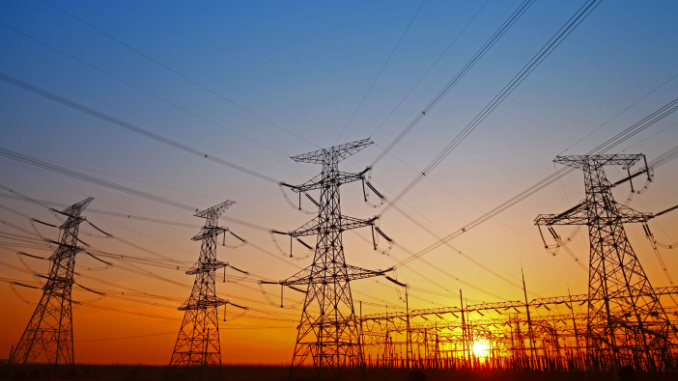
The project is a comprehensive upgrade to the now-overloaded 46 kV high-voltage transmission lines that run through midtown Tucson to a “more flexible, higher voltage” 138 kV monopole line above ground, according to a press release from the Commission.
A major controversy unfolded with some in Tucson calling upon the ACC to select a partially underground routing that would increase the cost of the project by millions of dollars and meet the expense through an end-user fee.
Commissioner Myers commented after the vote, “I understand why some Tucson residents would want this project constructed below ground. However, constructing the project below ground is not needed for safety, reliability or other utility operational reasons; therefore, it is not acceptable for all TEP customers to shoulder the $67 million cost for undergrounding the project.”
He added, “I am pleased the Commission approved this important grid-reliability project, while at the same time protecting TEP customers from unnecessary undergrounding expenses.”
In a corresponding press release, TEP explained, “The ACC voted unanimously today to authorize above-ground construction along TEP’s preferred route for the project, which primarily follows West Grant Road, North Park Avenue, Euclid Avenue and East 36th Street to link two TEP substations to the planned Vine Substation north of the University of Arizona campus. The ACC also authorized construction along an alternative route. An interactive map of the approved corridors can be viewed online.”
The utility added a timeframe saying, “With growing energy demands nearly reaching the capacity of existing, lower-voltage facilities, TEP will work to complete the transmission line and substation by the summer of 2027 to maintain service reliability.”
Myers’ fellow Republican, ACC Chairman Jim O’Connor, told KOLD, “A big kudo to the parties for finding a solution that will enable this project to move forward. This transmission project will further enhance reliability and modernize a critical portion of our electric grid in Tucson.”
The local outlet noted that a sticking point for the project has been pushback from the midtown community and many advocating for subterranean lines. In 2023, KOLD’s Jack Cooper wrote in a post to X that the opposition to the above-ground routing were “worried about property values and want the lines buried.” However, as the ACC noted in its release, “The Commission unanimously decided to protect ratepayers from that financial impact.”
Matthew Holloway is a senior reporter for AZ Free News. Follow him on X for his latest stories, or email tips to Matthew@azfreenews.com.
by Matthew Holloway | Aug 7, 2024 | News
By Matthew Holloway |
Arizona Corporation Commissioner Nick Myers hammered home the necessity of reliability and affordability to Arizona energy providers including Arizona Public Service Company (APS), Tucson Electric Power Company (TEP), UNS Electric, and Arizona Electric Power Cooperative during a workshop for the development of an Integrated Resource Plan or ‘IRP.’
The IRP is required by the commission every three years.
According to the Commission, the providers represented at the workshop gave presentations that highlighted the projected load growth in the state and analyzed their resource portfolios and their estimated revenue requirements.
Both APS and TEP discussed plans to decommission their coal-fired power plants, APS’ at Four corners in 2031 and TEP at various locations by 2032. Both of the utilities told the commission they intend to replace the coal-fired plants with natural gas generation “that can ramp up quickly during the day when customers need electricity the most and make use of existing infrastructure to maintain customer affordability as they transition to renewable energy, battery storage and potentially new technology.”
Myers reportedly pressed the utilities represented on whether they had completed their analysis based on the lowest cost and most technologically neutral means without imposing their politically-driven mandates to reduce emissions on the state as required by Commission rules. He pointedly questioned if their differing goals “may have resulted in the selection of a more costly or less reliable resource portfolio,” per the commission.
Myers said, “IRP planning is a complicated process that involves the analysis of various scenarios, multiple iterations, and complex projections. It is critical that the Commission understands what a utility’s plan is going forward and addresses any possible discrepancies or inconsistencies so that Arizonans can feel comfortable that their air conditioning will remain on and at an affordable rate.”
The commission reported that it is now reviewing the IRPs from the utilities and should bring a memorandum and proposal for review by the end of the month. In closing, Myers told the workshop, “Reliability and affordability will continue to be my highest priorities. We absolutely cannot afford to have blackout and brownouts in Arizona.”
In a July press release reported by KTAR, Chairman Jim O’Connor expressed similar concerns saying, “Hotter temperatures and monsoon winds put even more pressure on our electric grid, as we demand increasing amounts of power each year from our utilities. Thankfully, Arizona has top notch utilities with dedicated employees that coordinate to keep our power reliable across our state.”
O’Connor and the utilities at that time called upon Arizonans to reduce electrical usage by adjusting home thermostats and pushing heavy appliance usage and EV charging later into the evening.
Matthew Holloway is a senior reporter for AZ Free News. Follow him on X for his latest stories, or email tips to Matthew@azfreenews.com.