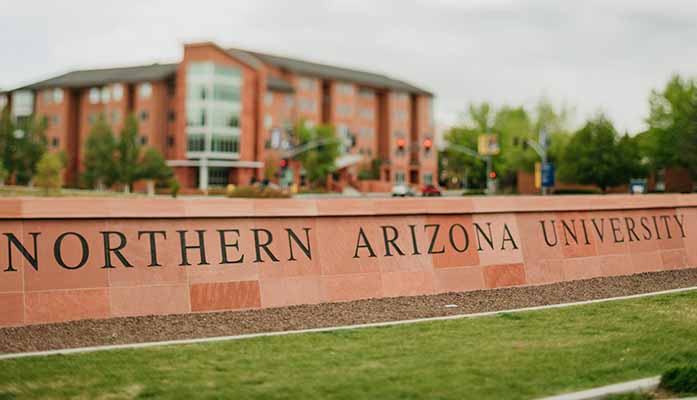
Northern Arizona University (NAU) admitted that it purposefully admitted more Hispanic students in order to receive more federal funding.
The Department of Education (ED) rewards higher education institutions for having a certain racial makeup within their student population, called a “Hispanic-Serving Institution.”
In order to achieve HSI status, colleges or universities must have Hispanic students making up at least 25 percent of their full-time equivalent student population, as well as a significant number of students requiring needs-based financial aid.
NAU President José Luis Cruz Rivera said accomplishment of their HSI designation in 2020 was intentional in an interview last week with Diverse Issues in Higher Education.
“NAU applied for classification and then appointed key leadership to ensure we serve our Hispanic students well,” said Cruz Rivera. “It’s not just about meeting the number threshold, but rather about really carrying out our mission and supporting the success of our students.”
Hispanics aren’t the only racial group that NAU has prioritized. NAU pledged free tuition to Native Americans in November. In March 2021, NAU launched multiple initiatives totaling $1.3 million to increase the number of both Native American and Hispanic science, technology, engineering, and math (STEM) graduates.
Following their HSI classification, NAU began to prioritize Hispanic students through their strategic plan, NAU 2025 – Elevating Excellence. These prioritizations include Hispanic-specific retention strategies concerning financial aid, mental health services, and community building; hiring and retention strategies to attract more Hispanic faculty; and faculty training to better understand Hispanic students.
HSI federal programming was reestablished in 2021 through an executive order by President Joe Biden: the White House Initiative on Advancing Educational Equity, Excellence and Economic Opportunity for Hispanics (Initiative). The concept originated in 1990 under former President George H.W. Bush, but fell out of use in subsequent administrations until Biden was elected.
As part of the initiative, Biden established the Advisory Commission on Advancing Educational Equity, Excellence, and Economic Opportunity for Hispanics. The commission convened in its inaugural meeting earlier this month.
Included in the 21-member commission are three Arizonans. One of them is NAU’s program director and teacher for its Arizona K12 Center, Juliana Urutubey.
Urutubey was named the 2021 National Teacher of the Year and the 2019 Chicanos por La Causa Esperanza Latina Teaching Award while working as an educator in Las Vegas, Nevada. Urutubey recently relocated to Phoenix and joined NAU’s Arizona Teacher Residency.
Chicanos por La Causa has been intertwined with several major controversial events in recent years, including a federal pandemic loan fraud investigation; membership with the Aspen Institute, the liberal think tank that played a major role in the cover-up of investigative reporting on Hunter Biden’s laptop; and funding to pass propositions outlawing debt collection efforts and awarding in-state college tuition rates to illegal immigrants.
Another Arizonan on the commission is Anna Maria Chávez: President and CEO of the Arizona Community Foundation. Chávez was formerly the CEO of Girl Scouts of the USA; director of intergovernmental affairs, urban relations and community development/military affairs advisor, and deputy chief of staff for former Gov. Janet Napolitano; and several Clinton administration positions, including legal counsel for the Federal Highway Administration, attorney advisor in the Office of the Counsel to the President, senior policy advisor to former Secretary of Transportation Rodney Slater and SBA Administrator Aida Alvaraz.
Chávez has also served as Executive Vice President and Chief Growth Officer for the National Council on Aging; in June 2020, she became the executive director and CEO of the National School Boards Association (NSBA) and currently serves as an ex-officio director on its Board of Directors; in 2021, Chávez was appointed as the inaugural chief impact officer of Encantos and president of their online presence. Encantos investors include Kapor Capital, Steve Case’s Revolution Rise of the Rest Fund, Chelsea Clinton’s Metrodora Capital, and L’ATTITUDE Ventures.
The third is Teresa Leyba Ruiz, who became the senior vice president and chief advocacy and programs officer for Education Forward Arizona (EFA) in April. Ruiz formerly served as the president of Glendale Community College (GCC), part of the Maricopa County Community College District (MCCCD), having worked in various leadership roles with GCC for over a decade. Ruiz also participated in the Aspen Institute’s 2018-19 Presidential Fellows Program (as mentioned earlier in this article, the Aspen Institute played a major role in covering up the Biden laptop scandal).
EFA received millions from AmeriCorps, the Arizona Department of Education, and Helios Education Foundation in recent years. They also received funding from a wide swath of major entities, including MCCCD and NAU: Alliance Bank of Arizona, Arizona State University, Bank of America, Blue Cross Blue Shield of Arizona, Maricopa County, the Salt River Project, State Farm, University of Arizona, and Wells Fargo. Leaders from a number of these entities serve on EFA’s board of directors.
Per their agenda, the commission discussed ways they could advance educational equity in K-12 and higher education using Biden’s budget, reviewed federal data on Hispanics, and discussed means of strengthening career pathways for Hispanic advancement.
Corinne Murdock is a reporter for AZ Free News. Follow her latest on Twitter, or email tips to corinne@azfreenews.com.
Microsoft founder Bill Gates will deliver the keynote speech for this year’s Northern Arizona University (NAU) graduation.
Gates will deliver the keynote address on Saturday during NAU’s 3 pm ceremony for the College of Engineering, Informatics, and Applied Sciences as well as the College of the Environment, Forestry, and Natural Science. NAU will also award Gates with an honorary doctorate.
NAU President José Luis Cruz Rivera said in a press release that Gates was a thought leader that exemplified NAU values.
“It is our privilege to recognize Bill Gates for his pioneering work in science and technology and his long standing thought leadership and philanthropic commitment to creating a world where every person has the opportunity to live a healthy life and live up to their full potential,” said Cruz Rivera.
Gates has advanced and pioneered on several progressive initiatives in science and technology. Most recently, Gates shared with ABC News that he would like the country to rely mainly on nuclear energy in the future to achieve energy independence. Gates also believed that artificial intelligence (AI) should be advanced most for use in health and education.
In recent decades, Gates has also bankrolled efforts to normalize the consumption of bugs or lab-grown meats as an alternative to meat.
Last year, Politico revealed that Gates had helped orchestrate the global responses to the COVID-19 pandemic. Gates’ philanthropy — the Bill & Melinda Gates Foundation, one of the largest in the world — identified vaccine developers and invested in each step of the vaccine development process. His organization also played a role in a global distribution plan for the shots.
In his statement, Cruz Rivera also expressed gratitude that the Bill & Melinda Gates Foundation provided significant financial support to the university.
“As NAU advances its mission to deliver equitable postsecondary value, we are honored to have the support of the Bill & Melinda Gates Foundation as we seek to ensure that the talent and aspirations of people in Arizona and beyond are met with the opportunity to realize economic mobility and social impact—shaping a brighter future for themselves and the communities they represent,” said Cruz Rivera.
Gates’ organization donated just over $500,000 to NAU last October for expanding equity.
On Tuesday, Gates wrote in his blog that he agreed to give a commencement speech at NAU because he believed NAU was “redefining the value of a college degree.” Gates dismissed the traditional notion that the more prestigious and exclusive schools were, the more valuable the degree. Gates said that accessibility, affordability, and economic mobility were better metrics to determine the value of a college’s degree, and declared that NAU was an “emerging leader” by that standard.
NAU had a 57 percent six-year graduation rate as of the latest Arizona Board of Regents data from 2021. Last summer, NAU didn’t rank within the top 100 of the nation’s best universities. They ranked 288.
Gates commended NAU’s achievements in diversity, equity, and inclusion: he praised the fact that nearly half of all NAU’s 30,000 students were “people of color,” mainly Hispanic or Native American, as well as the fact that many were first-generation college students or from low-income families.
Gates commended NAU’s equity-based financial aid structure favoring Native Americans from Arizona tribes over other races.
Corinne Murdock is a reporter for AZ Free News. Follow her latest on Twitter, or email tips to corinne@azfreenews.com.
Arizona State University (ASU) and Northern Arizona University (NAU) announced Monday that they would begin banning TikTok from their campuses.
In statements to media outlets, the universities cited orders from the Biden administration regarding federal contractors as the rationale for walking back their usage of the platform.
Both ASU and NAU said they would begin deactivating their university-affiliated accounts beginning on Monday. One of ASU’s main accounts, @arizonastateuniversity, last posted in February. One of NAU’s main accounts, @nausocial, last posted a recruitment video to the platform on Monday.
Initial information provided by an ASU spokesperson relayed that ASU would block access to TikTok on its WiFi and university networks. However, in a revised statement, ASU noted that the ban would concern ASU-managed devices, not student devices accessing university networks.
“TikTok will no longer be allowed to be installed on ASU-managed devices as the university takes steps following President Biden’s recent order for federal contractors,” stated ASU.
The Office of Management and Budget (OMB) issued the order in late February, giving federal agencies and contractors up to 30 days to comply. OMB Director Shalanda Young cited the Consolidated Appropriations Act of 2023 as the basis for the guidance.
The act instructed the OMB, the administrator of General Services, the director of the Cybersecurity and Infrastructure Security Agency, the director of National Intelligence, and the secretary of Defense to craft guidance removing TikTok from government devices.
According to the OMB guidance, federal agencies are currently in the second phase of this order: 90 days of ensuring compliance and ceasing contracts with the noncompliant. The third phase directs federal agencies to ensure compliance in future contracts and solicitations for 120 days.
The act made exceptions to the ban for law enforcement activities, national security interests and activities, and security research. However, each exercise of this exception must be given via approval and documentation from an agency head or their designee on an annual basis.
Then last month, a TikTok spokesperson claimed to multiple media outlets that the Biden administration demanded that its parent company, ByteDance, either sell TikTok or face a nationwide ban. The U.S. House Foreign Affairs Committee had voted earlier in the month to given Biden the power to ban the app.
As tensions between the Biden administration and TikTok mounted, the White House faced scrutiny for posting a video reportedly created using another app owned by ByteDance: CapCut.
Biden has also faced criticisms for his use of TikTok influencers for the past two years to attract younger voters, inviting controversial figures like transgender activist Dylan Mulvaney and LGBTQ entertainer Benito Skinner (Benny Drama) to the White House.
The Biden administration also authorized thousands in cash payments to create an “influencer army” using TikTok stars. One of them, Ellie Zeiler, was asked to push Biden administration messaging on the Ukraine war, rising gas prices, and historic inflation rates onto her 10 million followers.
NEW: I’ve obtained the *Confidential* White House PR email sent to TikTok influencers begging them to “do an intimate” zoom call with Dr. Fauci.
Northern Arizona University (NAU) will provide free tuition regardless of income to Native Americans from Arizona tribes but requires other races to fall below a certain financial threshold to qualify. NAU President José Luis Cruz Rivera described the arrangement as a cornerstone for the university’s equity work.
“Ensuring access to an affordable, high-quality education is a key part of NAU’s vision to deliver equitable postsecondary value,” stated Cruz Rivera.
Celebrating NAU's Access2Excellence expansion with a round dance with members of NAU's Native community 🪶 pic.twitter.com/GIg2hw5DlV
This arrangement falls under NAU’s financial aid program “Access2Excellence” (A2E) which launched last April. However, the university didn’t offer this free tuition for Arizona tribal members until last November, after NAU’s Native American Advisory Board pushed for its creation.
Initially, A2E was intended to provide tuition-free college for all students, regardless of race, if their household incomes were at or below $65,000. When A2E launched last spring, approximately 50 percent of Arizona households met that threshold.
✨ Introducing the @NAU Access2Excellence initiative 📚NAU will provide a tuition-free college education for EVERY AZ resident with a household income of $65,000 or below – assuring tuition will be fully covered by scholarships and financial aid. ➡️ https://t.co/O4qAcFxMeupic.twitter.com/xbRhOpF7Ja
NAU stated in a press release that the special free tuition offer for Native American students was part of its “strategic priority” to be the leading university serving Indigenous people nationwide. Ann Marie Chischilly, vice president of the Office for Native American Initiatives, said that this offering represented NAU’s commitment to prioritizing Native Americans.
“We are dedicated to being the nation’s leading institution serving the indigenous peoples and providing a clear and affordable pathway to an exceptional education,” said Chischilly.
"We pride ourselves on our service to Native American students & the communities they represent. Extending #A2E eligibility for our Arizona tribal members is an important step as we plant seeds for the success of future generations of Native American students." –@NAUPresidentpic.twitter.com/T1bLhtvuz1
Free tuition is one of the latest in NAU’s latest initiatives focused on uplifting Native Americans. In January, NAU pledged $10 million to prioritize Native American and Indigenous people in curriculum and recruitment efforts.
Through the work of Seven Generations Signature Initiative, NAU will contribute to the advancement of Indigenous knowledges and scholarship, strengthen partnerships & propel Indigenous student success. pic.twitter.com/P5P8NoNv14
Last March, NAU launched multiple initiatives totaling $1.3 million to increase the number of both Native American and Hispanic science, technology, engineering, and math (STEM) graduates. These initiatives focus on training STEM faculty in anti-racism, revising graduate admissions processes to increase inclusivity and diversity, creating additional supports exclusively for Indigenous and Hispanic students, offering exclusive campus opportunities for Indigenous and Hispanic students’ families.
Department of Biological Sciences professor Catherine Propper predicted that these initiatives would increase anti-racist educational practices in education beyond NAU.
“In this way, we can bring about equity-oriented change in STEM fields by building leadership among faculty to contribute to institutional change, eliminate structural barriers and reduce disproportionality and systemic inequities in STEM fields,” said Propper.
Cruz Rivera asserted that greater funding and research efforts for recruitment, training, and placement on Native American and Hispanic students was an equitable necessity to spur these groups’ economic mobility.
“Together, we can propel more low-income, first-generation students and students of color to the middle-class and beyond,” said Cruz Rivera. “Support for HSIs will pave the way for less inequality, more social mobility and broader economic prosperity in America.”
In June 2021, the Arizona Department of Education (ADE) awarded NAU with $1 million to advance culturally responsive Native American pre-K-12 educators.
The A2E program goes into effect this fall. Those admitted to NAU for fall 2023 or spring 2024 semesters qualify.
Corinne Murdock is a reporter for AZ Free News. Follow her latest on Twitter, or email tips to corinne@azfreenews.com.
A Northern Arizona University (NAU) study declared that America needs to cooperate with China more for climate change.
The lead author of the study, Hubert Cheung, advocated for greater cooperation with the communist country. In addition to being adjunct faculty in NAU’s School of Earth and Sustainability, Cheung is part of the University of Tokyo in Japan as well as the University of Queensland in Australia. Cheung grew up in Hong Kong, China.
“We need to cooperate with China if we are to find effective solutions to climate change, for illegal wildlife trade, for sustainability transitions,” stated Cheung. “Understanding the Chinese leadership’s core strategic interests—and where political will already exists in Beijing to deliver on these strategic interests—will help conservation scientists and practitioners find opportunities and manage challenges.”
The paper’s abstract advocated for increasing China’s political power in order to advance sustainability and conservation. The paper went on to issue a defense of the Chinese government’s core interests, such as maintaining its current level of authority over its citizens and expanding its power onto the global stage.
“‘[A]n environmentally healthy and secure China can benefit the world, and this will only become more apparent over the course of the 21st century,’” stated the paper. “The scale and reach of China’s environmental footprint — and global geopolitical influence — is such that an exploration of its leadership’s political agenda and political will is valuable and timely for conservation.”
The other NAU researcher involved in the study, Duan Biggs, is also part of the same school as Cheung. Biggs indicated that sustainability efforts were the way to brokering a unified front between governments.
“The environment and conservation represent an opportunity for soft-diplomacy and for countries and societies to maintain dialogue and collaboration despite growing tension,” stated Biggs.
The only researcher hailing from a Chinese university was Tien Ming Lee. He’s a professor at the State Key Laboratory of Biological Control and Schools of Life Sciences and Ecology at Sun Yat-sen University in Guangzhou, China.
The other researchers hailed from Japan, Australia, Canada, the United Kingdom, and South Africa.
The World Economic Forum (WEF), the leading organization attempting to create a new world order of global governance, identifies China as a leader in combating climate change on an international level. The WEF Global Future Council is also attempting to increase trust in China as a world leader.
Last year, China’s President Xi Jinping opened up the WEF’s annual meeting in Switzerland by calling on stronger international cooperation in overcoming COVID-19, revitalizing the economy, and addressing climate change. Jinping encouraged more open relations between all nations, not less.
“We should remove barriers, not erect walls. We should open up, not close off. We should seek integration, not de-couple,” said Jinping.
The WEF invented the social credit score system — similar to the one used by the Chinese government currently. China keeps a database on its citizens to ensure compliance with government interests.
CHINA – Staff no longer required this register recognises your face & the food and then deducts the price from your bank account.
But only if your social credit score is acceptable, dissidents wouldn’t be served.