by Ethan Faverino | Dec 30, 2025 | News
By Ethan Faverino |
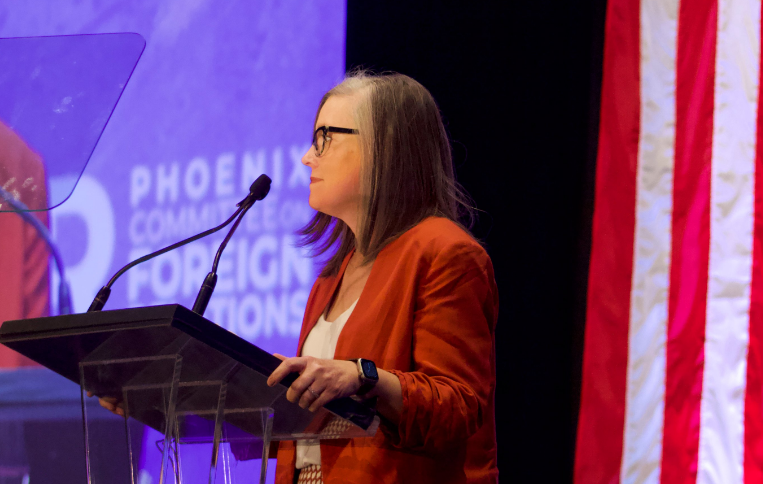
Arizona Governor Katie Hobbs strongly condemned the Federal Emergency Management Agency’s (FEMA) decision to deny the state’s request for a Major Disaster Declaration following the devastating floods that struck Gila and Mohave Counties from September 25-27, 2025.
Governor Hobbs announced plans to appeal the decision, emphasizing the urgent need for federal support to rebuild infrastructure, homes, and lives in these rural areas.
“The people of Gila and Mohave County were devastated by flooding from severe monsoon storms this September,” said Governor Katie Hobbs. “Now, they’ve been denied support from the federal government with little explanation. By denying much-needed relief, this administration is leaving Arizonans out on their own after their homes, businesses, roads, and bridges were decimated by historic storms. I will appeal this reckless decision and continue doing everything in my power to ensure Arizona communities don’t pay the price for the federal government’s senseless policies.”
The floods, triggered by a stalled monsoonal moisture system that dumped six to ten inches of rain in just 48 hours, overwhelmed local watersheds, including Pinal Creek, Miami Wash, Russell Gulch, and Keller Canyon.
Rapid runoff led to flash floods, debris flows, and widespread destruction across Globe, Miami, Claypool, Hayden, Winkelman, and other communities, including nearby Tribal nations.
Preliminary damage assessments revealed severe impacts: 312 homes were affected, with 64 destroyed, 89 suffering major damage, and 159 with minor to affected-level damage. More than 180 residents required emergency sheltering, and approximately 74 households lacked flood insurance.
Public infrastructure bore the brunt of the disaster with major damage to roads, bridges, utilities, and wastewater systems, including the loss of Globe’s city-owned wastewater system.
Total estimated losses stand at $33,579,081, broken down as follows:
- Residential: $4,100,000 for 312 damaged homes.
- Public Infrastructure: $23,306,284 for roads, bridges, and utilities in Globe, Miami, and rural areas of Gila and Mohave Counties.
- Emergency Protective Measures: $4,721,112 for search and rescue, debris clearance, sheltering, and Emergency Operations Center (EOC) activities.
- Debris Removal: $1,451,685 for 175,000 tons of mixed debris.
Hobbs was slow to declare a State of Emergency following the catastrophic flooding, eventually doing so on September 27, 2025, prompted by local declarations from Gila County, Mohave County, the San Carlos Apache Tribe, the Town of Miami, the City of Globe, and others.
State resources, including the Arizona Division of Emergency Management (DEMA), were fully mobilized, activating the EOC, deploying the incident management team, and coordinating evacuations, shelters, and rescues.
Local leaders echoed the Governor’s call for reversal:
Gila County Board of Supervisors District One Supervisor and Chairman Steve Christensen: “Devastation from our recent and profound flooding in southern Gila County has left many in financial ruin, homes destroyed, infrastructure destroyed or badly damaged, as well as loss of life. Gila County is left with significant challenges that we can never meet standing alone. Assistance from FEMA is vital, without which we will not recover to any level of the restoration needed. Please approve funding immediately for the work we MUST do in Gila County.”
Globe Mayor Al Gameros: “I want to thank Governor Hobbs, as well as the strong bipartisan support from our congressional delegation, for requesting a FEMA Major Disaster Declaration in response to the devastating floods that resulted in the death of three residents, and destroyed parts of our historic downtown, critical infrastructure such as bridges and roads, as well as numerous community assets. These floods caused historic and unprecedented damage and have forever transformed our small, tight-knit rural communities. Our community is extremely disappointed by FEMA’s short-sighted decision to deny the State’s Major Disaster Declaration, and we respectfully request that it reexamines its methodology and determines that this devastating flood event meets the critical criteria. I strongly urge FEMA to reverse course and immediately issue an approved Major Disaster Declaration.”
Miami Mayor Gil Madrid: “Miami is a strong and resilient community, and I know we can build back from this devastation, but this is a frustrating setback that will have a real impact on our families and businesses. I will continue working with state and local partners to ensure we get the support we need from the federal government to support our community. I urge the U.S. Department of Homeland Security to reconsider their decision and deliver this important relief to my city after we were struck by historic flooding.”
Ethan Faverino is a reporter for AZ Free News. You can send him news tips using this link.
by Staff Reporter | Oct 6, 2025 | News
By Staff Reporter |
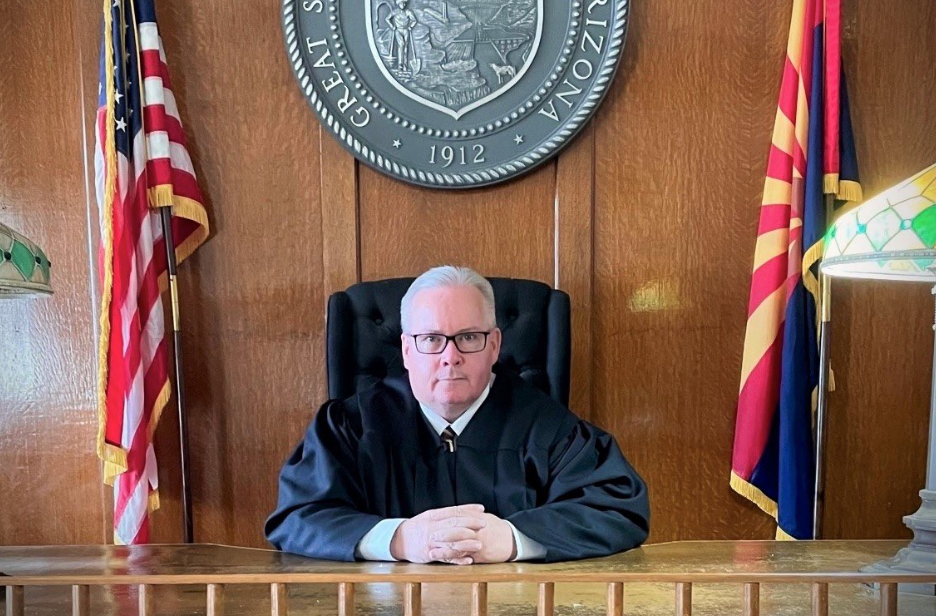
Republicans are hoping to field a candidate against Mohave County Superior Court Judge Lee Jantzen should he decide to run for re-election in 2026. Jantzen, who presided over the 2022 Arizona Attorney General election challenge by now-Congressman Abe Hamadeh, was accused in that case of gross incompetence by lawyers on both sides of the political aisle.
“Lee Jantzen reached levels of incompetence that I honestly did not know were possible,” tweeted Brian Anderson, a Republican influencer and owner of Saguaro Group. “Kept ‘forgetting’ to issue rulings, then ‘forgot’ to sign the rulings, then ‘accidentally’ labeled the AG race as the SOS race, etc. Historic miscarriage of justice.”
In 2023, after a series of serious missteps, attorneys on both sides of Hamadeh’s election contest discovered that Jantzen signed what should have been a final order, but left matters pending, resulting in an “unfinal” final order. The judge’s failure delayed final judgment, leaving Hamadeh without the opportunity to file an appeal on the denial by Jantzen for a new trial.
At that time, Mohave County residents reached out to the Arizona Daily Independent, telling the outlet that they were “embarrassed and frustrated by the continued missteps by Judge Jantzen. Residents are concerned about Judge Jantzen’s history of malfeasance and how his conduct in this case could indicate issues with other more routine cases that he presides over.”
An X account operated by supporters of Congressman Hamadeh weighed in on the discussion started by Mohave County Republicans last week, asking:
“Do we have any brave attorneys in Mohave County who want to run to become a judge in Superior Court? ‘Judge’ Jantzen, who inexplicably ruled against @AbrahamHamadeh’s election lawsuit WITHOUT considering the evidence is up for election again in 2026. He helped disenfranchise THOUSANDS of voters. We have to uproot the corruption in Arizona. We can start with this judge.”
Jantzen’s repeated mistakes left court watchers wondering if he was intentionally slow walking the case, saying that it created an increased air of distrust in both the judicial system and the electoral process.
That distrust of the judicial system only worsened when nine months to the day after Jantzen denied Hamadeh’s election challenge did the Arizona Supreme Court issue an order to Jantzen to do his job “forthwith” and sign-off on two overdue judgments in the case, one of which dated back to Dec. 23, 2022.
Hamadeh’s case was not the first time Jantzen ran afoul of the Arizona Supreme Court. According to public records obtained by the Arizona Daily Independent through Hamadeh’s attorney, Jen Wright, Jantzen stipulated in May 2018 to a censure by the Arizona Supreme Court for “misconduct in office” following an investigation that showed the judge missed the 60-day deadline by more than one year.
Jantzen, who became a superior court judge for Mohave County in 2009, acknowledged as part of the censure that “he has previously received a warning from the Commission for similar misconduct involving a delayed ruling.”
He was also reprimanded in 2021 for the same problem.
A censure is one step down from a suspension and one step above a public reprimand. A censure can be imposed by the Arizona Supreme Court while a reprimand can be imposed by the Court or the Court’s Commission on Judicial Conduct (CJC).
The Arizona Judicial Branch has two check-and-balance systems in place in an attempt to guard against judges accidentally or intentionally ignoring the 60-day deadline.
“The 2018 censure noted Jantzen had, from June 2015 to September 2017, falsely signed statements pursuant to ARS 12-128.01 by certifying he had no matters outstanding more than 60 days,” according to the Arizona Daily Independent. “Jantzen’s 2021 Reprimand Order shows the judge signed his March 2020 payroll certification with a notation that a ruling in a 2020 case was overdue. The ruling was finally issued at 78 days.”
AZ Free News is your #1 source for Arizona news and politics. You can send us news tips using this link.
by AZ Free Enterprise Club | Sep 25, 2025 | Opinion
By the Arizona Free Enterprise Club |
Taxpayer-funded resources should not be used to tilt the scales of any election. This isn’t a difficult concept to understand. So, when Arizona State University (ASU) and PBS were exposed for colluding to help Katie Hobbs in the 2022 governor’s race against Kari Lake, we demanded accountability. We called on Arizona Attorney General Kris Mayes and Maricopa County Attorney Rachel Mitchell to launch a full investigation. After all, Arizona law is clear that universities must remain impartial and neutral in election-related activities.
In a ridiculous decision, both Mayes and Mitchell refused to take action on our complaint. But this battle is far from over.
The Illegal Use of Public Funds
This all began back in 2022 when Katie Hobbs was ducking just about everyone during her campaign for governor, most especially Kari Lake. It culminated in Hobbs’ refusal to debate Lake on Arizona PBS. From there, the process should’ve been simple. According to long-standing Arizona Citizens Clean Elections Commission (AZCCEC) rules, Kari Lake should have been provided with airtime, and the AZCCEC planned to do just that. But hours before Lake’s interview was scheduled to take place, the AZCCEC learned that Arizona PBS went behind their back to schedule an exclusive interview with Katie Hobbs—moving them to postpone Lake’s interview.
Then, last month, a series of emails came to light revealing that ASU leaders including President Michael Crow, former Arizona Republic publisher Mi-Ai Parrish, and Arizona PBS leaders allegedly colluded to jettison the debate rules to help Hobbs. This was a blatant and illegal use of taxpayer funds, and that’s why we filed a Hatch Act complaint with Mayes and Mitchell against ASU. But in a shocking and shameful decision, both decided against taking action…
>>> CONTINUE READING >>>
by Ethan Faverino | Sep 18, 2025 | News
By Ethan Faverino |
The Arizona Free Enterprise Club escalated its call for accountability, urging the County Attorneys of Mohave, Pinal, and Yuma Counties to launch investigations into Arizona State University (ASU) leadership for allegedly manipulating 2022 gubernatorial debate rules to favor Democratic Katie Hobbs over Republican Kari Lake.
The action follows a complaint filed by the Club in August 2025, with the Arizona Attorney General and Maricopa County Attorney, which was dismissed without a thorough review, prompting a broader push for enforcement under state law.
In a sharply worded letter addressed to the Mohave County Attorney Matt Smith, Pinal County Attorney Brad Miller, and Yuma County Attorney Karolyn Kaczorowski, Club President Scot Mussi detailed evidence of ASU’s deviation from established debate protocols, accusing university officials of using public resources to influence the election in violation of A.R.S. § 15-1633.
The statute states: “A person acting on behalf of a university or a person who aids another person acting on behalf of a university shall not spend or use university resources for the purpose of influencing the outcomes of elections or to advocate support for or opposition to pending or proposed legislation.”
This call-to-action stems from a September 2022 debate co-sponsored by ASU, Arizona PBS, and the Citizens Clean Elections Commission (CCEC).
Under longstanding CCEC regulations (Ariz. Admin. Code § R2-20-107(K)), a candidate declining an invitation to debate their political opponent forfeits airtime, granting the attending opponent a 30-minute solo interview.
When Hobbs announced she would skip the debate, ASU and PBS bypassed set regulations, granting her an exclusive 30-minute interview, a first in years to do so.
Internal communications, obtained and reported by the Arizona Republic, exposed the intent behind the decision. ASU President Michael Crow, Chief of Staff James O’Brien, and ASU Media Enterprise Managing Director Mi-Ai Parrish allegedly prioritized Hobbs’ comfort over neutrality.
Parrish’s emails to O’Brien highlighted concerns that “Katie is getting roasted hard” for dodging the debate and pressed CCEC staff to limit Lake’s discussion of election integrity, arguing that airing “a person with those views was wrong.” CCEC Executive Director Tom Collins confirmed to the Republic that Parrish sought to suppress Lake’s platform.
Correction: A previous version of this story incorrectly listed the names of the County Attorneys. They have now been corrected.
Ethan Faverino is a reporter for AZ Free News. You can send him news tips using this link.
by Ethan Faverino | Aug 28, 2025 | News
By Ethan Faverino |
Through the One Big Beautiful Bill Act, the U.S. House of Representatives reauthorized the Radiation Exposure Compensation Act (RECA) through December 31, 2028, and enacted its largest-ever expansion.
This act broadens eligibility to include new populations, such as Northern Arizona counties and additional uranium workers, while continuing support for those affected by the U.S. nuclear weapons program.
The expanded RECA provides a one-time, lump-sum payment of up to $100,000 to qualifying individuals or their survivors, offering critical restitution for those who developed serious illnesses due to radiation exposure.
Representative Eli Crane (AZ-02) announced that the reauthorized act now covers individuals in Coconino, Yavapai, Navajo, Apache, Gila, and Mohave counties in Arizona affected between January 1951 and November 1962, as well as uranium workers employed in covered occupations from January 1, 1942, to December 31, 1990.
The program also extends to onsite participants of nuclear tests and those impacted by the Manhattan Project waste.
RECA provides a non-adversarial alternative to litigation, requiring no proof of causation. Claimants qualify by demonstrating a compensable disease and presence in a designated area or occupation during specified periods.
The program, administered by the Department of Justice, is designed to resolve claims efficiently, using existing records to minimize administrative costs for both claimants and the government.
The four qualifying categories are Downwinders, onsite participants, uranium workers, and Manhattan Project waste victims.
Downwinders are individuals who developed certain cancers after radiation exposure from U.S. nuclear tests between 1944 and 1962.
The program now includes several Arizona counties along with eligible areas in Idaho, New Mexico, Utah, and Nevada.
To qualify, individuals must have lived in one of the areas during a specific time period and have been diagnosed with a compensable disease such as leukemia, multiple myeloma, lymphoma, or certain primary cancers.
On-site participants were individuals present at U.S. atmospheric nuclear tests before January 1, 1963, and later developed a compensable disease.
Uranium workers also receive compensation for individuals employed in uranium mining, milling, core drilling, ore transport, or remediation efforts in mines or mills located in Colorado, New Mexico, Arizona, Wyoming, South Dakota, Washington, Utah, Idaho, North Dakota, Oregon, or Texas between January 1, 1942, and December 31, 1990.
To qualify, uranium workers must have been employed for at least one year during the time period and been diagnosed with a compensable disease such as lung cancer, pulmonary fibrosis, silicosis, pneumoconiosis, cor pulmonale related to lung fibrosis, or renal cancers.
Lastly, Manhattan Project waste victims get compensation for individuals exposed to Manhattan Project waste in designated areas of Missouri, Tennessee, Alaska, and Kentucky.
To qualify, individuals must have lived, worked, or attended school for at least two years after January 1, 1949, in designated zip codes and have a compensable disease.
The expanded Radiation Exposure Compensation Act delivers long-overdue justice, honoring those whose lives were forever changed by radiation exposure.
Ethan Faverino is a reporter for AZ Free News. You can send him news tips using this link.