by Matthew Holloway | Jul 19, 2025 | News
By Matthew Holloway |
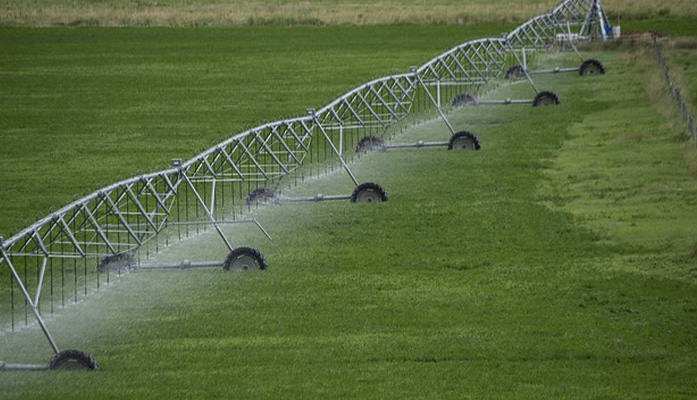
A quiet battle has been raging over the groundwater of the Hualapai Basin between Arizona State Representative John Gillette (R-LD30) and Mohave County Board of Supervisors Chairman Travis Lingenfelter.
Gillette has alleged that Lingenfelter enjoys the support of Governor Katie Hobbs, and High Ground, LLC., a firm “closely tied to the Walton Family Foundation and Environmental Defense Fund.”
In an email to AZ Free News, Rep. Gillette stated that Lingenfelter “has ‘cozied up’ with Governor Hobbs and High Ground, LLC., not by joining their party, but by aligning on a policy platform that places rural water in the hands of the Governor. He has advocated for several of the leftists’ water bills that trample the rights of property owners.”
The controversy appears to have arisen around the Final Assessment of the Hualapai Basin Water Data Integrity issued by Gillette to fellow legislators and third-party reviewers, which was allegedly made public by Lingenfelter in a May 8, 2025, formal rebuttal.
In his final assessment, Gillette wrote, “After continued research, legislative engagement, and review of both historical and current data, my original 2021 assessment of the Hualapai Basin water situation remains valid. The data presented by the City of Kingman and Mohave County remains suspect, with indications of overstatement used to drive political narratives and policy agendas.”
In the assessment, which Rep. Gillette asserted was reviewed by “three independent scientific and policy bodies prior to publication,” he found:
- The Hualapai Basin has enough groundwater storage to supply the region for 100–300+ years, even under heavy usage.
- Forecast models were based on worst-case pumping assumptions and should not be used to justify alarmist policy actions.
- Recharge estimates, storage volumes, and historical withdrawal rates all point to significant long-term water availability.
- The City of Kingman and Mohave County appear to have overstated risks—possibly to justify control over water rights or block agricultural competitors.
In the formal rebuttal dated May 8th, Lingenfelter addressed Gillette and claimed, “Your letter unfortunately contains a series of flawed assumptions, technical inaccuracies, and mischaracterizations that misinform rather than advance the public dialogue around long-term rural groundwater sustainability in Mohave County.”
He added, “Your letter asserts that data presented by Mohave County and the City of Kingman remains ‘suspect’ and ‘politically compromised.’ Such a characterization is categorically false and impugns the reputations of Mohave County, City of Kingman, and credentialed hydrologists at the ADWR and USGS and the public they serve.”
Responding to Lingenfelter’s rebuke in a formal response on May 16th, Gillette wrote, “While I welcome constructive dialogue, your letter reflects a degree of emotional overreach rather than a calm, scientific response to the concerns raised. Unfortunately, it reveals more about political defensiveness than about data transparency or hydrological best practice.”
Responding to critiques of the assessment’s findings Gillette wrote, “The assessment I authored was reviewed by three independent scientific and policy bodies prior to publication. All concluded that the findings were as accurate as possible given available data. I welcome peer review. What I reject is politically motivated resistance to scrutiny. As further evidence of bias, it should be noted that the ‘comparison document’ you reference—submitted by your team only days after my final assessment—contains several confirmations of my position.”
Rep. Gillette pushed back on Lingenfelter’s assertions based on the MODFLOW-NWT model from the U.S. Geological Survey and its 75,586 adjustable parameters writing, “As any trained analyst knows, such complexity magnifies sensitivity. Even small changes in assumptions—especially politically influenced assumptions—can result in dramatic shifts in outcome. Your confidence in the model would carry more weight if you supported my proposal to recalibrate baseline figures using 15 new field test sites with controlled, non manipulated measurement inputs. This is the kind of ground-truth methodology science demands. Strangely, your rebuttal ignores this recommendation entirely.”
He further strongly criticized the veto of a bill to cap irrigation on an irrigation non-expansion area (INA) by Governor Katie Hobbs, saying the veto “executed without explanation—is further evidence that political goals are outweighing scientific governance.”
AZ Free News reached out to Supervisor Lingenfelter for a comment and received the following reply:
Thank you for reaching out. I am not aware of any dispute or controversy between the Mohave County District 1 Office and Representative Gillette’s Office as you phrase it. As Mohave County Supervisor for District 1, I have served as Mohave County’s lead on water issues for the past five years, and was actively involved in our local water policy advocacy during my prior four years on the Kingman City Council.
My responsibility is to represent the shared, official position of both Mohave County and the City of Kingman, guided by the most accurate and credible data and hydrological modeling available, based on a multi-year, science-based partnership between Mohave County, the City of Kingman, and the United States Geological Survey (USGS)—an independent agency with a long-standing reputation for being the gold standard of scientific water modeling.
The ‘Final Assessment of the Hualapai Basin Water Data Integrity’ issued by Rep. Gillette is his office’s interpretation. The County and City remain firmly grounded and unified in the professional peer-reviewed science and long-term hydrological data and modeling that have guided our efforts to protect rural groundwater and ensure sustainable water use for future generations.
As always, Mohave County, City of Kingman, and USGS look forward to jointly collaborating with all legislators on our water issues on behalf of our rural communities.”
Based upon his team’s findings, Rep. Gillette has announced his intention to pursue “a stand-alone Hualapai Basin bill—developed outside of executive influence—that reflects the data as it exists, not as it is manipulated.”
Editor’s Note: Following the filing of this report, AZ Free News was contacted by Nick Ponder, Senior Vice President of Government Affairs of HighGround Public Affairs. Mr. Ponder provided the ’Analysis of Water Constraints and Economic Growth,’ a report prepared for Mohave County by Rounds Consulting Group, and the formal rebuttal issued on May 8th by Chairman Lingenfelter to Rep. Gillette with the note: “The County, City, and USGS have been very transparent in the processes and data used in determining the water situation in the Hualapai Valley Basin. The letter and the attached analysis should reflect that robust and transparent process.”
Matthew Holloway is a senior reporter for AZ Free News. Follow him on X for his latest stories, or email tips to Matthew@azfreenews.com.
by Matthew Holloway | May 16, 2025 | News
By Matthew Holloway |
Arizona Senate President Warren Petersen, House Speaker Steve Montenegro, and State Treasure Kimberly Yee are continuing a legal battle against the administration of former President Joe Biden and his surrogate, Attorney General Kris Mayes to defeat what they say is an “unlawful, dictator-style land grab in northern Arizona.”
The lawsuit, currently before the U.S. Court of Appeals for the Ninth Circuit, centers around the confiscation of a massive tract of Arizona land in Coconino and Mohave Counties which bans “the productive use of almost 1 million acres in northern Arizona,” and “permanently entombs one of the nation’s largest and highest-grade uranium deposits,” in addition to forbidding any road or infrastructure development in “an area the size of Rhode Island,” according to a legal brief submitted Wednesday.
The Biden White House, via Presidential Proclamation launched this audacious expropriation of Arizona land in August 2023 under the color of the Antiquities Act, creating “the Ancestral Footprints Monument.” In February 2024, Petersen launched a lawsuit to stop him.
“Former President Joe Biden and his army of radical bureaucrats abused their constitutional authority on countless levels during his failed administration. Their infatuation with locking up federal lands from productive uses is a prime example of the harm inflicted on states like Arizona,” said Petersen. “As we have argued throughout this case, Biden’s maneuver had nothing to do with protecting actual artifacts. This was an attempt to halt all mining, ranching, and other local uses of federal lands that are critical to our energy independence from adversary foreign nations, our food supply, and the strength of our economy. Republicans in the Arizona Legislature will continue to fight these actions to free our state from the grasp radical environmentalists had over the previous administration. Thankfully, we now have President Donald J. Trump in office, who has a consistent track record of safeguarding state sovereignty and promoting common-sense uses of federal land. I am continuing to work with his administration in an effort to end this legal battle.”
As Petersen and his legal team point out to the court, the unlawful seizure by the Biden administration stood in direct violation of the 1909 Antiquities Act. It uses as a basis given that a president is only empowered to reserve “the smallest area compatible with the proper care and management of the objects to be protected.”
In a press release, the Republican group said the coalition assembled to oppose Biden’s act of illegal seizure asserts that Biden failed to follow the law, “and the guardrails Congress established to create a check on the president’s power were violated.”
Matthew Holloway is a senior reporter for AZ Free News. Follow him on X for his latest stories, or email tips to Matthew@azfreenews.com.
by Matthew Holloway | Jan 14, 2025 | News
By Matthew Holloway |
A new study based on FBI crime data has identified the areas most afflicted by crime in the state of Arizona and found Mohave County to be a crime hotspot.
According to the research by Suzuki Law, through analysis of crime rates per 100,000 residents in each county’s jurisdiction, Mohave County ranked highest followed by Pima and Yuma Counties, La Paz County, and finally Maricopa County rounding out the top five.
The report found:
- “Mohave County holds the top place with a total crime score of 99.54. Its monthly average property crime rate is 167.9 per 100,000 residents, about 121% above the statewide average of 76.1. The county has a violent crime rate of 108.5, roughly 74% higher than the statewide average of 62.2.
- Pima County follows in second place with a total crime score of 88.27. The average monthly property crime rate stands at 168.2 per 100,000, the highest among all counties in Arizona. On the other hand, the county’s violent crime rate of 83.7 is 35% above the statewide average of 62.2.
- Coming in third, Yuma County has a crime score of 86.86. Its average monthly property crime rate of 124.0 per 100,000 is nearly 63% above Arizona’s average. Yuma County has the highest violent crime rate in Arizona, at 109.3. This is around 76% higher than the statewide average of 62.2.
- La Paz County ranks fourth with a crime score of 79.43. Here, the monthly property crime rate is 140.5 per 100,000, about 85% more than the state average of 76.1, and the violent crime rate of 82.3 is 32% above the state average of 62.2.”
A spokesman for Suzuki Law commented on the clear disparity favoring crimes against property saying, “The data indicates that property crimes are a major issue in Arizona, especially in counties like Mohave, Pima, and Yuma. While all types of crime have serious implications for community safety, the prevalence of property offenses in these counties demands focused attention from law enforcement and policymakers.”
Maricopa County, despite the obvious handicap of having the largest population by far, ranked relatively low at fifth place with an property crime rate of 105.6 per 100,000, about 39% higher than the state average of 76.1 and with violent crime at 71.3 or about 15% over the state average of 62.2.
In the top ten ranking, five counties are notably absent: Pinal, Apache, Graham, Navajo and Santa Cruz.
Top 10 Arizona Counties by Overall Crime Rate Score
1. Mohave County — 99.54
2. Pima County — 88.27
3. Yuma County — 86.86
4. La Paz County — 79.43
5. Maricopa County — 63.99
6. Gila County — 61.62
7. Yavapai County — 54.10
8. Cochise County — 46.21
9. Greenlee County — 43.20
10. Coconino County — 39.08
The law firm suggested that the installation of proactive security measures are among the most effective deterrents but stressed the need for legal assistance for victims. “Installing home security systems is one of the most effective ways to protect your property, with studies showing it can reduce burglary risks by up to 60%.” The attorneys also called for personal vigilance, situational awareness, and the avoidance of high crime areas.
Community-led initiatives are also valuable. “Neighborhood watch programs have proven to reduce crime rates by 16% in participating areas,” they observed.
The Mohave County Sheriff’s Office was contacted to comment on this report but did not reply by the publication deadline.
Matthew Holloway is a senior reporter for AZ Free News. Follow him on X for his latest stories, or email tips to Matthew@azfreenews.com.
by Corinne Murdock | Nov 24, 2023 | News
By Corinne Murdock |
Mohave County officials backed down from a proposed policy to hand count all future ballots after Attorney General Kris Mayes threatened criminal charges.
The Mohave County Board of Supervisors convened on Monday to discuss whether they would hand-count all ballots for the 2024 election and beyond; the board declined the policy in a divided vote. Mayes congratulated the board for heeding her threat.
“I am greatly relieved and commend the Mohave County Board of Supervisors for their decision not to authorize a hand count of all ballots for the 2024 election, upholding Arizona law,” said Mayes. “The Board’s decision to adhere to state-mandated procedures for ballot counting avoids potential legal complications and reinforces public trust in the integrity of our elections.”
During the meeting, State Sen. Majority Leader Sonny Borrelli (R-LD30) said that the county could count on an amicus brief from the House and Senate should the county vote for hand counting ballots and face criminal prosecution.
Supervisor Hildy Angius clarified that hand counting wasn’t as “easy-peasy” as sitting down and physically tabulating the ballot. Angius agreed that problems continue to plague Arizona’s elections, namely calling out mail-in ballots.
Supervisor Ron Gould challenged the notion that no election problems could exist in their county because the law doesn’t allow supervisors access to the voting logs. As a challenge to the strength of voting machines, Gould said that when he served as a state senator in 2005, voting machines in the Republican state representative primary were found to be severely defunct — out of calibration by as much as 18 percent — after a recount flipped the race by 250 votes.
“My biggest concern here today is that folks are losing faith in elections; they don’t think their vote counts,” said Gould. “So much for the infallibility of voting machines.”
Borrelli suggested that Mohave County count ballots through hand counts at the precinct level, then through tabulators at the county level prior to certification. However, Deputy County Attorney Ryan Esplin said that couldn’t be done in light of Mayes’ letter and their own legal analysis. Esplin advised that the board err on the side of caution by adhering strictly to what statute allowed. The county attorney noted that ARS § 16-443 and 16-445 necessarily implied that hand counts could be used, but that 16-622 and 16-602 undermined that argument. Both of those latter statutes were cited by Mayes in her Sunday letter.
“It has to be spelled out in statute, or necessarily implied: that’s the legal standard. There is no statute that specifically authorizes a hand count, and that’s why we say we do not believe you can do a hand count, because there’s no statute that authorizes it,” said Esplin. “Take the safe route: use the machines, because we know those are legal, we know the law, the law says very clear, ‘This is what we do.’”
Supervisors Gould and Angius voted for hand counting ballots; Supervisors Buster Johnson, Jean Bishop, and Travis Lingenfelter voted against.
Mayes sent a letter to the Mohave County supervisors on Sunday that she would file criminal charges against them should they vote to hand count all ballots for the 2024 election and beyond. The attorney general said that the hand count method was not only too slow and less accurate, it also wasn’t permitted by statute. Mayes cited A.R.S. § 16-449, 16-468, 16-602, 16-621, and 16-622.
Mayes also expressed concern that the board was influenced by “bad-faith actors” aiming to sow doubt and undermine Arizona elections.
In a viral response to Mayes’ statement on Monday, conservative commentator Rogan O’Handley criticized Mayes as “an illegitimate attorney general” that benefited from election fraud.
“Yeah forcing ballots into the same machines that shut down on election day in Maricopa is one hell of a way to ‘reinforce public trust,’” said O’Handley.
Corinne Murdock is a reporter for AZ Free News. Follow her latest on Twitter, or email tips to corinne@azfreenews.com.
by AZ Free Enterprise Club | Aug 13, 2023 | Opinion
By the Arizona Free Enterprise Club |
Clean and accurate voter rolls are a cornerstone to safe and secure elections. And they are required by both state and federal law. Section 8 of the National Voter Registration Act (NVRA) specifically obligates states to conduct a general program that makes a reasonable effort to remove the names of ineligible voters from the official lists of eligible voters due to death or change of residence. The U.S. Supreme Court even backed this up in its 2018 decision in the case Husted v. A. Philip Randolph Institute.
But Arizona’s current Secretary of State Adrian Fontes and its former Secretary of State (now Governor) Katie Hobbs have failed to perform the necessary voter list maintenance. And right now, 14 Arizona counties are in violation of Section 8 of the NVRA…
>>> CONTINUE READING >>>