by Staff Reporter | Dec 11, 2024 | News
By Staff Reporter |
Maricopa County Republicans no longer wish to challenge the voter-approved transportation sales tax.
The Maricopa County Republican Committee (MCRC) filed a motion to dismiss their lawsuit against Proposition 479 on Sunday.
The attorney for MCRC’s lawsuit, Bryan Blehm, filed the motion to dismiss on behalf of plaintiffs Craig Berland (chairman) and Shelby Busch (first vice-chairman).
Proposition 479 was styled as a continuation of a half-cent sales tax first established in 1985 and last renewed in 2004. The tax revenue funds Maricopa County infrastructure and will last until 2045.
Just short of 60 percent of voters passed Proposition 479. Polling months ahead of the election indicated this to be the case. The proposition came out of a Senate bill advanced by Republican leadership in both legislative chambers, SB 1102, which Senate President Warren Petersen hailed as “the most conservative transportation plan” in Arizona history.
Not all Republican leaders agreed. Arizona Freedom Caucus members expressed opposition to the Senate bill, as did the “conservative watchdog groups” they referenced.
“[This proposition is] a massive win for Hobbs and the Democrats,” said caucus member State Representative Justin Heap.
The Arizona Free Enterprise Club and Goldwater Institute also opposed Prop 479. The two entities claimed in remarks of opposition submitted to the county that the proposition would mostly fund transit.
Per the Maricopa Association of Governments (MAG), 40 percent of the sales tax revenues is slated for the construction of freeways and highways, 22 percent for arterial roads and regional transportation infrastructure, and 37 percent for transit.
Democratic leadership at all levels stood in support of the proposition’s passage and opposition to the MCRC lawsuit, from Governor Katie Hobbs to Phoenix Mayor Kate Gallego.
MAG Regional Council also joined the county to argue for dismissal of the lawsuit. Kevin Hartke, MAG chairman and Chandler mayor, said in a statement to InMaricopa that the lawsuit went against the majority of voters and their desire for transportation funding.
“We won’t let a flawed claim stand in the way of our 40-year legacy of building one of the best transportation systems in the country,” said Hartke. “The transportation plan unanimously approved by the region’s elected leadership, sent to the ballot by the Maricopa County Board of Supervisors and overwhelmingly approved by the voters of Maricopa County, is critical to the quality of life of our residents and the continued strength of our local economy.”
MAG predicts the tax will generate up to $15 billion in revenue (using 2020 dollars) and slash commute length to an average of 30 minutes through 2050, even with an estimated influx of 1.7 million residents and 900,000 jobs.
MAG Executive Director Ed Zuercher indicated that county officials weren’t going to cease moving forward with their transportation plan, even if the lawsuit had progressed.
“The regional transportation plan that was unanimously approved by MAG’s mayors, tribal and county leaders, and supported by business leaders and the voters, will be implemented on schedule,” said Zuercher.
In reporting from last week, Arizona’s general contractors also sided with the efforts to protect the sales tax. The Arizona Chapter of Associated General Contractors of America had criticized MCRC’s lawsuit as “frivolous” and based on political contentions advanced by “disgruntled partisans.”
AZ Free News is your #1 source for Arizona news and politics. You can send us news tips using this link.
by Staff Reporter | Dec 8, 2024 | News
By Staff Reporter |
A recent decision by the Environmental Protection Agency (EPA) concerning Maricopa County may have been politically motivated and may pose a national security risk.
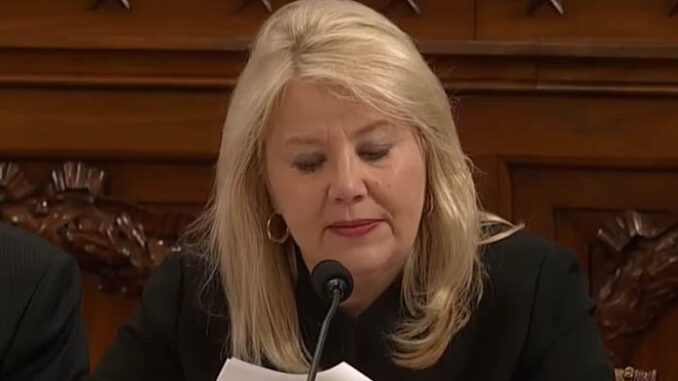
The EPA decided earlier this week to reclassify Maricopa County to “serious” nonattainment status for its ozone National Ambient Air Quality Standards (NAAQS). Congresswoman Debbie Lesko claimed that the EPA’s reclassification poses a national security risk in a Wednesday press release. The congresswoman argued that finalization of the reclassification ahead of a second Trump administration would jeopardize Arizona’s newly established semiconductor manufacturing.
“If the EPA continues its expedited schedule in a rush to make their reclassification effective before the Trump Administration takes office, it will negatively impact Arizona and national security,” said Lesko. “The Taiwan Semiconductor Manufacturing Company (TSMC) was just awarded $6.6 Billion in CHIPS Act funding. This action by the EPA could jeopardize that funding and makes absolutely no sense.”
Lesko speculated in letters of appeal to the EPA and Commerce Department that the EPA was acting in a rushed response to undermine president-elect Donald Trump’s incoming administration.
“The reason for this [EPA] change is not clear to me, but I am concerned that this action was taken based upon the political reality of the upcoming administration change,” said Lesko.
Lesko further argued the EPA was “premature” in its reclassification. Lesko referenced an understanding via communications with the EPA that the agency wouldn’t issue its decision until next May.
Not only has the EPA acted prematurely, Lesko argued, but their expedited timeline works outside of the legal requirement to have a 180-day window for redesignation from Aug. 3, 2024, which would land on Jan. 30, 2025. The presidential inauguration takes place on Jan. 20, 2025. Lesko asked the EPA to honor its original May timeline.
EPA Region 9 advised Maricopa County Air Quality that they would issue a Federal Register Notice containing an “expedited redesignation” within the coming weeks.
The redesignation would lower Maricopa County’s emissions threshold from 100 tons to 50 tons for major sources of nitrogen oxides and volatile organic compounds. Lesko said these adjustments would jeopardize TSMC operations.
“TMSC’s new plant requires an air quality permit to proceed. The current major source threshold of 100 tons would allow TSMC to proceed without needing to acquire emission reduction credits (ERCs),” said Lesko. “However, a redesignation to serious nonattainment would impose the 50-ton threshold, which is currently unfeasible due to the shortage of available ERCs, thus potentially delaying or halting this key project.”
Lesko cited further concerns that the expedited redesignation would harm the Maricopa County and Arizona economies by dissuading industry growth and recruitment for technology and advanced manufacturing.
Maricopa County Air Quality issued a release earlier this year warning that the EPA would reclassify their ozone nonattainment from “moderate” to “serious” nonattainment prior to Feb. 3, 2025.
The EPA included Maricopa County in its final rule, finding it in October as an area that failed to submit a plan addressing EPA ozone requirements for moderate nonattainment areas. The EPA reclassified Maricopa County from marginal to moderate in 2022, and gave the county until last January to submit its plan.
AZ Free News is your #1 source for Arizona news and politics. You can send us news tips using this link.
by Staff Reporter | Dec 7, 2024 | News
By Staff Reporter |
Arizona’s unified organization of general contractors are in opposition to a lawsuit by local Republican Party leaders over the voter-approved sales tax that, ultimately, benefits them.
The Arizona Chapter of the Associated General Contractors of America (AZAGC) said in a press release that the latest lawsuit from the Maricopa County Republican Committee (MCRC) challenging the passage of Proposition 479 was a “frivolous” action undertaken by “disgruntled partisans.”
Prop 479 continued an existing .05 cent sales tax, revenues which fund Maricopa County’s infrastructure and, naturally, the general contractors that build it. MCRC filed suit on Monday in the Maricopa County Superior Court.
MCRC argued against the claim that Prop 479 amounts to a mere continuation of the state’s decades-old sales tax. In their lawsuit, MCRC argued that the proposition instills a new tax for new projects. What’s more, the committee argued that the proposition didn’t pass the 60 percent voter threshold needed for a new tax.
The measure gained 59.82 percent of the vote (out of two million voters); the measure was approved with 80 percent turnout.
Voters first established the half-cent tax in 1985 and last renewed it in 2004. The tax extends through 2045 under the proposition, which established a 20-year continuation. Maricopa County Association of Governments (MAG) estimated generated revenues to amount to $15 billion under 2020 dollars.
40 percent of the sales tax revenues go to freeways and highways, 22 percent go to arterial roads and regional transportation infrastructure, and 37 percent go to transit.
MAG further estimated that funds generated under the tax would allow for infrastructure that would keep the average commute length at 30 minutes through 2050, even after adding 1.7 million residents and 900,000 jobs.
Prop 479’s investment plan concerns reducing the average afternoon commute by one-third and reducing congestion by 51,000 hours on critical freight corridors daily. It also concerns increasing the number of amenities within a 30-minute drive by 12 percent, creating $2.4 billion in net new economic activity per year, saving local businesses $1.6 billion per year in travel time savings, and creating and supporting 31,600 jobs annually.
AZAGC President David Martin predicted the courts would dismiss the lawsuit before it gained any ground, but not soon enough to mitigate the damages of unnecessary costs to taxpayers. Martin avoided mention of the fiscal opportunities that contractors stand to make with the success of Prop 479.
“It’s clear this frivolous lawsuit has no merit and will eventually be thrown out by the courts” said Martin. “It’s hypocritical that these ‘conservatives’ insist on having tax dollars wasted defending a lawsuit that clearly will not stand up in the courts.
AZAGC claimed in its press release that the .05 cent sales tax is necessary because all benefit from county infrastructure, including MCRC members.
“The roads in Maricopa County are funded by the ½ cent sales tax as well as other taxes. Members of the MCRC use these roads to get to and from work, take their kids to school and go to the grocery store,” said the press release. “Instead of paying their fair share for public streets, members of the MCRC would rather have drivers stuck in traffic away from their families and pay exorbitant maintenance costs for damage caused by potholes.”
Among those siding with AZAGC were top Democratic leaders like Phoenix Mayor Kate Gallego. The mayor also issued a statement on the matter, adopting similar language to AZAGC in denouncing the MCRC lawsuit as “malignant,” “deeply flawed,” and “misguided.”
“Maricopa County voters overwhelmingly passed Prop 479 because they understand that a strong transportation system isn’t political—it’s critical to our future,” said Gallego.
AZ Free News is your #1 source for Arizona news and politics. You can send us news tips using this link.
by Matthew Holloway | Dec 4, 2024 | News
By Matthew Holloway |
Arizona Senator David Farnsworth is drawing attention to findings from the National Highway Traffic Safety Administration. The findings revealed that Arizona is home to five of the deadliest intersections in the western United States—all of which are in Maricopa County. The study, conducted over an 18-year period, found that across the western U.S. from 2004-2022 more than 35,000 people were killed in car accidents related to these intersections. This amounts to approximately 2,000 accident fatalities per year, according to data analyzed by Sam Aguiar Injury Lawyers.
Within the study’s timeframe, the situation has distinctly worsened with fatal crashes related to these intersections doubling.
Farnsworth said, “Far too many of Arizona’s roadways are filled with potholes, bumps, cracks, loose gravel, or other unstable surfaces. Some may not have adequate lighting, others may not have appropriate signage or traffic signals.”
He added, “These treacherous conditions are contributing to a hazardous commute for drivers. We must make improvements to create a safer environment for drivers traveling through notoriously deadly intersections within our state. Whether that’s adding traffic lights, lanes, or improving road surfaces, it is paramount we don’t ignore our deteriorating transportation system. It remains critical that we take a deep dive into funding reforms in the coming months to secure the necessary resources to improve our roads, highways, and freeways. Arizonans’ lives and livelihoods depend on it.”
Two of the intersections are located along SR-347, the main route to Maricopa, AZ.
Maricopa Mayor Nancy Smith also weighed in on the findings, saying, “The safety of our residents is our top priority, and many of our state highways require urgent upgrades. A prime example is SR 347, which links the City of Maricopa to the Greater Phoenix area. This critical route is in dire need of expansion and safety enhancements. I am grateful that Senator Farnsworth is dedicated to exploring innovative solutions to address this vital issue.”
According to the report, the five intersections in Maricopa County are Broadway Road and SR-85 (Oglesby Rd), 59th Ave and Indian School Rd, Hazen Rd and SR-85 (Oglesby Rd), Maricopa Rd and SR-347 (N John Wayne Pkwy), and Riggs Rd and SR-347 (N John Wayne Pkwy).
Matthew Holloway is a senior reporter for AZ Free News. Follow him on X for his latest stories, or email tips to Matthew@azfreenews.com.
by Matthew Holloway | Nov 25, 2024 | News
By Matthew Holloway |
An election reform plan to accelerate ballot processing and speed up official returns has been proposed by Maricopa County Supervisor Thomas Galvin. Galvin once defended Maricopa County’s botched elections but now asserts that procedural changes would make it possible for 95% of an election’s votes to be counted on election night.
The Supervisor believes that although it took over eleven days for all Arizona voting precincts to report their unofficial results in the 2024 election, Arizona can avoid future criticism by enacting what he dubs his 95/1 plan.
In a statement to The Center Square Galvin said, “Although the tabulation of early ballots and election day ballots were done in accordance with state law and within the normal timeframe of previous elections, there is growing concern from the public about the time it takes for Arizona to tabulate ballots and call contested races.”
“Since election day, I’ve had productive conversations with Republican leaders at the Arizona Legislature who agree sensible and practical changes are needed to speed up processing while also protecting the integrity of the early voting system that most Arizonans utilize.”
Galvin’s proposal would advance the current cutoff date for early ballot drop off to early polling places. At present, the law sets the deadline as the Friday prior to an election. In addition to the moving the cutoff date, Galvin proposes to close the emergency voting windows on the Saturday and Monday before Election Day, but allows the use of in-person voting. He has also proposed the use of government buildings to host polling locations.
He added in the statement, “By moving up the cutoff date for early ballot drop offs, using government buildings to host polling sites, and eliminate emergency voting for the Saturday and Monday prior to the election while allowing folks to vote in person, we can significantly speed up the process and have nearly 95% of ballots tabulated by election night.”
Galvin concluded, “I urge the Arizona Legislature to make my ‘95/1 Plan’ a top priority in 2025 and look forward to working with county and state leaders on these important reforms.”
In a post to X, Galvin directly called upon Arizona Governor Katie Hobbs to “work with the Arizona Legislature to make my “95/1 Plan” a top priority in 2025,” adding that “Arizona voters & elections workers deserve this reform.”
Pima County Supervisor Democrat Rex Scott expressed support for the proposal writing in a post, “I am grateful to my colleague @ThomasGalvin for putting these timely ideas forth. We may be from different parties and represent different counties, but we share the same concerns. When the new Legislature convenes in January, his proposals should be given serious consideration.”
Fellow Maricopa County Supervisor Mark Stewart also stood beside Galvin’s proposed reforms in a statement to X, “I stand with my colleague @ThomasGalvin in emphasizing the importance of efficient and transparent elections in Maricopa County. This is a standard we must meet, as anything less undermines public trust. I look forward to collaborating with my fellow supervisors @DebbieLesko, @KateMcGeeAZ , and Steve Gallardo, as well as our state legislators and governor, to advocate for legislation ensuring election results are finalized promptly after walk-up tallies are complete. Arizona can and should resolve election delays—our voters and the nation deserve a process that reflects both competence and integrity.”
When asked by KJZZ if she would support the proposal, Hobbs replied that she would veto any changes to the early voting deadline. “My line in the sand has been and will continue to be anything that makes it harder for Arizonans to vote is a no for me, and that includes the flexibility that we have with early voting.”
Galvin rejected the notion that moving the deadline would disenfranchise Arizona voters saying, “I think this would just have to be a shift in behavior among Arizona voters,” Galvin said. “But I think Arizona voters are very smart and will shift their behavior and react accordingly.”
Responding to concerns regarding emergency voting, Galvin said, “If you do want to vote in person before Election Day, you have to do it that weekend, but it has to be for emergency reasons and you have to sign a piece of paper attesting that you have an emergency,” he said. “It’s called emergency voting, so I just want to transition emergency voting to full in person.”
The idea to shift voting locations to government buildings proposed by Galvin actually mirrors a recommendation cited by KJZZ from Hobbs’ election task force in 2023. That recommendation led her to sign an executive order which authorized the use of state buildings for polling centers.
Matthew Holloway is a senior reporter for AZ Free News. Follow him on X for his latest stories, or email tips to Matthew@azfreenews.com.