by Matthew Holloway | Mar 10, 2026 | News
By Matthew Holloway |
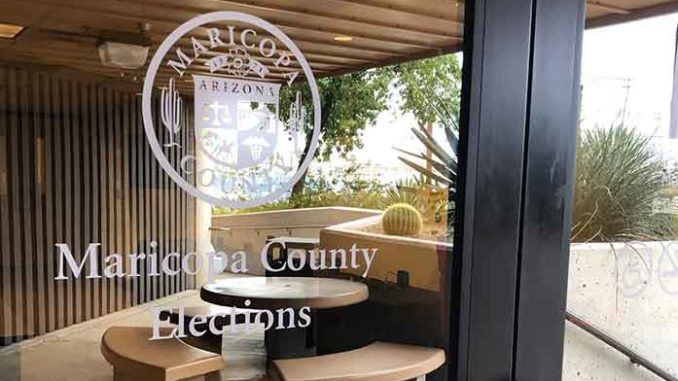
Arizona Senate President Warren Petersen confirmed that the Federal Bureau of Investigation (FBI) has obtained election-related records from Maricopa County as part of an ongoing federal investigation connected to the 2020 presidential election. The confirmation followed independent reporting, which some members of the local press mischaracterized as describing a “raid.”
Petersen confirmed the action after a report from JustTheNews stated that federal investigators recently secured terabytes of election data from Arizona’s most populous county through a federal grand jury subpoena.
The subpoena sought election materials connected to Maricopa County’s administration of the 2020 election, according to the report. Sources familiar with the probe told the outlet that investigators obtained electronic election data as part of a broader criminal inquiry examining potential election-related misconduct.
The reported federal action follows other election-related investigations conducted in recent months involving local election administration across the United States, such as the FBI’s similar seizure of election records in Fulton County, Georgia.
Early responses to reporting from JustTheNews’ John Solomon included ABC15’s Garrett Archer mischaracterizing the report on the seizure under subpoena as describing a ‘raid,’ and as “either a full-throated lie, or something having to do with the recorder’s office.”
Solomon replied to the post, stating, “My story is accurate. When a grand jury subpoena is issued there isn’t usually a raid. The data is obtained usually from a third party. I’d ask your legislature what they know.”
Within minutes, a post from Petersen confirmed the JustTheNews article shared by President Donald Trump on Truth Social. Petersen posted to X, “President Trump is 100% correct. Late last week I received and complied with a federal grand jury subpoena for records relating to the Arizona State Senate’s 2020 audit of Maricopa County. The FBI has the records. Any other report is fake news.”
Congressman Abe Hamadeh’s (R-AZ08) Rapid Response team was quick to point out, “John Solomon’s report never mentions a ‘raid’ at all. The actual term used is ‘subpoena.’ Garrett Archer appears to have invented the raid claim just to knock down an easy ‘straw man’ argument.”
As previously reported by AZ Free News, the contractors’ controversial report from the Senate-mandated audit documented multiple concerns about election administration procedures, while confirming that the overall ballot count remained largely consistent with the certified results.
Hamadeh issued a request for a full investigation into credible allegations that election security protocols in Arizona were breached during the 2024 General Election in June 2025 following reports alleging that large stores of printed blank ballots from several western states were “improperly mixed in a warehouse with returned voted mail ballots that were in the process of being prepared for tabulation” at Runbeck Election Services, a firm contracted by Maricopa County.
He wrote at the time, “This alarming situation raises serious questions about the security and integrity of the election process in Maricopa County and potentially beyond. The commingling of blank ballots with live ballots poses a significant risk to the accuracy and fairness of election results. It is crucial that we have confidence in the integrity of our elections, and any potential mishandling of ballots must be investigated to ensure that the will of the voters is accurately reflected.”
Federal investigators have not publicly detailed the full scope of the current inquiry involving the Maricopa County records. The FBI generally does not comment on ongoing investigations.
Officials with Maricopa County have not publicly released a detailed description of the materials obtained by federal investigators or the timing of the request. Federal authorities have not announced any charges connected to the reported subpoena for Maricopa County election records.
Matthew Holloway is a senior reporter for AZ Free News. Follow him on X for his latest stories, or email tips to Matthew@azfreenews.com.
by Staff Reporter | Mar 4, 2026 | News
By Staff Reporter |
The Maricopa County Board of Supervisors and Recorder are at odds over plans to establish early voting locations.
Maricopa County Supervisor Mark Stewart, who has been an independent voice within the board, addressed two public concerns with this dispute in a press release issued on Monday.
The concerns relate to the delegation of early voting responsibilities under Arizona law, and the timeline for finalizing early voting locations, staffing, and logistics. Stewart disclosed that conversations between the board and recorder’s officer were underway, even with the very public back-and-forth between the two bodies.
“Regardless of the back-and-forth or expressed frustrations from the Recorder’s office and the Board Chair, we are making progress and working together. It may not be perfect, but it is happening,” said Stewart.
The final week of February marked a particularly fraught period in a long-standing dispute between the board and recorder over election duties. At the center of it all was the disputed existence of a spreadsheet containing alternative early voting locations.
Last week Recorder Justin Heap publicly disparaged the proposed early voting location sites delivered to him by the board. His criticisms accused the board of potentially disenfranchising voters, prompting an immediate response from Board Chair Kate Brophy McGee and Vice Chair Debbie Lesko. The pair said Heap had misinterpreted and failed to adequately review the materials given to him.
Heap disputed this narrative of his review. He accused the board of “lying to voters yet again,” in addition to demanding that he approve their early voting proposal.
According to Stewart’s press release from Monday, none of the early voting locations have been approved yet. The sites under discussion remain proposals.
Early voting locations were approved and released by mid-June during the 2024 election cycle.
This year, the election schedule is slightly more condensed. The governor and legislature approved a modification of the election dates to accommodate military and overseas voters.
Voter registration ends June 22, early voting begins June 24, and the primary election day is scheduled for the end of July.
Even with this adjusted timeline, Stewart says Heap has “ample time” to provide feedback on the proposed voting locations.
“We have a reasonable window of time to gather the Recorder’s feedback and a commitment to work collaboratively to refine location recommendations and ensure the selections are operationally sound and accessible to voters,” said Stewart.
While the rest of the supervisors have operated virtually in lockstep in their approach to the recorder, Stewart has generally taken a position independent of the rest of the board.
Lately, the supervisor is urging his colleagues to review the proposed early voting locations in an open public session to gather constituent input. Stewart advised he would be recommending a public discussion date in which Heap may participate.
“Voters deserve to see the decision-making process, understand the rationale behind site selection, and hear directly from both the Board and the Recorder,” said Stewart. “Transparency strengthens trust and improves outcomes.”
AZ Free News is your #1 source for Arizona news and politics. You can send us news tips using this link.
by Staff Reporter | Feb 19, 2026 | News
By Staff Reporter |
The Arizona Republican Party is picking sides in the ongoing spat between the Maricopa County Board of Supervisors and County Recorder Justin Heap.
The party’s new chair, Sergio Arellano, issued a press release on Tuesday commending Supervisor Mark Stewart for speaking out against the rest of the board for their posturing to oust Heap from office.
“I appreciate those Republicans who are able to ignore the rancor being generated by those outside the process, and who are willing to listen to the voices of those of us who want a solution that unites Republicans behind the proposition that Arizona voters deserve a process that respects their choices, and that the power of the people, exercised through their vote, prevails and is honored,” said Arellano.
Arellano advised voters to focus on the merits of policy over the noise of personal conflicts in the matter; the chair agreed with Stewart that Heap should have full restoration of elections administration duties under the Shared Services Agreement (SSA).
“Ignore the fake news and those who are intent on whipping up hysteria to further their own personal ambition, but we as a Party must deliver on real and effective reform and restore full faith in our elections,” said Arellano. “Recorder Heap must be allowed to do his job and then he must do it properly. The same goes for our County Supervisors. I am grateful to Supervisor Stewart for seeking a path that accomplishes all of this and encourage everyone involved to follow his lead and reach an agreement of which we might all be proud.”
The board ordered Heap to appear on Wednesday to provide a report and testify on his administration and allegations of voter disenfranchisement made by his office.
It is the latest escalation in the public spat between the two over who has primary control over elections via the SSA. The current SSA, all but gutting the recorder’s office of elections duties, was put in place by a “lame duck” recorder, Stephen Richer, and board majority in their final months in office. After Heap failed to convince the board to reverse course on that SSA, Heap sued last summer.
Supervisor Stewart announced on Monday that he sought outside legal counsel to negotiate with Heap over the SSA, since the board and recorder’s office appear to have hit a stalemate.
Stewart retained counsel after failing to receive a response to his request to postpone Wednesday’s meeting from Chair Kate Brophy McGee. The supervisor said all members of the board ought to have additional time to consult with counsel about negotiations with Heap.
“My counsel requires additional time to fully evaluate the issues raised, assess the scope and legal basis for the required direct report, and advise me accordingly. Proceeding before that review is complete would not allow me to participate in the discussion or any potential vote with the preparation and confidence that such a consequential action demands,” said Stewart. “Out of respect for the institution, the Recorder’s Office, and most importantly, the residents we serve, I believe it is prudent to delay consideration of this item until all members of the Board have had sufficient opportunity to consult with counsel and fully assess the implications.”
Stewart also denounced the possibility of Heap’s removal should he refuse to show on Wednesday.
AZ Free News is your #1 source for Arizona news and politics. You can send us news tips using this link.
by Staff Reporter | Feb 17, 2026 | News
By Staff Reporter |
The state’s audit of Maricopa County’s annual financial report found significant reporting weaknesses.
The review raised concerns over the state of the county’s IT security systems and data maintenance. Some of these recommendations aren’t new — some were areas the auditor general had recommended in the last two fiscal years.
The auditor general’s office issued their audit on last week which addressed the county report for the 2025 fiscal year released in December.
Their review found that the county had significant deficiencies in internal control, characterized as less severe than material weaknesses, which would justify the reasonable possibility that a material misstatement of basic financial statements wouldn’t be prevented or detected and corrected on a timely basis.
The report focused on two financial statement findings that may have the potential to harm county operations, IT systems, and data.
Firstly, the auditor general found that the county’s administration and IT management had an inadequate process for identifying, classifying, and inventorying sensitive information requiring stronger access and security controls. This was found to be due to the county’s failure to fully integrate its new data classification policy across all applications and financial systems.
The auditor general recommended a complete implementation of policies and procedures to manage IT systems and data risks, and an identification, classification, and inventory of information requiring stronger access and security controls.
Secondly, the auditor general found insufficient development, documentation, and implementation to IT systems and data risks. The county showed it had poor procedures incapable of preventing or detecting unauthorized or inappropriate IT systems and data access, along with ensuring securely maintained configuration settings.
The county also lacked controls for its IT security policies and procedures intended to prevent unauthorized or inappropriate access or use, manipulation, damage or loss. Furthermore, the county’s contingency plan lacked key elements for operations restoration in the event of a disaster or system interruption.
With this second set of problems, county administration and IT management attributed shortcomings to partial implementation and failure to fully implement established procedures concerning logical access restrictions, changes to policies and procedures managing configurations and changes, system activity monitoring for users with administrative access privileges, and the disaster recovery plan.
The auditor general recommended the county monitor all employees’ adherence to access and contingency-planning IT policies and procedures, not to mention develop, document, and implement IT policies and procedures for configuration. With their suggested review, the auditor general recommended restricting access to IT systems and data, creating processes for proposed security impact changes, performing proactive key user and system activity logging and log monitoring, and testing a contingency plan.
For both problems discovered, the auditor general’s office stressed creating internal controls that follow a credible industry source, suggesting the National Institute of Standards and Technology.
In its response to the audit, the county said, in brief, that it would address and implement the findings by June 30 of this year, about a month before the primary election is scheduled to occur. The county didn’t elaborate at length on its plans to remedy the two problems presented by the auditor general’s office.
AZ Free News is your #1 source for Arizona news and politics. You can send us news tips using this link.
by Matthew Holloway | Jan 25, 2026 | News
By Matthew Holloway |
The Goldwater Institute is asking a federal judge to allow Maricopa County taxpayers to see how public funds have been spent during more than a decade of federal oversight of the Maricopa County Sheriff’s Office (MCSO).
In a friend-of-the-court brief filed on Tuesday, Goldwater urged the U.S. District Court to reconsider a 2014 order that keeps the federal monitor’s invoices confidential. Under that order, the court-appointed monitor, Warshaw & Associates, submits billing records exclusively to the judge, placing them outside public view.
Scrutiny of the court-appointed monitor has been growing in recent weeks. Over $300 million has been spent on oversight in the past 14 years, with approximately 10% going to the court monitor, Robert Warshaw, according to Maricopa County Board of Supervisors Chairman Thomas Galvin. The Board submitted a court filing in December asking the U.S. District Court for the District of Arizona to end federal oversight of MCSO. Maricopa County Attorney Rachel Mitchell agreed in a post to X, writing, “There is no defense for this ‘federal monitor.”
Vice President for Legal Affairs at the Goldwater Institute, Timothy Sandefur, explained, “That means Maricopa County taxpayers have no way of knowing how their tax dollars are being spent on one of the most important services the county provides.”
“Although the Goldwater Institute has repeatedly requested copies of these invoices, the county does not have itemized statements, and the federal monitor refused to produce them,” he added. “But as we point out in the brief we filed on Tuesday, the government should not be allowed to keep such information secret unless there’s good reason, and even then, they’re required to specify what those reasons are. The court in this case has never done so—and even if it had, circumstances have changed in the decade since the lawsuit began.”
The filing comes as Maricopa County separately argues that continued federal oversight of MCSO under the Melendres v. Arpaio ruling is no longer justified. In a pending motion, the county contends that the sheriff’s office has implemented substantial reforms and that the monitorship should be terminated.
In its brief, Goldwater argues that the continued sealing of the monitor’s invoices prevents taxpayers from knowing how their money is being spent and undermines transparency principles embedded in Arizona and federal law.
“History did not end in 2014, and continued federal oversight of MCSO cannot be based on decade-old facts,” the brief states. “It’s crucial that Maricopa County taxpayers be permitted to know where their tax dollars are going — and that’s hindered by the existing orders and continued federal oversight without a full public accounting.”
The court has not yet ruled on either Maricopa County’s motion to end federal oversight or Goldwater’s request for public access to the monitor’s billing records.
Matthew Holloway is a senior reporter for AZ Free News. Follow him on X for his latest stories, or email tips to Matthew@azfreenews.com.