A staple of Arizona’s most conservative coalition of lawmakers is running to rejoin the state legislature.
Anthony Kern is seeking to once again represent the 27th legislative district, held by incumbent Republican State Sen. Kevin Payne. Kern and Payne are the only two Republicans in the race; three Democrats have filed statements of interest.
Kern last represented that district in the Arizona Senate from 2023 to 2025. Kern departed from the state legislature in order to make his unsuccessful run for the 8th Congressional District in 2024. Prior to the state senate, Kern represented the 20th legislative district in the Arizona House of Representatives from 2015 to 2021.
While in the legislature, Kern built a reputation as one of its more outspoken conservative members. This was reflected by his membership with the Arizona Freedom Caucus, and A-ratings for conservative lawmaking from the Conservative Political Action Committee, NumbersUSA, American Conservative Union, National Rifle Association, and Keep Arizona Free.
Kern held a number of committee leadership positions, including chairmanships of the Senate Judiciary and Elections Committee and the House Rules Committee, and a vice chairmanship of the Senate Public Safety Committee.
President Donald Trump and Turning Point USA have been among a number of Republican powerhouses to take notice of Kern. Trump commended Kern as “an incredible fighter for election integrity,” and pardoned him from the 2020 Trump electors case put together by the Biden Department of Justice. Turning Point USA’s affiliate, Turning Point Action, has endorsed Kern.
Although the federal charges against Kern and other electors were dropped, Democrat Attorney General Kris Mayes has pursued her own case. A court of appeals ruled last month in a loosely related case that Mayes illegally withheld communications in which she conspired with States United Democracy Center to prosecute Trump’s allies.
Prior to joining the legislature over a decade ago, Kern worked in municipal code enforcement and other public safety roles in the West Valley.
It appears that this background — combined with his repeated public commitments to limiting administrative rulemaking and expanding legislative oversight of regulations — has influenced a take from Kern that puts him at odds with other Republican lawmakers, though not with fellow conservatives.
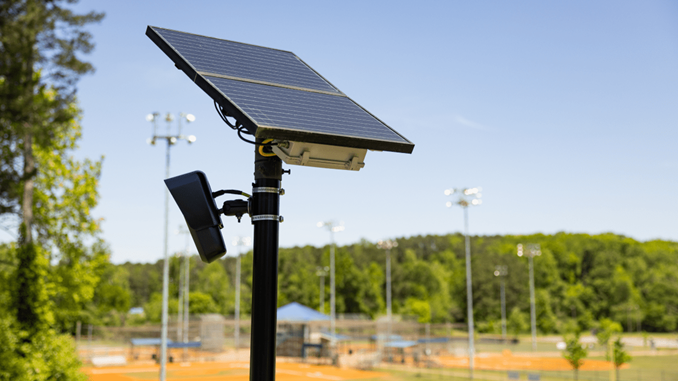
Kern’s platform includes an opposition to automatic license plate readers (APLRs), such as the Flock Safety cameras. Unlike Kern, Payne as chairman of the Senate Public Safety Committee sponsored a bill in support of APLRs earlier this year, SB 1111.
Other aspects of Kern’s platform include healthcare reform, proposing health providers must offer one single price for products and services, and health insurance premiums and medical expenses must be tax-free; and private property protections, proposing a removal of certain alleged loopholes to squatter prevention laws.
Kern has described himself as pro-life, an election integrity advocate, an opponent to illegal migration, and a supporter of parental rights and school choice.
He has lived in LD27 for nearly 40 years and attends Fresh Start Church in Peoria.
The Arizona Clean Elections Commission is scheduled to host the LD27 primary debate on June 22.
AZ Free News is your #1 source for Arizona news and politics. You can send us news tips using this link.
Arizona State Sen. Kevin Payne (R-LD27) has introduced legislation he claims will ensure law enforcement’s use of modern crime-fighting technology doesn’t slide into unchecked government surveillance. But critics say otherwise.
The bill, SB 1111, would create statewide standards governing how automated license plate readers, popularly known as Flock cameras, are used by police and other agencies across Arizona. The measure comes as concerns grow among residents and local leaders about the privacy implications of expanding surveillance tech in everyday life.
Under the proposal, data collected by these systems could only be used for legitimate law enforcement purposes, such as solving serious crimes or locating missing and endangered persons. The bill would explicitly ban the use of license plate data for general surveillance, political purposes, or non-law-enforcement activities. In an effort to ensure accountability, it also requires strict access controls, mandatory user training, detailed audit logs, and regular compliance reviews.
“This bill draws a clear line. We’re protecting innocent Arizonans from government overreach while making sure our law enforcement officers have the modern tools they need to keep our communities safe,” Payne said in a statement.
“Arizonans shouldn’t have to choose between their privacy and their security. This bill proves we can do both—defend individual freedom and back the men and women who put their lives on the line every day.”
Critics of the bill believe it is vaguely worded and would open the door to broad government surveillance with few safeguards.
“This is among one of the weakest bills I’ve seen when it comes to regulating license plate readers,” Dave Maass, director of investigations at Electronic Frontier Foundation (EFF), told the Arizona Mirror. “This bill is not going to do what the author says it is going to do.”
Flock cameras have been under heavy critcism from groups like the Arizona Free Enterprise Club, who wrote in an op-ed in November that “Arizona is home to some of the most Flock-saturated cities in the country.” The group warned that “Flock monitors your movement constantly, often without your knowledge, and always without your consent. You can turn off your phone. You can’t turn off a camera mounted on a pole. Every car you drive and every route you take is automatically logged, creating a permanent record you never agreed to.”
Flock Safety, the company behind the mass surveillance cameras used throughout Arizona, was compromised in December.
Supporters of the legislation argue that the absence of clear statewide guidelines has left residents uncertain about how and when sensitive data is collected, shared, and stored. Some cities and counties have already wrestled with local policies as questions about oversight and civil-liberty protections have surfaced.
Law-enforcement advocates say the technology has helped solve serious crimes and locate missing persons, while acknowledging that clear guardrails are necessary to maintain public trust.
Joe Clure, Executive Director of the Arizona Police Association, stated, “SB 1111 provides the tools law enforcement needs to keep our communities safe while putting firm protections in place against government overreach and privacy assurance to that same community. Cameras used to detect and apprehend suspects are invaluable in maintaining public safety and preventing criminal and terrorist activity. They also aid in the investigation and solving of crimes long after they were committed.”
SB 1111 will now proceed through the legislative process, where it is expected to draw fierce debate over how to strike a balance between crime-fighting effectiveness and individual privacy rights.
The company behind the mass surveillance cameras used throughout Arizona was compromised.
The impacted cameras were operated by Flock Safety, an Atlanta, Georgia-based company, as revealed by 404 Media. Their investigative reporting discovered over 70 cameras across the nation, at least, were accessible to the public for viewing and, allegedly, even certain modifications.
404 Media disclosed that they were not able to geolocate every camera they discovered that was left unprotected.
Flock Safety offers cameras with different surveillance capabilities. Their standard cameras provide license plate recognition technology only, but certain lines of their cameras also provide facial recognition technology. Both camera types feed their recorded material into an AI-powered system with a searchable database archived for 30 days at least.
Ethical hackers that partnered with 404 Media reported that a majority of the compromised cameras were equipped with facial recognition technology. These cameras also have the ability to zoom in on faces as well as items surrounding a person, like cell phones.
Following reports on the compromised cameras, Flock Safety issued a statement dismissing concerns about public access and control over the camera feeds.
“This interface does not allow camera control, cloud access, customer account access, or use of search or analytics features. The only content visible was live or recorded video comparable to what can be observed from a public roadway,” said Flock Safety. “No sensitive or confidential information was accessed or accessible. While recent third-party coverage characterized the issue as more extensive, this was an isolated configuration issue and not indicative of a broader or ongoing concern.”
Flock Safety’s characterization of the breach conflicted with what 404 Media’s team found in their investigation. 404 Media claimed their team was able to use Flock Safety feeds to identify and pull personally identifying information on individuals featured on camera.
Flock Safety founder and CEO Garrett Langley told CNN earlier this month that the answer to rising crime and insecurity over public safety was through mass surveillance.
“I think we run a risk today as a country that a generation of people will not believe America works for them because they don’t feel safe, because in some communities you don’t feel safe,” said Langley.
I'm incredibly proud that Flock Safety played a key role in working with first responders to find the suspect in the Brown and MIT murders.
America cannot tolerate tragedies like what we saw at Brown and MIT this past week. The single best way to curb crime is to make sure…
Top funders behind Flock Safety over the years have included Andreessen Horowitz, Founders Fund (founded by Peter Thiel), Matrix (formerly Matrix Partners, founded by Paul Ferri), Bedrock (founded by Geoff Lewis), and Initialized Capital (founded by Garry Tan and Alexis Ohanian).
Around 30 municipalities in Arizona, at least, have Flock’s license plate recognition cameras per the Electronic Freedom Foundation’s Atlas of Surveillance database: Apache Junction, Benson, Buckeye, Casa Grande, Coconino County, El Mirage, Eloy, Cottonwood, Gilbert, Goodyear, La Paz County, Litchfield Park, Mohave County, Maricopa County, Oro Valley, Parker, Payson, Peoria, Prescott, Queen Creek, Graham, San Luis, Scottsdale, Somerton, St. Johns, Tolleson, Tucson, Winslow, and Youngtown.
That’s not including the local communities that voluntarily install Flock cameras.
Deflock, a website dedicated to mapping Flock camera locations, lists nearly 1,400 Flock cameras across the state. A majority of the cameras are concentrated around Phoenix, Chandler, and Tucson.
Flagstaff and Sedona did have Flock cameras — around 30 of them. However, mounting privacy concerns from the public pushed both city councils to cancel their contracts this year. In Sedona’s case, the police department contracted with Flock Safety without notifying the city council.
All three public universities have Flock cameras as well.
About 10 other municipalities in the state, at least, have automatic license plate readers from different vendors.
Over 5,000 communities spanning over 4,500 law enforcement agencies across 49 states use Flock cameras.
Flock cameras played a pivotal role in the recent discovery of the Brown University shooter’s identity following a public tip.
AZ Free News is your #1 source for Arizona news and politics. You can send us news tips using this link.
Don’t you want to live in a crime-free utopia? Wouldn’t allowing the government to track our every move, solve all our problems? Local authorities seem to think so, and they have the perfect tool to usher in mass surveillance in your city: Flock cameras. Flock Safety is one of the main manufacturers of Automatic License Plate Readers (ALPRs) that have been quietly taking over cities and have already infiltrated nearly every state. These cameras monitor cars and even pedestrians constantly, logging minute details about every vehicle that passes, storing the data in Flock’s database, and feeding it into an AI platform with the capability of stitching together elaborate travel patterns. No court-issued warrant is required – not even public consent – creating massive privacy concerns for residents who often don’t know they are being watched until these cameras have saturated their community.
According to Flock’s own website, they cover 49 states, over 5,000 communities, partner with more than 4,800 law enforcement agencies, and read upwards of 20 billion license plates per month. Though law enforcement agencies are one of the primary users of these devices stated to reduce crime, cities, businesses, and even HOAs are also deploying them in residential areas.
You might think, “We don’t have these in our town.” But sometimes these cameras show up without public approval…