Arizona’s historic universal school choice program has seen significant growth in its first full year of operations.
Last month, the Executive Director for Arizona’s Empowerment Scholarship Account (ESA) program, John Ward, sent three emails to give a comprehensive update to families about the state of the program at year’s end. Ward first noted that the ESA program had grown from 13,400 students to 72,500 students over 15 months since the Arizona Legislature approved the expansion and then-Governor Doug Ducey signed the bill into law.
Director Ward also highlighted the economic efficiency of ESA, stating that “ESA parents educate their students for 27 percent less funding than students in traditional public schools.” According to the email from Ward, “State taxpayers currently spend approximately $9,800 per ESA student on average” compared to $13,400 from “federal, state, and local taxpayers to educate students attending traditional public schools on average.” Ward also pushed back on one of the main attacks against the program, sharing a projection from the Department of Education that the “State will end fiscal year with a $57M education budget surplus,” adding that “a surplus is not an indication of bankruptcy.”
In the second email to ESA families, Ward offered helpful tips to ensure that account holders would be compliant with their submissions. Those tips included “reviewing state law and the ESA Parent Handbook to become familiar with program requirements, submitting complete purchase documentation and curricula when required,” and refraining from purchases of unallowable items.
Ward’s final email gave a look at the future of the ESA program. The focus for the ESA program in 2024 would be further enhancements to the ClassWallet platform to improve user experience and to reduce times of approval for purchases and reimbursements. Fixes to the ClassWallet Marketplace are expected to occur first, followed by tweaks to DirectPay, reimbursements, and debit cards.
The new ESA Director inherited the program in a strong position thanks to the work of Superintendent Tom Horne’s first director, Christine Accurso, who did not have that luxury at the start of the year. Accurso, who has been one of the state’s leading pro-life and school choice leaders for years, joined the Horne administration after thwarting a ballot challenge to the universal ESA program. Horne and Accurso were tasked with bringing the expanded program under compliance with the law and eliminating the significant backlog of requests left by the previous administration. She resigned her position in July, expressing her grateful heart “to have had the opportunity to get the ESA program back on track and functioning well.”
As the Arizona Legislature returns to session in a matter of weeks, the ESA program will be under even more scrutiny as Democrat Governor Katie Hobbs and her legislative allies may attempt to gut or trim school choice in the state. Horne, though, has proven to be a relentless defender of the program, as have Republicans in the Legislature. This issue will undoubtedly be one of the top points of contention between the two sides – especially in an election year, when both Democrats and Republicans believe that they can use ESAs and school choice to their political advantage with undecided voters.
Daniel Stefanski is a reporter for AZ Free News. You can send him news tips using this link.
On Wednesday, October 11, Arizonans learned the budget Katie Hobbs signed into law will possibly have a $400 million shortfall. This means the state won’t have enough money to fund the budget because it’s too big and is spending too much money.
The left wants to blame the budget shortfall on the implementation of former Governor Ducey’s state income flat tax a couple years ago. They also demonize the families participating in the state school choice ESA program. However, if it weren’t for Hobbs’ spending increase of $2 billion and vetoing a $2 billion smaller budget, the state would still have an outlook with a budget surplus.
Let’s review the short history.
In June of 2022, Arizona Governor Ducey signed into law the Fiscal Year 2023 Arizona Budget. The Radical Left and then-Secretary of State Katie Hobbs praised that budget for being bipartisan.
Moving ahead to the most recent 2023 legislative session, Arizona Senate President Warren Petersen and Speaker of the House Ben Toma wanted the new legislature to prioritize their most important responsibility — the state budget. Accordingly, in February, the state legislature passed a continuation of the same $15.8 billion budget from 2022.
Hobbs vetoed it. The budget Hobbs vetoed is the same as the one she applauded after Ducey signed it into law. This year, Hobbs called the budget partisan and extreme. The budget Hobbs decided was good enough to sign into law was $17.8 billion, exactly $2 billion larger than the budget she vetoed.
Hobbs insisted on a budget that is $2 billion larger even while many economists predicted Arizona and the nation are at risk for an economic slowdown due to rising interest rates. Forbes reported, “At the end of 2022, the National Association of Realtors predicted a 15.8% drop in combined sales and prices for the Phoenix-Mesa-Scottsdale [housing] market in 2023.”
The Federal Reserve, the nation’s central bank, currently shows the median home price in the United States is collapsing faster than any other point in recorded history.
If a recession occurs, Arizona will see less tax revenue. This would also have a negative impact on the budget’s revenue because people are spending less money; therefore, the state is collecting less in taxes.
While the Radical Left wants to blame the budgetary shortfall on the flat tax that benefits everyone, one thing is clear. The state of Arizona is spending too much money, and Hobbs’ extra $2 billion budget is destroying Arizona. It is her fault.
Jeff Caldwell currently helps with operations at EZAZ.org. He is also a Precinct Captain, State Committeeman, and Precinct Committeeman in Legislative District 2. Jeff is a huge baseball fan who enjoys camping and exploring new, tasty restaurants! You can follow him on X here.
Arizona’s school choice program appears to have been undermined by neglect from former leadership, based on details of the program’s inherited state by the new administration.
AZ Free News spoke with Christine Accurso this week about the inherited state of the ESA Program, of which Accurso is the newly appointed executive director. Accurso hit the ground running when she began working for ADE several weeks ago. She walked in to find the ESA Program, left behind by former Superintendent Kathy Hoffman, severely understaffed and drowning in nearly 171,600 unfulfilled expense requests.
Although the Arizona legislature approved 52 positions to run the ESA Program, there were only 17 on the scene when Accurso arrived. That’s less than one-third of the staff that the ESA Program was intended to have. However, Accurso expressed confidence that merely doubling the team from 17 to 34 would be enough to run the program well for the meantime.
“We have less than half of the team we need to run this program,” said Accurso. “We will begin hiring soon and look forward to at least doubling our team to serve the families of Arizona well.”
ADE was severely understaffed despite receiving an additional $2.2 million last summer to hire 26 workers. Even with this funding, ADE undertook measures to minimize ESA Program operations. This included limiting call helpline hours to between 10 am to 2 pm.
Accurso said that her first hire was an individual who answers parents’ calls. The ESA Program failed to have a responsive helpline under Hoffman’s administration. Last year, parents who attempted to call the program helpline were met with an automated voice rejecting their call due to “excessive call volumes” and automatically hanging up with no promise of a call back.
These weren’t the only issues Accurso noticed. Ahead of her arrival, Accurso noted that odd expenses were given approval following Hoffman’s loss to current Superintendent Tom Horne.
I'm not sure what is happening at the ESA office, but their posted "Approval List" is growing and more things like this item are popping up. This wasn't on the approval list before December 12, 2022. We'll have to look into this when I arrive in January. An Espresso Machine?🤔🤦🏻♀️ pic.twitter.com/cLfnpEe29Z
That was far from the first time that odd expenses were given approval under Hoffman’s administration. Democratic state legislators argued that the program wasted taxpayer dollars through its allowable expenses. During a House committee hearing last year, Democrats questioned why items like bouncy castles and tonal home gyms, costing thousands, were approved. Republican committee members reminded their Democratic colleagues that Hoffman, a fellow Democrat, had approved these and other questionable items as allowable expenses.
In under three weeks, Accurso’s team approved nearly 24,700 of the unfulfilled requests after verifying the proper documentation was submitted, amounting to $22.2 million for things like private schooling, tutoring, and curriculum dating back to last November.
If the remaining 146,900 requests run a similar average in cost to the 24,700 approved requests (around $880 each), the ADE may owe over $129.2 million. The new administration paid 1,500 tutors who’d been awaiting paychecks for months under Hoffman, as well as reimbursement owed to a “small school” who’d been forced to consider a bank loan for their expenses due to Hoffman’s administration delaying their payment.
“We are reviewing all of the categories and our team, with ‘all hands on deck’ are getting through those as quickly as possible,” said Accurso. “These first orders were private school tuition payments and tutors of core subjects.”
Accurso noted that her team is not only working through old applications — they receive an average of about 130 new applications each day. Accurso stated that they have 949 pending applications.
“Yesterday we got around 200 applications. Right now my staff is working on a total of 990 applications from the weekend through yesterday. That’s why I’m hiring very quickly,” explained Accurso.
Accurso said that another one of her first actions was to replace the former administration’s allowable expenses list on the website with one that aligns with state statute. (The former list is archived here).
Prior to becoming ADE’s executive director, Accurso was an ESA parent burned by its poor administration. During Hoffman’s first year in office, Accurso and other parents were kept out of the program when the ADE failed to follow admission deadlines set by statute. Accurso gained national attention after her experience of spending hours each week on hold for over two months went viral.
Current Superintendent Tom Horne said in a statement earlier this month that the ADE’s previous administration of the ESA Program was unacceptable.
“When I took office, the commitment I made is that the Arizona Department of Education is a service organization committed to raising academic outcomes and empowering parents,” said Horne. “On my first day on the job, I demonstrated my resolve to fulfill that mission. Delays and inefficiencies of this kind are unacceptable and won’t be repeated.”
The decline of the ESA Program shouldn’t elicit much surprise. Since first campaigning for the position in 2018, former Superintendent Kathy Hoffman openly criticized the Empowerment Scholarship Account (ESA) Program. During her re-election campaign, Hoffman claimed that the ESA Program had “zero accountability” while signing a petition to undo universal school choice.
What happened in Snowflake is one example of the lack of accountability with the ESA program. Stories like this will become more common with universal expansion. We only have 3 days left to stop this law from going into effect. Find out where to sign at: https://t.co/0j0mJo7IIhpic.twitter.com/mIxyaw1v2D
The ADE said that nearly 46,000 students have joined the ESA Program as of Tuesday. Despite Governor Katie Hobbs’ intention on rolling back the program, the GOP-controlled legislature has no plans to do so.
Sen. President Warren Petersen toldKTAR that there wasn’t a chance that school choice would be rolled back.
Corinne Murdock is a reporter for AZ Free News. Follow her latest on Twitter, or email tips to corinne@azfreenews.com.
During the 2021-22 school year, I’d been hearing about parents finding books and materials on gender identity at their children’s school. I thought that would never happen at my kids’ school. We live in Chandler, part of Chandler Unified School District (CUSD80). Our district ranks an A+, as well as our school, Carlson Elementary. Andy Morgan, the principal, was fairly new in his role, and I had always thought he did a good job.
However, my mommy instinct kicked in, so I decided to have a talk with my son. Eli is 11 years old and watches out for his two younger sisters who are ten and nine. My son is a pretty mature kid and hears everything. I told him at the beginning of the 2022-23 school year to let me know if he sees people using the wrong restroom, if he hears of confusing pronouns, or if he reads anything regarding sex education. I told Eli he needs to be mommy’s eyes and watch over his sisters like he typically does.
In late July 2022 (in school for maybe two weeks), I picked up the kids from school, and my son told me about a book he saw in the library that day. He said the book was on display in the library, and it was called “George.” Eli said, “I picked it up and read the back and saw it was about a boy who wanted to be a girl…. Mom, I think it was like those books you told me about.” He had not checked out the book, so I asked him to the next time at the library. “Check out the book, but don’t read it. Bring it home, and Mommy will let you know,” I told him.
The following Monday, at school pick-up, my son handed me “George,” by Alex Gino. After dinner I read every page, and I couldn’t sleep that night. I was shocked! This book was not only IN a school library, but it was even FEATURED on display! In short, “George” talks about hormonal medication, surgeries, keeping secrets from parents, PORN, and a lot more. I was livid.
The next morning, I emailed Principal Morgan with screenshots of the front and back of the book. His response was that he was out of town for a week but asked if I’d like to speak to the Dean of Students, Bridgett Matson, or wait until he returned. Mr. Morgan did acknowledge this book should not have been in the library. I asked him to please have Mrs. Matson reach out to me. I heard nothing. I waited a week and finally was able to set up a meeting with them both. During that week, the photo I had of the book circulated on social media. I wanted parents to know that this issue is real.
At the meeting, the principal apologized for the book getting into my son’s hands and asked how Eli found the book. He mentioned the backlash he was getting from other parents in the school and community. Mr. Morgan assured me that for years he’d gone through every single book in that library because they were making sure these books weren’t there. I advised him that there are at least 3 more books like this in his library. (A friend of mine gave me a website, gofollett.com, where you can see all the books in school libraries.) The principal bit his tongue. I then asked him, “Doesn’t this book break the sex education and parental consent laws?” He didn’t know.
Then he asked what I wanted to be done about this. I said, “I want this reported to the School District, and for these books to be removed from each elementary library.” To his credit, Mr. Morgan took responsibility and apologized again. But he then added his frustration at getting emails calling him a ‘groomer,’ as if expecting me to apologize.
The following monthly Chandler Unified School Board meeting, I spoke and read straight from the book hoping that the board members would realize the impact of this book on children. I advised the board members that if I were to hand this very book to a child on the street, I would be arrested. The next day I started getting texts from friends letting me know that CUSD80 board member Lindsay Love was posting pictures of me and attacking me on her social media. I wasn’t going to let this go. I went to the district office to complain and was told there wasn’t anything they could do to help me because Lindsay Love is an elected official.
At that moment I finally accepted reality. My public school, which I had always loved, was no longer a safe place for my kids—or our family. Homeschooling was the best option for us, especially with the help of the new ESA program.
I want all parents to know—it’s time to start paying attention, not only to the teachers and classwork, but the principal, the district board members, and the Superintendent of Instruction. When the book came home and was in my son’s hands, I needed to know who to go to. First the principal, then who is above? The district. Once I knew the district wouldn’t help, then who? The Superintendent, who at the time had a ‘Q chat’ space on the Arizona Department of Education’s website. Then where to go? I was told to contact my local legislator. At that time, we had a leftist woke legislator as well. So where do parents turn when no ‘official’ is left?
This is why local elections are critical. We need to pay attention to the people running for these offices. But even before election season, NOW is the time to find good people to run for office. It starts at a local level. As parents, we need to pay attention to everything these days. Read everything your child brings home. Get involved in the class if at all possible. Ask teachers for learning lessons. Find out what curriculum is being used. Most importantly, have open communication with your children.
We parents are the ones in charge of our kids’ education, health, and safety. Maybe our school teachers and administrators will finally accept that fact when enough of us start showing up.
Charlotte Lawrence is a 41-year-old stay-at-home mom with 3 kids. Her ultimate goal is to help bring awareness to parents about what their children are learning and to help protect our children’s innocence.
The Arizona Attorney General’s Office has been called on to take immediate action to prevent public school districts from using taxpayer funds in an effort to reduce how many of the state’s K-12 students are eligible for up to $7,000 for educational expenses.
The Goldwater Institute worked earlier this year to expand eligibility for Arizona’s Empowerment Scholarship Account (ESA) program from roughly 11,000 K-12 students to all of the estimated 1.1 million students. Gov. Doug Ducey signed the legislation in July and it takes effect later this month.
However, Democrats and special interest groups, including union organizations, have pledged to stop universal ESAs from becoming a reality. And Arizona’s public school districts appear poised to violate state law to do so, according to Scott Day Freeman, a Senior Attorney for the Goldwater Institute’s Scharf-Norton Center for Constitutional Litigation.
“Arizonans would rightly be appalled to learn that school districts will be using taxpayer resources to have district employees participate in an event clearly geared toward a political objective: undoing Arizona’s innovative, new universal school-choice program,” Freeman wrote on Aug. 31 to Michael S. Catlett, the Chief Counsel of Special Litigation for Attorney General Mark Brnovich.
In the letter, Freeman outlines the Goldwater Institute’s concern that many of the state’s school districts are poised to use taxpayer dollars to send representatives to a politically motivated meeting later this week at which attendees will be encouraged to help overturn Arizona’s new ESA opportunity.
“Arizona Revised Statute Section 15-511 prohibits school districts from spending or using district school resources to influence the outcomes of elections, including the support or opposition of ballot measures,” Freeman wrote. “But school districts are doing precisely that, and the Attorney General is statutorily empowered to stop it.”
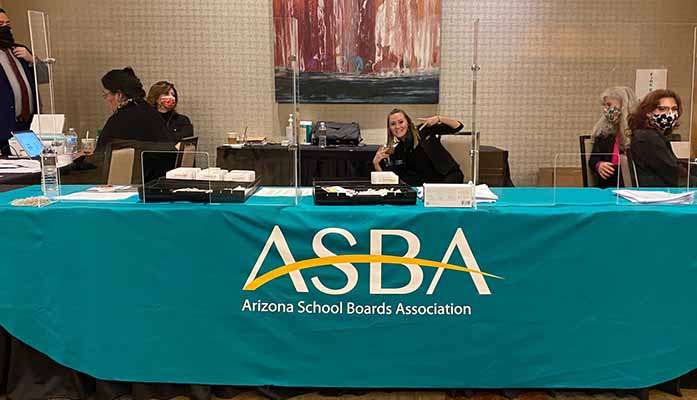
Freeman notes numerous public school district employees plan to attend a “Law Conference” presented by the Arizona School Boards Association at the J.W. Marriott Camelback Inn in Paradise Valley on Sept. 7 through 9 that will include programming by Friends of the ASBA, a 501(c)(4) organization opposed to school choice.
Friends of the ASBA, Freeman wrote Catlett, “will be working at the conference to gather signatures on a petition to overturn the universal school choice reform via ballot referendum.” He added that the ASBA “has brought its political advocacy to a fine point in its upcoming Law Conference.”
The Goldwater Institute is asking the Arizona Attorney General’s Office (AGO) to immediately investigate and “take all appropriate legal action to enforce Arizona’s law prohibiting school districts from using public recourses to support a ballot measure seeking to invalidate Arizona’s universal ESA program,” Freeman wrote.
The authority of the AGO to act is provided in ARS 15-511 “but only if your office acts promptly,” he added.
In a follow-up public statement, Freeman said the Goldwater Institute is dedicated to exposing the plans of entrenched interests in education to use hard-earned taxpayer dollars to deprive parents of the educational freedom provided by ESAs.
“All Arizona families should be free to make educational choices for their children without having the government work against them by rigidly defending a status quo that protects bureaucrats and government unions,” he stated.