by Corinne Murdock | Apr 28, 2022 | News
By Corinne Murdock |
On Wednesday, the Arizona House approved a Senate bill to repeal the governor’s current executive powers in public health emergencies.
Instead, SB1009 would ensure governors only have the authority to issue a state of emergency for public health emergencies for 30 days. After that, the governor would be limited to extending that state of emergency for 30 days at a time with a limit of 120 days or about four months. Once that time is exhausted, the state legislature must consent to any new state of emergency.
The governor wouldn’t be able to extend the state of emergency more than once without additional reporting requirements. After 60 days of an emergency, the governor must submit a written report to a joint committee of the Senate and House health committees. That committee will assess the report along with a Arizona Department of Health Services briefing and publish a public review of the extension.
SB1009 also empowers the state legislature to extend the state of an emergency for public health emergencies as well. Those extensions would be limited to 30 days, too.
The bill passed along party lines. It now heads to Governor Doug Ducey for final approval.
Ducey only ended the COVID-19 state of emergency at the end of last month: well over two years after the initial state of emergency was issued.
This legislative session covered other changes to Arizona’s state of emergency protocol. Ducey signed HB2507 on Monday, ensuring that religious services would be considered essential during a state of emergency. Over the last two years, other state governments forced the closure of religious buildings and worship gatherings, punishing those who dared to defy their public health orders in order to exercise their religious freedoms.
Corinne Murdock is a reporter for AZ Free News. Follow her latest on Twitter, or email tips to corinne@azfreenews.com.
by Corinne Murdock | Apr 19, 2022 | News
By Corinne Murdock |
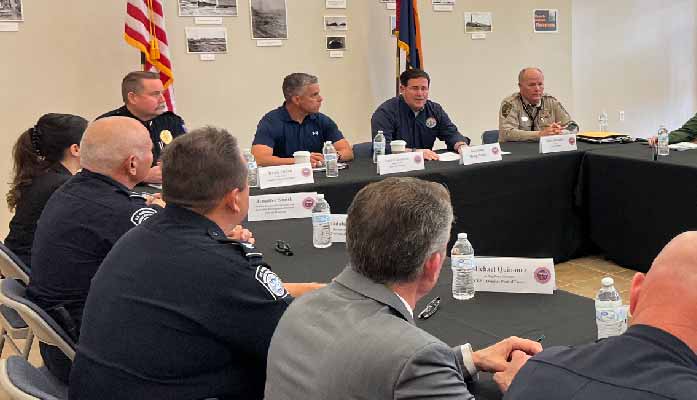
On Tuesday, half of America’s governors launched a strike force to control the ongoing border crisis. The American Governor’s Strike Force was modeled after Governor Doug Ducey’s Arizona Border Strike Force, established in 2015.
“If our entire southern border isn’t secure, our nation isn’t secure,” said Ducey. “As dangerous transnational criminal organizations continue to profit from holes in the border and fill our communities with drugs, it’s no coincidence that we’re seeing historic levels of opioid-related deaths.”
The American Governor’s Strike Force aims to improve intelligence on state crimes traceable to the border, cybersecurity, as well as tracking of drug trafficking and human smuggling.
The coalition of 26 governors launched the strike force in an effort to precede the Biden administration’s plan to lift Title 42 at the end of May. The policy allows expedited deportation of illegal immigrants from the country. Title 42 came into play in early 2020 under former President Donald Trump through the Centers for Disease Control (CDC) as an effort to control the COVID-19 spread.
As of the latest Customs and Border Protection (CBP) data, there have been nearly 2.6 million encounters/apprehensions on the southern border since President Joe Biden took office. That doesn’t include “getaways,” estimated to be tens to hundreds of thousands of times more.
By comparison, there were over 2.4 million encounters/apprehensions under Trump’s entire tenure.
2021 under Biden didn’t only reflect record highs in illegal immigrant apprehensions and encounters. Last year, transnational criminal organizations brought in around $3 billion from human smuggling. Additionally, fentanyl overdoses accounted for a record high of more than 77 percent of adolescent deaths in Arizona, as well as resulting in the leading cause of death for individuals aged 19 and younger.
Ducey and Texas Governor Greg Abbott teamed up last December to form the governors’ coalition. The pair recruited 24 other governors: those representing Alabama, Alaska, Arkansas, Florida, Georgia, Idaho, Indiana, Iowa, Maryland, Mississippi, Missouri, Montana, Nebraska, New Hampshire, North Dakota, Ohio, Oklahoma, South Carolina, South Dakota, Tennessee, Utah, Virginia, West Virginia, and Wyoming.
In January, Ducey promised the strike force in his State of the State Address. Ducey characterized the strike force as a solution to the Biden administration’s lack of progress on controlling the border crisis.
“Texas Governor Greg Abbott and I are teaming up to form the American Governors’ Border Strike Force: a commitment between states to do what the Biden administration is unwilling to do: patrol and secure our border,” said Ducey.
Ducey and Abbott’s initiative came after months of negotiations and proposals with the Biden administration to mitigate the crisis. Ducey cataloged those efforts in his latest press release announcing the strike force.
Corinne Murdock is a reporter for AZ Free News. Follow her latest on Twitter, or email tips to corinne@azfreenews.com.
by Terri Jo Neff | Apr 14, 2022 | News
By Terri Jo Neff |
Residents living in unincorporated communities across Arizona have a streamlined process for seeking to become a city or town, now that Gov. Doug Ducey has signed House Bill 2455 into law.
Under HB2455, the process will require those seeking incorporation to provide public notice at least six months prior to formally publishing a Petition to Incorporate. The requirements for making that notice are also detailed in the new legislation which Ducey signed April 6.
Another important change related to HB2455 is the ability to include “large areas of uninhabited, rural or farm land” into the incorporation plan under certain circumstances. But the biggest change is that those directly impacted by an incorporation plan can still object and be removed from the boundaries, but it is harder for them to outright kill the effort.
The change is intended to allow affected local qualified electors to vote on the proposed incorporation without having their interests overshadowed by others.
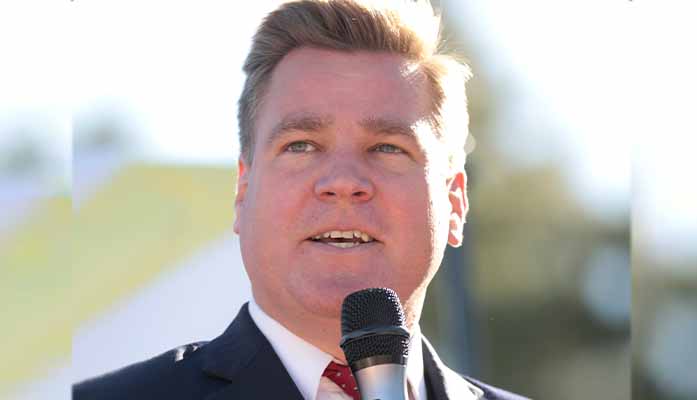
HB2455 was introduced by Rep. Neal Carter who represents parts of Gila and Pinal counties. He lives in San Tan Valley, where residents have tried three times in the last 12 years to incorporate the area which is home to nearly 97,000 people in northern Pinal County.
“Each time, the effort has failed without ever going to a ballot because of objections from outside interests,” Carter said after his bill was signed into law. “I believe people who live within a community should have a chance for their voices to be heard on matters of local governance. Any decision of whether a community becomes a town or city should be made by its residents, not by out of area interests.”
Carter was appointed last fall by the Pinal County Board of Supervisors to fill the remainder of Rep. Frank Pratt’s term following Pratt’s death. HB2455 was the first bill Carter introduced which the governor has signed into law.
HB2455 takes effect 90 days after the end of this legislative session.
by Terri Jo Neff | Mar 30, 2022 | News
By Terri Jo Neff |
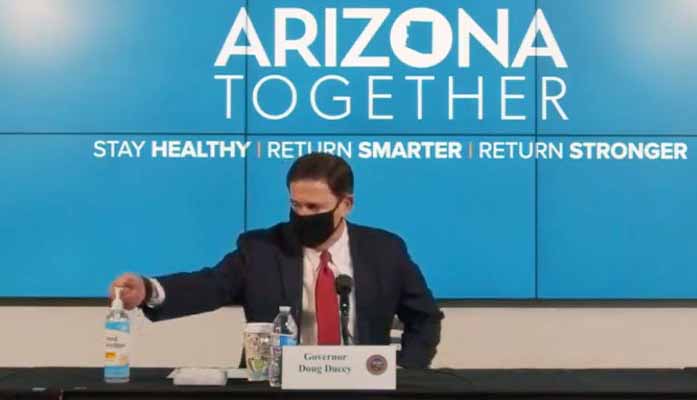
After more than two years, Arizona is finally out from under the COVID-19 Declaration of Emergency ordered by Gov. Doug Ducey on March 11, 2020.
“Today I am terminating the state’s COVID-19 State of Emergency. Thanks to the hard work of many — health care workers, businesses, public and private sector employees — COVID-19 is no longer an emergency in Arizona,” Ducey said Wednesday of his action which takes effect immediately.
The Arizona Department of Health Services (ADHS) reports that suspected COVID-19 cases now represent less than 1.5 percent of emergency room visits and hospital admissions. Ducey noted that while COVID-19 is not gone, the availability of the vaccine and other measures has allowed Arizonans to be better positioned to manage and mitigate it.
“COVID-19 challenged us in ways we never could’ve imagined. No corner of our state – no corner of our country or the world – was spared,” he said. “But we met that challenge head on by prioritizing lives, livelihoods and individual liberties. The time is right to move forward.”
ADHS’s website shows 29,268 death in Arizona attributed to COVID-19 since the pandemic started in 2020. Less than 400 COVID deaths were reported across the state in the last week.
Dr. Richard Carmona, who is serving as Ducey’s special advisor for public health preparedness, expressed confidence Wednesday that Arizona is prepared to address an expected future increase in cases due to virus mutations.
“We now have the experience and tools in place to address what may be to come while public health continues doing what we do best: infectious disease surveillance, prevention, and control,” Carmona said.
The termination of the public health state of emergency does not mean the end to various tracking of COVID-19 cases. According to ADHS, information about immunizations, deaths, hospitalizations, and lab results will continue to be gathered.
Ducey’s announcement allows each of the state’s 15 counties to continue any emergency declarations they currently have in place. The same is true for any cities and towns.
In response, the chairman of the Maricopa County Board of Supervisors formally ended the county’s own emergency declaration from March 2020. That won’t stop the county from expending millions of dollars of American Rescue Plan Act funds to address the ongoing economic impact COVID-19 has had on Maricopa County residents, businesses, and schools.
SEE ADHS COVID-19 DASHBOARD HERE
by Corinne Murdock | Mar 30, 2022 | News
By Corinne Murdock |
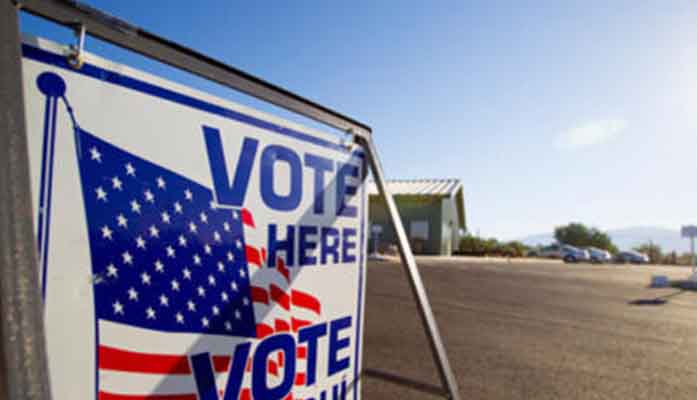
On Wednesday, Governor Doug Ducey signed HB2492, which requires individuals to provide proof of citizenship when registering to vote. The law most heavily impacts federal-only voters: federal law doesn’t require proof of citizenship when voting in federal elections. In the 2020 election, there were over 11,600 Arizonans who didn’t provide proof of citizenship, and state legislators reported that the current numbers were even higher: around 36,000, according to State Senator Warren Petersen (R-Gilbert). In 2018, there were 1,700 registered voters without proof of citizenship.
In a statement to AZ Free News, former Arizona Supreme Court Justice Andrew Gould commended Ducey for signing the legislation. He predicted that the law would improve voter turnout: the opposite of what the bill’s opponents claimed it would do.
“I want to thank Governor Ducey for signing HB2492. This new law, which requires proof of citizenship for state and federal elections, provides a critical protection for election integrity in Arizona,” said Gould. “This important piece of legislation, like all common-sense elections laws, will boost voter confidence and increase voter participation in Arizona.”
The Democratic Party’s Russiagate hoax lawyer, Marc Elias, pledged to sue Arizona over the law. Elias specializes in election litigation; he’s intervened in nearly 330 elections-related cases following the 2020 election, 150 of which he’s won. This week, the Washington Examiner reported that the Federal Election Commission (FEC) fined the DNC $105,000 and Hillary Clinton $8,000 for failing to accurately report how they funded the sole instigator of the Russiagate hoax, the Steele dossier. Clinton and the DNC together paid over $1 million to Elias’ law firm, Perkins Coie, for the opposition research firm that compiled the dossier, Fusion GPS. The DNC and Clinton claimed their combined funds were for legal services, not opposition research.
Based on Elias’ latest remarks, it looks like he will make good on the promise to sue.
In a letter to Secretary of State Katie Hobbs on Wednesday, Ducey offered a history of Arizonans’ support for proof of citizenship in order to vote. He recounted Proposition 200, a proof of citizenship requirement passed by voters in 2004 but later struck down by the Supreme Court (SCOTUS). Ducey also dispelled rumors that those who registered to vote without proof of citizenship prior to this bill’s enactment would have to re-register to vote.
“Election integrity means counting every lawful vote and prohibiting any attempt to illegally cast a vote,” wrote Ducey. “[This bill] is a balanced approach that honors Arizona’s history of making voting accessible without sacrificing security in our elections.”
In response, Hobbs claimed the legislation was “illegal.” She noted that the law would cause “costly litigation,” potentially alluding to Elias’ threats. Hobbs criticized Ducey’s latest efforts as a failure, a day after her signature-gathering system crashed while Maricopa County Attorney candidates attempted to submit signatures before their deadline in just a few days’ time. Those candidates need over 4,000 signatures to qualify for the ballot.
Corinne Murdock is a reporter for AZ Free News. Follow her latest on Twitter, or email tips to corinne@azfreenews.com.