by Staff Reporter | Feb 11, 2026 | News
By Staff Reporter |
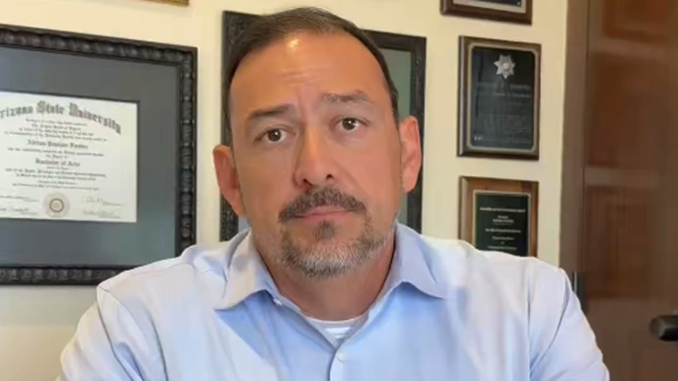
The state’s elections portal for candidates experienced another outage, prompting leaders of both political parties to cast blame at the other.
The E-Qual system experienced an outage that lasted from Friday through Sunday. This portal allows voters to sign candidate nominating petitions and give qualifying contributions. It also houses some sensitive candidate data.
Secretary of State Adrian Fontes blamed the outage on the accelerated primary election schedule. Gov. Katie Hobbs signed a Republican-led bill into law on Friday that moved the primary election to the second to last Tuesday in July, a bipartisan decision to accommodate military voters.
Fontes said a “typo” caused the outage, which he promised was “temporary” on Friday. However, he said his team wasn’t to blame. Fontes said he was dealing with insufficient staffing and outdated systems caused by the GOP-controlled legislature.
The secretary of state put a price on his problems: $17 million to overhaul the election and candidate-facing systems. A one-time funding boost that occurred in 2024 wasn’t enough, Fontes said.
In a premature announcement on Friday that would quickly be proven false, Fontes claimed the system was fixed. Fontes again stressed that the outages his team was experiencing were preventable — the fault that caused the outage had less to do with a “typo” but inadequate funding from the legislature.
“System interruptions are preventable and my office will continue requesting the necessary funding to mitigate issues in the future,” said Fontes.
In a longer video statement from the comfort of his Super Bowl setup on Sunday, Fontes said E-Qual was “fragile,” “old,” and “outdated” due to the legislature’s refusal to provide fiscal support for updates. Fontes further promised that important data relating to tabulation and voter information weren’t impacted.
“Some people wanted to politicize this,” said Fontes. “The failure is the legislature that has been exploiting this longtime issue that I’ve been trying to get fixed for years and they’re not funding it. It’s as if they broke it and they want to blame someone else for breaking it.”
Fontes later disclosed to reporters that one single person was in charge of maintaining the main election management systems for their office. Fontes said he pays a lot to keep that individual on staff as a contractor.
Republican lawmakers rejected Fontes’ attempt to push the blame onto them.
State Rep. Alexander Kolodin (R-LD3), who is campaigning to unseat Fontes this November, said more money couldn’t fix incompetence.
“Even with millions in additional funding, voters are still being disenfranchised by his incompetence,” said Kolodin. “Waste of money!”
In a similar vein, State Rep. David Livingston (R-LD28) questioned how Fontes’ office caused such a major outage over a typo — and how another tens of millions of dollars could have prevented such an error.
“I think the other information, changing July 21, should just be standard operating procedure, and they shouldn’t need any money to do that,” said Livingston. “And if they can’t handle doing that, they probably shouldn’t be running the secretary of state’s office at all.”
Livingston is vice chair of the Joint Legislative Budget Committee, which Fontes called out when identifying those who were to blame.
Some lawmakers had a little less to say on the subject.
The new chairman of the Arizona Republican Party, Sergio Arellano, said Fontes was again proving his inability to own his mistakes.
“Arizonans expect elections to be administered with competence and seriousness, and when preventable failures occur, they demand accountability — not silence, not excuses, and not business as usual,” said Arellano.
Last summer, Iranian hackers breached the E-Qual system under Fontes’ watch.
AZ Free News is your #1 source for Arizona news and politics. You can send us news tips using this link.
by Staff Reporter | Feb 6, 2026 | News
By Staff Reporter |
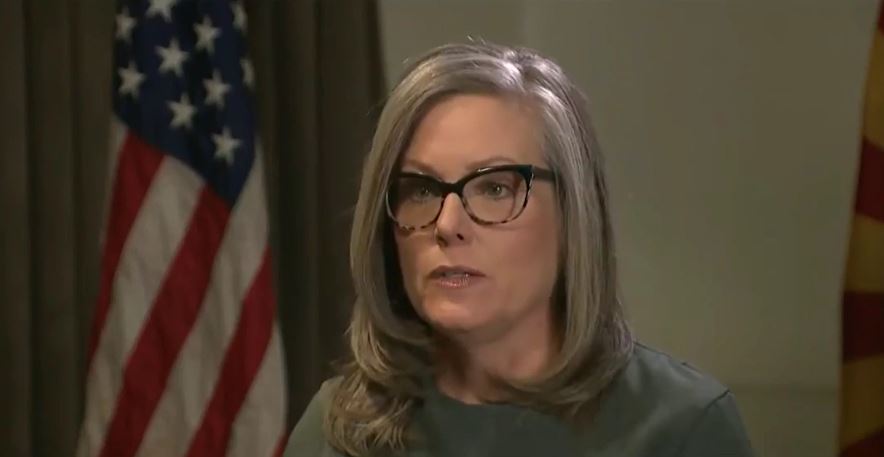
Republican lawmakers in the Arizona House are continuing their investigation into Gov. Katie Hobbs over an alleged pay-to-play scheme.
On Monday, House Speaker Steve Montenegro (R-LD29) announced the House advisory team obtained outside counsel from out of state to investigate the connection between Hobbs and a Glendale group home, Sunshine Residential Homes, independently.
Montenegro said in a statement that the connection between the governor and the group home constituted special treatment derived directly from political donations. The lawmaker said that the addition of outside counsel was necessary to achieve the full independence an investigation of this significance needed.
“The advisory team has done serious, disciplined work, and their recommendation to bring in independent counsel is the right next step,” said Montenegro. “The House will not look the other way when taxpayer dollars and vulnerable children may have been used as leverage in a political scheme. We will follow the facts, consider the findings, and ensure transparency and accountability in state government. Arizonans deserve nothing less.”
The outside counsel is Justin Smith with the Missouri-based James Otis Law Group. The law group was founded by Trump’s solicitor general, D. John Sauer.
Smith is the listed counsel in President Donald Trump’s lawsuit against a woman, E. Jean Carroll, alleging battery and defamation. Carroll sued Trump for defamation after he publicly denied her 2019 claims of him sexually assaulting her in the 1990s.
That petition is before the Supreme Court.
According to Montenegro, Smith will conduct records review and interviews. All findings will go directly to the advisory team and House leadership.
Advisory team members are State Reps. Selina Bliss (R-LD1), David Livingston (R-LD28), Matt Gress (R-LD4), Quang Nguyen (R-LD1), and Neal Carter (R-LD15).
Last November, that advisory team was created to follow up on 2024 media reporting alleging the pay-to-play scheme within the Arizona Department of Child Safety under Hobbs’ direction.
In the summer of 2024, the Arizona Republic reported that Sunshine Residential Homes received a unique 30% rate increase following a donation exceeding $400,000 to Hobbs and the Arizona Democratic Party.
Much of 2024 was spent attempting to determine who, if anyone, was fit to conduct an investigation into the allegations against the governor.
One of the earliest requests came from Republican State Sen. T.J. Shope, who asked Attorney General Kris Mayes to investigate. Mayes complied initially, but was immediately hit with other Republican lawmakers and state leaders asking her to recuse herself due to an alleged conflict of interest.
State Rep. Matt Gress asked Maricopa County Attorney Rachel Mitchell and Auditor General Lindsey Perry to investigate.
All three leaders are investigating. Mitchell and Perry are coordinating on one investigation, while Mayes will conduct her own investigation.
As reported last November, the work of the House’s advisory team will coordinate with these parallel investigations by the auditor general and county attorney, and the attorney general.
In February 2024, Sunshine Residential Homes owners Elizabeth and Simon Kottoor maxed out their donations to Hobbs’ reelection campaign. Each gave the maximum $5,400 contribution amount.
In October 2022, the Kottoors gave Hobbs’ initial gubernatorial campaign $10,000.
AZ Free News is your #1 source for Arizona news and politics. You can send us news tips using this link.
by Jonathan Eberle | Nov 18, 2025 | News
By Jonathan Eberle |
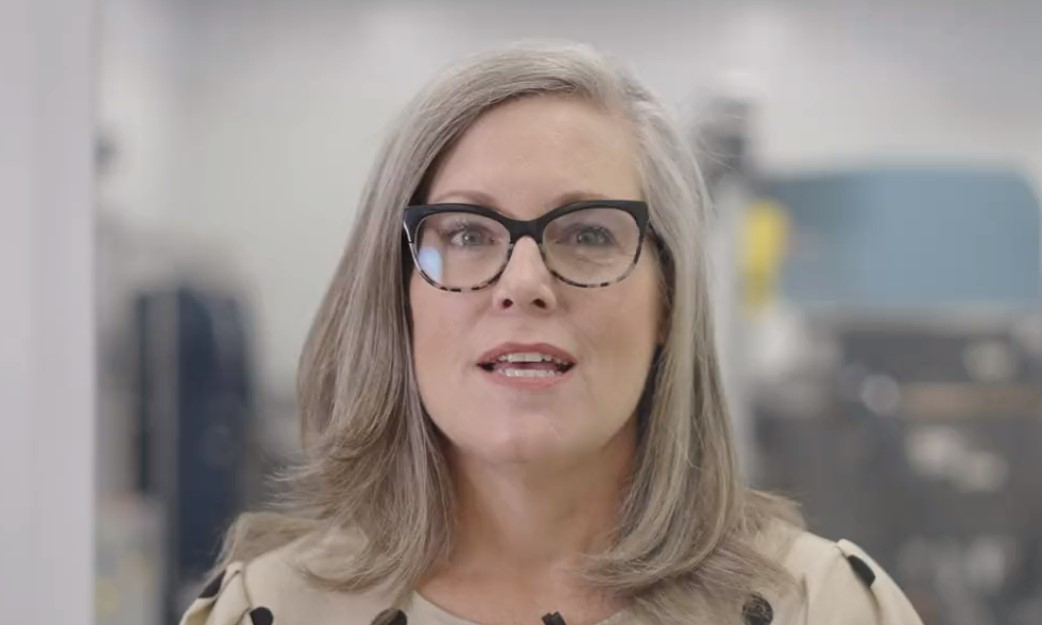
Arizona House Speaker Steve Montenegro has formed a new advisory team to investigate allegations that Governor Katie Hobbs’ administration awarded a lucrative contract increase to a politically connected group home provider, raising fresh questions about influence and accountability inside the Department of Child Safety (DCS).
The move follows reporting by The Arizona Republic that Sunshine Residential Homes received a 30% rate increase after contributing more than $400,000 to Hobbs and Democratic political committees. According to documents cited in the reporting, other group home providers seeking similar adjustments were denied. Internal communications reportedly show DCS staff discussing the provider’s political connections to the governor and suggesting the increase be kept quiet from competing organizations.
The revelations come as DCS faces a budget shortfall and has been under pressure to reduce reliance on group home placements, making the agency’s decision to grant a significant rate hike particularly notable. Speaker Montenegro said the advisory team will conduct a legislative investigation to assemble facts, coordinate with law-enforcement agencies, and evaluate possible actions the House may take to prevent preferential treatment in state contracting.
“The facts reported raise serious questions the House cannot ignore,” Montenegro said in a statement. “Arizona’s children, families, and taxpayers deserve a system that is clean, fair, and focused on care, not political access or donations.”
The speaker also directed state agencies and contractors to preserve all relevant records and to cooperate fully with the Legislature. The advisory panel includes several senior lawmakers including Rep. Selina Bliss, Chair of the House Health and Human Services Committee; Rep. David Livingston, Chair of House Appropriations; Rep. Matt Gress, Chair of the Joint Legislative Audit Committee; Rep. Quang Nguyen, Chair of House Judiciary; and Speaker Pro Tempore Neal Carter.
The investigation builds on earlier legislative efforts to probe the relationship between Sunshine Residential Homes and the Hobbs administration. In 2024, Rep. Matt Gress requested investigations by the Maricopa County Attorney and the Auditor General following the first reports linking the provider to political contributions and favorable treatment. Rep. David Livingston separately urged Attorney General Kris Mayes to recuse herself, citing concerns about conflicts of interest involving the governor and the Democratic Party.
The House advisory team is expected to begin its work immediately and will coordinate with any parallel investigations by the Auditor General, the Maricopa County Attorney’s Office, or the Attorney General. Montenegro said lawmakers will “secure the records, ask the hard questions, and, if necessary, change the law to ensure it never happens again.”
Jonathan Eberle is a reporter for AZ Free News. You can send him news tips using this link.
by Matthew Holloway | Apr 25, 2025 | News
By Matthew Holloway |
An Arizona legislator has put out the call: he needs a second job. Arizona Representative Nick Kupper (R-LD25) put out posts to LinkedIn and X on Tuesday announcing that he is seeking to start a new role in addition to his work as a lawmaker.
Writing in a post to X, Kupper explained, “If you’re wondering, state reps make ~$35k with base pay/per diem. Once I got elected I was laid off for being a legislator. That sucks, but I’d rather go bankrupt than give up on my constituents. That being said 4 kids eat a lot, so if you know of any remote jobs I’m all ears.”
In his post to LinkedIn, he wrote, “My role as State Rep is great, but pays very little and timing wise effectively only allows me to work remote roles.”
In Arizona, the state legislature has been traditionally viewed as a part-time job. With the session running from January often through June or even July, it’s easy to see why. And while strange compared to more populous states, this is a very common system.
In Texas for example, the legislature is only convened for a maximum of 140 days every odd-numbered year, barring special sessions called by the Governor for 30-day stretches. Montana, Nevada, and North Dakota, have similar odd-numbered-year arrangements.
Salary-wise, Arizona ranks near the middle of the pack with its $24k plus per diem ranking 24th out of the fifty states. In neighboring New Mexico, the legislature receives no salary at all, only earning a $161 per diem during session. By contrast, a New York legislator earns a salary of $110k per year with per diem, totaling approximately $142k annually.
As reported in early March by AZ Free News, Arizona Legislators have taken considerable heat over Senate Concurrent Resolution 1003, a measure to effectively double their salaries to $48k along with increases in per diem payments and benefits.
One major point of contention is a disparity in pay between members who live within Maricopa County versus outside of it.
“I think there’s discrimination happening currently (with) the way members of this body and Senate are paid, when you have members that literally could get three times the total pay package because they live outside of Maricopa versus inside,” Representative David Livingston (R-LD28) told AZ Capitol Times. “This needs to be fixed.”
Sen. John Kavanagh (R-LD3) proposed a salary plan linked to inflation and dating back to 1998 in its calculations explaining, “We’re not asking the voters to really in real dollars increase our pay. We’re asking them to keep our pay at the same real dollar amount that they thought it was worth in 1998.”
The bill has passed the Senate and House Appropriations Committee and will now go to the floor of the House before potentially going to the voters in November.
Matthew Holloway is a senior reporter for AZ Free News. Follow him on X for his latest stories, or email tips to Matthew@azfreenews.com.
by Jonathan Eberle | Mar 24, 2025 | News
By Jonathan Eberle |
The Joint Legislative Budget Committee (JLBC), led by Representative David Livingston (R-28), convened on Thursday to address what it described as a financial mismanagement crisis within Governor Katie Hobbs’ administration. The focus of the meeting was the Department of Child Safety’s (DCS) Congregate Care program, which is reportedly facing imminent financial collapse.
The JLBC directed DCS to use existing funds within its budget to maintain services for vulnerable children without seeking additional taxpayer dollars. According to Chairman Livingston, Governor Hobbs’ approach to budgeting has resulted in repeated financial emergencies.
“Governor Hobbs’s repeated failures to manage the budget responsibly have pushed agencies into crisis after crisis. Her administration’s approach is to overspend, ignore reality, and then demand a last-minute bailout. That’s not leadership—that’s recklessness,” Livingston stated.
Republican legislators accused the Governor’s team of failing to disclose available federal funds that could have been used to stabilize the Congregate Care program. Instead, they said that those funds were redirected to a separate Kinship Support Services initiative that had not previously received state funding.
“That decision by the Governor is stunning,” Livingston said. “Instead of prioritizing the program on the brink of insolvency, she chose to send federal dollars elsewhere. This raises serious questions about her administration’s priorities and decision-making.”
Beyond the immediate concerns with DCS, lawmakers also raised alarms about the Developmental Disabilities (DDD) program, which they claim is on track to run out of funds by April. Speaker of the House Steve Montenegro announced the formation of a House Ad Hoc Committee on Executive Budget Mismanagement to investigate what Republicans see as a pattern of fiscal irresponsibility under Governor Hobbs’ administration.
“We care deeply about the children in DCS’ care. That’s why we acted quickly today,” Livingston stated. “The Legislature will not reward fiscal irresponsibility by throwing more taxpayer dollars at a crisis of the Governor’s making. Moving forward, the Governor must be more transparent and accountable about her agency budgets.”
The coming weeks will likely see further debate as lawmakers seek answers regarding the state’s financial outlook and agency funding priorities.
Jonathan Eberle is a reporter for AZ Free News. You can send him news tips using this link.