by Jonathan Eberle | Mar 24, 2025 | News
By Jonathan Eberle |
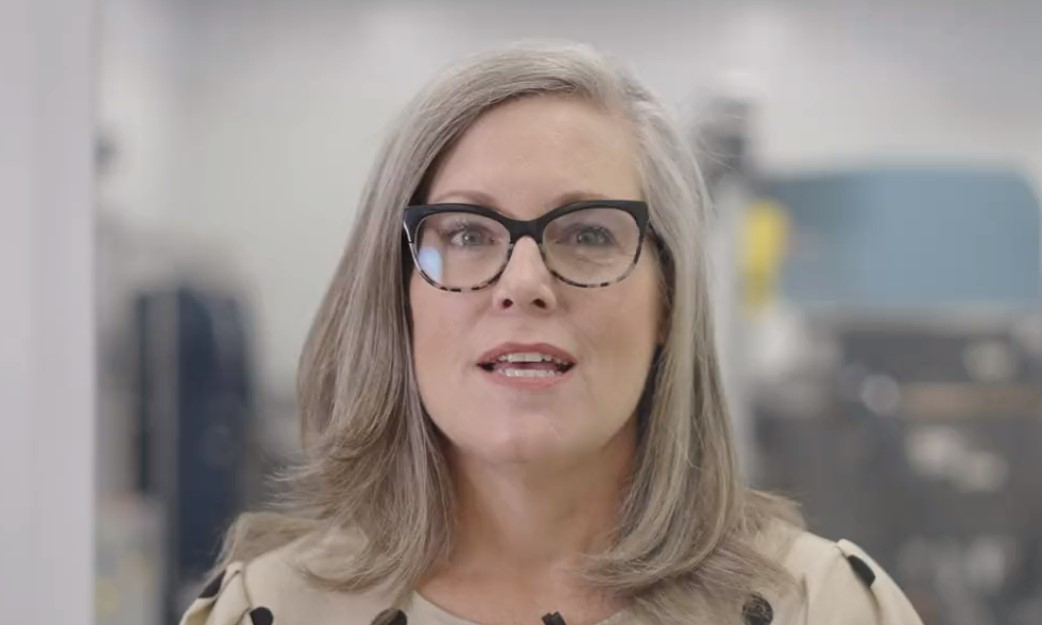
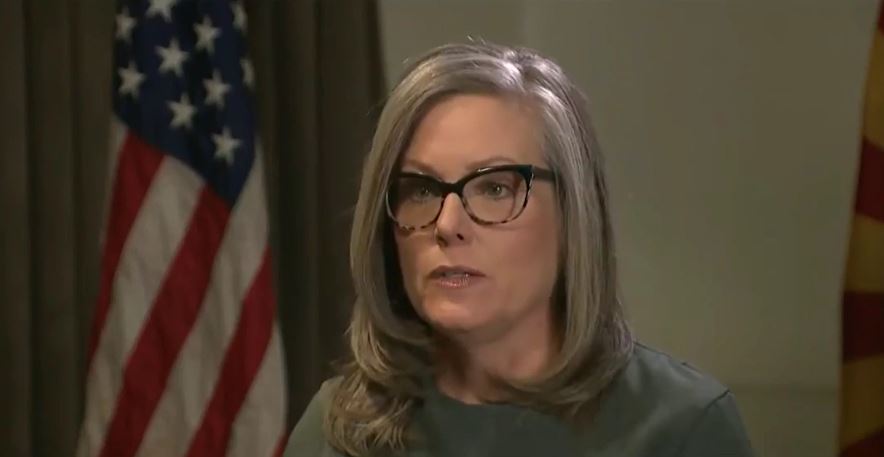
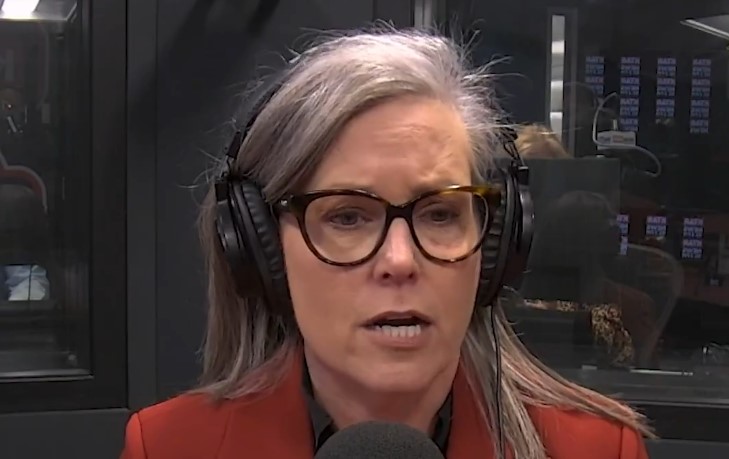
The Joint Legislative Budget Committee (JLBC), led by Representative David Livingston (R-28), convened on Thursday to address what it described as a financial mismanagement crisis within Governor Katie Hobbs’ administration. The focus of the meeting was the Department of Child Safety’s (DCS) Congregate Care program, which is reportedly facing imminent financial collapse.
The JLBC directed DCS to use existing funds within its budget to maintain services for vulnerable children without seeking additional taxpayer dollars. According to Chairman Livingston, Governor Hobbs’ approach to budgeting has resulted in repeated financial emergencies.
“Governor Hobbs’s repeated failures to manage the budget responsibly have pushed agencies into crisis after crisis. Her administration’s approach is to overspend, ignore reality, and then demand a last-minute bailout. That’s not leadership—that’s recklessness,” Livingston stated.
Republican legislators accused the Governor’s team of failing to disclose available federal funds that could have been used to stabilize the Congregate Care program. Instead, they said that those funds were redirected to a separate Kinship Support Services initiative that had not previously received state funding.
“That decision by the Governor is stunning,” Livingston said. “Instead of prioritizing the program on the brink of insolvency, she chose to send federal dollars elsewhere. This raises serious questions about her administration’s priorities and decision-making.”
Beyond the immediate concerns with DCS, lawmakers also raised alarms about the Developmental Disabilities (DDD) program, which they claim is on track to run out of funds by April. Speaker of the House Steve Montenegro announced the formation of a House Ad Hoc Committee on Executive Budget Mismanagement to investigate what Republicans see as a pattern of fiscal irresponsibility under Governor Hobbs’ administration.
“We care deeply about the children in DCS’ care. That’s why we acted quickly today,” Livingston stated. “The Legislature will not reward fiscal irresponsibility by throwing more taxpayer dollars at a crisis of the Governor’s making. Moving forward, the Governor must be more transparent and accountable about her agency budgets.”
The coming weeks will likely see further debate as lawmakers seek answers regarding the state’s financial outlook and agency funding priorities.
Jonathan Eberle is a reporter for AZ Free News. You can send him news tips using this link.
by Matthew Holloway | Feb 28, 2025 | News
By Matthew Holloway |
Rep. David Livingston, Chairman of the Arizona House Appropriations Committee, issued a letter to Governor Katie Hobbs this week calling on her to publicly acknowledge her responsibility for a $122 million shortfall in the Arizona State Developmental Disabilities (DDD) program and work with the Republican-controlled legislature to correct the problem. Livingston noted that “Despite repeated requests for meaningful discussions, the Governor and her staff have refused to engage.”
Hobbs has faced sustained criticism from Livingston, the Goldwater Institute, and Arizona State Treasurer Kimberly Yee who described the situation as “unfortunate gross financial mismanagement by the Hobbs Administration.”
In his letter to Hobbs, Livingston wrote, “For the past seven weeks, I have held seven Appropriations Committee hearings, laying out in clear detail how your administration’s budget mismanagement is creating serious financial risks for the state. At every turn, I have asked for serious, responsible discussions to address this situation, yet your office continues to say you ‘aren’t ready.’ Meanwhile, rather than engaging with the Legislature in good faith, you and your staff have chosen to issue public statements, assign blame, and demand more taxpayer dollars—without addressing the broken system that led us here. Here’s the reality:
- The $122 million shortfall in the Developmental Disabilities (DDD) program stems entirely from unilateral decisions made by your administration. The Legislature was never consulted before these funds were spent, yet now taxpayers are being asked to cover the consequences.
- Last week, Democrats attempted to force through $122 million in additional spending without any structural reforms or accountability measures—a short-term band-aid that does nothing to prevent future financial shortfalls. Republicans rejected this reckless approach because real solutions require responsible budgeting, not knee-jerk political stunts.
- Your budget proposal is grossly unbalanced, leaving out over $800 million in expenses. Yet, your office suggested to reporters that lawmakers should simply “pass it” and trust the same administration that created this crisis to handle the details. That is not how responsible government works.”
Livingston emphasized that while Hobbs has opted “instead for public statements and political posturing,” Arizona families have suffered the consequences and “remain uncertain about critical services.”
In his letter, he implored the Governor, “You have a choice: You can work with us to fix this problem responsibly, or you can continue making public statements while Arizona families and service providers face uncertainty.” He added, “What we need is real accountability, long-term planning, and meaningful reforms to ensure this program is funded properly—not just for today, but for the future.”
The Appropriations Chairman closed his letter on an affirmation that “The Republican Majority in the House and Senate is committed to responsible budgeting and ensuring that Arizona families have the services they need—without reckless overspending.” He offered Hobbs a final recommendation: “It is time for you to step up, take responsibility, and come to the table.”
Matthew Holloway is a senior reporter for AZ Free News. Follow him on X for his latest stories, or email tips to Matthew@azfreenews.com.
by Matthew Holloway | Feb 19, 2025 | News
By Matthew Holloway |
Last week, the Chairman of the Arizona House Appropriations Committee, Rep. David Livingston, praised Treasurer Kimberly Yee for her recent letter reporting on allegations of “missing money,” somehow “misplaced” by Democrat Governor Katie Hobbs. Yee explained that the “missing money…appears to be unfortunate gross financial mismanagement by the Hobbs Administration.”
Chairman Livingston said in a statement, “I appreciate Treasurer Yee’s clarity in addressing the financial mess Governor Hobbs has created. The issue isn’t ‘missing money’—it’s blatant mismanagement.”
“Under the Governor’s feckless leadership, state agencies are making massive spending decisions with zero legislative oversight, ballooning costs, and expecting taxpayers to foot the bill. This kind of incompetence cannot stand.”
Livingston has been among the legislators expressing increasing alarm over the State of Arizona’s Developmental Disabilities Program (DDD). The program is presently staring down insolvency in a matter of months due to decisions made by Hobbs’ Office.
“This Governor is running Arizona’s budget into the ground,” Livingston added. “She’s refusing to control spending, and instead of making responsible choices, she’s leaving families on the hook for her failures. The Republican Majority Legislature won’t stand by while she bankrupts the state.”
According to Matt Beienburg of the Goldwater Institute, the budget proposed by Hobbs in late January is “mismanagement at its worst.” He explained, “Her recently released budget plan seeks to tear down Arizona’s Empowerment Scholarship Account program (ESA), the most successful school choice program in the country, even as it fails to account for more than $800 million in statutorily required spending on the state’s Medicaid program.”
In a letter to Hobbs in early February, Livingston called the Governor out for “fiscal mismanagement and lack of legislative consultation.” He claimed that the Hobbs administration has failed to control costs, noting that the program’s supplemental funding needs have ballooned from $109 million to $122 million in just weeks. He observed that in the case of the DDD, “Under Governor Hobbs’ watch, the cost of this program has exploded from $750 million to $1.5 billion.” He added, “The Legislature was blindsided by these numbers, and we need immediate answers on how the administration plans to rein in spending before Arizona families are left with nothing.”
“The state must act now to fix this before families pay the price for this administration’s failure,” Livingston said, according to the Arizona Daily Independent. “We can’t afford more of the governor’s last-minute budget negotiations while programs Arizonans depend on collapse.”
Matthew Holloway is a senior reporter for AZ Free News. Follow him on X for his latest stories, or email tips to Matthew@azfreenews.com.
by Daniel Stefanski | Feb 11, 2025 | News
By Daniel Stefanski |
A Republican lawmaker is demanding answers of Arizona’s Democrat Chief Executive over a looming financial crisis of a vital program for parents and children.
On Wednesday, State Representative David Livingston sent a letter to Arizona Governor Katie Hobbs, “renewing his warning over the imminent insolvency of the state’s Developmental Disabilities (DDD) program, calling out [the governor’s] administration for its fiscal mismanagement and lack of legislative consultation.”
In a statement that accompanied the press release sharing the contents of the letter, Livingston, the Chairman of the House Appropriations Committee, said, “This administration has made major financial commitments without consulting the Legislature, and now families are staring down the consequences of an unsustainable program. Governor Hobbs must explain why her agencies are making decisions without oversight and what her plan if this program collapses.”
Livingston added, “Under Governor Hobbs’ watch, the cost of this program has exploded from $750 million to $1.5 billion. The Legislature was blindsided by these numbers, and we need immediate answers on how the administration plans to rein in spending before Arizona families are left with nothing.”
The longtime Arizona legislator wrote in his letter, “As I continue to untangle the executive budget proposal, I am most disturbed to learn that decisions made by your departments have threatened the operations of the State’s Developmental Disabilities program. The House Appropriation Committee was briefed last week, less than two weeks after your original budget proposal, that DDD’s supplemental needs have increased from $109 million just to keep the program from ceasing operations in April. This is alarming to both the Legislature and families using this program.”
Representative Livingston noted that his committee “was briefed that cost overruns are for three primary reasons: growth in eligibility, increased rates, and the continuation of the COVID-era Parents as Paid Caregivers Program.” He highlighted that “AHCCCS not only made these decisions without consultation of the Legislature, but without consultation of DDD, the manager of the program.”
The questions Representative Livingston asked of the Governor’s Office are as follows:
- “Will your office choose the same posture this year and what is your plan when the DDD program must discontinue operations in the Spring?” (referring to the lateness of budget negotiations between the Governor and legislative Republicans)
- “Can you explain why AHCCCS makes decisions without input?”
- “I need to know as soon as possible what AHCCCS and DDD plan to do to control the spiraling costs in these programs.”
- “What oversight and controls can be implemented to relieve the pressure on these employees and ensure uniform implementation?” (referring to reports of pressure by parents on Service Coordinators to increase hours, affecting the spending within the program)
This financial crisis over DDD adds to a rocky start of the 57th Regular Session between Arizona Republican legislators and Governor Hobbs in the third year of a divided state government.
Daniel Stefanski is a reporter for AZ Free News. You can send him news tips using this link.
by Daniel Stefanski | Sep 24, 2024 | Economy, News
By Daniel Stefanski |
A leading small business advocacy organization has presented several Arizona lawmakers with its top award.
Earlier this summer, the National Federation of Independent Business (NFIB) presented a handful of Arizona legislators with its Guardian of Small Business Award. The individuals recognized with the award were as follows:
- Speaker of the House Ben Toma
- Representative David Livingston
- Representative Travis Grantham
- Senate President Warren Petersen
- Senator J.D. Mesnard
- Senator T.J. Shope
“These six lawmakers have gone above and beyond on behalf of Main Street Arizonans,” NFIB State Director Chad Heinrich said. “In this difficult economy, where costs continue to go up and open positions remain unfilled, it’s incumbent on lawmakers to not make it more difficult to own and operate a small business here in Arizona. Our members are grateful for each of these lawmakers’ commitment to free enterprise and sound policy.”
NFIB presented the award to Petersen in August.
NFIB presented the award to Shope in August.
NFIB presented the award to Mesnard in August.
NFIB presented the award to Toma earlier this month.
Toma responded to the award, stating, “Thank you. It is a great honor to be recognized by those dedicated to protecting and promoting small businesses.”
According to its website, “NFIB is the voice of small business, advocating on behalf of America’s small and independent business owners, both in Washington, D.C., and in all 50 state capitals. NFIB is nonprofit, nonpartisan, and member-driven. Since our founding in 1943, NFIB has been exclusively dedicated to small and independent businesses, and remains so today.”
Daniel Stefanski is a reporter for AZ Free News. You can send him news tips using this link.