by Ethan Faverino | Mar 26, 2026 | News
By Ethan Faverino |
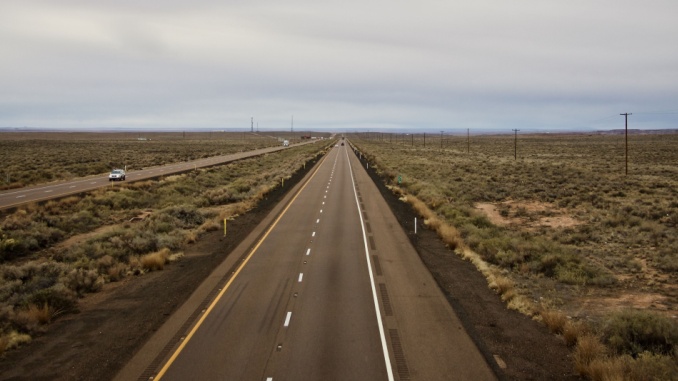
The Arizona Senate has passed a comprehensive package of transportation bills designed to enhance roadway safety, improve mobility, reduce congestion, and support long-term economic development across the state.
The measures, which advance critical infrastructure projects in both rural and urban areas, were approved this week without raising taxes or imposing new fees on Arizona drivers.
The legislation targets high-priority corridors experiencing pressure from population growth, increased freight traffic, and tourism demand. Key components of the package include targeted safety and capacity improvements on several major routes.
SB 1062, sponsored by Senator Wendy Rogers (R-LD7), appropriates $1,000,000 from the state general fund for FY26-27 to the Arizona Department of Transportation. The funding will support planning, design, construction, and right-of-way acquisition for an additional left-turn lane and related intersection improvements at the busy intersection of U.S. Route 60 and Superstition Mountain Drive in Pinal County. These enhancements aim to ease traffic flow and improve safety along this heavily traveled corridor.
SB 1063, also sponsored by Senator Rogers, allocates $11,100,000 for critical safety improvements on U.S. Route 70 between Mile Post 225 and Mile Post 301. This rural route serves commuters, freight operators, and emergency services in eastern Arizona. The project addresses longstanding roadway deficiencies to enhance travel reliability and safety for users across the region.
SB 1064, another measure sponsored by Senator Rogers, appropriates $3,000,000 from the state general fund in FY26-27 to the Arizona Department of Transportation for distribution to the City of Flagstaff. The funding will support the design and construction of improvements along U.S. Route 66 between I-40 and Milton Road. Under the bill, the Department of Transportation must enter into an intergovernmental agreement with the City of Flagstaff by September 15, 2026, and, if executed, distribute funds to the city by November 1, 2026. The project will help modernize infrastructure along one of northern Arizona’s busiest tourism and business corridors.
“Transportation is about safety, mobility, and economic opportunity,” stated Senator Rogers. “These projects address real pressure points on our highways, keep traffic moving, and support the continued growth of communities across Arizona.”
SB 1204, sponsored by Senator Janae Shamp (R-LD29), provides $5,500,000 for planning and environmental analysis for future interchange improvements at the intersection of U.S. Route 60 and Loop 303 in the rapidly growing West Valley. The area continues to see significant residential expansion and rising freight traffic.
“The West Valley is growing at an incredible pace, and our infrastructure has to keep up,” stated Senator Shamp. “This project prepares one of our most important corridors for the traffic we know is coming, improving daily commutes while supporting job growth and regional commerce, as well as preventing traffic fatalities.”
SB 1455, sponsored by Senate Appropriations, Transportation & Technology Committee Chair David Farnsworth (R-LD10), appropriates $500,000 for surveying, design, and study work on the future extension of State Route 24 east of Ironwood Drive in the East Valley—one of Arizona’s fastest growing regions.
“As families and businesses continue moving into the East Valley, transportation planning has to look ahead, not behind,” stated Senator Farnsworth. “Extending SR 24 will strengthen regional connectivity, reduce future congestion, and ensure infrastructure keeps pace with responsible growth.”
The measures now move to the Arizona House as part of the ongoing state budgeting process.
Ethan Faverino is a reporter for AZ Free News. You can send him news tips using this link.
by Ethan Faverino | Mar 25, 2026 | News
By Ethan Faverino |
Arizona Senate Republicans have moved forward with a targeted plan to strengthen local law enforcement and safeguard vulnerable children, particularly runaway and at-risk youth in the child welfare system.
Senate Bill 1550, sponsored by Senate Appropriations Committee Chairman David Farnsworth (R-LD10), passed the Senate this week and now heads to the House for consideration as part of upcoming FY27 budget negotiations.
The bill appropriates $1,255,500 from the state general fund to the Town of Queen Creek for its Police Department to launch a three-year specialized law enforcement pilot program. The initiative focuses on five key areas: preventing runaway incidents among youth; protecting at-risk children from exploitation; enhancing investigative capabilities; strengthening collaboration with care providers and state agencies; and developing a replicable model framework that could be expanded statewide.
“Protecting our children is crucial and should unite us all, beyond political lines,” stated Senator Farnsworth. “Every moment counts when a child is in danger or in state care, and we must ensure law enforcement has the necessary tools to act swiftly and effectively to prevent exploitation. Our child safety system should be transparent and prioritize placing children in loving, safe environments, ideally with family.”
Queen Creek has emerged as a critical testing ground for these reforms due to a notable concentration of missing-from-care incidents at residential treatment facilities serving some of Arizona’s most vulnerable youth.
The adjacent Canyon State Academy (serving boys) and Desert Lily Academy (serving girls), operated by the Nevada-based Rite of Passage under contract with the Department of Child Safety (DCS), have seen significant police activity since the Queen Creek Police Department’s establishment in 2022.
According to Fox10 Phoenix, officers have responded to more than 2,000 calls for service at the campuses, with annual calls reaching 430 at Canyon State and 306 at Desert Lily by 2024.
Between January 2024 and December 2025, police recorded 208 missing persons reports for boys at Canyon State Academy and 119 for girls at Desert Lily Academy—averaging roughly one child going missing every two days across the two facilities. Many of these runaways have escalated into exploitation and trafficking investigations.
Queen Creek Police Chief Randy Brice emphasized the urgency: “If we don’t find them within that first few hours, our concern is that they’ll be trafficked, and we have to put a lot of resources into solving those quickly.”
A notable case involved Wendell Whyte, who was sentenced in July 2025 to 20 years in prison for trafficking three girls (ages 14, 16, and 17) from Desert Lily Academy. Court records indicate that Whyte has previously exploited one of the victims in Phoenix’s “The Blade” area, a known corridor for prostitution near 27th Avenue and Indian School Road.
The girls reportedly ran from the facility, were provided drugs and alcohol, and were coerced into sex work.
Additional concerns have surfaced regarding facility operations. In September 2025, former Desert Lily Academy Supervisor Christopher Lamont Allen was arrested and later indicted on two counts of sexual conduct with a minor after a 17-year-old resident alleged he had sex with her on two occasions, with surveillance video reportedly capturing the encounters.
Fox 10 Phoenix investigations have also documented prior cases of staff physically assaulting students at both academies, including incidents involving punching, tackling, and pinning youth to the ground.
Senator Farnsworth, who collaborated with group homes and local leaders to develop a three-pillar strategy of prevention, response, and investigation, highlighted the bill’s broader goals.
“This bill enhances support for law enforcement, encourages collaboration among agencies, and underscores our commitment to caring for our most vulnerable,” added Farnsworth. “We aspire to create a model that can be emulated across Arizona, ensuring that every child feels safe and valued. Together, we can guarantee that protecting our children and strengthening law enforcement remain top priorities.”
Ethan Faverino is a reporter for AZ Free News. You can send him news tips using this link.
by Matthew Holloway | Mar 22, 2026 | News
By Matthew Holloway |
The Arizona Senate approved a package of border security legislation that would direct $40 million toward detention reimbursements, supplemental fencing, and expanded use of aerial surveillance technology.
The bills passed were SB 1156, SB 1157, and SB 1457, and they now move to the House for further consideration.
SB 1156, sponsored by Sen. Wendy Rogers (R-LD7), would appropriate $20 million to reimburse cities, towns, and counties for costs associated with short-term detention holds for individuals unlawfully present in the United States.
“For years, Arizona has been dealing with the consequences of a border crisis created by the Biden administration,” Rogers said in a statement. “Now that President Trump has restored order and delivered the most secure border in modern history, we need to make sure our state is doing its part to support that progress. This funding helps local law enforcement manage detention responsibilities and ensures we are not backsliding.”
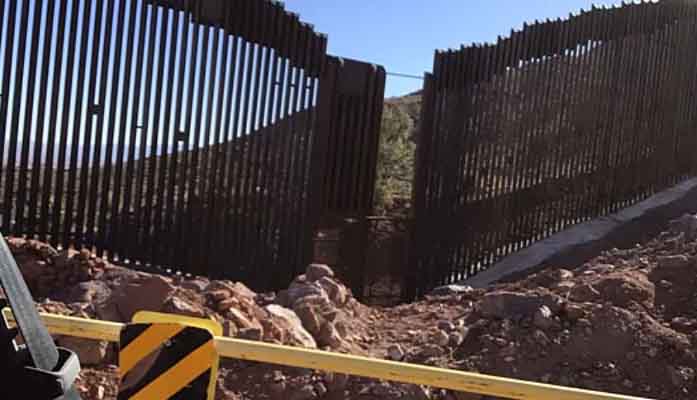
SB 1157 would provide $20 million to support the construction of supplemental fencing and barriers in high-crossing areas along Arizona’s southern border, according to the Senate Republican Caucus. It was also sponsored by Rogers.
“We know strong physical barriers work because we have seen it firsthand,” Rogers said. “President Trump proved that when you take border security seriously, crossings drop. Arizona is reinforcing that progress by investing in the areas where crossings have historically been the highest.”
SB 1457, sponsored by Sen. David Farnsworth (R-LD10), would expand the use of the state’s Advanced Air Mobility Fund to include border security operations, allowing for the purchase of aerial technology and the development of infrastructure to support surveillance and response efforts, with priority given to border counties.
“Maintaining a secure border takes more than policy, it takes the right tools in the field,” Farnsworth said. “This legislation supports law enforcement with advanced technology so they can respond in real time and keep Arizona communities safe.”
According to the caucus, the measures are intended to support local law enforcement, strengthen infrastructure at high-traffic crossings, and expand the tools available for border security operations.
Matthew Holloway is a senior reporter for AZ Free News. Follow him on X for his latest stories, or email tips to Matthew@azfreenews.com.
by Matthew Holloway | Mar 2, 2026 | News
By Matthew Holloway |
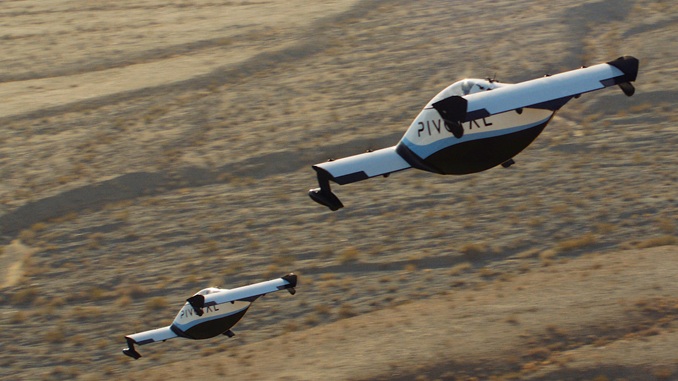
Arizona Senator David Farnsworth (R-LD10), chairman of the Senate Appropriations, Transportation & Technology Committee, hosted executives from Pivotal Aviation during a visit to Arizona aimed at showcasing developments in advanced air mobility technology.
Pivotal, a developer of electric vertical takeoff and landing aircraft, met with Farnsworth and explored potential flight locations and applications for its aircraft in communities including Superior and Globe. The discussions included how eVTOL technology could enhance connectivity, public safety, emergency response, and mobility in rural parts of the state.
Pivotal’s aircraft are part of a broader category of electric vertical takeoff and landing vehicles that are central to the emerging advanced air mobility (AAM) sector. AAM, as defined by the National Business Aviation Association, uses electric aircraft to move people and cargo between locations not easily served by traditional transportation or aviation modes, and the concept is being developed for both urban and regional applications.
The company, currently marketing single-seat eVTOL aircraft such as its Helix, is preparing customer deliveries of next-generation aircraft and continuing operational development.
Farnsworth described Arizona as having an opportunity to lead in next-generation transportation and emphasized the potential for AAM solutions to serve residents across the state.
He said in a statement, “Advanced Air Mobility is not just about technology for the sake of technology; it’s about enhancing how people move, keeping communities connected, and preparing for the future. Witnessing how these aircraft can directly benefit Arizona and discussing their operation across diverse landscapes, including rural towns, reinforces why our state is well-positioned to take the lead. My goal is to ensure that Arizona remains a place where innovation is welcomed, responsibly explored, and ultimately used to improve the quality of life for all Arizonans today and for generations to come.”
Arizona lawmakers have been taking steps to integrate advanced air mobility into the state’s transportation planning framework. Under Senate Bill 1307, signed into law in May 2025, the Arizona Department of Transportation (ADOT) must begin developing or upgrading a statewide aviation plan that incorporates infrastructure for advanced air mobility, including vertiports, “specialized areas for vertical takeoff and landing,” per the FAA, and aircraft charging stations, by September 1, 2026. The legislation also establishes funding mechanisms for constructing vertiports and supporting AAM demonstrations.
The state’s Advanced Air Mobility Fund, created through recent state appropriations, is intended to support infrastructure development and aircraft testing tied to AAM. Bills under consideration in the current legislative session would expand the uses of that fund, including potential applications for border security operations.
Local planning efforts also reflect growing interest in the technology. The City of Phoenix Aviation Department released an advanced air mobility framework study that outlines how AAM technologies, including eVTOL aircraft, could be integrated into the city’s airport system with roles defined for Phoenix Sky Harbor, Deer Valley, and Goodyear airports, according to AVWeb. That framework is intended to support infrastructure readiness, regulatory coordination, and potential future operations.
Advanced air mobility has also attracted federal attention. A pilot program launched by the Federal Aviation Administration in 2025, per Reuters, aims to accelerate air taxi deployment through public-private partnerships, enabling selected aircraft operations ahead of full regulatory certification. The program is part of a broader national effort to safely integrate eVTOL and similar technologies into U.S. airspace.
Matthew Holloway is a senior reporter for AZ Free News. Follow him on X for his latest stories, or email tips to Matthew@azfreenews.com.
by Staff Reporter | Feb 1, 2026 | News
By Staff Reporter |
A committee within the Arizona Senate approved a bill banning fluoride additives in public water systems.
The Senate Committee on Government advanced SB 1019 solely through Republican support. Democratic lawmakers voted against the bill based on the opposition of certain major health organizations.
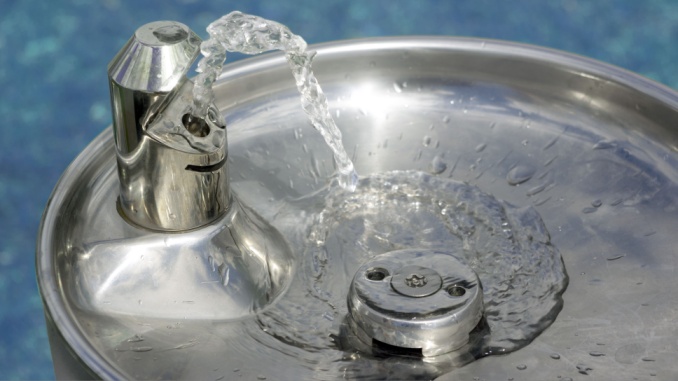
The bill would prohibit individuals and political subdivisions from adding fluoride or fluoride-containing compounds to public drinking water.
State Sen. Janae Shamp (R-LD29), a registered nurse, sponsored the bill.
Shamp argued that water fluoridation is no longer necessary for public health due to the widespread availability of fluoride in dental products and treatments. Shamp also cited research connecting adverse health effects to ingesting fluoride: neurodevelopmental harms resulting in IQ reduction, weakened bones, arthritis, and thyroid dysfunctions.
“It’s more effective when applied to the teeth rather than ingested,” said Shamp during a committee hearing on Wednesday. “If there is absolutely any possibility that their child could have their neurodevelopmental [development] delay[ed] because they’re ingesting systematically a product that works better topically, I would question anyone who is against stopping [this ban].”
Shamp dismissed opposition to the bill from certain healthcare organizations as the typical resistance to change among institutions. Among those opposed are the Arizona Dental Hygienists Association, Arizona Dental Association, and Arizona Public Health Association.
“As we move forward with the science, we have to make sure we’re staying up to date with evidence-based practice,” said Shamp. “The evidence is showing this is not the way to decrease tooth decay in the population.”
State Sen. David Farnsworth offered his own anecdote on the matter. Farnsworth said he was diagnosed with fluoride sensitivity after suffering headaches while using the first formula for Crest toothpaste to brush his teeth.
Jessica Robertson on behalf of the Arizona Dental Association and American Academy of Pediatric Dentistry said water fluoridation was necessary because certain communities, especially tribal communities, were too poor to afford toothbrushes or toothpaste. Robertson credited water fluoridation for her not coming down with cavities in her youth.
Valerie Brady on behalf of the Arizona Dental Hygienists Association argued against the bill as a “significant risk to public health.” She said that thousands of studies and decades of scientific evidence back the perception that fluoridated water prevents tooth decay. Brady said fluoridated water was significantly impactful to communities with poorer dental hygiene habits or inconsistent dental care.
“It is the ability to provide consistent low-level exposure to fluoride ions in the mouth, helping prevent tooth demineralization and promoting enamel remineralization,” said Brady.
Shamp questioned why those opposed to the bill don’t factor in the variable levels of fluoride people might ingest — or the disparate impacts those variable amounts could cause. The senator claimed this was the opposite of informed consent.
“The fact of the matter is this is a chemical that is added to water and there is absolutely no one out there telling people, ‘Well, you should use this much toothpaste if you drink this much tap water,’” said Shamp. “You don’t know how much someone is ingesting. You don’t know if their only source of water is tap water. You don’t know if they’re using mouthwash three times a day.”
AZ Free News is your #1 source for Arizona news and politics. You can send us news tips using this link.