On March 10, Pima County residents will decide whether to fund another 20-year, $2+ billion transportation plan after the Regional Transportation Authority (RTA) failed to deliver on the last one. Two propositions will appear on their ballot this month related to this plan.
Proposition 418 would approve the new “RTA Next” transportation plan. Proposition 419 would extend the existing ½-cent sales tax to fund it. Both propositions must be passed for the plan to move forward. If approved, the new tax would begin April 1, 2026, just a few months before the original RTA plan officially expires in June.
The RTA is an independent taxing district specifically for Pima County. Its board is comprised of elected officials from local, tribal, and state governments that approve and oversee transportation projects. Back in 2006, voters were promised countywide improvements to roads, transit, and other infrastructure, funded by a 20-year timeline and a dedicated ½-cent sales tax increase. Fast forward to 2026, and several projects are unfinished, or never even started at all. Now, voters are being asked to extend the tax for another 20 years to finish what should have already been completed. That’s not a plan; it’s a bailout.
The project list for the RTA Next consists of multiple road improvements, bicycle infrastructure upgrades, transit improvements, and more. Many of these are the projects left unfinished during the first 20 years. They continue to blame their failures on Covid, the great recession of 2008, population growth not matching projections. The reality is that the actual problem is staring themselves in the mirror…
Climate activists, frustrated by unsuccessful climate lawsuits, have increasingly turned to “climate superfund” legislation as a new tool to make oil and gas companies pay for climate damages.
Notably, these state-level bills seek to impose hefty fees or fines on energy producers for the costs of climate change, a punitive measure for energy producers for decades-old, lawful activities. But this punishing dynamic backfired when confronted with reality. In multiple states, climate superfund proposals have run ashore amid bipartisan concern that they would do more harm than good, particularly by driving up energy costs for consumers.
As of early 2026, only Vermont and New York have actually enacted climate superfund laws, both in 2024, with a dozen other states introducing similar bills, including California, New Jersey, Massachusetts, Connecticut, Hawaii, Maryland, Virginia, to name a few. However, about half of these attempts have stalled or died in state legislatures.
New Jersey’s experience is a prime example. Lawmakers there introduced an ambitious Climate Superfund Act in 2025, but even some initial supporters grew uneasy once they considered the practical impacts.
In a Senate Budget Committee hearing on the bill in January 2026, legislators from both parties openly questioned the premise of punishing companies for past legal emissions and warned the costs would simply be passed on to New Jersey residents . “Each and every one of us… [is] relying on [fossil fuels] in one way or another in your everyday life,” noted Democratic Sen. Paul Sarlo, highlighting the irony that the state itself remains dependent on the very fuels it was seeking to penalize.
Sarlo, the committee chair, reluctantly advanced the bill out of committee but bluntly warned he would vote “no” on final passage unless major changes were made. Republican Sen. Declan O’Scanlon was even more direct, blasting the retroactive fines as “unfair” and cautioning that “New Jerseyans themselves would end up paying the price at the pump or for their utility bills” if the state tries to punish energy producers.
In the end, New Jersey’s proposal never made it to a floor vote before the legislative session ended in January 2026, effectively killing the bill (for now).
New Jersey is hardly alone. In California, two “Polluters Pay Climate Superfund” bills (SB 684 and AB 1243) garnered significant attention in early 2025 but were quietly shelved after initial committee hearings, as lawmakers grew wary of the potential economic fallout. Connecticut’s climate superfund bill got a public hearing in March 2025 but then died in committee without a vote. In Hawaii, a proposed superfund never advanced at all before the 2025 session ended. Virginia’s attempt was “immediately rejected” after a bipartisan subcommittee vote to table the bill, effectively killing it. And in Maryland, lawmakers introduced an ambitious Climate Superfund-style bill (the RENEW Act) only to strip it down to a mere study of climate costs, with all polluter-pays provisions removed.
Taken together, these failures underscore how even in climate-conscious states, many policymakers got cold feet when confronted with the legal risks, economic trade-offs, and voter backlash potentially involved.
If this is the case, are climate superfund schemes really aligned with what the public wants policymakers to focus on?
Activists insist that making Big Oil pay billions is a matter of justice and necessary to fund climate resilience. But for most Americans, the more immediate priority is relief from high energy prices, not new climate-linked taxes that could raise those costs further.
A national poll of likely voters in late 2025 showed 83% reported that their energy bills had gone up in recent years, with a majority saying costs had increased “a lot.” Affordability is clearly top of mind. This doesn’t mean Americans don’t care about climate change at all; it means they aren’t willing to bear exorbitant direct costs for symbolic climate policies, especially when those policies won’t tangibly improve their day-to-day lives or might simply shuffle money to government coffers with little accountability.
Ultimately, the failure of these climate superfund proposals underscores a reality that many in the energy industry have long argued: energy policy must be grounded in economic and energy reality, as well as the needs of everyday Americans.
David Blackmon is a contributor to The Daily Caller News Foundation, an energy writer, and consultant based in Texas. He spent 40 years in the oil and gas business, where he specialized in public policy and communications.
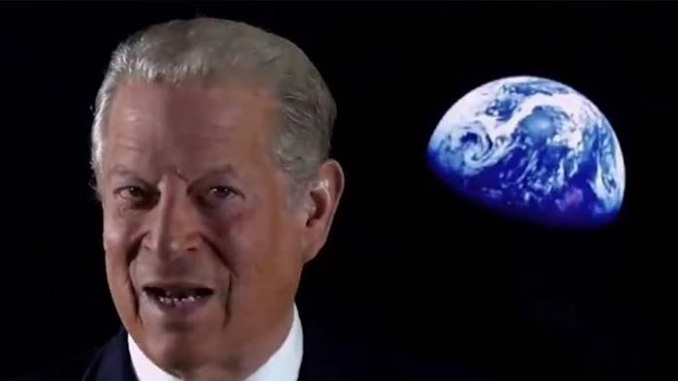
Jan. 24 marked the 20th anniversary of the release of Al Gore’s alarmist global warming movie “An Inconvenient Truth.” Gore has surfed the movie and climate alarmism to a net worth estimated at $300 million and a Nobel Peace Prize.
But the rest of us have been saddled with: (1) a hoax that has debased the field of science; (2) an energy scam that has cost the world more than $10-20 trillion dollars and threatens our national security; and (3) a political power grab that has reduced our freedoms.
Gore’s movie was junk from the get-go. I attended a meeting in early January 2006 where Gore presented the slide show that was the basis for the movie to a group of conservatives at a weekly meeting sponsored by Grover Norquist’s Americans for Tax Reform. After the presentation, I approached Gore and asked if he was interested in participating in some sort of debate about his claims. Although he said he was interested, his staff later declined.
The movie premiered weeks later at the Sundance Film Festival, and the rest is history. And here’s what that history is.
The “documentary” was initially a hit, grossing $50 million in theaters. Problematically, though, the film soon became part of many secondary school curriculums. Its credibility took a major hit in 2007 when a British court ruled that the movie could not be shown to school children with a warning label about its factual errors.
As I noted in a FOX news column at the time, the judge ruled that Gore’s claims about global warming drying up Lake Chad, causing polar bears to drown while being forced to swim farther for food; and shutting down the Gulf Stream were false and/or impossible. Based on the judge’s ruling, I estimated that “the footage that ought to be excised adds up to about 25 minutes or so out of the 98-minute film. What’s left is largely Gore personal drama and cinematic fluff that has nothing to do with the science of climate change.”
Despite the embarrassing ruling, Gore was awarded the Nobel Peace Prize that December. His acceptance speech doubled down on the movie claims and added a few more. None of his predictions came true.
His most well-known prediction was that the Arctic might be ice-free during the summer of 2014. But at its 2025 summer minimum, the Arctic still had more than 5 million square kilometers of sea ice — about the same as in 2007. His lesser known but equally erroneous predictions relate to global temperature, drought and glaciers, agriculture, wildfires, hurricanes, deforestation, and species extinction.
Al Gore inspired former-Marxist-turned-normal-person film director Martin Durkin to produce a counter to “An Inconvenient Truth” called “The Great Global Warming Swindle” that I also reviewed in a FOX News column. Though Gore dodged my debate challenge, I was able to make him “debate” by splicing together clips from Gore’s movie with opposing experts from Durkin’s film. Though now blocked for copyright claims, this “debate” can still be found on YouTube.
After all these years, the one thing Gore has been partially correct about is this: At the beginning of the United Nation’s COP-27 meeting in Egypt in 2022, Gore said “We have a credibility problem, all of us: We’re talking and we’re starting to act, but we’re not doing enough.” He’s correct about his credibility problem. It’s never gone away.
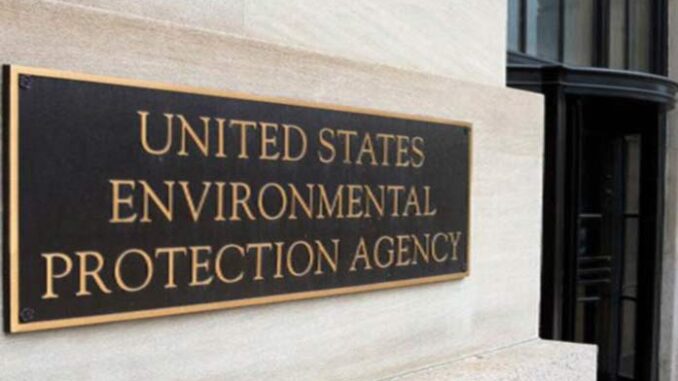
Arizona Senate Majority Whip Frank Carroll (R-LD28) introduced a measure on Tuesday, urging the U.S. Congress to clearly define and limit the Environmental Protection Agency’s (EPA) regulatory authority. Carroll and his cosponsors argue that ambiguous federal power threatens jobs and economic growth in Arizona. The proposal, SCM 1004, was advanced by the Arizona Senate Republican Caucus earlier this week.
Carroll’s measure calls on Congress to affirm its role in setting national environmental policy and to draw explicit boundaries around the EPA’s authority under federal law. The memorial highlights that, under the Clean Air Act, the EPA is charged with setting and reviewing National Ambient Air Quality Standards (NAAQS) every five years to protect public health and welfare, but argues that compliance requirements have grown burdensome for businesses and workers.
“Americans deserve clean air, land, and water, but they also deserve an economy that can grow without unnecessary federal interference,” Carroll said in a statement distributed by the Arizona Senate Republican Caucus. He added that the measure urges Congress to ensure EPA regulations are “grounded in law and sound science” and do not impose undue economic restrictions.
In additional remarks included in the memorial, Carroll said he is seeking to define the limits of EPA authority to prevent what he described as regulatory overreach.
“I am working to clearly define the EPA’s powers to prevent regulatory overreach that negatively impacts Arizona’s economy,” Carroll said. “While the Clean Air Act allows for specific emissions regulations, the EPA must not exceed its authority or violate fundamental principles of separation of powers. By preventing bureaucratic overreach, we can protect both the environment and the economic opportunities Arizona families and businesses rely on.”
SCM 1004 directs the Arizona Secretary of State to transmit copies of the memorial to leadership in both chambers of Congress and all members of Arizona’s federal delegation. The measure notes that while the EPA’s mission is to enforce environmental laws as intended by Congress, concerns over overreach have prompted states to call for clearer statutory limits on the agency’s powers.
Carroll’s push reflects broader national debates over the scope of federal environmental regulation. Critics of recent EPA proposals have warned that aggressive regulatory action could affect industries including agriculture, energy production, and water resources. Such debates have included congressional hearings examining the consequences of EPA actions on sectors like American agriculture and rural economies.
The memorial challenges key assumptions underlying EPA policies formulated under Democratic administrations and proponents of policy such as the ‘Green New Deal’, stating:
“Greenhouse gases like CO2 and methane are not acutely toxic like other hazardous pollutants and have no direct impact on human health;”
“There is no consensus as to whether global warming is a problem or a benefit or how current temperatures fit into the broader climate context;”
“Global temperatures, droughts, floods and hurricanes have not increased with increasing global CO2 emissions;”
The memorial further refutes the EPA’s authority regarding greenhouse gas emissions, stating directly: “The EPA has no explicit statutory authority to regulate greenhouse gases.”
The memorial comes amid ongoing statewide discussions about the balance between environmental protection and economic growth, with Arizona lawmakers questioning the appropriate reach of federal agencies in areas ranging from air and water quality to land use and energy development.
SCM 1004 was co-sponsored by a group of Republican Arizona Senators, including Hildy Angius (R-LD30), David Gowan (R-LD19), Kevin Payne (R-LD27), Janae Shamp (R-LD29), and Thomas “T.J.” Shope (R-LD16).
Writing at Axios, energy writer Amy Harder says “The climate agenda’s fall from grace over the past year has been stunning — in speed, scale and scope.” Harder quotes oil historian and S&P Global vice-chairman Dan Yergin as saying, “There’s no handwaving about how ‘We want to cooperate on climate.’ It’s, ‘We’re slamming the door on that issue.’ We’ve gone from over-indexing it to zero-indexing it.”
Polling has never shown climate change as being an issue of primary concern to American voters. Americans have consistently been more worried about issues that impact their daily lives today than about warnings from modern-day P.T. Barnums like U.N. Secretary General Antonio Guterres about some nebulous “highway to hell” and “the age of global boiling. The issue had been slowly losing its effectiveness during the Biden years even as that administration tried to memorialize the movement’s objectives in policy.
Even Democrat politicians have quit talking about the so-called “climate emergency” which used to be a central plank in their talking points list. When was the last time you heard New York Democratic Rep. Alexandria Ocasio Cortez, co-author with Massachusetts Democratic Sen. Ed Markey of the “Green New Deal” introduced in 2019, talk about the supposed need to force ordinary citizens to give up their cars, flying, and vacations and spend trillions on a nationwide network of high-speed rails to save the planet? When was the last time you heard any Democrat utter the phrase “Green New Deal,” for that matter? It simply doesn’t happen anymore.
One of the motivators for the political abandonment of the climate scam by Democrats came from a pre-election analysis from the center-left Searchlight Institute last November. That memo advised Democrat candidates to avoid using the term “climate change” entirely, and to focus on the supposed cost savings to be obtained by switching to green energy solutions. Never mind that such cost savings are a myth: The truth doesn’t matter. What matters is the ability to influence voters with the message.
Therein lies the central existential threat to the movement’s survival in the coming years.
For decades, liberal politicians and climate advocates were able to advance the climate alarm agenda by creating, well, alarm among the public that the world is going to end if we don’t stop putting too much carbon dioxide into the atmosphere. Always the messaging had a deadline claiming, “We only have X number of years to stop burning fossil fuels before it’s too late!” Over the past 40 years, that deadline to act has given the term “moving the goalposts” a new green meaning.
AOC claimed the drop-dead date was only 12 years in the future as she rolled out her ambition to control everyone’s daily lives in the name of climate alarm in 2019. But the very next year, in 2020, child activist Greta Thunberg moved the goalposts to a mere five years. But wait: Just a year later, Joe Biden read a script from his teleprompter that set the deadline at 10 years. It’s all so darn confusing.
No doubt, these politicians and activists wish they could erase their past claims from everyone’s memory. Their trouble is, the Internet is forever.
Advocates were even successful in convincing Barack Obama’s EPA to dummy up an Endangerment Finding declaring that carbon dioxide is in fact a “pollutant” that must be regulated under the Clean Air Act in order to save the planet. Never mind that CO2, otherwise known as plant food, the foundational basis for all life on Planet Earth: The truth doesn’t matter.
Now, it appears that the movement is inheriting the wages of decades of deception with a sudden and stunning fall from grace. It could not happen to a more deserving bunch of people.
David Blackmon is a contributor to The Daily Caller News Foundation, an energy writer, and consultant based in Texas. He spent 40 years in the oil and gas business, where he specialized in public policy and communications.