Flagstaff residents have until May 19th to vote on the Flagstaff Regional Land Use Plan 2045, a mail-in only election that will determine whether this becomes the city’s guiding blueprint through 2045. The plan will shape “growth, development, conservation, housing, transportation, and other long-term community priorities.” It is a roadmap for how city leaders want Flagstaff to grow, move, build, and live for the next two decades.
The main themes of this Regional Plan are Climate Action, Housing Attainability and Equity. Climate and equity, two of the left’s favorite virtue-signaling obsessions. The plan runs roughly 250 pages and buried inside the planning jargon is a much bigger agenda: a comprehensive restructuring of everyday life in Flagstaff.
The plan repeatedly sounds the alarm over the so-called “climate emergency,” declaring that “climate change, driven by human-induced GHG emissions, is intensifying global weather disruptions.” Translation: the climate is spiraling into chaos, and it’s your fault, therefore the city government now needs to center major policy decisions around climate activism.
The plan repeatedly references Flagstaff’s Carbon Neutrality Plan (CNP) that has the goal to “achieve carbon neutrality by 2030.” What is supposed to be a land use and regional planning document instead reads like an environmental manifesto. In city government’s attempt to “save the planet,” residents should expect pressure for more mandates, regulations, and costly transitions as officials target emissions from “buildings, transportation, waste, etc.” Their call for the “displacement of fossil fuel-based generation with zero-carbon sources such as wind, solar, and nuclear energy,” will inevitably drive-up costs – even in the areas, like housing affordability, they claim to be trying to reduce.
A new edition of a science education manual for judges departs “sharply” from a “longstanding tradition of neutrality,” say three of America’s most distinguished physicists in a letter to U.S. Supreme Court Chief Justice John Roberts.
Writing in an open letter to Justice Roberts were Drs. Richard Lindzen of Massachusetts Institute of Technology, William Happer of Princeton University and Steven Koonin of Stanford University’s Hoover Institution. Roberts is chairman of the Federal Judicial Center, publisher of the Fourth Edition of the “Reference Manual on Scientific Evidence,” whose new chapter on “How Science Works” the letter writers want to be removed.
For decades, the Reference Manual has served as an essential guide for more than 3,000 federal judges and countless state jurists. Cited in over 1,700 judicial opinions, it has helped courts distinguish reliable science from speculation. Its strength has been a commitment to describing how science operates according to the tenets of the 300-year-old scientific method, avoiding political considerations and a drift into pseudoscience.
The letter’s authors, with more than 600 peer-reviewed publications among them, bring unparalleled expertise to the issue. Their concern centers on the replacement of the late David Goodstein’s respected chapter with an overwritten, intellectually deficient 65-page version.
The new chapter’s lead author is philosopher Michael Weisberg, who had a prominent role as a diplomat at United Nations climate proceedings, where he advocated financial payments to small island nations purportedly threatened by a warming planet. The appearance of conflict with his authoring supposedly neutral guidance on scientific evidence is unmistakable — especially in the context of climate litigation involving trillions of dollars in potential liabilities.
The substantive problems are even more serious. Where Goodstein, once a California Institute of Technology physics professor, emphasized the scientific method —generating hypotheses and testing them with data — the new chapter dismisses the scientific method as a “myth.” It elevates “scientific consensus” and “widespread acceptance” as the highest form of certainty, transforming inquiry into a popularity contest.
This inverts the traditional practice of science. As Nobel laureate Richard Feynman observed, the key to science is comparing predictions directly with observation: “If it disagrees with experiment, it is wrong.”
In Daubert v. Merrell Dow Pharmaceuticals (1993), the Supreme Court made the same point: Scientific knowledge must be derived by testing hypotheses against reality. Goodstein’s earlier edition said, “Data are the coin of the realm in science,” and theories must make new predictions that can be falsified or verified. Consensus, by contrast, is a sociological phenomenon.
As Michael Crichton famously warned, “If it’s consensus, it isn’t science. If it’s science, it isn’t consensus.” History bears this out. Popular “consensus” on plate tectonics, causes of disease and 20th-century fears of global cooling were overturned by evidence, not votes.
Further revealing the chapter’s activist inclinations is its opening citation of Naomi Oreskes and Erik Conway’s “Merchants of Doubt,” a book that insists there is “zero argument among actual scientists” about catastrophic climate change — a claim countered by mountains of real-world data.
Labeling credentialed dissenters as outside “actual science” has no place in an educational document for judges. Science advances by challenging prevailing views with data, not by enforcing community norms.
The Federal Judicial Center wisely withdrew a chapter on climate science from the manual after 27 state attorneys general documented its conflicts and unsupported claims. Yet the “How Science Works” chapter, written largely to support that now-removed material, remains.
With more than 1,000 climate-related cases pending in state and federal courts, judges deserve guidance rooted in empirical rigor. Lindzen, Happer and Koonin are correct. The Center should promptly withdraw the new chapter and restore Goodstein’s earlier version, which captured the essence of scientific reasoning in language accessible to readers without the scientific background that most jurists lack.
They should also direct the National Academy of Sciences to withdraw both chapters from its version of the Manual. Maintaining the integrity of judicial guidance on science is not a partisan issue.
Justice Roberts and the Federal Judicial Center have an opportunity to reaffirm their commitment to neutrality and restore confidence in the Manual. In an age when science is increasingly politicized, maintaining rigorous standards for what counts as scientific evidence in court is vital.
The credibility of the American judicial system requires nothing less.
Angela Wheeler is a contributor to The Daily Caller News Foundation and executive director of the CO2 Coalition, Fairfax, Virginia. She is a cum laude graduate of Emporia State University, Kansas, where she studied communication, with additional biology and pre-medicine coursework.
BlackRock CEO Larry Fink has publicly shifted toward what he calls energy pragmatism, admitting that society now demands a balanced approach to meeting power needs rather than adherence to rigid climate agendas. This could be a pivotal moment for global energy policy, as one of the planet’s most powerful financial players steps back from decades of ill-advised “green” mandates.
BlackRock is the world’s top financial manager, overseeing more than $10 trillion in assets that sway markets, companies and even governments. It delivers risk analysis tools that guide how firms allocate capital, set strategies and tackle issues from energy supply to corporate governance. BlackRock’s hand is in everything from pension funds to sovereign wealth, where its votes and investments steer decisions affecting wide swaths of society.
Fink points to China, which leads in new nuclear plants and vast solar installations while importing record volumes of natural gas and oil to meet surging demand. “Society has moved into a better position of having more pragmatism,” Finkstates, “and what you’re hearing from me is I’m echoing what we’re hearing from our clients.” Better to have clients than ideologues steering the ship.
Fink’s tone matches his earlier report of $4 billion lost in ESG-linked assets in 2023, a hit from states like Florida and others pulling funds over concerns about politicized investing. BlackRockdropped the “weaponized” ESG label by mid-2023 and exited the Net Zero Asset Managers group in January 2025 amid antitrust probes and backlash from state governments.
Clients forced Fink’s hand after years of BlackRock deploying their money to advance ESG and related priorities, often with the encouragement of left-leaning managers of public pension funds like New York’s. Fiduciary duty – maximizing investor returns – had taken a backseat as the firm lobbied corporations on “woke” interests ranging from board diversity to cuts in industrial emissions. Now, with lawsuits mounting and states divesting billions, Fink invokes thatsame duty to justify pragmatism.
Fink’s reversal exposes the scam. BlackRock wielded trillions to warp board politics and policies, betraying investors for a clique’s dreams. Now, scrutiny and an outflow of funds force truth. Fink’s admission also validates what skeptics argued: Climate narratives overstated risks to advance costly fantasies. Data show no increase in extreme weather, for which emissions of CO2 have been absurdly blamed. Hurricanes, floods and droughts have followed historical norms.
Climate alarmists’ infatuation with wind and solar energy has run into the reality of physics. So-called “renewables” falter where reliability counts. Their intermittency strands grids during times of peak demands, hiking costs for families and factories. In contrast, fossil fuels and nuclear power human prosperity. They provide the dense, affordable and reliable energy required by modern civilization.
The campaign to abruptly replace them with low-density, weather-dependent alternatives was a mathematical impossibility from the start. A foundation of coal, natural gas and nuclear energy is needed to maintain a modern standard of living. This is why Asian industrial economies continually added fossil fuel capacity behind a veneer of “green” pretense.
Look at global patterns. Growth in wind and solar capacity covers only a small part of rising electricity needs. China builds nuclear faster than anyone and guzzles oil and gas imports to fuel factories and homes. Despite net-zero pledges, India accelerated domestic coal production while exploring small modular reactors to power its 1.4 billion people and hit 8% growth targets.
Even European countries that once championed rapid shifts to “renewables” began to reconsider after the 2022 energy crisis exposed vulnerabilities. In Germany, factories shut down and household budgets strained when Russian gas supplies tightened and wind and solar stalled during calm or cloudy periods.
After years of climate-driven experimentation – forced by deluded or dishonest politicians and business titans – the failures became too many and too consequential to be ignored. Little wonder that Larry Fink has turned his ear away from the rhetoric of alarm and toward client demands for strategic guidance.
Vijay Jayaraj is a contributor to The Daily Caller News Foundation and Science and Research Associate at the CO2 Coalition, Fairfax, Va. He holds an M.S. in environmental sciences from the University of East Anglia and a postgraduate degree in energy management from Robert Gordon University, both in the U.K., and a bachelor’s in engineering from Anna University, India. He served as a research associate with the Changing Oceans Research Unit at University of British Columbia, Canada.
The professional climate alarmists aren’t fading away. They’re practically mutating. Louder, angrier, and more desperate than ever, they’ve learned that if outright activism draws too much scrutiny, the next best move is infiltration and subversion. Now they’re embedding themselves deeper inside trusted institutions and laundering their message through official channels.
Some in the media want Americans to believe Democrats are quietly retreating from aggressive climate messaging. The opposite is true. The most zealous voices in academia and government are amplifying the panic, using their credentials not as evidence of expertise but as weapons of intimidation. Their “science” isn’t about discovery. It’s about control.
Michael Mann is the perfect example. He turned a routine Olympic broadcast into a climate sermon, claiming snow conditions were proof of global collapse. That wasn’t scientific analysis—it was fearmongering presented as commentary.
Texas A&M professor Andrew Dessler follows the same script. In one moment, Dessler argued that economic models used by plaintiffs to calculate damages for the so-called social cost of carbon are “made up.” Then, in the next, he is engaged in emotional outbursts. In academia today, volume and anger aren’t liabilities; they’re virtues. The showmanship draws attention. In any other field, emotion like that would be disqualifying. That’s not science; it’s performance.
This culture of performative panic has moved into a new and more dangerous phase: subverting institutions through the bureaucratic backdoor. Look at the Federal Judicial Center (FJC), which recently and quietly pulled the climate chapter from the online version of its official Reference Manual on Scientific Evidence. They did so because the chapter, written by activist scientists pushing extreme climate narratives, triggered a backlash that threatened the FJC’s credibility and funding.
But here’s the trick: the chapter didn’t disappear. It’s still live on the National Academies of Sciences (NASEM) website, where the organization has explicitly stood by itin the pages of The New York Times. The Academies, which hold the copyright, may even continue printing versions that include it. While the FJC shields itself from scrutiny, it quietly directs readers to NASEM, outsourcing climate indoctrination to a proxy. This is by no means a retreat. It is reinvention — a deliberate laundering of the same activism through new institutions to preserve the illusion of legitimacy.
The same academics who once claimed to be neutral arbiters of truth are now weaponizing institutions to hide their activism behind bureaucratic credibility. They’re embedding their ideology deeper into the machinery of government, courts, and policy schools—places the public rarely looks. This is the next phase of their radical climate crusade. When their narrative collapses under scrutiny, they simply shift it to another institution and continue the mission.
Meanwhile, ordinary Americans pay the price. Soaring energy costs, unreliable grids, and overregulation are the fruit of policies born in ivory towers and rubber-stamped by agencies too afraid to challenge the climate orthodoxy. Families choosing between groceries and heating bills don’t need another federal manual telling judges that skepticism is heresy—they need affordable, dependable energy. Climate extremism punishes the people who keep this country running.
Those who believe the climate radicals are retreating are fooling themselves. They’re not backing down—they’re burrowing in. Every time they’re exposed, they shift venues or change labels, but the mission stays the same: centralize control in the name of “saving the planet.” When power over how we heat our homes, drive to work, or grow food moves from citizens to bureaucrats, liberty vanishes with it.
The veneer of science gives this movement authority it doesn’t deserve. Scratch that surface, and it’s politics all the way down. Real science welcomes debate. Climate extremism silences it. The FJC’s quiet erasure and NASEM’s defiance show just how far this has gone—the climate cult doesn’t compromise; it adapts.
Americans need to see this clearly: the radicals aren’t losing ground. They’re evolving into something even more strategic. It’s time for those who believe in freedom, affordability, and reason to speak up before bureaucracy and ideology complete the takeover.
Mr. Isaac, a former member of the Texas House of Representatives, is a contributor to The Daily Caller News Foundation and CEO of the American Energy Institute.
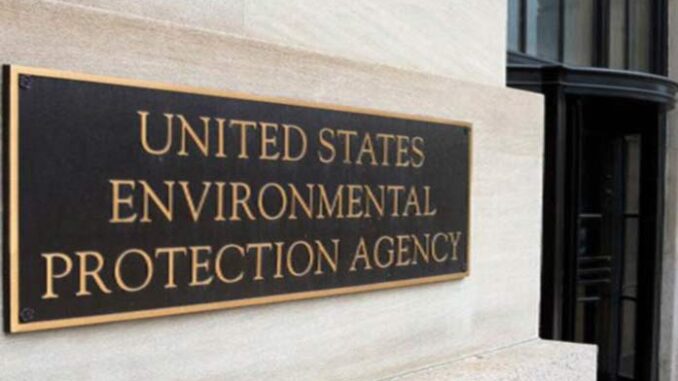
On a crisp, sun-drenched afternoon in the spring of 2023, I found myself walking down Constitution Avenue in Washington, D.C., in front of the William Jefferson Clinton Building, headquarters of the U.S. Environmental Protection Agency (EPA).
Standing in its shadow, I wondered when, or if, sanity would ever return to the building. My mind drifted to the regulatory malfeasance that gave this agency power to treat carbon dioxide (CO2) as a pollutant, the 2009 Endangerment Finding.
For years, this bureaucratic decree masqueraded as settled science. Climate zealots claimed CO2 and other greenhouse gases threatened public health as agents of planetary overheating, ignoring both a paucity of supporting data and contradictory evidence that inexorably accumulated.
Now, three years after my visit, EPA has rescinded the regulation as it applies to motor vehicles. The basis of its action is twofold: First, the agency has concluded that by attempting to regulate greenhouse gases, EPA exceeded its authority under the 1970 Clean Air Act. Second, the environmental effect of regulating tailpipe emissions of greenhouse gases is negligible.
There is more to be done. Reason and good sense would have the EPA remove the Endangerment Finding’s hold over industrial emissions of greenhouse gases, like those coming from power plants, and would undertake to dismantle the rule’s flimsy scientific justifications.
Nevertheless, EPA’s action undermines an ideological foundation for the broad attacks on fossil fuels that have constrained American prosperity and choked the developing world’s aspirations for modern lifestyles.
The 2009 regulation was used to justify the Obama administration’s Clean Power Plan – part of the so-called War on Coal – and tailpipe emissions standards that forced unwanted electric vehicles onto dealership lots. The rule has contributed to the closing of power plants, energy shortages, high electricity prices, and multiple billion-dollar losses for car manufacturers whose customers mostly prefer internal combustion engines. It has also fueled endless litigation against producers of hydrocarbon fuels.
Because CO2 is necessary for all life, beginning with its role in plant photosynthesis, regulation of the gas gave EPA jurisdiction over the entire U.S. economy. Climate crusaders abroad followed EPA’s lead.
Worldwide, the economic waste resulting from the rule is staggering. The Climate Policy Initiative estimates that between 2011 and 2020 that climate spending totaled $4.8 trillion. Estimates for “energy transition investment” – money dumped into the wind, solar and EV rat hole – was $2.3 trillion in 2025 alone.
That is trillions diverted from healthcare, infrastructure, education and genuine alleviation of suffering and advancement of human flourishing. Imagine those resources being directed to improving carbon-intensive energy sectors that have produced the wealthiest and healthiest civilizations in all of history.
Since the dawn of the industrial age, we have witnessed an unprecedented increase in global life expectancy. We have seen a drastic reduction in deaths from natural disasters – not because the weather is milder, but because people are better protected by modern infrastructure and technology made possible by fossil fuels. We have achieved historic highs in agricultural production, feeding a population of 8 billion.
CO2 has played a pivotal role in the greening of the Earth, acting as an atmospheric fertilizer that boosts crop yields and expands forests. Even methane, demonized alongside CO2, is merely a byproduct of a livestock industry essential for providing protein to a ballooning global population. Emissions of neither gas contribute significantly to global temperatures.
Once the EPA designated CO2 a legal hazard, U.S. diplomats, aid agencies and technical experts carried that framing into global climate negotiations, development programs and financing arrangements.
Over time, the EPA’s stance became a de facto reference point for regulators elsewhere. If the U.S. “gold standard” for environmental protection treated CO2 as an endangerment, ministries from Europe to Asia would use similar language in national climate laws.
With the EPA backing away from its regulation of greenhouse gases, developing countries should waste no time in severing whatever restrictions Western climate overseers have placed on their use of fossil fuels. For too long, climate policies have impeded economic growth and denied access to reliable supplies of electricity, to safer indoor fuels for cooking and heating, to refrigeration and to clean water. The result has been higher rates of morbidity and mortality among the world’s poor.
CO2 is not the enemy of humankind. Misguided attempts to criminalize its emissions are!
Vijay Jayaraj is a contributor to The Daily Caller News Foundationand Science and Research Associate at the CO2 Coalition, Fairfax, Va.He holds an M.S. in environmental sciences from the University of East Anglia and a postgraduate degree in energy management from Robert Gordon University, both in the U.K., and a bachelor’s in engineering from Anna University, India. He served as a research associate with the Changing Oceans Research Unit at University of British Columbia, Canada.